
Hear from Our Customers
Your driveway takes a beating in New Jersey. Every winter brings 55 to 75 freeze-thaw cycles that crack unsealed asphalt wide open. Water seeps in, freezes, expands by 9%, and pushes those cracks wider every single time.
Summer isn’t any easier. Surface temperatures hit 130°F on sunny days, softening your asphalt and leaving tire marks, indentations, and premature wear you’ll notice by fall.
Sealcoating creates a protective barrier that keeps water out and weather damage at bay. It’s not a luxury – it’s the difference between a driveway that lasts 15 years and one that makes it past 25. The cost runs $0.15 to $0.40 per square foot, which means most residential driveways in Somerville get protected for $150 to $500. Compare that to resurfacing at $500 to $2,000, or full replacement at several thousand more.
You’re either paying for prevention now or repairs later. One of those options costs a lot less and saves you the headache of watching your driveway fall apart.
We’ve spent over two decades working in Morris, Somerset, and Sussex Counties. We know how the soil drains in Somerville, how the winters hit harder than people expect, and what happens when contractors cut corners on materials or timing.
We’re not the cheapest option, and that’s intentional. Our sealcoating material contains over 50% solids with polymer modification – most standard sealers sit around 47%, and the bargain options drop below 40%. That difference shows up in how long the seal lasts and how well it holds up against New Jersey weather.
We carry full liability insurance, guarantee our work, and respond to quote requests within 24 to 48 hours. No runaround, no vague timelines. You get clear pricing, a realistic schedule, and a crew that shows up when we say we will.
First, we inspect your driveway to check for damage that needs repair before sealing. Cracks get filled, potholes get patched, and any drainage issues get addressed. Sealcoating over problems just hides them temporarily – it doesn’t fix anything.
Next, we clean the surface completely. Oil stains, dirt, debris, and vegetation all interfere with adhesion, so we pressure wash and scrub until the asphalt is ready to accept the sealer. This step matters more than most homeowners realize.
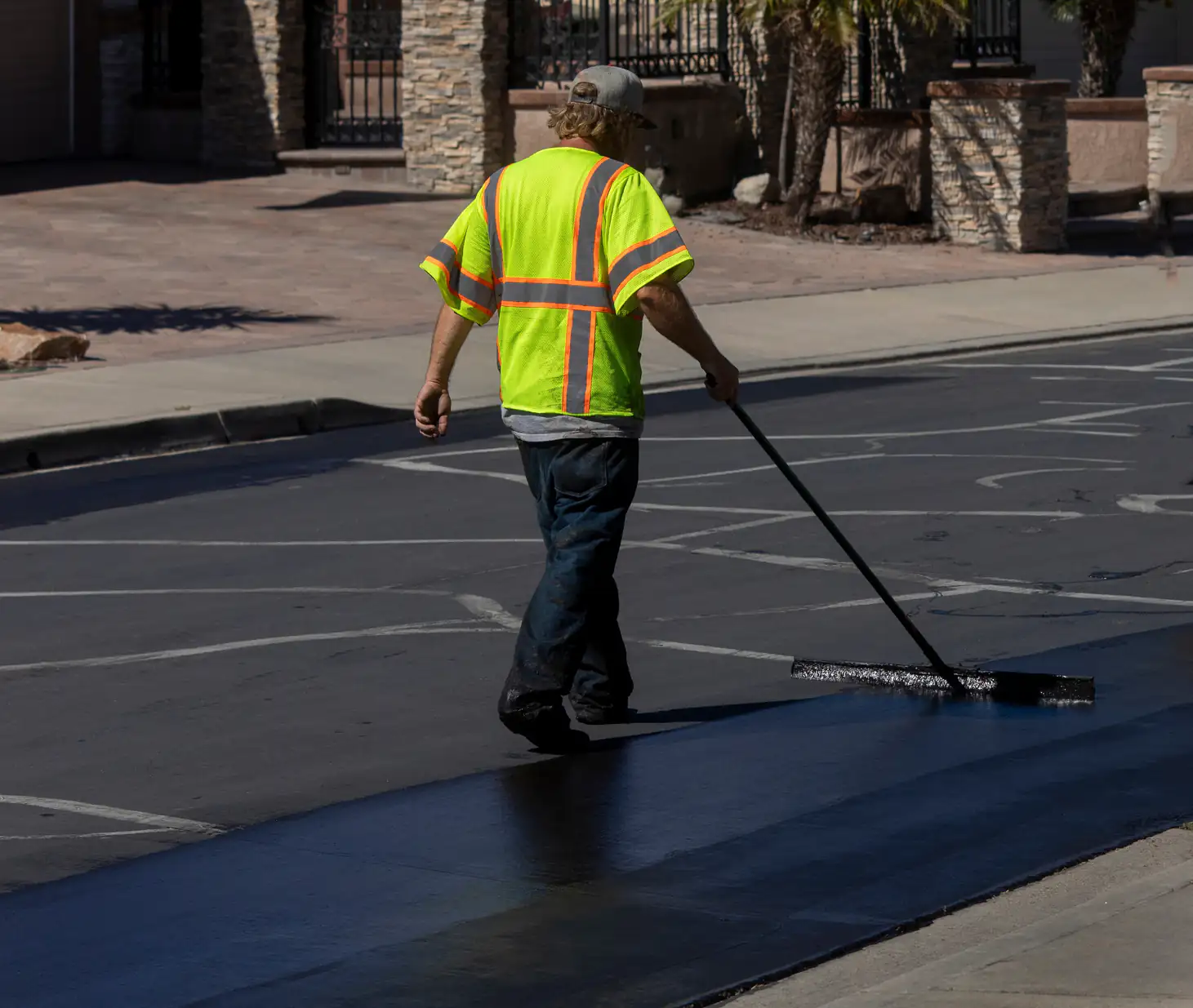
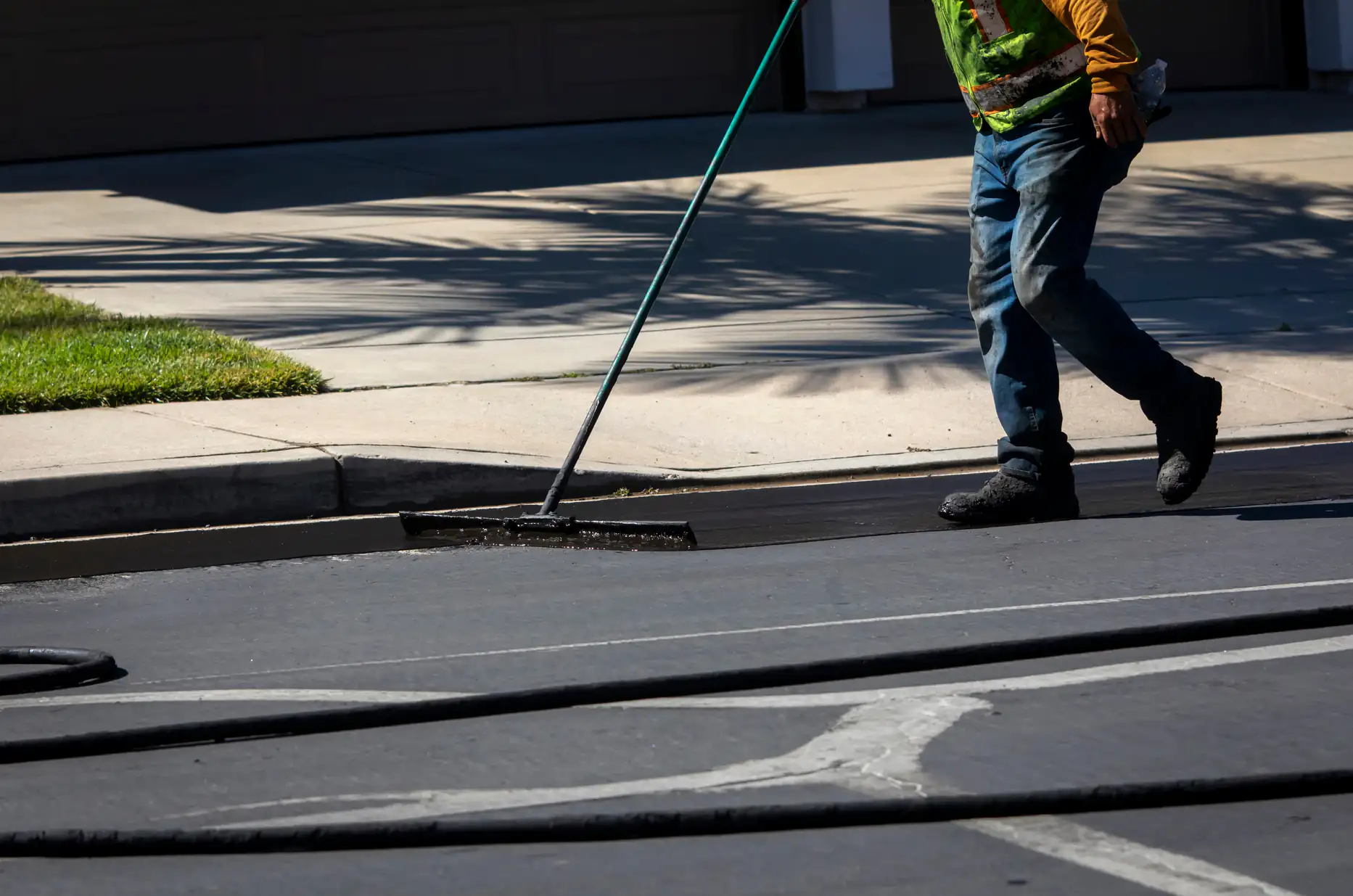
Then we apply two coats of high-grade sealer using professional equipment. We’re not brushing it on with a broom or spraying it thin to save material. Each coat goes down evenly, and we let the first coat dry before applying the second.
Timing matters here. We only seal when temperatures stay between 50°F and 85°F, humidity is low, and there’s no rain in the 48-hour forecast. Sealing outside those conditions leads to poor curing, premature failure, and wasted money. After application, your driveway needs 24 to 48 hours to cure before you can drive on it. We’ll give you an exact timeline based on weather conditions.
Ready to get started?
Sealcoating in Somerset County runs $120 to $170 for a 400-square-foot driveway, $180 to $255 for 600 square feet, and $300 to $425 for 1,000 square feet. Pricing varies based on driveway condition, how much prep work is needed, and whether repairs are required before sealing.
You’re not just paying for material. You’re paying for proper surface prep, crack filling, two coats of high-solids sealer, and application during optimal weather conditions. Cheap sealcoating skips steps, uses inferior materials, or applies sealer when it’s too cold, too hot, or too humid. That work fails within a year, and you’re back to square one.
Our sealer carries a two-year written guarantee against wear-off, peeling, or flaking on residential driveways. Most contractors offer one year, if they offer anything at all. We also handle the prep work that makes the difference between sealcoating that lasts and sealcoating that doesn’t.
Somerville’s climate is tough on asphalt. You need a seal that can handle freeze-thaw cycles, summer heat, and the humidity that comes with living in New Jersey. That requires better materials, experienced application, and timing that doesn’t cut corners to fit a schedule.
Seal your driveway every two to three years to maintain protection and extend its lifespan. New asphalt needs six to twelve months to cure before the first application, so don’t seal it right after installation.
After that, the timeline depends on traffic, weather exposure, and how well the previous sealcoating was applied. Driveways that see heavy use or sit in full sun all day may need sealing closer to every two years. Driveways in shaded areas with lighter traffic can stretch to three years.
If you’re seeing faded color, small cracks forming, or water soaking into the surface instead of beading up, it’s time to reseal. Waiting too long means water infiltration and damage that sealcoating can’t reverse. At that point, you’re looking at repairs before you can even seal.
Late spring through early fall gives you the best conditions for sealcoating in New Jersey. You need temperatures between 50°F and 85°F, low humidity, and at least 48 hours without rain.
Summer is ideal because temperatures stay consistent and humidity drops during dry stretches. Early fall works too, as long as you finish before temperatures start dipping at night. Sealing too late in the season means the sealer won’t cure properly before winter hits, which leads to premature failure.
Avoid sealing in early spring when overnight temperatures still drop near freezing, and skip late fall entirely. The sealer needs warmth to cure and bond to the asphalt. Cold weather slows curing, traps moisture, and creates a weak seal that won’t last through the first winter. If a contractor offers to seal your driveway in November or March, find someone else.
Professional sealcoating lasts two to three years in New Jersey’s climate, depending on traffic, weather exposure, and material quality. High-solids sealer with polymer modification holds up longer than standard or budget products.
Driveways that see daily use from multiple vehicles, sit in full sun, or experience heavy freeze-thaw cycles wear faster. Shaded driveways with lighter traffic can stretch closer to three years between applications. The key is resealing before the protection wears off completely.
If you wait until the sealer is completely gone, water has already started infiltrating the asphalt and causing damage. At that point, you’re not just maintaining – you’re repairing. Regular sealcoating every two to three years keeps your driveway in good shape and avoids the bigger expenses that come with neglect. Think of it like changing your oil – skip it too long, and you’re replacing the engine.
You can seal your own driveway, but most DIY jobs fail within a year because of poor surface prep, low-quality materials, or bad timing. Professional contractors have commercial-grade equipment, high-solids sealer, and experience reading weather conditions.
The biggest mistakes homeowners make are skipping crack filling, not cleaning the surface thoroughly, applying sealer when it’s too cold or humid, and using one thin coat instead of two proper coats. Store-bought sealer also contains fewer solids than professional products, which means it wears off faster and protects less.
If your driveway is small, in good condition, and you’re confident in your ability to prep and apply correctly, DIY can work. But if you’re dealing with cracks, drainage issues, or a larger driveway, hiring a contractor saves you time and gets better results. A professional job costs more upfront but lasts longer and actually protects your asphalt. A failed DIY job costs you the materials, your time, and the money to redo it properly.
Rain within the first 24 to 48 hours after sealing can ruin the application. The sealer needs time to cure and bond to the asphalt, and water interferes with that process. Light rain might cause streaking or uneven curing, while heavy rain can wash the sealer off completely.
That’s why we check the forecast before scheduling sealcoating work. We need at least 48 hours of dry weather after application to ensure proper curing. If rain shows up in the forecast, we reschedule. Sealing anyway and hoping for the best is how you end up with a failed job.
If it does rain before the sealer cures, the damage depends on timing and intensity. Rain after 24 hours might leave some streaks but won’t destroy the seal. Rain within the first few hours can wash it away entirely, and you’ll need to reapply. This is why working with a contractor who monitors weather and schedules properly matters. You’re not just paying for materials and labor – you’re paying for someone who knows when not to seal.
No, sealcoating does not fill cracks. It seals the surface and protects against water and weather, but it doesn’t repair structural damage. Cracks need to be filled separately before sealcoating, or they’ll keep growing underneath the sealer.
Crack filling uses a rubberized material that flexes with temperature changes and keeps water out. We clean the crack, fill it properly, and let it set before applying sealer over the top. Skipping this step means you’re sealing over a problem that’s going to get worse.
Some contractors apply sealer over cracks without filling them first, either to save time or because they don’t know better. That’s not protecting your driveway – it’s hiding damage temporarily. Within months, those cracks reappear, water gets in, and the damage spreads. If a contractor tells you sealcoating will fix your cracks, they’re either confused or dishonest. Proper driveway maintenance includes crack filling before sealcoating, not instead of it.