
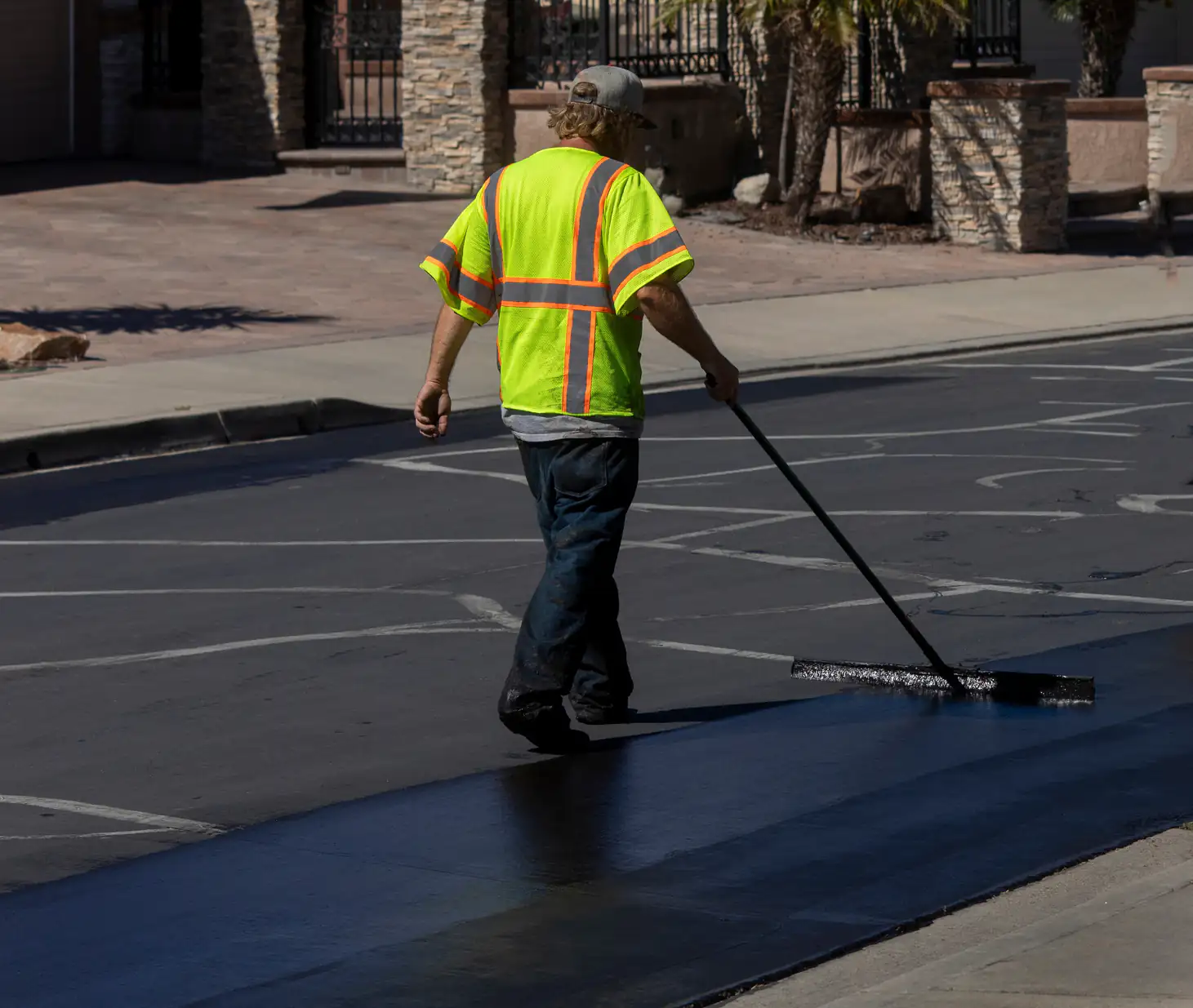
Hear from Our Customers
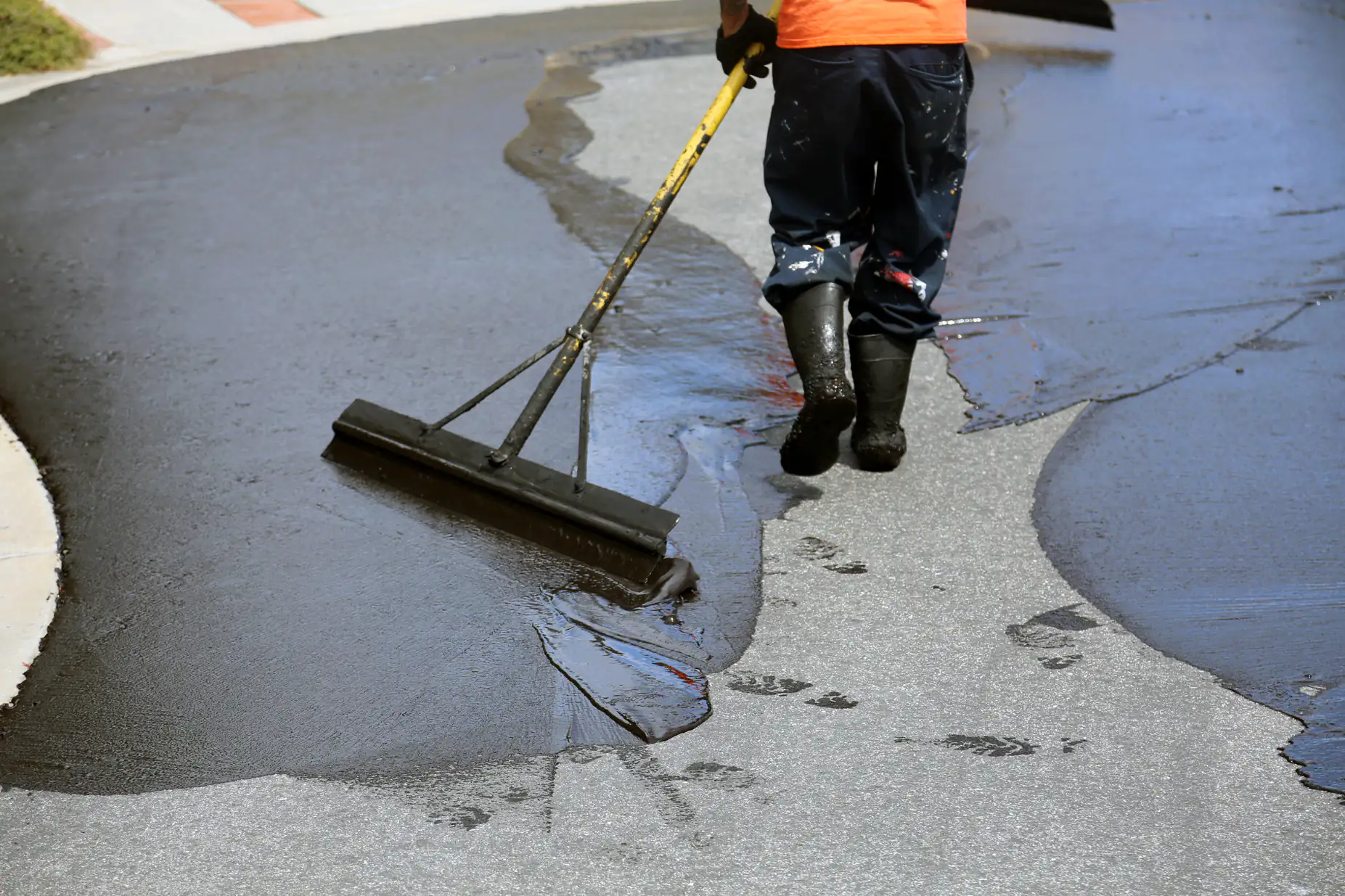
Water stops finding its way into cracks. That means no more expansion during freezing temperatures, no more widening gaps, and no more foundation damage that costs thousands to fix.
Your asphalt stays flexible instead of brittle. Road salt and chemicals wash off instead of eating through the surface. UV rays slow their damage instead of accelerating it.
The result is a driveway that lasts 25 years instead of 15. That’s the difference between one major investment and two. Between routine maintenance and emergency repairs. Between a $300 sealcoating job every few years and a $5,000 replacement you weren’t planning for.
You also get the curb appeal back. A freshly sealed driveway looks clean and maintained, which matters whether you’re selling soon or just tired of your property looking worn down. It’s the first thing people see when they pull up, and right now it’s probably not sending the message you want.
We’ve been handling asphalt work across Newark, East Orange, Morristown, and surrounding areas for over 20 years. We’re a family-owned operation, fully licensed and insured, and we’ve seen what happens to driveways that skip fall sealcoating before winter hits.
North Jersey weather is brutal on asphalt. The freeze-thaw cycles, the road salt, the long summers—it all adds up faster here than in other parts of the country. We use commercial-grade sealants because we know what holds up and what doesn’t.
Our owner is on-site for your project. Not just at the start, but throughout. You get clear upfront pricing, a 5-year warranty on the work, and a 24-48 hour callback guarantee when you request a quote online. No surprises, no runaround.
First, we inspect the entire surface. We’re looking for cracks, potholes, drainage issues, and any areas where the base might be compromised. If there’s damage, we handle crack filling and patching before sealcoating—otherwise you’re just covering up problems that will get worse.
Next, we clean the driveway completely. Oil stains, debris, vegetation growing in cracks—it all has to go. Sealant won’t bond properly to a dirty surface, and that’s where most DIY jobs and cheap contractors fail.
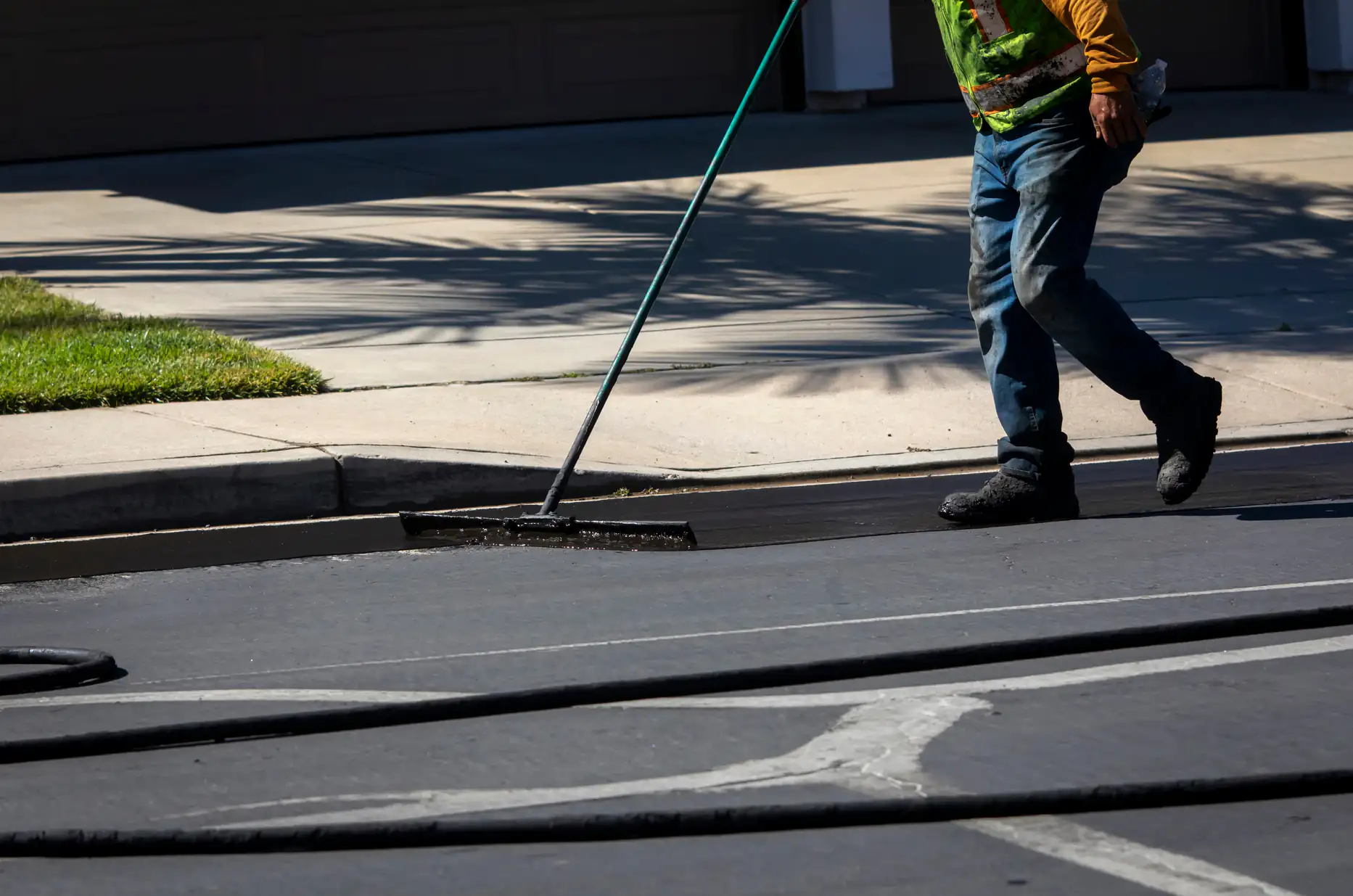
Then we apply two coats of commercial-grade sealer using professional equipment. We’re not brushing it on with a Home Depot kit. The material goes on at the right thickness, at the right temperature, and we give it proper curing time between coats.
The whole process takes one to two days depending on size and condition. You’ll need to stay off the driveway for 24-48 hours while it cures. After that, you’re set for the next few years with a surface that’s protected against everything Newark weather throws at it.
Ready to get started?
Driveway sealing in Newark typically runs $0.30 to $0.60 per square foot. For a standard two-car driveway, that’s $200 to $500 including cleaning, crack filling, and two coats of premium sealer. If you need significant repairs first, the cost goes up—but it’s still a fraction of what replacement costs.
You’re paying for materials that actually last. Commercial-grade sealant costs more than the stuff you can buy retail, but it creates a thicker barrier and holds up to traffic and weather. You’re also paying for proper surface prep, which is the difference between sealcoating that lasts two years and sealcoating that lasts five.
Fall is the ideal time for this work in New Jersey. Temperatures are moderate, conditions are dry, and the sealer has time to cure properly before winter. If you wait until spring, you’re assessing damage instead of preventing it. And spring scheduling fills up fast once everyone sees what winter did to their driveway.
The return is straightforward. Spend a few hundred dollars now, or spend a few thousand later when water infiltration damages your base and you need structural repairs. Sealcoating every three to four years extends your driveway’s lifespan from 15 years to 25-plus years. That’s real money saved over time.
Every two to three years is the standard recommendation for Newark and surrounding areas. New Jersey’s climate is harder on asphalt than most regions because of the freeze-thaw cycles and road salt exposure.
If your driveway gets heavy use or sits in full sun most of the day, you might need to seal it every two years. If it’s lightly used and mostly shaded, you can stretch it to three or even four years. The test is simple: when water stops beading on the surface and starts soaking in, it’s time to reseal.
Waiting too long means you’re not just losing protection—you’re letting small cracks turn into big ones. Once water gets into the base layer and freezes, you’re looking at structural damage that sealcoating can’t fix. At that point, you’re into repair territory, which costs significantly more.
Nothing. The terms are used interchangeably. Both refer to applying a protective coating to asphalt pavement to shield it from water, UV rays, chemicals, and general wear.
Some contractors use “sealcoating” when talking about the professional process and “sealing” when referring to DIY products, but technically they mean the same thing. What matters more is the quality of the material and how it’s applied.
Commercial-grade sealcoating products are thicker and more durable than retail versions. They also require professional equipment to apply correctly. A homeowner with a squeegee and a bucket isn’t getting the same result as a contractor with proper tools and experience, even if they’re both technically “sealing” the driveway.
You can do it yourself, but the results usually don’t last as long or protect as well. The retail sealant products are thinner and don’t bond as effectively as commercial-grade materials. Surface prep is also harder than it looks—if you don’t clean properly or miss damage during inspection, the sealant won’t perform.
Most DIY sealcoating jobs last one to two years before they need to be redone. Professional work typically lasts three to five years. Over time, you’re not saving money—you’re spending more on materials and your own labor for inferior results.
The bigger risk is missing underlying problems. If you seal over cracks without filling them properly, or if there’s base damage you didn’t catch, you’re just delaying more expensive repairs. We know what to look for and how to address it before applying sealant.
Plan on staying off your driveway for 24 to 48 hours after the final coat is applied. Curing time depends on temperature, humidity, and how thick the application is.
In ideal conditions—temperatures between 50 and 85 degrees with low humidity—sealant can be dry to the touch in four to eight hours. But “dry to the touch” doesn’t mean it’s fully cured. You need at least 24 hours before light foot traffic and 48 hours before driving on it.
If it’s cooler or more humid, add extra time. Rushing it means you risk tire marks, scuffing, and uneven curing that weakens the protective layer. Fall weather in Newark is usually good for sealcoating because temperatures are moderate and conditions are drier than spring. Just avoid scheduling right before a rainstorm.
No. Sealcoating protects the surface—it doesn’t repair structural damage. If your driveway has cracks or potholes, those need to be filled and patched before sealant goes on.
Crack filling uses a rubberized material that flexes with temperature changes and prevents water from getting into the base. Potholes require removing damaged asphalt, compacting the base, and patching with new hot mix asphalt. Both of these repairs should happen first, then sealcoating goes over everything to lock it all in.
If you just sealcoat over cracks, you might hide them temporarily, but they’ll continue to expand underneath. Water will still get in, freeze-thaw cycles will still cause damage, and within a year or two you’ll have bigger problems than you started with. Proper sequencing matters: repair first, then protect.
Fall is ideal. You get moderate temperatures, lower humidity, and enough time for the sealant to cure properly before winter weather arrives. Late August through October is the sweet spot in Newark and surrounding areas.
Spring is the second-best option, but scheduling fills up quickly because everyone’s calling after they see winter damage. You’re also dealing with more unpredictable weather—late frosts, spring rain, temperature swings that affect curing time.
Summer works, but avoid the hottest days. When temperatures climb above 85 or 90 degrees, sealant can dry too quickly and not bond properly. You also can’t use your driveway during the curing period, which is harder when kids are home and you’re in and out more often.
Winter is out. Sealant needs temperatures above 50 degrees to cure correctly. Applying it in cold weather means it won’t bond, won’t protect, and won’t last. If you’re reading this in winter and your driveway needed sealing last fall, your best move is scheduling for spring before slots fill up.