
Hear from Our Customers
Your driveway stops bleeding money. That’s the short version.
Every winter in Netcong, water seeps into tiny cracks in your asphalt. When temperatures drop, that water expands by 9%. The crack widens. Spring comes, more water gets in, and the cycle repeats. Within a few years, you’re looking at a $5,000 replacement job instead of a $400 maintenance appointment.
Professional driveway sealcoating creates a waterproof barrier that stops this destruction before it starts. The sealer flexes with temperature changes instead of cracking. It blocks UV rays that dry out and weaken your asphalt. It repels oil stains, gas spills, and de-icing salt.
Most driveways in Morris County last about 15 years without protection. With proper sealcoating every three years, that same driveway can last 25 to 30 years. The math is simple: spending $1,200 to $1,600 over 24 years beats spending $5,000 to repave.
Your driveway also looks better. A fresh sealcoat restores that deep black finish. Cracks disappear. The surface becomes easier to clean. If you’re thinking about selling, curb appeal matters more than most homeowners realize.
We’ve been handling asphalt and concrete work in Morris, Sussex, and Somerset Counties for over 20 years. Platinum Paving is a third-generation, family-owned contractor based right here in Morris County.
We know what New Jersey weather does to pavement. We’ve seen what happens when homeowners skip maintenance or hire the cheapest crew they can find. We’ve also seen driveways that are 30 years old and still look great because someone took care of them properly.
Our crews use commercial-grade sealers, not the watered-down stuff you’ll find at a big-box store. We apply two coats with professional spray equipment. We don’t rush the job to get to the next one. And we back our sealcoating work with a two-year warranty against peeling or flaking.
Netcong homeowners deal with the same freeze-thaw cycles, heavy snow, and temperature swings that destroy driveways across North Jersey. We’ve been protecting asphalt from those conditions since before most of our competitors were in business.
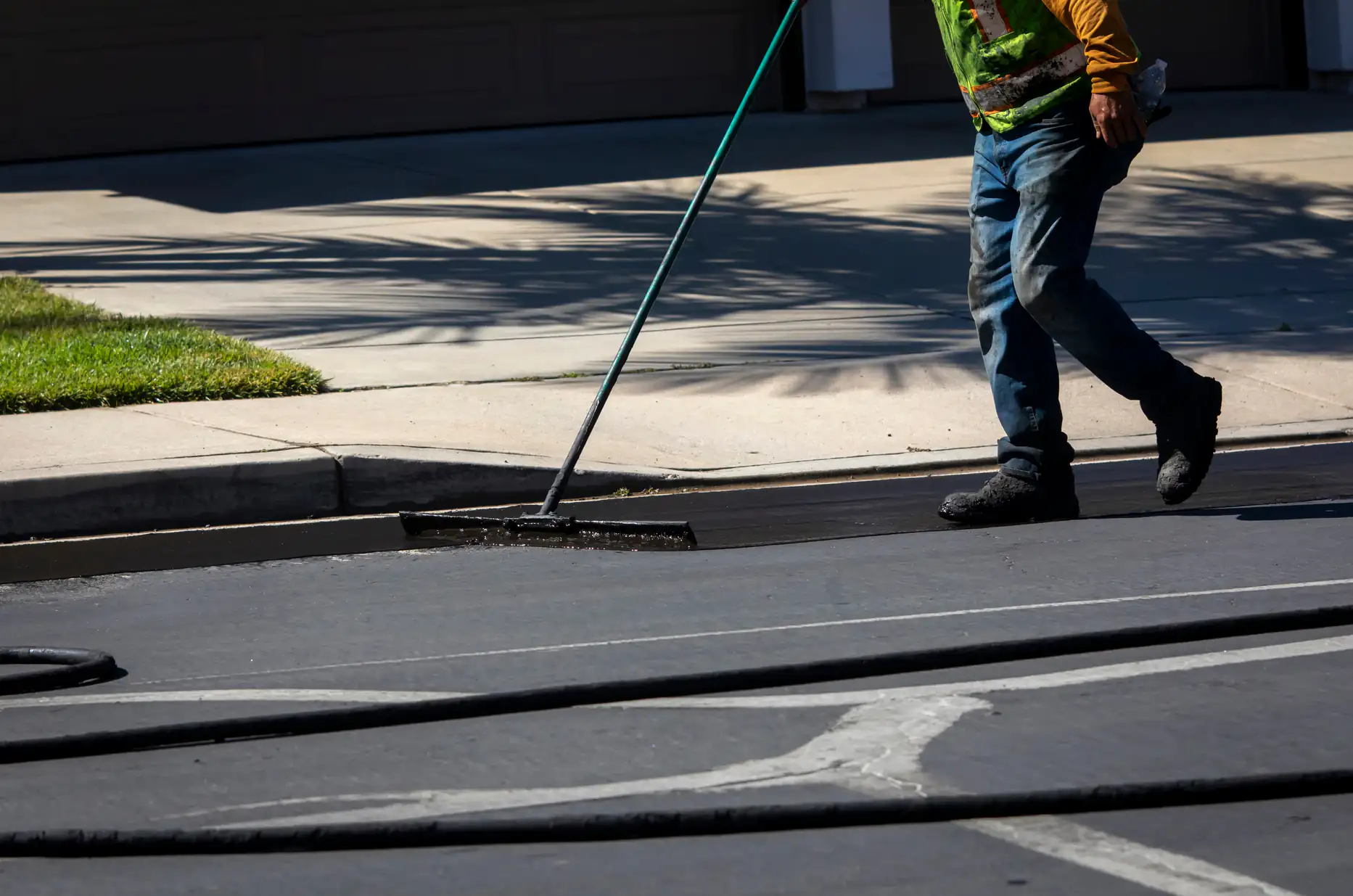
First, we clean your driveway. That means power washing to remove dirt, oil, debris, and any loose material. Sealer won’t bond to a dirty surface, so this step matters more than most people think.
Next, we fill cracks. Any crack wider than a quarter-inch gets filled with hot rubberized crack filler. This prevents water from getting underneath the new sealcoat. If we skip this step, you’re wasting your money on the sealer.
Then we apply the first coat of sealer. We use professional spray equipment to ensure even coverage and the right thickness. Too thin, and it won’t protect. Too thick, and it can peel. We add sand to the mix for better traction and durability.
After the first coat dries (usually 24 hours), we apply the second coat. Two coats are standard in New Jersey because of our climate. One coat might work in Arizona. It doesn’t work here.
Finally, we let everything cure. You’ll need to stay off the driveway for 24 to 48 hours depending on temperature and humidity. After that, your driveway is protected for the next three to four years.
The whole process takes two to three days from start to finish. Most of that time is just waiting for coats to dry.
Ready to get started?
A standard residential driveway sealcoating job in Netcong runs between $300 and $600 depending on size and condition. That includes power washing, crack filling, two coats of commercial-grade sealer, and our warranty.
Most driveways in Morris County are between 400 and 800 square feet. At $0.15 to $0.40 per square foot, you’re looking at $240 to $320 for a typical 600-square-foot driveway. If your driveway has significant cracking or damage, the price goes up because we’re doing more prep work.
Here’s what matters: the cost of sealing your driveway every three years is a fraction of what you’ll pay to replace it. A full driveway replacement in New Jersey costs between $3,000 and $8,000. Sealcoating four times over 12 years costs around $1,600. The choice is obvious.
We don’t play games with pricing. When you request a quote, we’ll come out, measure your driveway, assess the condition, and give you a clear number. No surprises. No hidden fees. No pressure.
Timing also matters. Fall is the best season for sealcoating in New Jersey. Temperatures are moderate, conditions are dry, and your driveway gets maximum protection before winter hits. Spring gets busy fast, so if you’re thinking about it, schedule early.
Every three years is the standard recommendation for residential driveways in New Jersey. That timeline assumes normal wear and tear from regular vehicle traffic and typical exposure to weather.
If your driveway sees heavier use—multiple vehicles, frequent turning, commercial traffic—you might need to seal it every two years. If it’s a second driveway or rarely used, you can stretch it to four years.
The key is to seal before you see major deterioration. Once your driveway starts showing significant cracking, fading to gray, or surface raveling (where the aggregate starts coming loose), you’ve waited too long. At that point, sealcoating becomes less effective because the damage is already done.
New driveways need their first sealcoat six to twelve months after installation. This gives the asphalt time to cure properly. Sealing too early can trap oils in the asphalt and cause problems down the road.
Cheap sealer is mostly water. Professional-grade sealer has a higher concentration of asphalt emulsion, which is what actually protects your driveway.
Big-box store sealers typically contain 30% to 40% solids. Professional products contain 50% to 60% solids. That difference means better coverage, longer-lasting protection, and fewer coats needed to do the job right.
Professional sealers also include additives that improve flexibility, adhesion, and resistance to gas and oil. We add sand to our mix for better traction and durability. DIY products usually don’t include these enhancements.
Application matters just as much as the product. Brush or squeegee application (the DIY method) creates an uneven coat with thin spots that fail quickly. Professional spray equipment delivers consistent thickness and better penetration into the asphalt surface. The result lasts three to four years instead of one to two.
You can seal your own driveway, but most homeowners who try it end up disappointed with the results. The product quality is lower, the application is uneven, and the protection doesn’t last.
The bigger issue is preparation. If you don’t clean the surface properly or fill cracks correctly, the sealer won’t bond. It’ll peel off in sheets within a year. Professional equipment makes a significant difference in both cleaning and application.
There’s also the time factor. A DIY sealcoating job takes most homeowners an entire weekend. You’ll spend hours cleaning, filling cracks, applying sealer, and cleaning up. Then you’re stuck with leftover materials and equipment you’ll never use again.
We finish the same job in a few hours of actual work time. We have the right equipment, the right products, and the experience to spot problems before they become expensive repairs. We also warranty our work, which means if something goes wrong, we fix it. If your DIY job fails, you’re starting over from scratch.
One coat isn’t thick enough to handle New Jersey winters. Two coats provide the protection your driveway needs to survive freeze-thaw cycles, UV exposure, and chemical damage from salt and de-icing products.
The first coat penetrates into the asphalt and fills small surface voids. It creates the base layer of protection. The second coat builds thickness and provides the waterproof barrier that keeps moisture out.
In warmer climates with less severe weather, one coat might be adequate. In New Jersey, where temperatures swing from below zero to above 90 degrees and we get heavy snow, ice, and salt exposure, one coat fails too quickly.
Think of it like paint. One coat of paint on your house might look okay initially, but it won’t last. Two coats provide durability. The same principle applies to driveway sealer. Cutting corners on the second coat means you’ll be resealing sooner, which costs more in the long run.
Fall is ideal for driveway sealcoating in Netcong and throughout Morris County. September and October offer moderate temperatures, low humidity, and dry conditions that help sealer cure properly.
You need temperatures above 50 degrees during application and for at least 24 hours afterward. You also need dry weather—no rain in the forecast for 24 to 48 hours. Fall typically provides these conditions more consistently than spring.
Spring is the second-best option, but it comes with challenges. Everyone wants their driveway sealed in spring, so contractors get booked quickly. Spring weather in New Jersey is also unpredictable. A surprise rainstorm can ruin a fresh sealcoat job.
Summer works, but extreme heat can make application difficult and cause sealer to dry too quickly. Winter is out of the question—sealer won’t cure in cold temperatures.
If you’re planning to seal your driveway, schedule in late summer or early fall. Your driveway gets maximum protection before winter, and you avoid the spring rush.
Professional sealcoating lasts three to four years on a residential driveway in New Jersey with normal use. That timeline assumes proper application, quality materials, and typical exposure to weather and traffic.
Several factors affect longevity. Heavy traffic wears down sealer faster. If multiple vehicles use your driveway daily, or if you have delivery trucks making frequent turns, expect closer to two to three years. Light use can extend protection to four years or slightly longer.
Climate plays a major role. New Jersey’s freeze-thaw cycles, UV exposure, and salt use are hard on sealcoating. Driveways in southern states where weather is less severe can go longer between applications.
The quality of the original application matters most. A rushed job with cheap materials might only last one to two years. Professional application with commercial-grade products gives you the full three to four years of protection.
When your driveway starts fading from black to gray, or you notice water no longer beads on the surface, it’s time to reseal. Don’t wait until you see significant cracking or surface damage. Preventive maintenance always costs less than repairs.