
Hear from Our Customers
You know what happens every spring in Millington. Those hairline cracks you saw last fall are now potholes. Water got in, froze overnight, expanded, and destroyed your asphalt from the inside out.
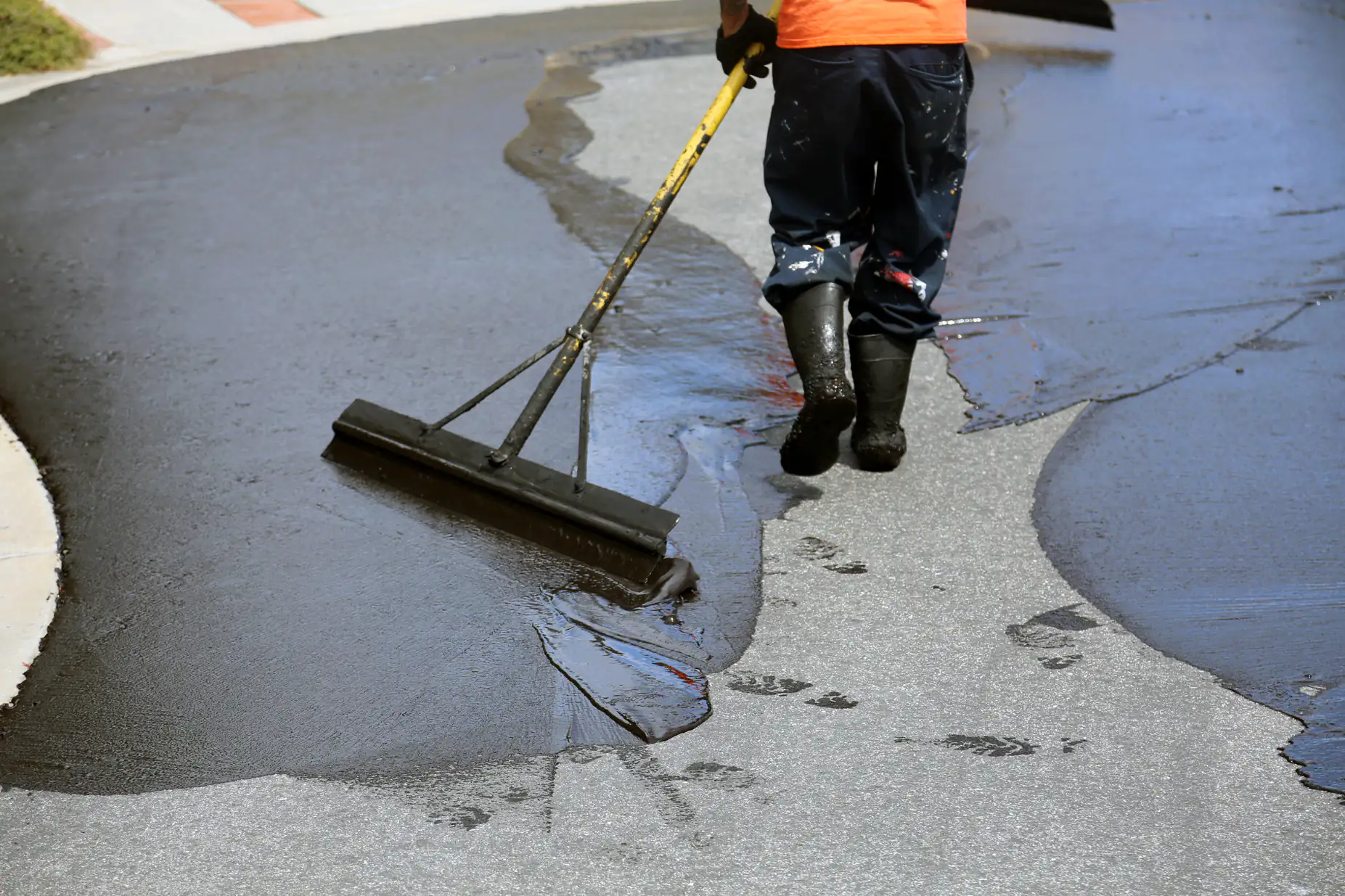
Professional driveway sealing stops that cycle before it starts. The sealcoat creates a waterproof barrier that keeps moisture out of your asphalt. No water penetration means no freeze damage, no widening cracks, and no expensive spring repairs.
You’re looking at $300-500 every few years for sealcoating versus $5,000+ for total replacement. The math isn’t complicated. Regular sealing extends your driveway’s lifespan from 15 years to 25+ years in New Jersey’s climate.
Your driveway also looks better. The fresh black finish restores that new-asphalt appearance and makes snow removal easier all winter. Smooth sealed surfaces let you sweep and shovel more effectively than rough, deteriorated asphalt.
We work exclusively in Morris, Somerset, and Sussex Counties. We understand what Somerset County winters do to asphalt because we see it every day in Millington, Basking Ridge, and Bernardsville.
You’re not getting a crew that learned paving in a different climate. Our team knows the temperature swings, the freeze-thaw patterns, and the exact materials that hold up in North Jersey conditions.
We use a proprietary sealcoating product with over 50% solids and polymer modification. It comes with a two-year written guarantee against wear-off, peeling, or flaking. Most contractors only offer one year because their materials can’t handle our winters.
You get upfront pricing before we start, and we stick to our schedule. No surprise charges, no delays, no excuses.
We start by cleaning your entire driveway surface. All debris, dirt, and vegetation gets removed so the sealcoat bonds properly to your asphalt. This step matters more than most homeowners realize.
Next comes crack filling and pothole repair. We fix damaged areas before sealing because sealcoat isn’t a repair product—it’s a protective coating. Any structural issues get addressed first with proper materials and techniques.
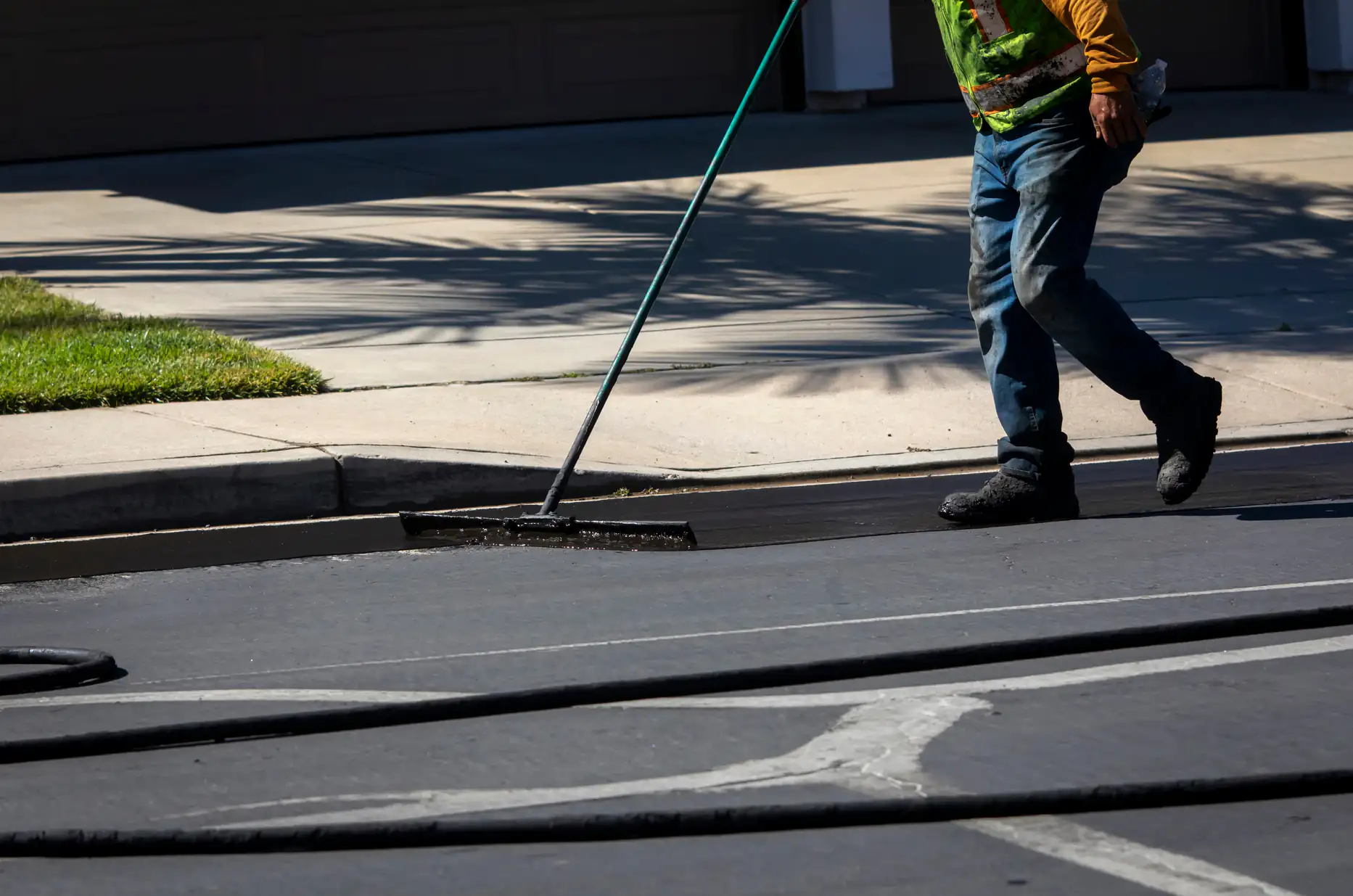
Then we apply the sealcoat material in two coats for residential driveways. The first coat penetrates and bonds. The second coat creates that protective layer that shields your asphalt from water, UV rays, and chemicals. We’re not spraying one thin coat and calling it done.
The final step is curing time. Your driveway needs 24-48 hours to dry completely depending on temperature and humidity. We’ll tell you exactly when you can drive on it again. No guessing, no assumptions.
The entire process typically takes one day for most residential driveways in Millington, weather permitting.
Ready to get started?
Your service includes complete surface cleaning, crack filling up to ¼ inch, minor pothole patching, and two coats of our proprietary polymer-modified sealant. We’re not cutting corners with single-coat applications or watered-down materials.
Somerset County’s climate demands specific timing. We seal driveways between late spring and early fall when temperatures stay consistently above 50 degrees. June through September gives us the best curing conditions. You don’t want sealcoating applied in cold weather—it won’t cure properly and you’ll have problems within months.
Your driveway should be resealed every 2-3 years depending on traffic and weather exposure. That schedule keeps the protective layer intact and prevents water penetration. Think of it like changing your oil—regular maintenance costs less than engine replacement.
We also handle larger projects beyond residential driveways. Parking lots, commercial properties, and municipal facilities throughout Morris and Somerset Counties. The same materials, same process, same guarantee.
You’ll receive care instructions after we finish. Simple stuff like avoiding sharp turns for the first few days and keeping heavy vehicles off until fully cured. Following those guidelines ensures you get the full two-year warranty coverage.
Most residential driveways in Millington run between $300-600 for professional sealcoating, depending on size and condition. You’re looking at roughly $1.25-1.50 per square foot for materials and labor combined.
That price includes surface cleaning, crack filling, repairs, and two coats of sealant. If someone quotes you significantly less, they’re either using inferior materials, applying only one coat, or diluting the sealer with excessive water. All three options leave you with a substandard result that won’t last through one New Jersey winter.
The cost breaks down to about $100-200 per year when you factor in the 2-3 year resealing schedule. Compare that to $5,000+ for complete driveway replacement and the value becomes obvious. You’re spending pennies now to avoid thousands later.
Late spring through early fall gives you the best results in Somerset County. You need consistent temperatures above 50 degrees for proper curing, which typically means June through September here in Millington.
Sealcoating applied in cold weather won’t cure correctly. The material needs warmth to bond and harden into that protective shell. Apply it too early in spring or too late in fall and you risk peeling, flaking, or poor adhesion.
You also want dry conditions for at least 24-48 hours after application. Summer months give you the most predictable weather windows. We monitor forecasts closely and won’t start your project if rain is coming. You’re better off waiting a few days than rushing a job that won’t hold up.
New asphalt is different. Wait at least 90 days before sealing a brand new driveway. The asphalt needs time to cure and off-gas before you trap it under sealant.
Quality sealcoating lasts 2-3 years in New Jersey’s climate with proper application and materials. Our polymer-modified sealer comes with a two-year guarantee against wear-off, peeling, or flaking on residential driveways.
Several factors affect longevity. Traffic volume matters—a driveway with four cars daily wears faster than one with light use. Weather exposure plays a role too. Driveways in full sun fade quicker than shaded areas, though sun also helps melt snow in winter.
The biggest factor is material quality. Sealers with high solids content and polymer additives outlast basic asphalt emulsion products. We use a proprietary formula with over 50% solids specifically because it handles Somerset County’s freeze-thaw cycles better than standard options.
You’ll know it’s time to reseal when the black color fades to gray and you start seeing small cracks appear. Don’t wait until you have major damage. Staying on a regular 2-3 year schedule prevents those expensive repair situations.
Yes, but we repair the damage first before applying sealcoat. Sealcoating is a protective layer, not a repair product. It won’t fill large cracks or fix structural problems on its own.
We start by evaluating your driveway’s condition. Cracks up to ¼ inch get filled with rubberized crack filler as part of the standard sealing service. Larger cracks and potholes need proper patching with hot asphalt before we seal. That’s additional work, but it’s necessary for a lasting result.
If your driveway has severe alligator cracking or major foundation issues, sealcoating won’t help. At that point you’re looking at resurfacing or replacement. We’ll tell you honestly if your driveway is beyond sealing—we’re not going to take your money for a service that won’t solve your problem.
Most driveways in Millington fall somewhere in the middle. Some cracking, maybe a small pothole or two, but overall solid structure. Those are perfect candidates for repair and sealcoating. You get several more years of life for a reasonable investment.
Material quality and application method separate professional work from cheap jobs. Budget contractors cut costs by diluting sealer with water, skipping the second coat, or using low-grade asphalt emulsion that breaks down quickly.
Our proprietary sealer contains over 50% solids with polymer modification. That means more actual protective material and less filler. Cheap sealers might have 30-40% solids diluted with extra water. They go on thin, dry gray instead of black, and fail within a year.
Application matters just as much. We apply two coats on residential driveways because one coat doesn’t provide adequate protection in New Jersey’s climate. The first coat penetrates and bonds. The second coat builds that waterproof barrier. Single-coat applications save the contractor time and material but leave you with inferior protection.
You also get surface prep with professional service. We clean thoroughly and repair damage before sealing. Cheap jobs skip those steps, which means the sealcoat doesn’t bond properly and fails prematurely. You end up paying twice—once for the cheap job, then again for someone to do it right.
Concrete driveways need sealing too, but with different products and schedules than asphalt. Concrete sealers protect against moisture penetration, freeze-thaw damage, and surface deterioration just like asphalt sealcoating.
The main difference is frequency. Concrete typically needs resealing every 3-5 years instead of 2-3 years for asphalt. Concrete is more durable but still vulnerable to Somerset County’s winter conditions without proper protection.
We use penetrating sealers for concrete rather than topical coatings. These sealers soak into the concrete and create a water-repellent barrier from within. They don’t change the appearance much—you won’t get that fresh black look like with asphalt—but they provide excellent protection.
Stamped or decorative concrete needs sealing even more than plain concrete. The patterns and colors fade without protection, and you lose that investment quickly. We handle both standard and decorative concrete sealing throughout Millington and Somerset County with appropriate products for each application.