
Hear from Our Customers
Your driveway faces 60 to 80 freeze-thaw cycles every winter here in Morris County. Water seeps into hairline cracks, freezes, expands with up to 30,000 psi of pressure, and literally bursts the asphalt apart from the inside. That’s why you see small cracks in November turn into quarter-inch gaps by March.
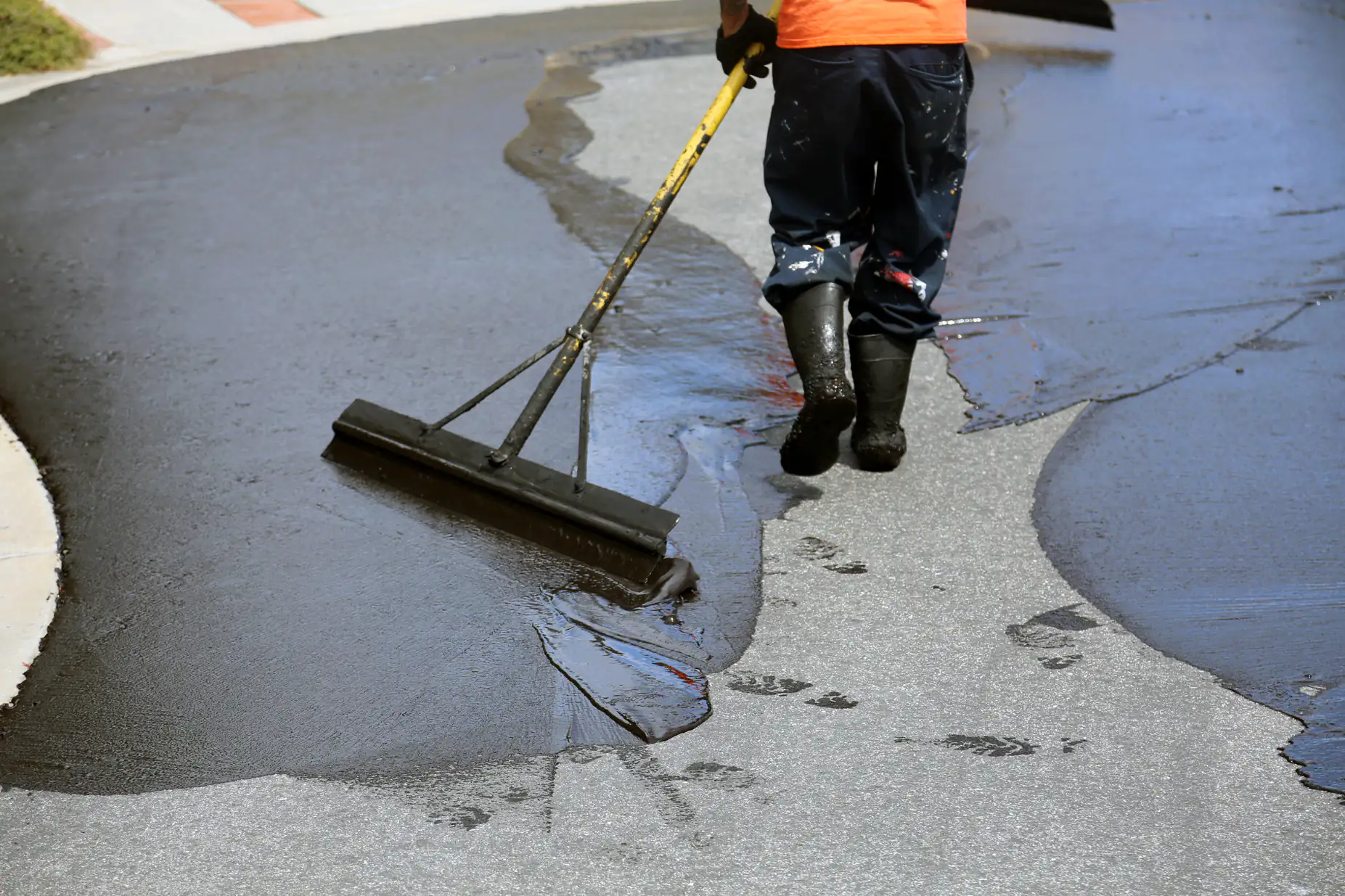
Sealcoating creates a protective barrier that keeps water out before it can do that damage. It’s not just about looks, though a freshly sealed driveway does make your property look sharp. It’s about stopping deterioration before it starts.
The math is straightforward. Sealing costs $200 to $500 every few years. Replacing a failed driveway costs $5,000 or more. And when you seal on schedule, you’re extending your asphalt’s life by 10 to 15 years according to pavement maintenance studies.
You’re also making winter easier on yourself. Sealed surfaces shed snow better, they’re easier to shovel or plow, and the dark surface absorbs heat that helps melt ice faster than untreated asphalt.
Platinum Paving is a third-generation, family-owned contractor that’s been working in Madison and throughout Morris County for over 20 years. We’re not a franchise or a seasonal crew. We’re local, and we understand exactly what New Jersey weather does to asphalt.
Madison’s soil conditions, temperature swings, and the amount of road salt that gets tracked onto your driveway all factor into how we approach your sealcoating job. We’ve seen what works and what fails, and we only use methods and materials that hold up in this climate.
Every job comes with a five-year warranty because we stand behind our work. You’ll also get a callback within 24 to 48 hours when you request a quote. No runaround, no disappearing after the deposit clears.
First, we inspect your driveway for cracks, drainage issues, and any structural problems that need fixing before we seal. Sealcoating won’t fix existing damage, it prevents future damage. So if you’ve got cracks wider than a quarter-inch, we’ll fill those first with hot rubberized crack filler that flexes with temperature changes.
Next, we clean the surface completely. Oil stains, dirt, vegetation, and loose debris all interfere with sealer adhesion. We’re not just sweeping it off, we’re making sure the surface is ready to bond with the sealer.
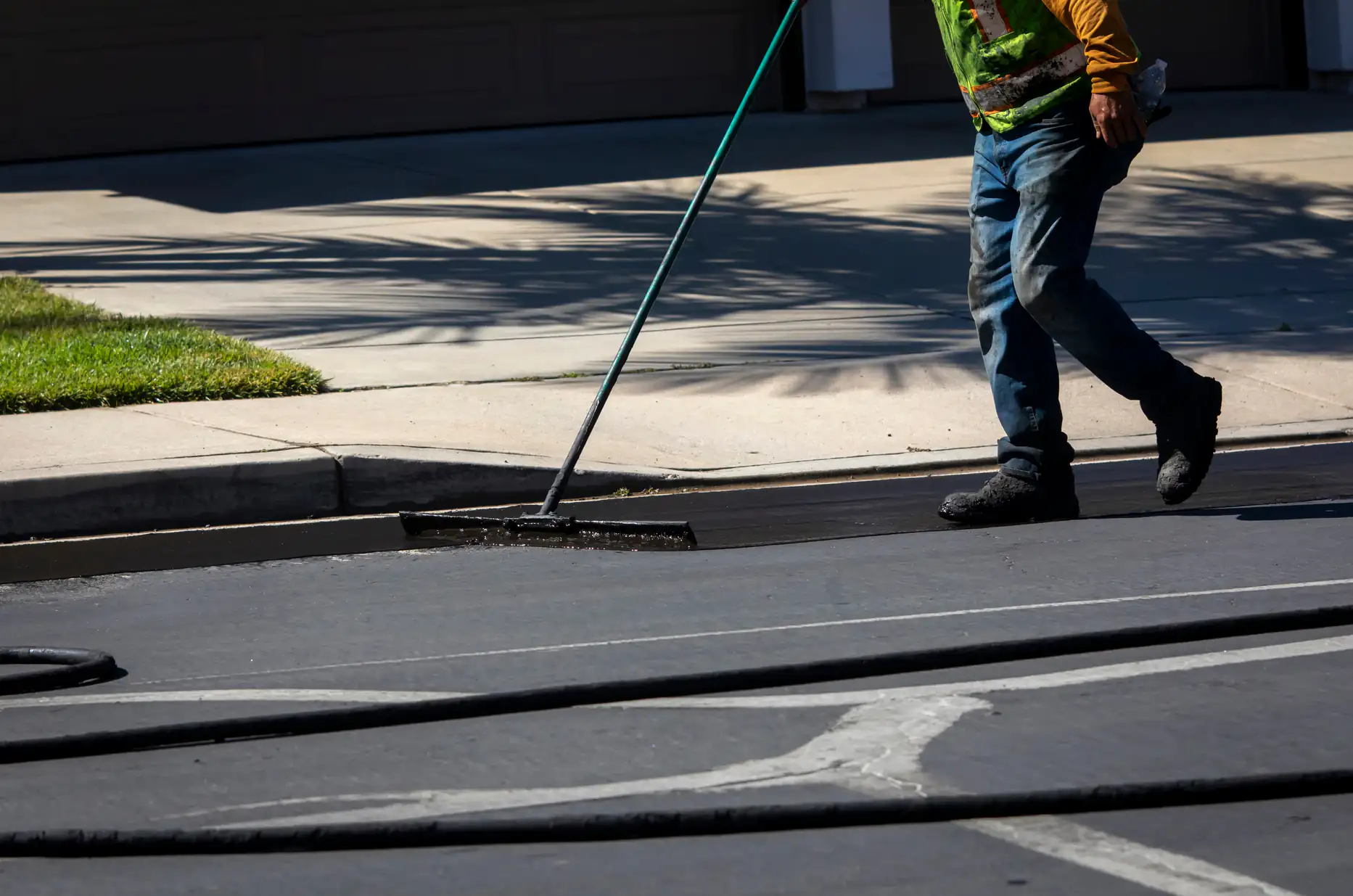
Then we apply commercial-grade sealer, not the watered-down stuff you’d get in a Home Depot bucket. Professional sealer has higher solids content and lasts two to three times longer than DIY products. We apply it evenly at the right thickness, usually two coats for residential driveways.
Temperature matters. We don’t seal if it’s below 50°F or if rain is coming within 24 hours. The sealer needs proper curing time, and rushing it means poor results. Most driveways are ready to walk on in 24 hours and ready for vehicles in 48 to 72 hours depending on conditions.
Ready to get started?
In Madison and Morris County, professional driveway sealing typically runs between $0.15 and $0.50 per square foot depending on the condition of your asphalt, how much prep work is needed, and the size of the area. Most residential driveways end up in the $200 to $500 range for a complete job.
That price includes crack filling, surface cleaning, two coats of commercial-grade sealer, and proper curing time. It doesn’t include major repairs like patching potholes or fixing drainage problems, which we’ll identify and quote separately if needed.
You should plan to reseal every two to three years in this area. That’s not us trying to sell you more services, that’s what the climate demands. Madison gets hit harder by freeze-thaw cycles than central or southern New Jersey, about 40% more cycles per winter. Your driveway takes a beating.
Some contractors will quote lower prices using cheaper sealer or skipping steps like crack filling. You’ll end up resealing more often and dealing with premature failure. We price our work based on doing it right the first time, using materials that actually last, and backing it up with a real warranty.
Professional sealcoating lasts about two to three years in Madison before you need to reseal. That timeline is shorter than what you’d see in milder climates because Morris County’s freeze-thaw cycles are brutal on asphalt.
The sealer itself doesn’t fail all at once. It gradually wears down from traffic, UV exposure, and weather. By year three, the protective barrier has thinned enough that water can start penetrating again, which is when you want to reseal before damage begins.
If you’re using DIY sealer from a big box store, expect half that lifespan or less. Those products have lower solids content and don’t bond as well. Commercial-grade sealer that we and other professional driveway sealer companies use is formulated differently and holds up much longer under the same conditions.
Late spring through early fall is your window, specifically when temperatures are consistently above 50°F during the day and night. The sealer needs warmth to cure properly and bond to the asphalt.
Most Madison homeowners schedule sealing in May, June, or September. July and August work too, but the sealer cures faster in high heat, which can make application trickier. By October, we get slammed with last-minute calls from people trying to squeeze in before winter, and temperatures start dropping too low for proper curing.
If you wait until you see frost warnings, it’s too late for that year. The sealer won’t cure right in cold temperatures, and you’ll end up with a poor bond that fails early. Plan ahead and book in late spring or early summer when we have more availability and weather is predictable.
Sealing concrete driveways requires a completely different product than asphalt sealcoating. Concrete sealers are typically penetrating sealers or acrylic-based topical sealers, not the coal tar or asphalt emulsion used on asphalt driveways.
Concrete sealing protects against moisture intrusion, salt damage, and staining, but the application process and materials are distinct. You can’t use asphalt sealer on concrete and expect it to work. The chemistry is wrong and it won’t bond.
We handle both asphalt and concrete sealing, but we use the appropriate materials for each surface. If you’ve got a concrete driveway in Madison, we’ll use Portland cement-based products and methods designed specifically for concrete. The goals are similar, protecting your investment and extending its life, but the execution is different.
Sealing is preventive maintenance, not cosmetic work. Yes, it makes your driveway look better, but that’s a side benefit. The real purpose is stopping water infiltration before it destroys your asphalt from the inside out.
Here’s what happens without sealing. Water enters through small cracks and pores in the asphalt. When temperatures drop below freezing, that water expands with massive force. It widens cracks, breaks apart the binder holding your asphalt together, and creates potholes. In Madison’s climate, you can leave on Friday with minor cracks and come back Monday to find new potholes after a freeze-thaw cycle over the weekend.
Road salt makes it worse. New Jersey uses over 500,000 tons of road salt every winter, and it gets tracked onto your driveway where it accelerates asphalt breakdown. Sealing creates a barrier against both water and salt. It’s the difference between a driveway that lasts 20-plus years and one that needs replacement in 10.
Most residential driveways in Madison cost between $200 and $500 to seal professionally, depending on size and condition. That’s for a standard two-car driveway with crack filling, cleaning, and two coats of commercial-grade sealer.
Larger driveways or those needing extensive crack repair will run higher. If your driveway has potholes, drainage issues, or sections that need patching, those repairs are separate from sealing and will add to the cost. We’ll identify those issues upfront during the inspection so there are no surprises.
The cost breaks down to roughly $0.15 to $0.50 per square foot in this area. Compare that to $3 to $7 per square foot to replace a failed driveway, and sealing every few years is clearly the smarter investment. You’re spending a few hundred dollars now to avoid spending several thousand later.
Plan on staying off your driveway for 48 to 72 hours after sealing. You can walk on it after 24 hours in most conditions, but vehicles need to wait longer to avoid tire marks and damage to the fresh sealer.
Curing time depends on temperature, humidity, and how much sun exposure your driveway gets. Hot, dry, sunny days mean faster curing. Cool, humid, or shaded conditions mean you should wait the full 72 hours before parking on it.
We’ll give you specific guidance based on the forecast when we finish your job. Rushing it and parking too soon can leave permanent tire marks in the sealer and reduce its effectiveness. It’s frustrating to wait, especially if you only have one driveway, but letting it cure properly means the sealer will last the full two to three years it’s designed for.