
Hear from Our Customers
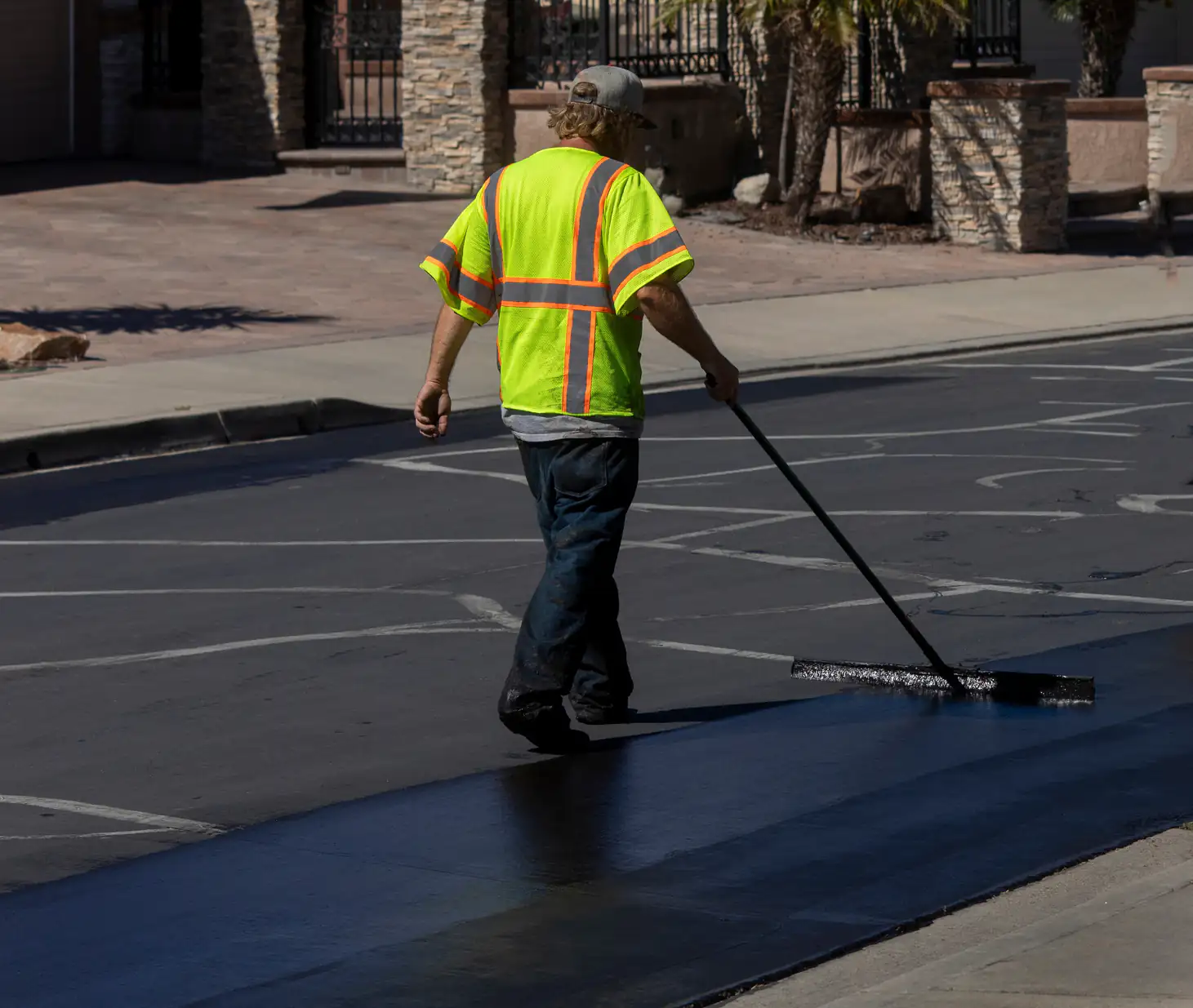
You’re not just getting a fresh black coat. You’re getting a barrier between your asphalt and everything trying to destroy it.
Water is the biggest threat to driveways in Lyons and across Morris County. When it seeps into small cracks and freezes, it expands and pushes your pavement apart from the inside. That’s how you go from a hairline crack in November to a pothole by March. Sealcoating stops water before it gets in.
UV rays dry out asphalt binders. Road salt eats through the surface. Oil stains break down the pavement structure. A proper sealcoat—applied by someone who knows what they’re doing—blocks all of it. You get 20 to 25 years out of your driveway instead of 12 to 15. That’s the difference between one replacement and none.
And it’s not just about function. A freshly sealed driveway looks clean, sharp, and well-maintained. That matters if you’re selling. It matters if you just want your property to look like you care about it.
We’ve worked throughout Morris County long enough to know what holds up here and what doesn’t. We’ve seen driveways in Lyons, Basking Ridge, Bernardsville, and Morristown go through decades of freeze-thaw punishment. We know how temperature swings near Lake Hopatcong affect base stability. We understand why drainage design matters in Newton and Sparta.
That experience shows up in how we prep your surface, what materials we use, and how we apply them. You’re not getting a crew that learned this trade last summer. You’re getting people who’ve handled hundreds of residential driveways and know the difference between a job that lasts two years and one that lasts ten.
We don’t disappear after the work is done. If you request a quote online, you’ll hear back within 24 to 48 hours. We show up when we say we will, and we don’t leave until the job is finished right.
We start with a full surface inspection. If there are cracks wider than a quarter-inch, we fill them with hot rubberized crack filler. If there are oil spots, we treat them with a primer so the sealer actually bonds. Skipping this step is how most DIY jobs fail in the first year.
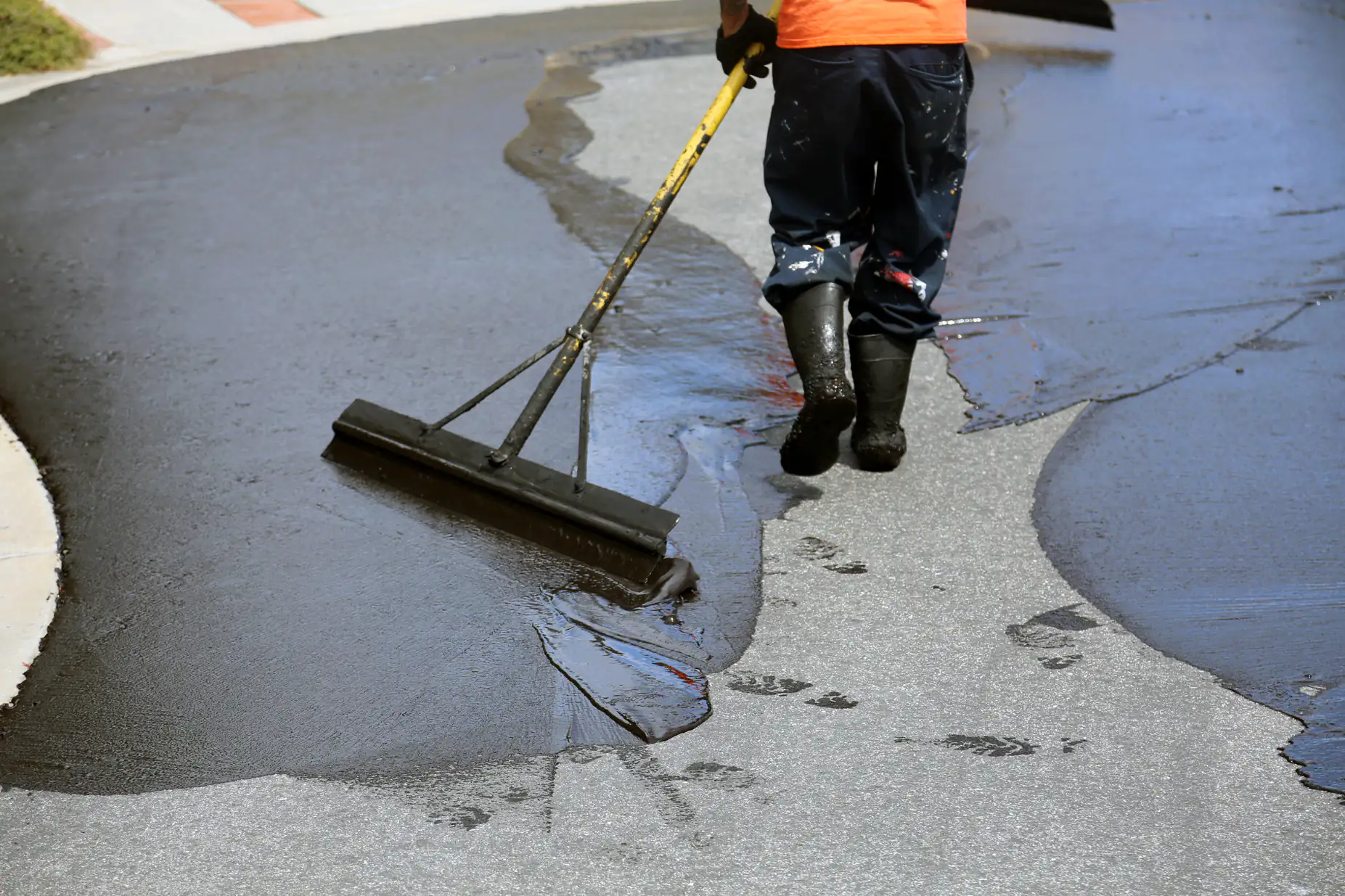
Next, we power wash the entire driveway. Dirt, debris, and loose material have to come off or the sealcoat won’t stick. This isn’t optional. It’s the foundation of a job that lasts.
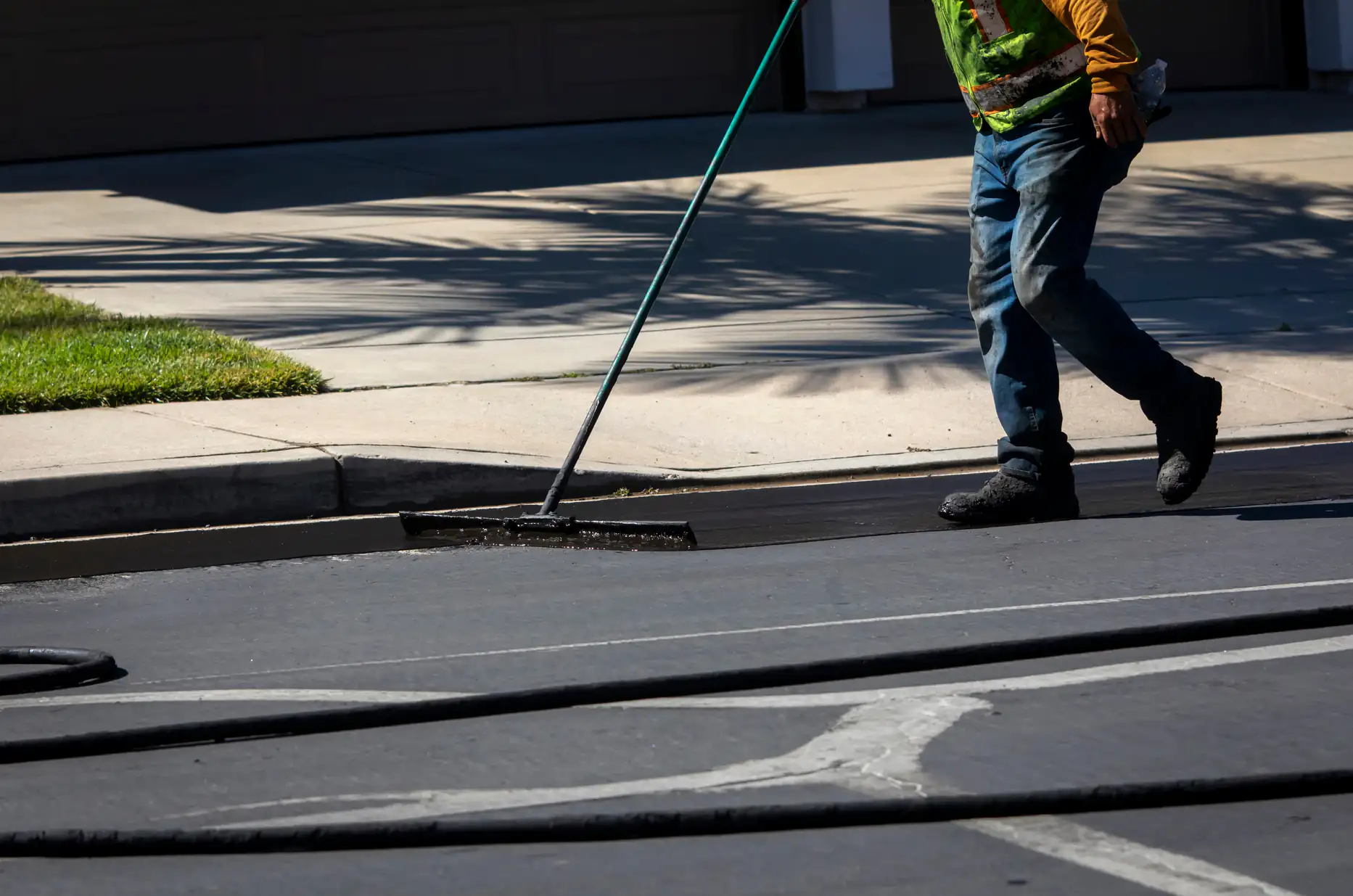
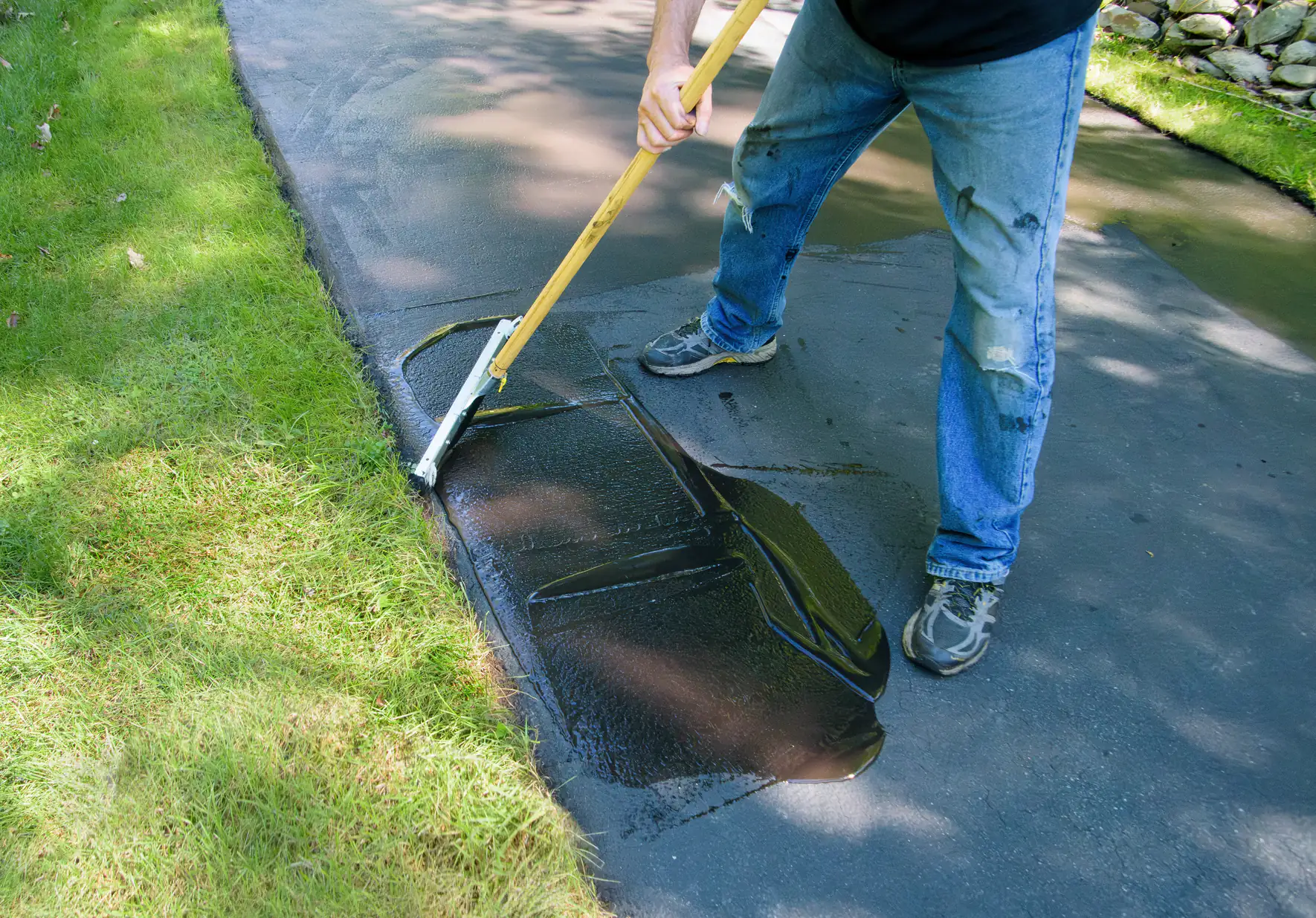
Then we apply two coats of coal tar sealer. Not one thick coat. Two properly applied coats with drying time in between. We add a sand additive for traction so your driveway isn’t slick when it rains. We edge around walkways, garage floors, and any concrete or brick so you get clean lines and no overspray.
The whole process takes one to two days depending on driveway size and weather. You’ll need to stay off it for 24 to 48 hours while it cures. After that, you’re good to go—and your driveway is protected for the next two to three years.
Ready to get started?
This isn’t just someone spraying sealer and calling it a day. You’re getting a complete driveway maintenance service that includes everything your asphalt needs to hold up in New Jersey weather.
We power wash the surface, fill cracks up to 50 linear feet, prime oil spots, and apply two coats of commercial-grade coal tar sealer with a sand additive for traction. Every job comes with edge trimming so your walkways and garage stay clean. And we back it with a two-year warranty because we know it’s going to hold up.
The cost of asphalt sealing in Lyons typically runs between $180 and $270 for a standard two-car driveway, depending on size and condition. That’s a fraction of what you’d pay to repave in three years if you skip maintenance now. A $300 sealcoat job today can prevent a $5,000 replacement job down the road.
We use high-grade materials applied at the right temperature with proper compaction. The sealer we use is designed for northern climates where freeze-thaw cycles are constant. It flexes with temperature changes instead of cracking. And because we’ve been doing this in Morris County for over two decades, we know how to adjust our process based on your driveway’s age, condition, and exposure.
Every two to three years is the standard recommendation for driveways in Lyons and across Morris County. That timing keeps your asphalt protected without over-sealing, which can cause its own problems.
If your driveway gets heavy use—multiple vehicles, frequent traffic, or exposure to oil and gas—you might want to seal it closer to every two years. If it’s lightly used and stays in good shape, you can stretch it to three. The key is not waiting until you see major cracking or surface damage. By then, sealing alone might not be enough.
A good rule: if water stops beading on the surface and starts soaking in, it’s time. That means the previous sealcoat has worn down and your asphalt is exposed. The longer you wait after that point, the more damage you’re allowing.
Coal tar sealer is more durable and holds up better against gas, oil, and UV damage. That’s why we use it for residential driveways. It’s tougher, lasts longer, and provides better protection in climates with harsh winters.
Asphalt-based sealers are less expensive and easier to apply, but they don’t last as long and they break down faster when exposed to petroleum products. If you park cars that occasionally drip oil or gas, coal tar is the better choice.
Some areas have restrictions on coal tar due to environmental concerns, but it’s still widely used in New Jersey and remains the industry standard for long-term driveway protection. We use commercial-grade coal tar sealer on every job because it delivers the results homeowners in Lyons and Morris County actually need.
You can do it yourself, but the results usually aren’t the same. DIY sealcoating often leads to uneven coverage, poor adhesion, and a finish that starts failing within a year. The materials matter, but application technique matters even more.
Most homeowners don’t have access to commercial-grade sealers or the equipment needed to apply them correctly. Big-box store products are thinner and less durable. And without proper surface prep—crack filling, oil spot treatment, power washing—the sealer won’t bond right no matter how carefully you apply it.
There’s also the issue of timing and weather. If you seal too early in the season, or right before rain, or when temperatures drop overnight, the sealer won’t cure properly. We know how to read conditions and adjust. A bad DIY job doesn’t just look rough—it can actually trap moisture and cause more damage than doing nothing. If your driveway matters to you, hire someone who does this for a living.
You’ll need to stay off your driveway for 24 to 48 hours after we finish. That’s the minimum cure time for coal tar sealer in typical New Jersey weather conditions. Cooler temperatures or high humidity can extend that timeline.
We usually recommend waiting a full 48 hours before driving on it, even if it looks dry. The surface might feel firm after 24 hours, but the sealer is still curing underneath. Driving on it too early can leave tire marks, scuff the finish, or cause the coating to peel later.
If rain is in the forecast, we’ll reschedule. Sealcoating needs at least 24 hours of dry weather to set properly. We don’t take chances with the forecast because a surprise storm can ruin the entire job. When we schedule your driveway sealing near Lyons, we’re watching the weather closely and planning around it so your investment is protected.
No. Sealcoating protects the surface—it doesn’t repair structural damage. If you have cracks wider than a quarter-inch or any potholes, those need to be filled before we seal. Otherwise, they’ll just keep spreading underneath the sealcoat.
We include crack filling up to 50 linear feet in our standard service. We use hot rubberized crack filler that bonds to the asphalt and flexes with temperature changes. For larger cracks or serious damage, we’ll let you know if patching or more extensive repair is needed before sealing makes sense.
Sealcoating is preventive maintenance. It stops small problems from becoming big ones. But if your driveway already has big problems—deep cracks, crumbling edges, sunken areas—you need repair work first. We’ll walk your property during the estimate and tell you exactly what’s needed. No surprises, no upselling. Just an honest assessment of what your driveway actually needs to last.
Spring and fall are ideal. You want temperatures consistently above 50°F during the day and at night, with no rain in the forecast for at least 24 hours. That usually means late April through June, and then September through early October in Morris County.
Summer works too, but extreme heat can make the sealer dry too fast, which affects how well it bonds. Winter is out—sealcoat won’t cure properly in cold weather, and any moisture in the asphalt will cause problems when it freezes.
A lot of homeowners call us in April and May right after the frost lifts. That’s when you can see what damage winter caused and address it before it gets worse. Fall is the second-best window because you’re protecting your driveway before the next freeze-thaw cycle hits. If you’re planning to schedule driveway sealcoating near me in Lyons, reach out in early spring or late summer to get on the schedule before the busy season fills up.