
Hear from Our Customers
You already know what happens when you skip maintenance. Small cracks turn into spiderweb patterns. Water seeps in. Winter hits, and suddenly you’re looking at a $5,000 repaving bill instead of a few hundred dollars in preventive care.
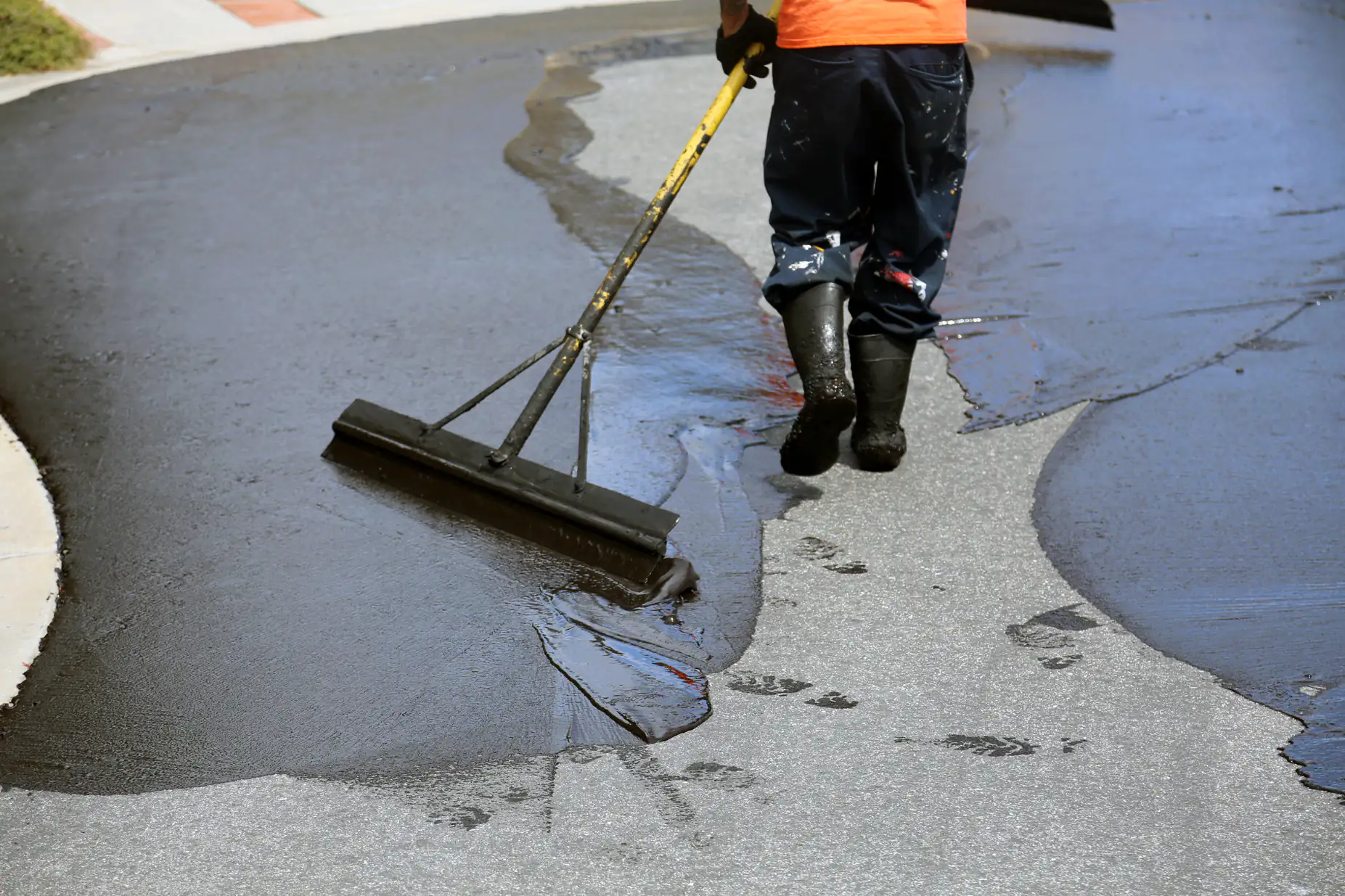
Asphalt driveway sealing creates a protective barrier against everything Morris County throws at your pavement. Rain, snow, oil, UV rays, temperature swings that hit 60-80 freeze-thaw cycles every winter. The sealcoat keeps water out, which means the base stays stable and the surface stays intact.
You get years added to your driveway’s functional life. You avoid emergency repairs that cost more and deliver worse results. Your property maintains its value instead of broadcasting neglect to every person who drives past. That’s what protection actually looks like when it’s done right.
We’ve spent over 20 years working in Morris, Sussex, and Somerset Counties. We know what northern New Jersey weather does to asphalt because we’ve seen it happen to thousands of driveways.
Long Valley properties face specific challenges. The temperature swings affect base stability. Drainage design matters more here than in milder climates. The materials you use and the timing of application can mean the difference between a sealcoat that lasts and one that fails within a year.
We use high-grade hot mix asphalt applied at proper temperatures. Our crews understand site preparation, drainage requirements, and how to work around your schedule without cutting corners. You get upfront pricing, no surprise charges, and work that holds up to what winter brings.
First, we inspect your driveway to assess the current condition. Cracks get filled, damaged areas get addressed, and the entire surface gets cleaned properly. You can’t seal over dirt, oil, or debris and expect it to bond.
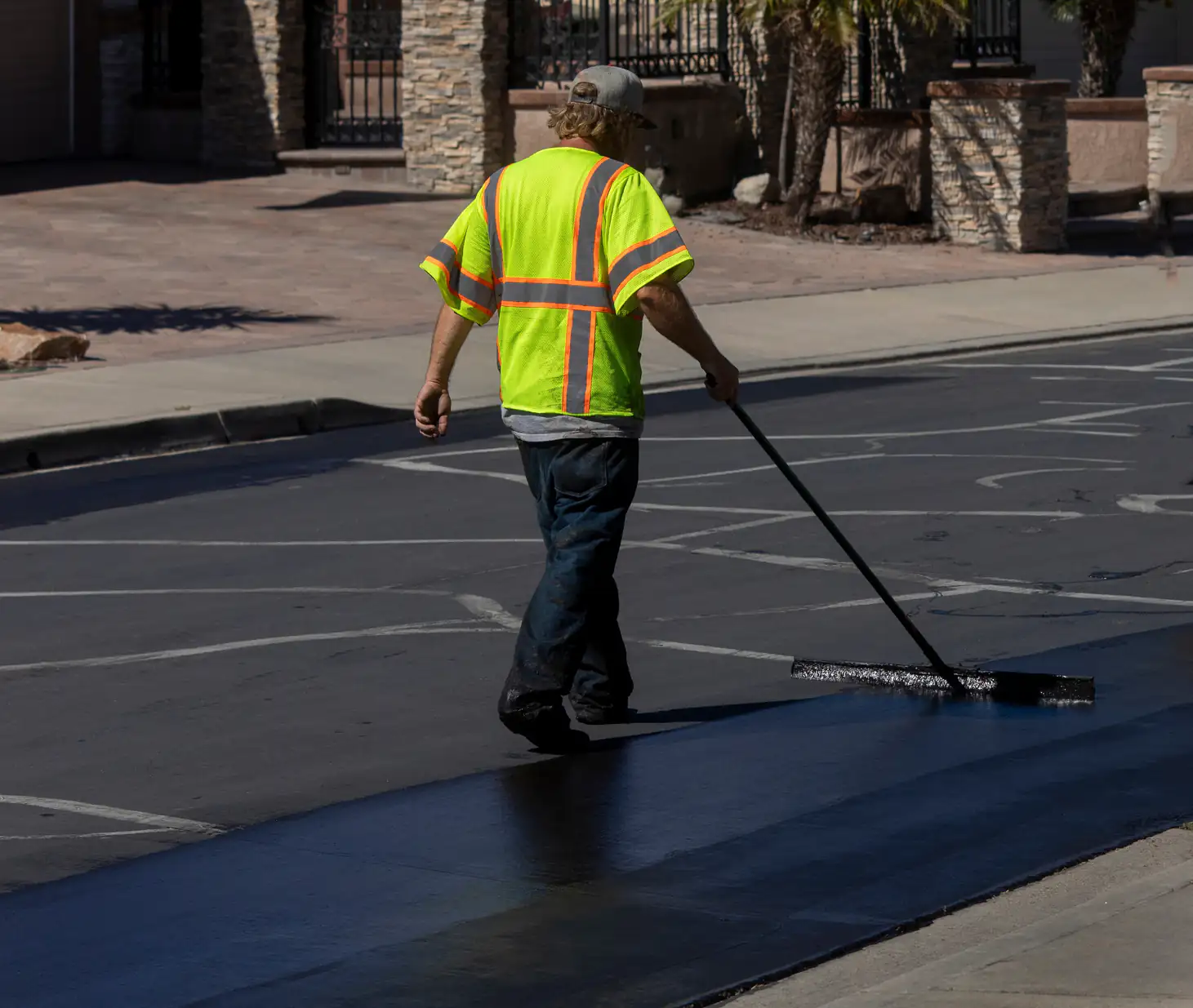
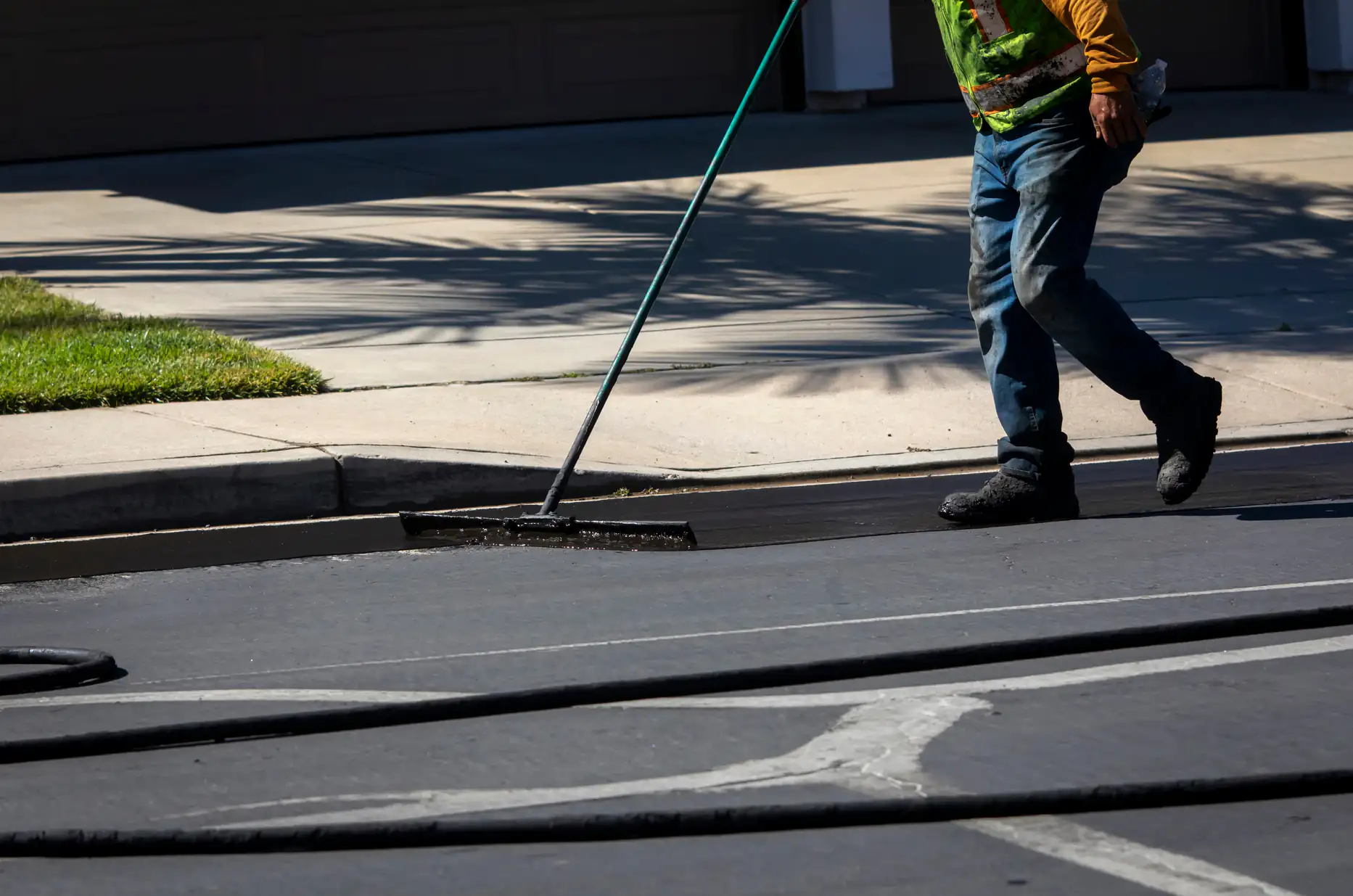
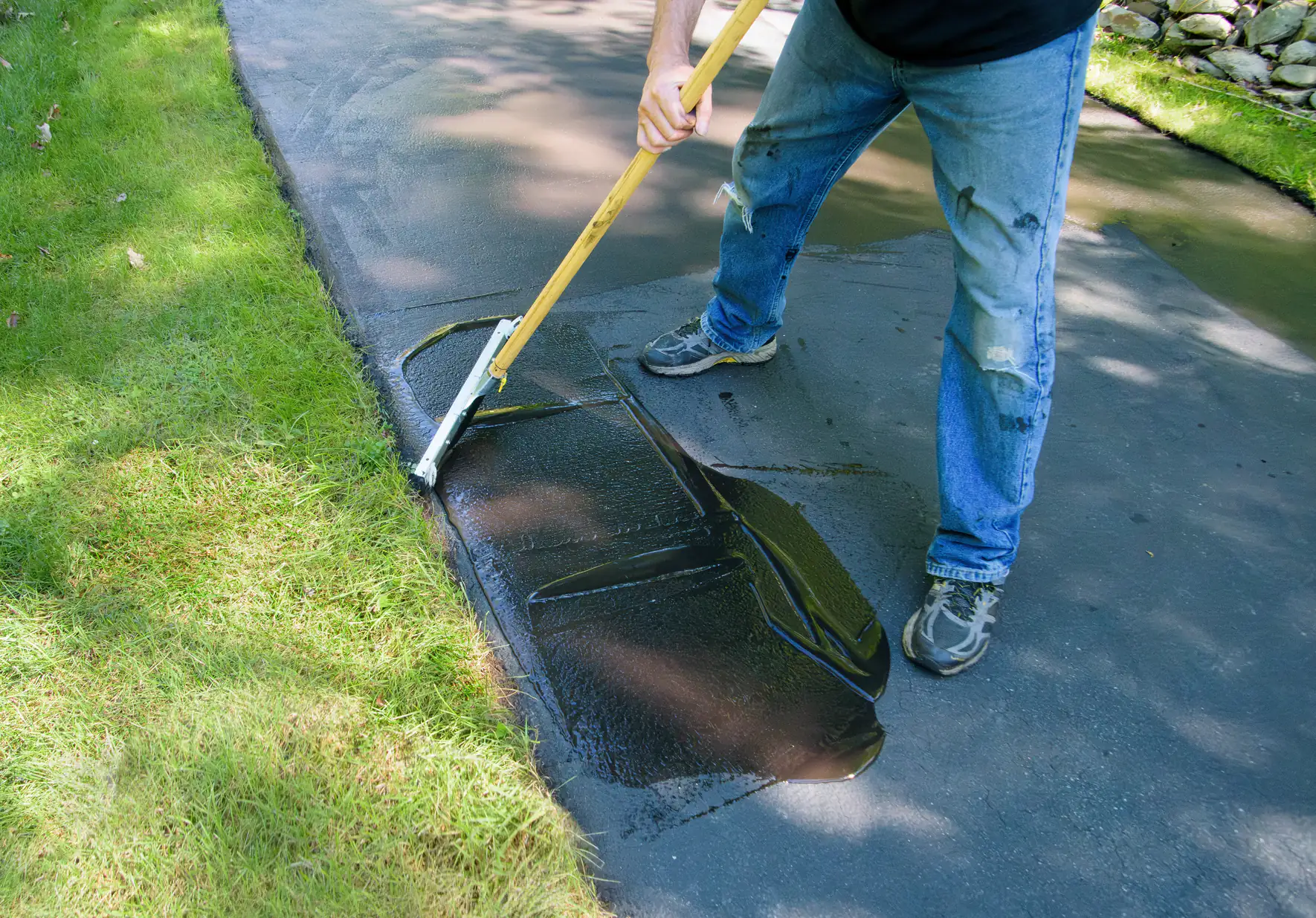
Next comes the sealcoating application itself. We apply a high-grade sealer at the right temperature and thickness. Too thin and it won’t protect. Too thick and it can crack. The material needs time to cure, which means staying off the driveway for 24-48 hours depending on weather conditions.
After curing, you have a restored surface that resists water penetration, stands up to traffic, and looks clean again. The black finish brings back that fresh-paved appearance. More importantly, the protective layer is now doing its job against the elements that would otherwise break down your asphalt from the inside out.
Ready to get started?
Your driveway sealing service includes complete surface preparation. That means crack filling, cleaning, and addressing any drainage issues that could undermine the sealcoat. If water pools on your driveway, sealing over it doesn’t fix the problem.
You get professional-grade materials designed for northern New Jersey’s climate. The sealers we use are formulated to handle freeze-thaw cycles, not just look good for a few months. Application happens at proper temperatures with equipment that ensures even coverage and appropriate thickness.
In Long Valley specifically, we account for the fact that your property value sits well above state averages. A deteriorating driveway on a $557,000 home doesn’t just look bad. It signals deferred maintenance to buyers and can knock thousands off your property value. Professional sealcoating protects that investment while costing a fraction of what you’d lose in equity or pay for emergency repairs down the line.
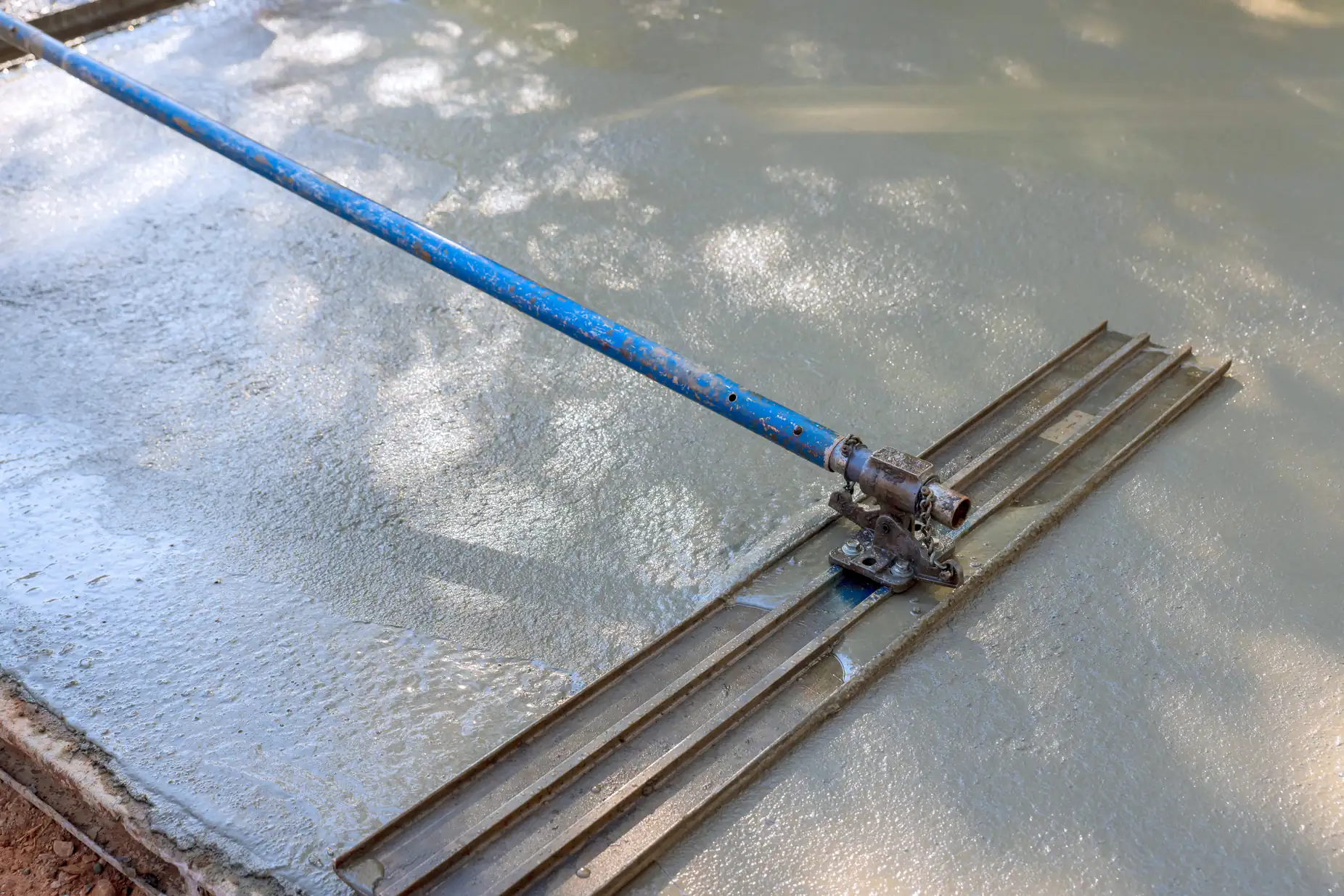
Most driveways in Morris County need sealcoating every 2-3 years, but the actual timeline depends on traffic, sun exposure, and how well the last application was done. If you park multiple vehicles daily or your driveway gets full sun, you’re on the shorter end of that range.
You can tell it’s time when the surface starts looking gray instead of black, or when you see hairline cracks beginning to form. Those are early warning signs that the protective layer is wearing thin. Waiting until you see significant cracking or potholes means you’ve already moved past prevention into repair mode.
The cost difference matters. A preventive sealcoat runs a few hundred dollars. Letting it go until you need patching, crack filling, and then sealcoating can easily triple that cost. And if you wait long enough that the base fails, you’re looking at full replacement, which starts around $5,000 for an average driveway.
Late spring through early fall gives you the best conditions for sealcoating. You need temperatures above 50°F during application and for at least 24 hours afterward. You also need dry weather since moisture prevents proper curing.
In Long Valley, that typically means May through September are your prime months. Trying to seal too early in spring when overnight temperatures still drop can cause problems. Waiting too late into fall means you’re racing against the first hard freeze, which is exactly what you’re trying to protect against.
The worst time to seal is when you’re already seeing winter damage. Emergency repairs in cold weather cost more, take longer, and don’t perform as well as properly timed maintenance. If you’re reading this in late fall or winter, you’re better off waiting for spring than trying to rush a subpar application before the snow flies.
You can buy sealcoating products at hardware stores, but the results rarely match professional application. The materials available to homeowners are typically lower grade. You’re also working without the proper equipment for surface prep, even application, or temperature control.
The bigger issue is what happens when DIY sealcoating fails. The product shrinks, cracks, or peels within months. Now you’ve wasted your time and money, and you still need to hire someone to fix it. Except now we have to remove the failed coating before doing it right, which adds cost.
Professional driveway sealing contractors bring commercial-grade materials, proper surface preparation, and equipment that ensures consistent coverage. The sealcoat bonds correctly, cures properly, and actually protects your asphalt instead of just sitting on top of it. For a few hundred dollars, you get work that lasts years instead of a weekend project that fails before the next season.
Professional sealcoating in Morris County typically runs $0.15 to $0.50 per square foot, depending on the condition of your driveway and what prep work is needed. An average two-car driveway (about 600 square feet) usually costs $300-$600 for quality work.
If your driveway needs crack filling, patching, or other repairs before sealing, that adds to the cost. But it’s still a fraction of what you’d pay for repaving, which starts around $5,000 and goes up from there. That’s the math that matters when you’re deciding whether to maintain or defer.
Watch out for prices that seem too good to be true. Contractors running “leftover asphalt” scams or cutting corners on prep work can do more harm than good. You want someone who gives you a proper estimate after actually looking at your driveway, not a guy who quotes you over the phone and shows up with whatever materials he has in the truck.
Yes, and the difference is significant. An unsealed driveway in northern New Jersey might last 10-15 years before needing replacement. A properly maintained driveway with regular sealcoating can potentially double that lifespan. The protection keeps water from penetrating the surface and destroying the base.
Here’s what actually happens when water gets into asphalt. It seeps through cracks, saturates the base material, and then freezes. Ice expands with tremendous force. That expansion creates more cracks, which let in more water, which causes more damage. It’s a cycle that accelerates every winter until your driveway is beyond repair.
Sealcoating stops that cycle before it starts. The protective layer keeps water on the surface where it can drain away instead of penetrating down to the base. You still need to reseal every few years as the coating wears down, but that maintenance costs far less than dealing with structural failure. The return on investment is clear when you compare a few hundred dollars every 2-3 years against $5,000+ for replacement.
Start with local experience. A company that’s worked in Morris County for years understands what northern New Jersey weather does to asphalt. We know how drainage needs to be handled, what materials hold up, and when conditions are right for application.
Check that they’re properly licensed and insured. In New Jersey, legitimate paving contractors carry the right credentials and liability coverage. If someone can’t provide proof of insurance or tries to pressure you into a cash deal, walk away. You want documentation that protects you if something goes wrong.
Pay attention to how they estimate the job. A contractor who quotes you without seeing your driveway is guessing at best, scamming at worst. Proper estimates require inspection of the current condition, measurements, and assessment of what prep work is needed. You should get clear pricing upfront with no surprise charges when the work is done. If they can’t explain what you’re paying for and why, keep looking.