
Hear from Our Customers
Every winter in Landing brings 55 to 75 freeze-thaw cycles. Water gets into your asphalt, freezes overnight, and expands by 9%. That force is enough to turn hairline cracks into structural problems.
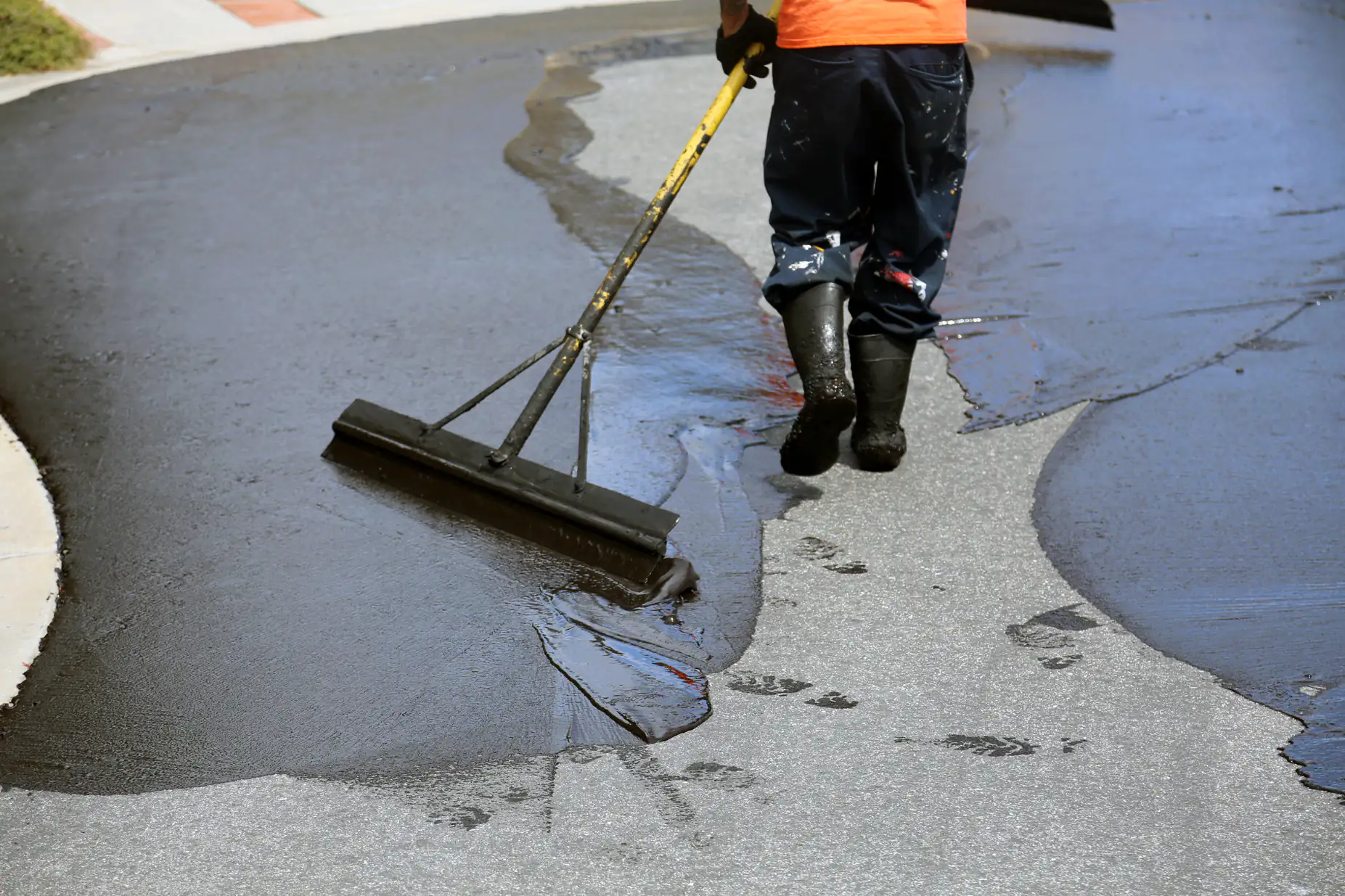
Professional driveway sealing creates a waterproof barrier that keeps moisture out. You’re not just making your driveway look darker—you’re stopping water before it can freeze and push your asphalt apart from the inside.
The difference shows up in March. While your neighbors are calling for emergency pothole repairs at $500 to $2,000, your driveway comes through winter intact. Sealcoating every 2-3 years at $200-$500 extends your driveway’s life by 10-15 years and prevents a $5,000+ replacement down the road.
It also protects against UV damage, oil stains, and the ice melt chemicals everyone uses around here. Your driveway stays flexible instead of brittle, and that rich black color comes back instead of fading to gray.
We’re a third-generation business that’s been handling residential and commercial paving in North New Jersey for over 40 years. We’re grounded in Morris County, so we know exactly what Landing driveways go through every winter.
We’re not the cheapest option, and we’re upfront about that. You’re paying for hot-pour rubberized materials heated to 400 degrees, proper crack prep, and a crew that shows up when we say we will. The owner is on every job site making sure it’s done right.
We’re fully licensed (License #13VH09061100) and insured, and we provide references, documentation, and written warranties with terms you can actually understand. You’ll get a callback within 24-48 hours after requesting a quote, and we give you clear upfront pricing with no surprise charges.
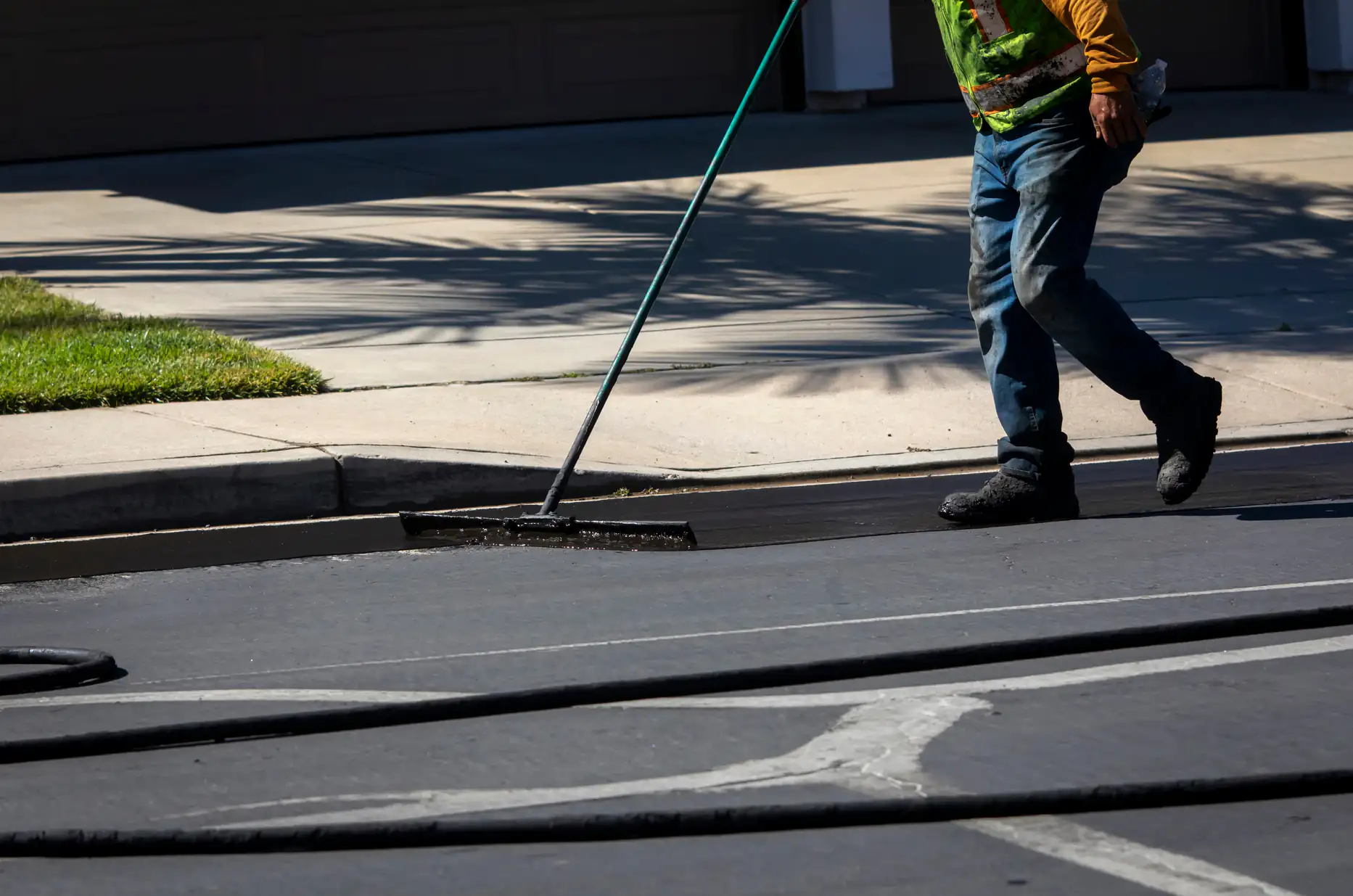
We start by cleaning your driveway completely. Any dirt, oil, or debris left on the surface will prevent the sealant from bonding properly, so this step matters more than most people realize.
Next, we fill every crack with hot-pour rubberized material. This isn’t the stuff you get at the hardware store—it’s heated to about 400 degrees and stays flexible through temperature swings. It moves with your asphalt instead of cracking apart after one winter.
Then we apply two coats of commercial-grade sealant. One coat might work in warmer states, but Morris County’s freeze-thaw cycles demand two. The second coat creates a thicker protective layer that lasts 3-4 years instead of 1-2.
We only do this work in warmer months so the sealant has time to cure before winter arrives. Rushing the timeline or applying sealant in cold weather leads to adhesion problems and early failure. The whole process takes a day or two depending on your driveway size, and you’ll need to stay off it for 24-48 hours while it cures.
Ready to get started?
Driveway sealcoating in Landing typically runs $0.15 to $0.40 per square foot. Most residential driveways end up between $200 and $500 for professional two-coat application. That’s every 2-3 years, not annually.
Compare that to what you’ll pay if you skip it. Crack filling alone costs $100-$400 once damage starts. Patching runs $100-$500. Resurfacing hits $500-$2,000. Full replacement? You’re looking at $3,000-$10,000, and New Jersey prices run 15-25% above national averages because of our weather.
We use professional-grade materials you can’t get at retail stores. Our sealants are formulated specifically for New Jersey’s temperature extremes, and we have relationships with regional suppliers who understand what works in Morris County conditions.
You’re also paying for proper application. We prep the surface correctly, apply at the right temperature, use the right thickness, and time everything so the sealant cures before weather turns. DIY products fail within a season because they lack the flexibility and adhesion properties needed here. Our work comes with a written warranty covering materials and workmanship.
The timing matters too. By the time spring arrives and you’re staring at new cracks, every asphalt contractor in Morris County is booked solid. Scheduling in fall means you’re ahead of the rush and your driveway is protected before the first freeze.
Every 2-3 years is the standard recommendation for Morris County driveways. Some contractors will tell you every year, but that’s overkill and a waste of money. Others say every 5 years, but that leaves your driveway exposed too long.
The 2-3 year window is based on how long commercial-grade sealant holds up against our freeze-thaw cycles. After about three winters, the protective layer starts breaking down and water can penetrate again.
You can check if it’s time by pouring water on your driveway. If it beads up and runs off, your sealant is still working. If it soaks in and darkens the asphalt, you need to reseal. That simple test tells you more than any calendar schedule.
Crack filling addresses existing damage. Sealcoating prevents future damage. You need both, and crack filling always comes first.
When we fill cracks, we’re using hot-pour rubberized material that stays flexible through temperature changes. It seals the crack so water can’t get in and freeze. This is repair work—fixing problems that already exist.
Sealcoating goes over the entire surface after cracks are filled. It creates a waterproof barrier that protects against UV rays, water infiltration, oil stains, and chemicals. This is preventive maintenance—stopping new cracks from forming.
If you only sealcoat without filling cracks first, water will still get in through existing damage and cause problems. If you only fill cracks without sealcoating, new cracks will keep forming because the surface isn’t protected. Both services work together to extend your driveway’s life.
You can buy sealant at hardware stores and do it yourself, but the results won’t last. The products available to homeowners are designed as temporary patches, not long-term solutions.
Retail sealants lack the flexibility and adhesion properties needed for New Jersey winters. They might look fine in summer, but they’ll crack and peel after one freeze-thaw season. You’ll end up doing the work again next year, and your driveway still won’t be properly protected.
We use commercial-grade materials formulated for regional climate conditions. We also have the equipment to clean surfaces properly, heat crack filler to the right temperature, and apply sealant at the correct thickness. The surface prep alone makes a huge difference—any contamination left on your driveway will cause adhesion failure.
The cost difference isn’t as big as you’d think either. By the time you buy materials, rent equipment, and spend a weekend doing the work, you’re not far off from professional pricing. And if it fails after one winter, you’ve wasted that money and still need to hire someone.
Late spring through early fall gives you the best conditions. You need temperatures consistently above 50 degrees during the day and no rain in the forecast for at least 48 hours after application.
Fall is actually ideal for Morris County. The temperatures are moderate, humidity is lower, and the sealant has time to cure properly before winter weather arrives. You’re also getting ahead of the spring rush when every property owner realizes they need repairs.
Avoid sealing in summer heat above 90 degrees—the sealant can dry too fast and not bond correctly. And never seal in late fall or winter when temperatures drop below 50. Cold weather prevents proper curing and you’ll have adhesion problems that lead to early failure.
New asphalt needs to cure for 90 days before sealcoating. If your driveway was just installed, wait through that period. Sealing too early traps oils in the asphalt that need to evaporate, and that causes the sealant to fail.
A professional two-coat application typically lasts 3-4 years in Morris County. Single-coat applications only last 1-2 years, which is why we don’t recommend them for this area.
The lifespan depends on several factors. Traffic volume matters—a driveway with multiple cars coming and going daily will wear faster than one with light use. Exposure to direct sunlight breaks down sealant over time. And the number of freeze-thaw cycles each winter affects how long the protection holds.
You can extend the life of your sealcoating by keeping your driveway clean and avoiding harsh chemicals. Don’t use metal shovels or plows that scrape the surface. And address any new cracks quickly before they let water underneath.
When the sealant starts wearing thin, you’ll notice the color fading from black to gray. That’s your signal to schedule resealing. Waiting too long after that point leaves your asphalt exposed and vulnerable to damage.
It does both, but the protection is the real value. The appearance is just a bonus.
Sealcoating creates a waterproof barrier that keeps moisture from penetrating your asphalt. When water can’t get in, it can’t freeze and expand. That’s what prevents new cracks from forming. It also blocks UV rays that make asphalt brittle and protects against oil and chemical damage.
The dark black color you get after sealing isn’t just cosmetic—it actually helps. Darker surfaces absorb more heat from the sun, which keeps your asphalt more flexible. Flexible asphalt resists cracking better than brittle, sun-damaged asphalt.
That said, sealcoating won’t fix structural problems or repair existing damage. If your driveway already has major cracks, potholes, or base failure, you need repairs first. Sealcoating is preventive maintenance that works best when applied to driveways in good condition. It extends the life of quality asphalt—it doesn’t replace proper installation or necessary repairs.