
Hear from Our Customers
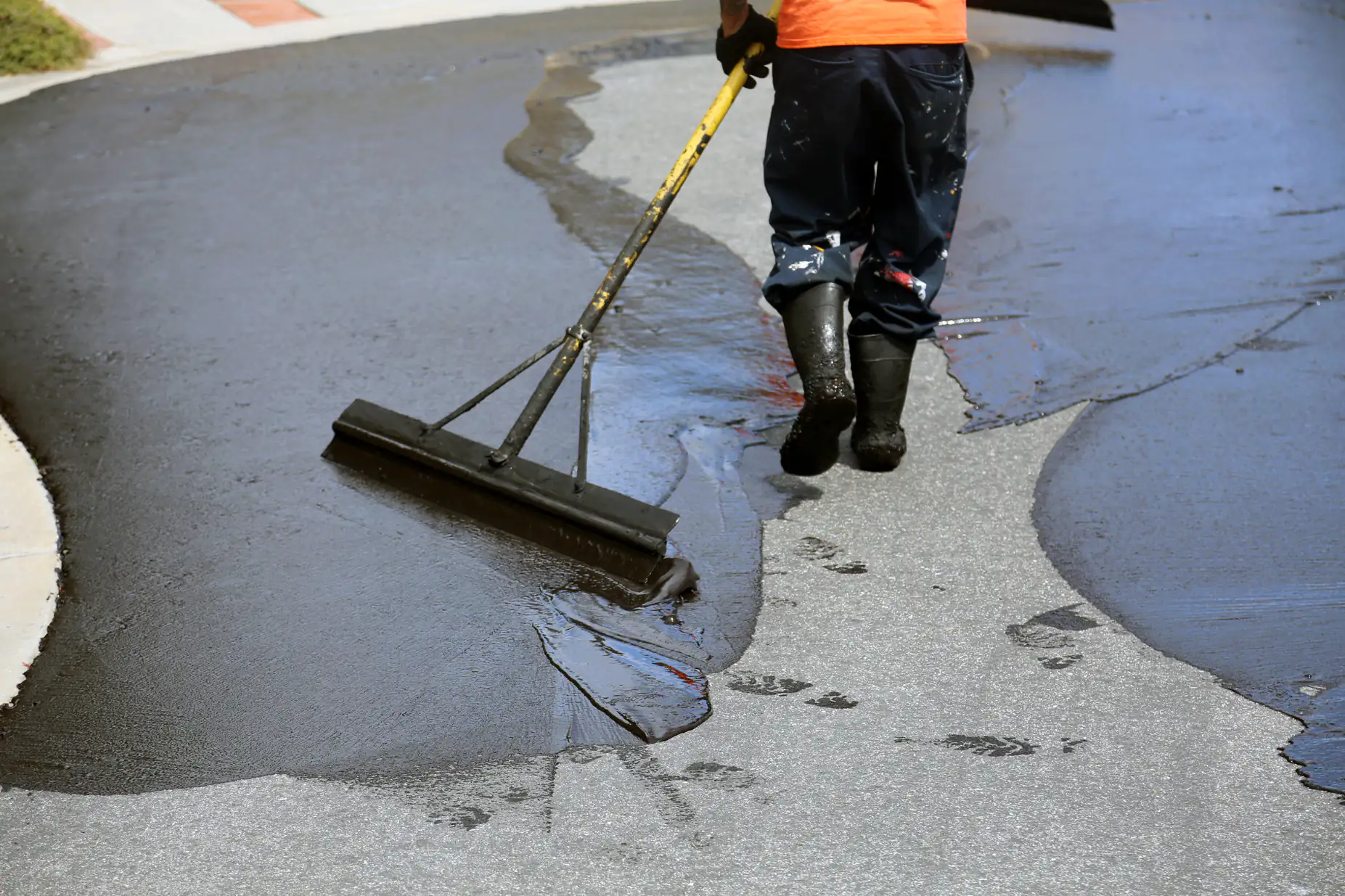
Your driveway takes a beating from New Jersey weather. Winter road salts eat away at the surface. Summer UV rays dry out the asphalt binder. Water seeps into small cracks, freezes, expands, and turns minor issues into major failures.
Sealcoating creates a protective barrier against all of it. You’re looking at 3-4 additional years of life from a treatment that costs 2-5% of what the asphalt underneath it costs. That’s not marketing speak—it’s basic math that makes sense for Hillsborough properties.
The visual difference is immediate. That fresh black finish doesn’t just look better—it tells potential buyers or visitors that the property is maintained. But the real value is underneath: protected pavement that resists cracking, oxidation, and water damage for years longer than untreated surfaces.
Most Hillsborough driveways need sealcoating every 2-3 years depending on traffic and sun exposure. Skip it, and you’re looking at crack filling, patching, or complete resurfacing that runs 10-20 times what preventive maintenance would have cost.
We’re a third-generation, family-owned contractor serving Morris, Sussex, and Somerset County for over 20 years. We’re not the newest company with the flashiest ads—we’re the ones your neighbors call when they want it done right.
Hillsborough’s topography creates drainage challenges that inexperienced contractors miss. The clay soils and elevation changes mean water doesn’t always flow where you’d expect. We assess those issues before we seal, because applying product over poor drainage just delays the inevitable.
You’ll get a written estimate with clear pricing, a 5-year warranty on the work, and a callback within 24-48 hours of your quote request. We use high-grade materials applied at proper temperatures with equipment that actually works—not bargain-bin sealer brushed on by someone who started last month.
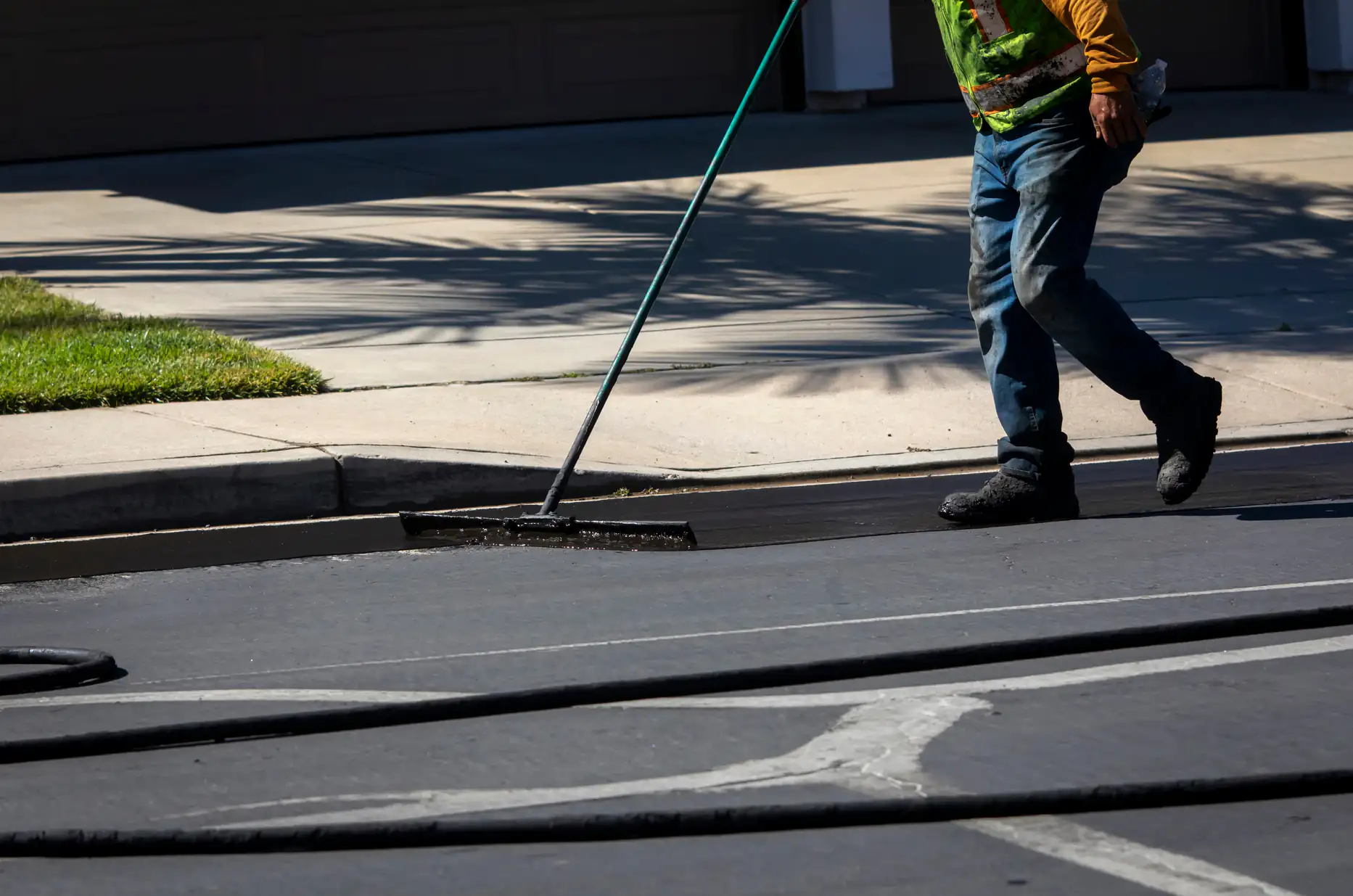
First, we inspect your driveway to determine if sealcoating is the right solution or if you need crack filling, patching, or more extensive repairs first. Sealer won’t fix structural problems—it protects sound pavement.
We clean the surface completely. Oil stains get treated, vegetation gets removed, and the entire area gets blown clear of debris. Sealer needs direct contact with asphalt to bond properly.
Cracks wider than a quarter-inch get filled with hot rubberized crack filler before we seal. This prevents water infiltration at the most vulnerable points. Then we apply two coats of commercial-grade asphalt emulsion sealer, allowing proper drying time between coats.
The driveway needs 24-48 hours to cure before you can drive on it, depending on temperature and humidity. We schedule jobs during optimal weather windows—above 50°F with no rain in the forecast—because New Jersey weather doesn’t always cooperate, and we won’t compromise the results to meet an arbitrary deadline.
Ready to get started?
Sealcoating typically runs $0.15-$0.40 per square foot in New Jersey, with most Hillsborough driveways falling in the $300-$500 range depending on size and condition. That includes surface prep, crack filling for minor cracks, two coats of sealer, and cleanup.
You’re not just paying for material. You’re paying for someone who knows the difference between coal tar and asphalt emulsion sealers, understands when temperatures are right for application, and won’t leave you with a streaky mess that fails in six months.
Hillsborough properties often need additional drainage work due to the area’s topography and clay soils. We’ll identify those issues during the estimate. Sometimes a $200 drainage solution saves you from a $5,000 repair two years later.
The ROI is straightforward: spend $400 now or $8,000 on resurfacing later. Sealcoating every 2-3 years keeps your asphalt in the preventive maintenance zone instead of the emergency repair zone. And if you’re planning to sell, a freshly sealed driveway signals that the home has been cared for—buyers notice.
Every 2-3 years for most residential driveways in Hillsborough. The timeline depends on sun exposure, traffic volume, and how well the previous sealcoat was applied.
South-facing driveways get more UV damage and may need sealing closer to the 2-year mark. Driveways under tree cover that see less sun can often stretch to 3 years. High-traffic areas near the street or turnarounds wear faster than straight sections.
If you’re seeing faded gray asphalt, small cracks forming, or rough texture where it used to be smooth, you’re overdue. Waiting until the asphalt is badly cracked or crumbling means you’ve moved past the point where sealcoating helps—now you’re looking at repairs or resurfacing.
Sealcoating protects existing asphalt with a thin protective layer. Resurfacing removes the top layer of damaged asphalt and replaces it with new hot mix. They solve different problems at very different price points.
Sealcoating costs $300-$500 and maintains pavement that’s still structurally sound. Resurfacing costs $3,000-$8,000 and fixes pavement that’s cracked, sunken, or failing. If your driveway has widespread alligator cracking, potholes, or base failure, sealer won’t fix it—you need resurfacing or full replacement.
The key is catching problems early. Regular sealcoating prevents the oxidation and water damage that lead to resurfacing. Skip maintenance for 10 years, and you’ll pay for it with a much bigger bill. We’ll tell you honestly which service your driveway actually needs.
No, and you shouldn’t trust anyone who says they can. Asphalt sealer needs temperatures above 50°F to cure properly, with no rain for 24 hours after application. New Jersey winters don’t provide those conditions reliably.
The ideal window for driveway sealcoating in Hillsborough runs from late April through October. Even within that range, we monitor forecasts closely. Applying sealer when it’s too cold or wet leads to poor adhesion, extended cure times, and premature failure.
If someone offers you a great deal on sealcoating in February, they’re either inexperienced or desperate for work. Either way, you’ll end up with a failed sealcoat and wasted money. We’d rather schedule your job for the right conditions than take your money for work that won’t last.
Because not all sealcoating is the same, and Hillsborough has plenty of contractors who don’t know what they’re doing. The lowest price usually means bargain materials, minimal prep work, or someone who started offering “sealcoating services” last month.
Commercial-grade asphalt emulsion sealer costs more than the watered-down product sold at big box stores. Proper crack filling, thorough cleaning, and two-coat application take more time than spraying one thin coat and leaving. Equipment, insurance, and 20+ years of experience cost more than a pickup truck and a Home Depot sprayer.
You’ll see quotes ranging from $150 to $500 for the same driveway. The $150 job will look terrible in six months and need redoing. The $500 job uses quality materials, includes proper prep, and comes with a 5-year warranty. Cheap sealcoating is expensive when you have to do it twice.
No—concrete and asphalt are completely different materials that require different maintenance approaches. Asphalt sealcoating uses petroleum-based emulsions that protect against oxidation and water. Concrete sealers are typically acrylic or penetrating sealers that prevent staining and moisture intrusion.
Concrete driveways in New Jersey face different challenges than asphalt. They’re more prone to cracking from freeze-thaw cycles, and repairs are harder and more expensive. That’s why asphalt is generally the better choice for our climate—it handles winter weather better and costs less to maintain.
If you have a concrete driveway, you’re looking at different products, different application methods, and different maintenance schedules. We handle both materials, but the process and pricing are distinct. Don’t let anyone tell you they can use the same sealer on both—that’s a red flag.
Move all vehicles, basketball hoops, planters, and anything else off the driveway and keep them off for 24-48 hours after we finish. We need complete access to the entire surface, and you need to avoid the sealed area until it’s fully cured.
Trim back any vegetation growing along the edges. We’ll handle the cleaning and prep work, but overhanging branches or bushes that scrape the surface should be cut back before we arrive.
If you have oil stains from leaking vehicles, point them out. We’ll treat them, but they need special attention because sealer won’t bond to petroleum residue. And if you’ve had recent repairs or patching, let us know—new asphalt needs 90 days to cure before it can be sealed, or the sealer will prevent proper curing and cause problems.