
Hear from Our Customers
Your driveway takes a beating every winter. Water seeps into small cracks, freezes overnight, expands with 30,000 psi of pressure, and tears the asphalt apart from the inside. By March, those hairline cracks from November have turned into potholes that cost thousands to repair.
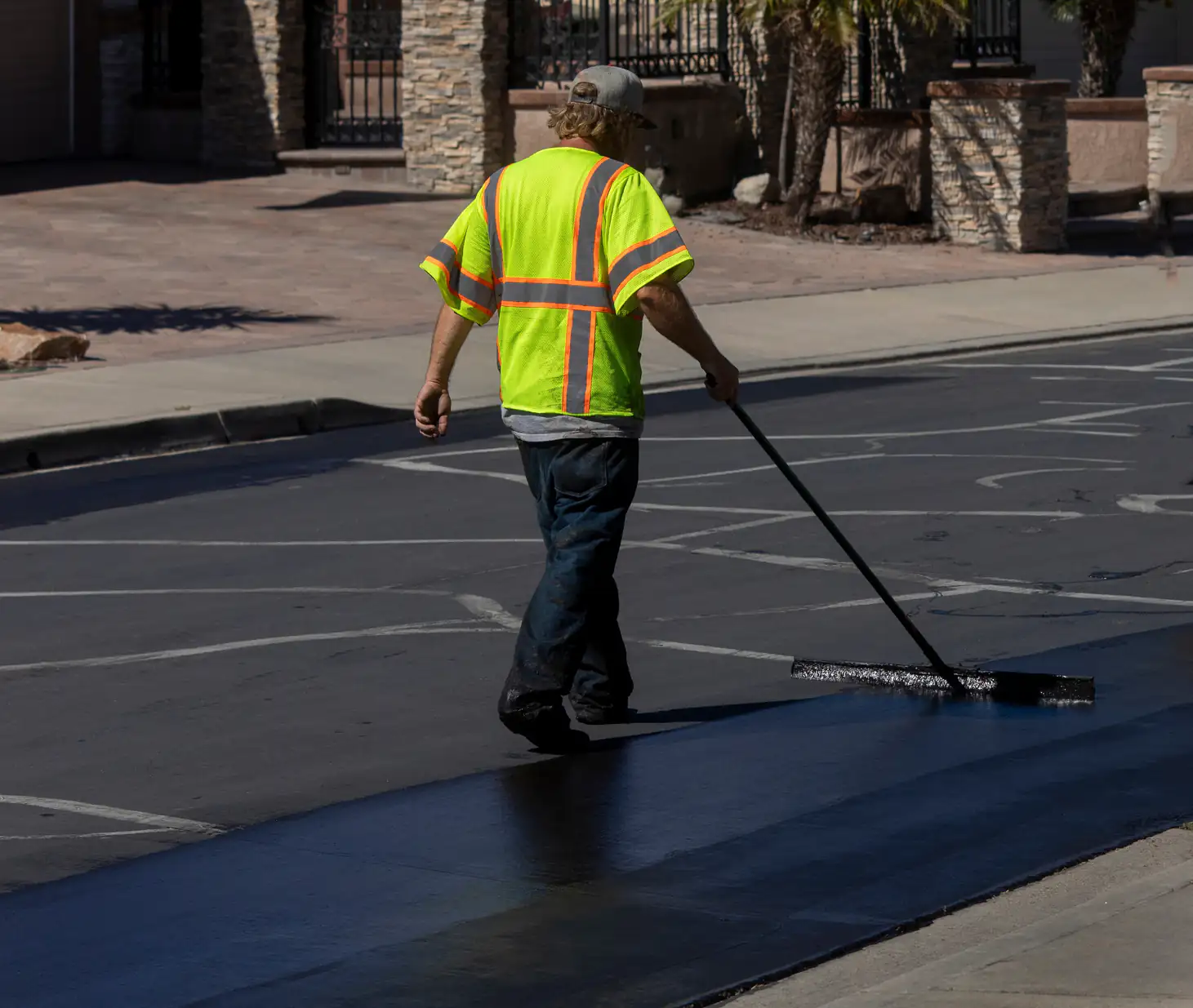
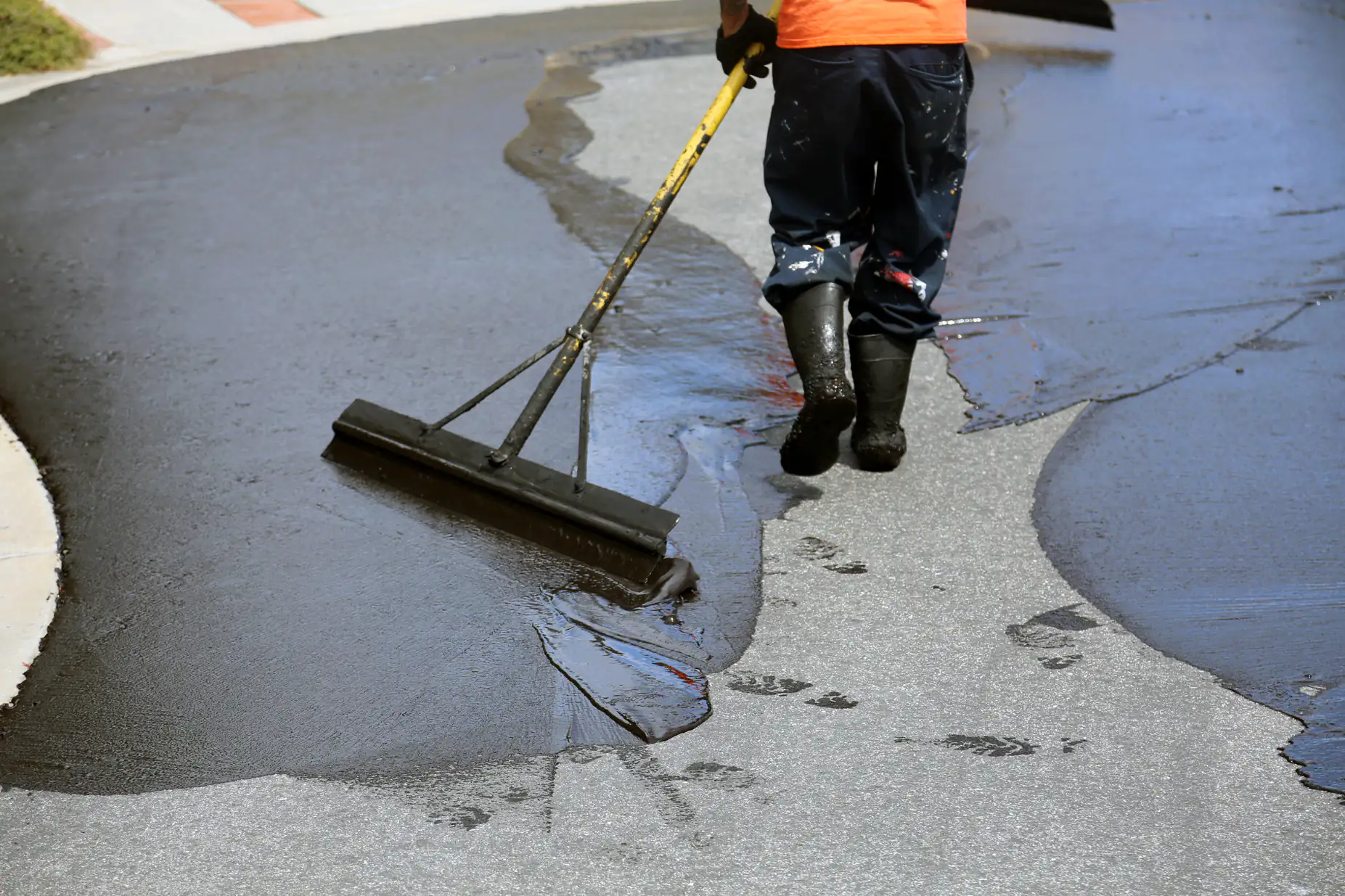
Professional asphalt driveway sealing stops that cycle before it starts. A proper two-coat application creates a waterproof barrier that keeps moisture out, protects against UV damage all summer, and shields your asphalt from oil drips and gas spills that break down the binder. You’re not just making it look darker—you’re adding years of life to a surface that probably cost you $5,000 or more to install.
The difference between a sealed driveway and an unsealed one in Hamburg is dramatic. Sealed surfaces last 20-25 years. Unsealed ones start failing around year 10. That’s the gap we’re closing.
We’ve spent over 20 years working in Morris, Sussex, and Somerset Counties. We’re not a national franchise that shows up with a one-size-fits-all approach. We know what Hamburg winters do to asphalt because we’ve been repairing and protecting driveways here since before most sealcoating companies even existed.
Our crews understand the difference between applying sealer and applying it correctly. Temperature matters. Timing matters. The number of coats matters. We use professional-grade asphalt emulsion sealer that meets New Jersey’s environmental standards and outperforms the cheap stuff you’ll find at big-box stores. Every job gets the same attention whether it’s a residential driveway or a commercial parking lot.
You’ll get an upfront quote with no surprise charges, a crew that shows up when we say we will, and a finish that actually lasts multiple seasons. That’s how we’ve stayed in business this long.
We start by inspecting your driveway for cracks, potholes, and drainage issues. If there’s damage, we repair it first—sealer won’t fix structural problems, it only prevents them. Any cracks wider than a quarter-inch get filled with hot rubberized crack filler that flexes with temperature changes instead of cracking again in six months.
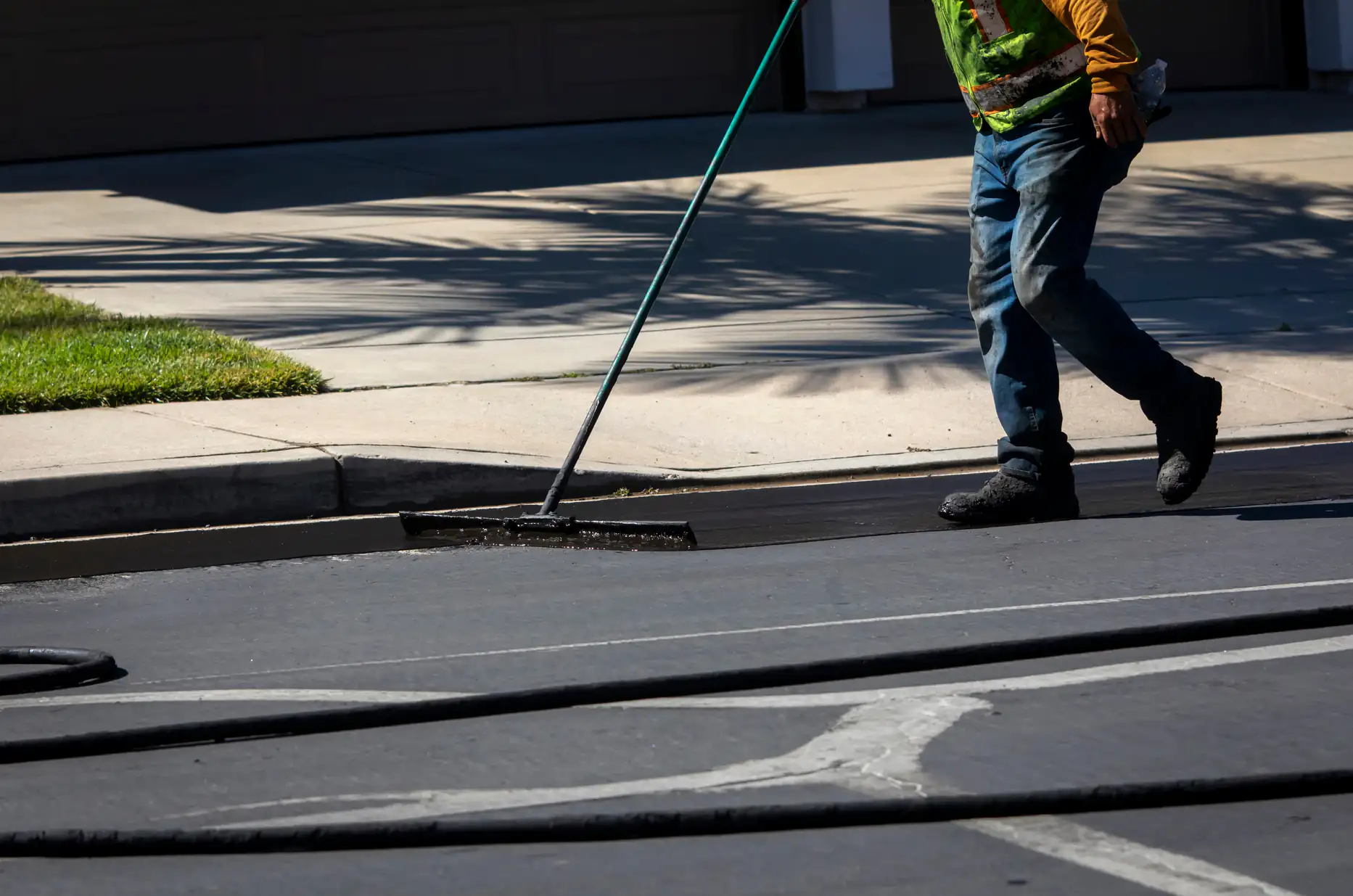
Next, we clean the entire surface. Oil stains, dirt, vegetation, and loose debris all have to go or the sealer won’t bond properly. We use commercial equipment to make sure we’re applying sealer to asphalt, not to a layer of grime.
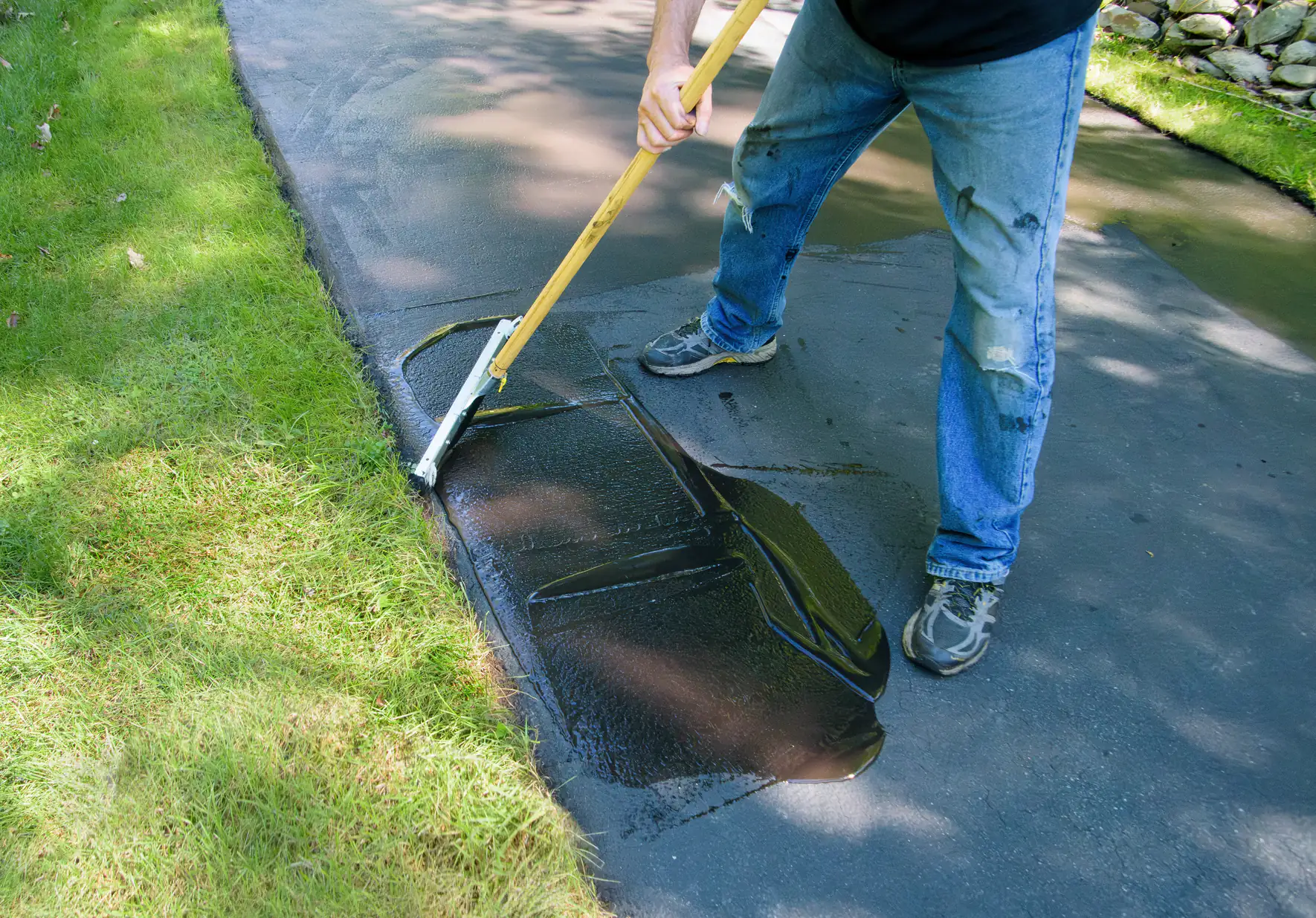
Then we apply two coats of professional-grade asphalt emulsion sealer. The first coat penetrates and bonds. The second coat builds thickness and durability. We don’t cut corners with single-coat applications that wear off in a year. Two coats give you 3-4 years of protection in Hamburg’s climate, sometimes longer depending on traffic and weather exposure.
After application, your driveway needs 24-48 hours to cure before you can drive on it. We’ll give you a specific timeline based on forecast temperatures. That’s it. No ongoing maintenance, no special treatments. Just a protected surface that handles winter the way it should.
Ready to get started?
Every sealcoating job includes crack repair, surface cleaning, and two full coats of sealer. We’re not showing up with a squeegee and a bucket. You’re getting a crew with professional spray equipment, proper safety gear, and the experience to handle edges, transitions, and problem areas that DIY jobs always mess up.
We also handle the details most homeowners don’t think about. That means edging along garage doors and walkways so you don’t get sealer where it doesn’t belong. It means protecting landscaping and adjacent surfaces. It means knowing when conditions aren’t right for application and rescheduling instead of doing subpar work.
Hamburg driveways face specific challenges. Your freeze-thaw cycles run from November through March, sometimes longer. Your summer heat hits 85-90°F regularly, which accelerates UV damage. We account for that when we schedule jobs and select materials. Timing matters as much as technique, and we’ve been doing this long enough to know the difference.
The cost of professional driveway sealing in Hamburg typically runs $0.15-$0.25 per square foot depending on driveway size and condition. That’s a fraction of what you’d pay for resurfacing ($2-$4 per square foot) or full replacement ($5-$7 per square foot). You’re looking at a few hundred dollars now versus several thousand later.
Most driveways in Hamburg need sealing every 2-3 years. That timeline shifts based on a few factors: how much traffic your driveway gets, how much sun exposure it receives, and how well it was sealed the last time.
If your driveway sits in full sun all day, UV damage accelerates and you might need sealing closer to every 2 years. If it’s mostly shaded and sees light use, you can stretch it to 3 years. The test is simple—if water soaks into the asphalt instead of beading on the surface, it’s time to reseal.
New driveways are different. You need to wait 6-12 months after installation before applying the first seal coat. Fresh asphalt needs time to cure and release oils. Sealing too early traps those oils and prevents proper bonding.
Sealcoating protects the surface you already have. Resurfacing replaces it. They solve different problems at very different price points.
Sealcoating applies a protective layer over existing asphalt that’s still in decent shape. It fills minor surface imperfections, restores color, and creates a barrier against water, UV rays, and chemicals. Cost runs $0.15-$0.25 per square foot. It’s preventive maintenance.
Resurfacing scrapes off the top layer of damaged asphalt and replaces it with fresh material. You do this when the surface is too cracked or worn for sealing to help, but the base underneath is still solid. Cost jumps to $2-$4 per square foot. It’s corrective work.
If your driveway has widespread cracking, potholes, or base failure, sealing won’t fix it. But if it’s just faded, showing minor wear, or hasn’t been sealed in 3+ years, sealcoating is exactly what it needs.
You can buy sealer at any hardware store, but getting professional results is harder than it looks. Most DIY jobs fail because of surface prep, not the sealer itself.
If you don’t clean the driveway thoroughly, the sealer sits on top of dirt and oil instead of bonding to asphalt. It peels within months. If you don’t fill cracks first, water still gets underneath and the damage continues. If you apply sealer when it’s too cold, too hot, or rain is coming, it won’t cure properly.
Professional crews have commercial cleaning equipment, hot rubberized crack filler, spray application systems, and years of experience reading weather conditions. We also know how to handle problem areas like steep slopes, drainage issues, and transitions between asphalt and concrete. A homeowner with a squeegee and a bucket can’t replicate that.
The cost difference between DIY and professional work is smaller than most people think—maybe $100-200 for an average driveway. But the durability difference is massive. DIY jobs last 1-2 years if you’re lucky. Professional applications last 3-4 years minimum.
Late spring through early fall is your window—roughly May through September. You need consistent temperatures above 50°F during application and for 24-48 hours afterward while the sealer cures.
Early summer is ideal. The asphalt is warm, which helps the sealer penetrate and bond. Humidity is manageable. You’ve got long days and stable weather patterns. By late September, you’re gambling with temperature swings and early frost that can ruin a fresh application.
Don’t wait until October thinking you’ll squeeze it in before winter. If temperatures drop unexpectedly or rain moves in, you’re stuck with a driveway that can’t be sealed until next spring. That means another winter of freeze-thaw damage that could’ve been prevented.
Spring sealing works too, but you need to wait until nighttime temperatures stay consistently above 50°F. One cold night can prevent proper curing even if daytime temps look good. We track forecasts closely and won’t schedule a job unless conditions are right for the full cure period.
Plan on 24-48 hours before driving on your driveway. The exact timeline depends on temperature, humidity, and sun exposure during curing.
Sealer might look dry after 4-6 hours, but that’s just the surface. The material underneath is still curing. Drive on it too early and you’ll leave tire marks, scuff the finish, or pull the sealer right off the asphalt. Those marks are permanent—you can’t buff them out.
Hot, sunny, low-humidity days cure faster. Cool, cloudy, or humid conditions take longer. We’ll give you a specific timeline when we finish the job based on the forecast. If rain is coming within 48 hours, we won’t start the job. Water hitting uncured sealer washes it away and you’re left with a blotchy mess.
Foot traffic is usually fine after 6-8 hours, but keep kids, pets, and lawn equipment off until we give you the all-clear. The investment you’re making in sealing only pays off if the material gets time to cure properly.
Sealcoating extends driveway life by 10-15 years when done correctly and maintained on schedule. It’s not cosmetic—it’s the difference between a 25-year driveway and a 10-year driveway.
Unsealed asphalt oxidizes. UV rays break down the binder that holds aggregate together. The surface turns gray and brittle. Small cracks form. Water gets in, freezes, expands, and turns those small cracks into big ones. Within a few years, you’re looking at potholes and base failure.
Sealer blocks UV rays, repels water, and keeps the binder intact. Your asphalt stays flexible enough to handle temperature swings without cracking. The surface resists damage from oil, gas, and chemicals that would otherwise eat through the binder. You’re not just delaying problems—you’re preventing them.
The math is straightforward. Sealing every 2-3 years costs a few hundred dollars each time. Replacing a failed driveway costs $5,000-$10,000 depending on size. Spending $1,500-$2,000 on sealing over 20 years beats spending $8,000 on replacement after 10 years. That’s not cosmetic. That’s protecting an investment.