
Hear from Our Customers
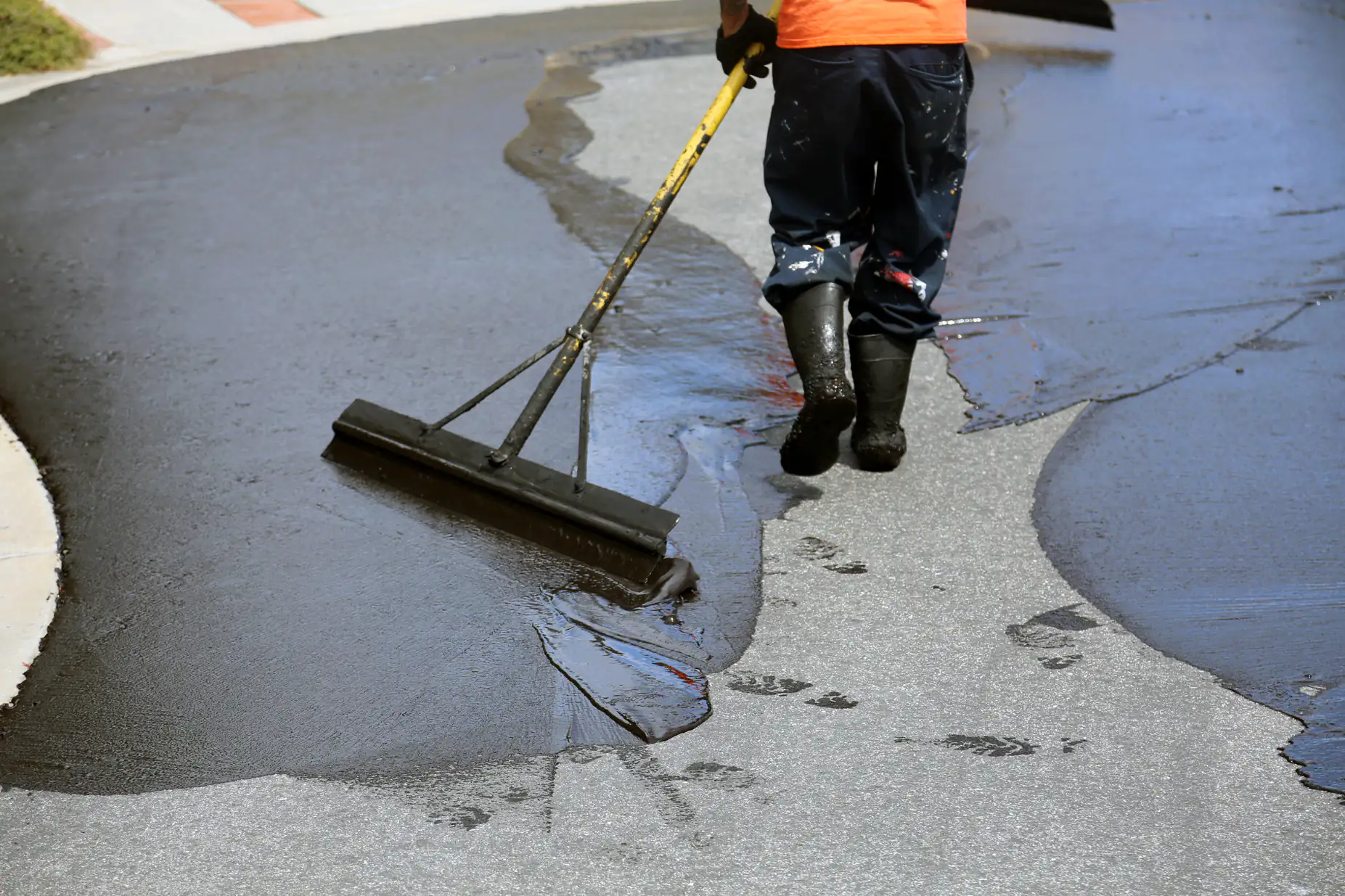
Your driveway takes a beating every winter. Water seeps into tiny cracks during the day, freezes overnight, and expands with enough force to split the asphalt apart from the inside. This happens dozens of times between November and March in Franklin Center.
Sealcoating creates a waterproof barrier before winter hits. It keeps moisture out, blocks road salt from breaking down the asphalt binders, and protects against UV damage that makes pavement brittle. The result is a driveway that looks better and lasts longer without the constant cycle of crack filling and patching.
Most homeowners spend $200-500 every 2-3 years on driveway sealcoating. That’s significantly less than the $5,000+ you’ll pay to replace a driveway that wasn’t maintained. The math is simple: a small investment now prevents a major expense later.
We’ve served Franklin Center and Somerset County for over 20 years. We know exactly what happens to asphalt in this area because we’ve seen it season after season.
Franklin Center sits in a zone that experiences more freeze-thaw cycles than most of New Jersey. That means your driveway needs protection that’s applied correctly, at the right time of year, with materials that actually work in this climate. We use high-grade hot mix asphalt and commercial sealers designed for northern New Jersey conditions.
You’ll get a written estimate that breaks down exactly what you’re paying for. No surprises, no upselling once we show up. Just straightforward work done right the first time.
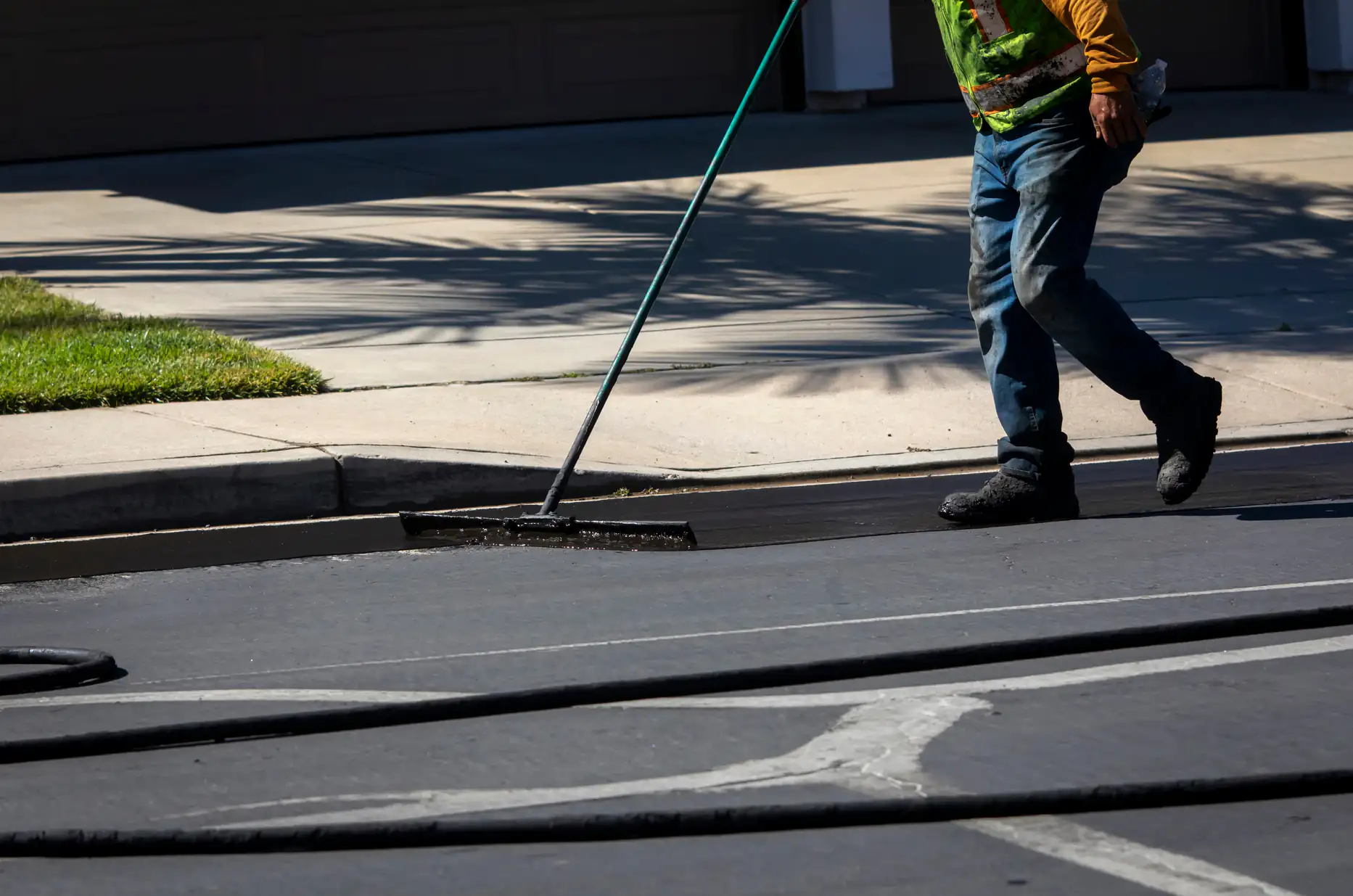
First, we clean the entire surface. Any dirt, oil, or debris prevents the sealer from bonding properly, so this step matters more than most driveway sealer companies admit.
Next, we fill any existing cracks with hot rubberized crack filler. This creates a flexible seal that moves with the asphalt as temperatures change. Skipping this step means water will still get underneath, which defeats the purpose of sealcoating.
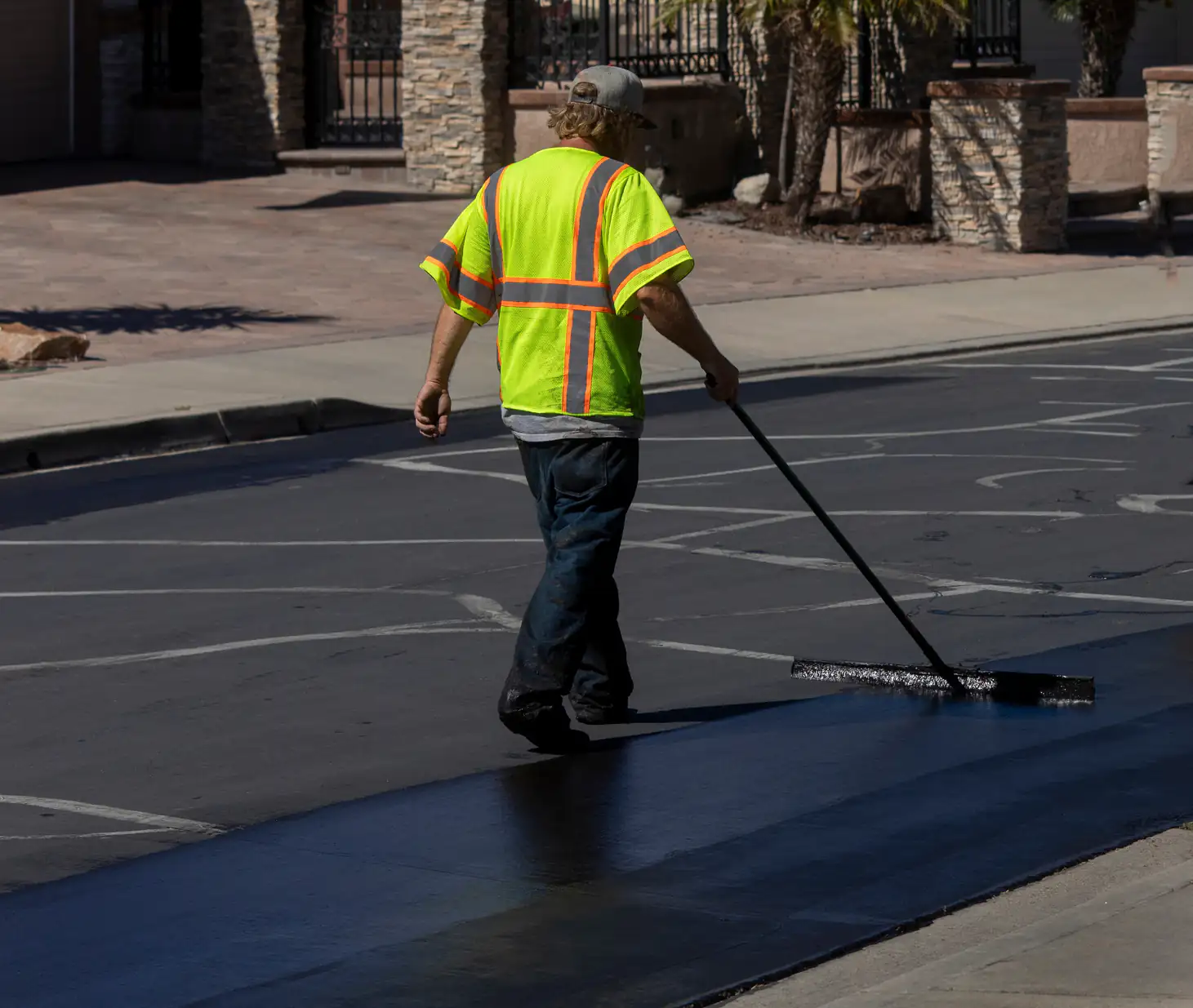
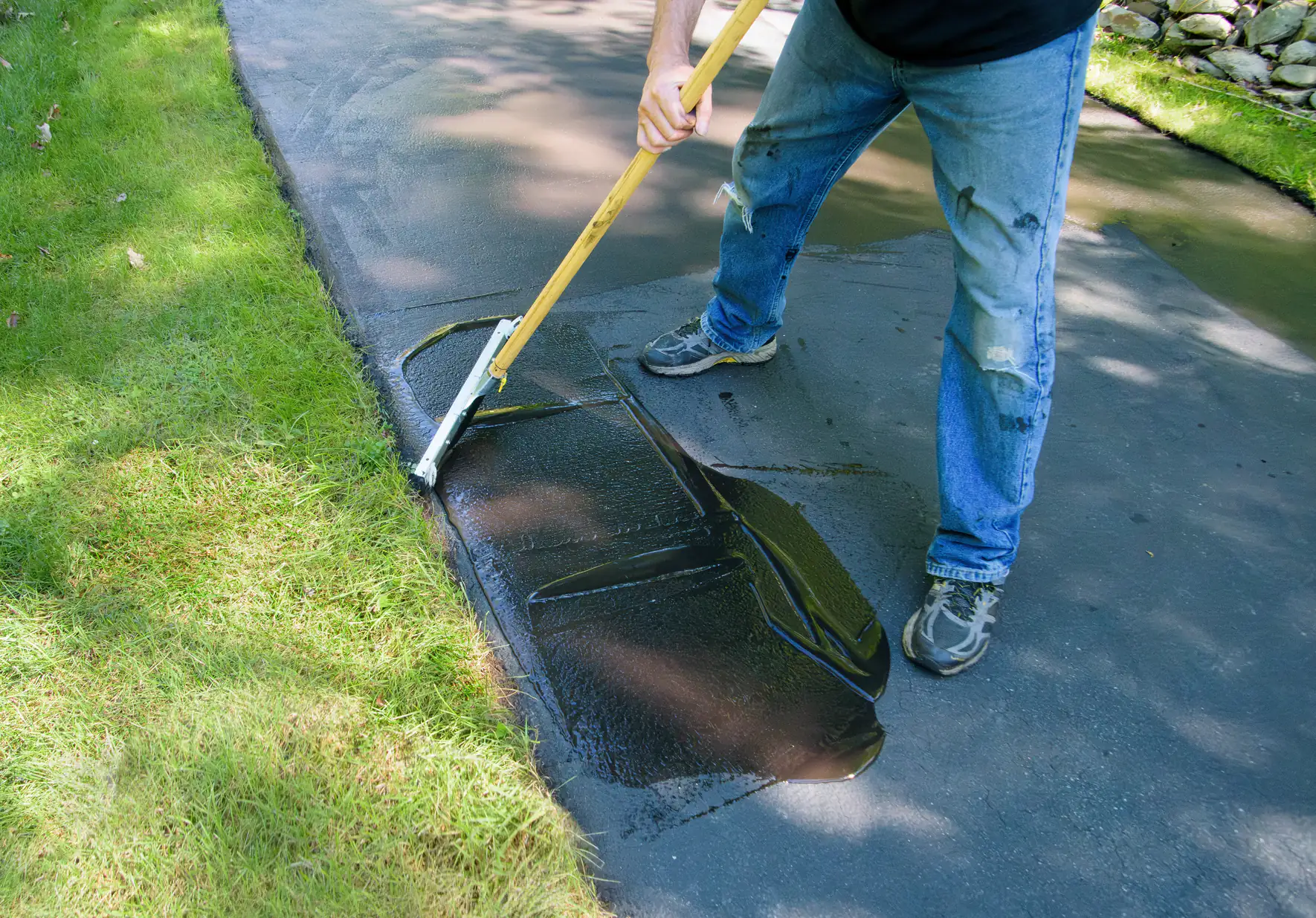
Then we apply two coats of commercial-grade sealer using professional equipment. The first coat soaks in and bonds to the asphalt. The second coat creates the protective barrier that blocks water, salt, and UV rays. We let each coat dry completely before applying the next.
The whole process takes one to two days depending on driveway size and weather conditions. You’ll need to stay off the driveway for 24-48 hours while it cures. After that, you’re good to go with a driveway that’s protected for the next 2-3 years.
Ready to get started?
Driveway sealing prices in Franklin Center typically run between $0.30 and $0.50 per square foot. For an average two-car driveway (about 600 square feet), you’re looking at $200-400 for a complete job including cleaning, crack filling, and two coats of sealer.
That price includes surface cleaning with commercial blowers and power washing if needed. It includes hot crack filler for any cracks wider than a quarter inch. And it includes two full coats of coal tar or asphalt-based sealer applied with a spray system for even coverage.
What affects the cost of asphalt sealing? Driveway size is the obvious one. But condition matters too. If your driveway has extensive cracking or areas where the asphalt is already breaking apart, you’ll need repairs before sealing makes sense. We’ll tell you upfront if that’s the case.
Timing also plays a role in Franklin Center. Fall is the ideal window for driveway sealcoating near me searches because temperatures are moderate and the sealer has time to cure before winter. Spring works too, but you’re racing against summer heat that can make the sealer cure too quickly.
Every 2-3 years is the standard recommendation for residential driveways in Franklin Center. Some driveway sealers contractors will tell you every year, but that’s overkill for most homes and can actually cause buildup that cracks and peels.
The 2-3 year timeline assumes normal use and proper application. If your driveway gets heavy traffic or sits in full sun all day, you might lean toward every two years. If it’s shaded and sees light use, every three years is fine.
You can tell it’s time when the asphalt starts looking gray instead of black, or when water stops beading up on the surface and soaks in instead. Those are signs the previous sealcoat has worn down and your driveway is exposed again.
Sealcoating protects existing asphalt. Paving means installing new asphalt or replacing what’s already there. They’re completely different services with different costs and purposes.
Think of sealcoating like painting your house. It protects the surface and makes it look better, but it doesn’t fix structural problems. If your driveway has major cracks, potholes, or areas where the base has failed, sealing over it won’t help. You need repair or replacement first.
Paving costs $3-7 per square foot in Franklin Center. Sealcoating costs $0.30-0.50 per square foot. That’s why regular sealcoating makes financial sense. It extends the life of your existing asphalt so you can delay that much larger paving expense by 10-15 years.
No. Sealer needs temperatures above 50 degrees to cure properly, and ideally above 60. In Franklin Center, that means late spring through early fall is your window. October can work if we get a warm stretch, but November through March is out.
Cold temperatures prevent the sealer from bonding to the asphalt. It’ll look fine initially, but it won’t cure correctly and will start peeling or flaking within weeks. You also need at least 24 hours of dry weather after application, which gets harder to guarantee as fall turns to winter.
This is why fall is actually the best time for asphalt driveway sealing in Franklin Center. You get moderate temperatures, lower humidity, and you’re creating a protective barrier right before winter hits. Spring works too, but you’re competing with everyone else who waited until the snow melted.
Sealcoating prevents new cracks from forming by keeping water out of the asphalt. It doesn’t fix existing cracks unless we fill them first with crack filler, which is a separate step that should always be included in a proper sealing job.
Here’s what actually happens: asphalt is porous. Water seeps in, freezes, expands, and creates cracks from the inside out. Sealcoating fills those tiny pores and creates a waterproof surface layer. No water in means no freeze-thaw damage, which is what causes most driveway deterioration in Franklin Center.
But if you already have cracks, sealer alone won’t fix them. We fill those with hot rubberized crack filler before applying the sealcoat. The crack filler is flexible, so it moves with the asphalt as temperatures change instead of cracking apart like rigid fillers do.
Usually because they’re skipping steps or using diluted sealer. The material cost alone for quality sealer is $0.15-0.20 per square foot. Add labor, equipment, and crack filling, and there’s a floor below which someone is cutting corners.
Common shortcuts include applying only one coat instead of two, skipping the cleaning process, not filling cracks, or watering down the sealer to stretch it further. All of these save time and money upfront but result in a sealcoat that fails within a year instead of lasting 2-3 years.
You can ask any driveway sealcoating contractor in Franklin Center a few simple questions to figure out what you’re getting: Do you clean the surface first? Do you fill cracks before sealing? How many coats do you apply? What brand of sealer do you use, and do you dilute it? The answers will tell you whether you’re getting a real job or a quick spray-and-go.
A fresh sealcoat can be slightly slicker than bare asphalt when wet, but it shouldn’t be dangerously slippery. If it is, the sealer was applied too thick or the wrong product was used.
Quality sealers include additives like sand or grit that provide traction. We mix these in at the right ratio so the surface has texture even when wet. You’ll notice the difference between a properly sealed driveway and one where someone just dumped on a thick coat without any texture additives.
The slickness also decreases as the sealcoat wears in over the first few months. By the time winter arrives, your driveway will have normal traction. And because the sealed surface is smoother than cracked, deteriorating asphalt, snow removal is actually easier. Shovels and plows glide across instead of catching on rough spots.