
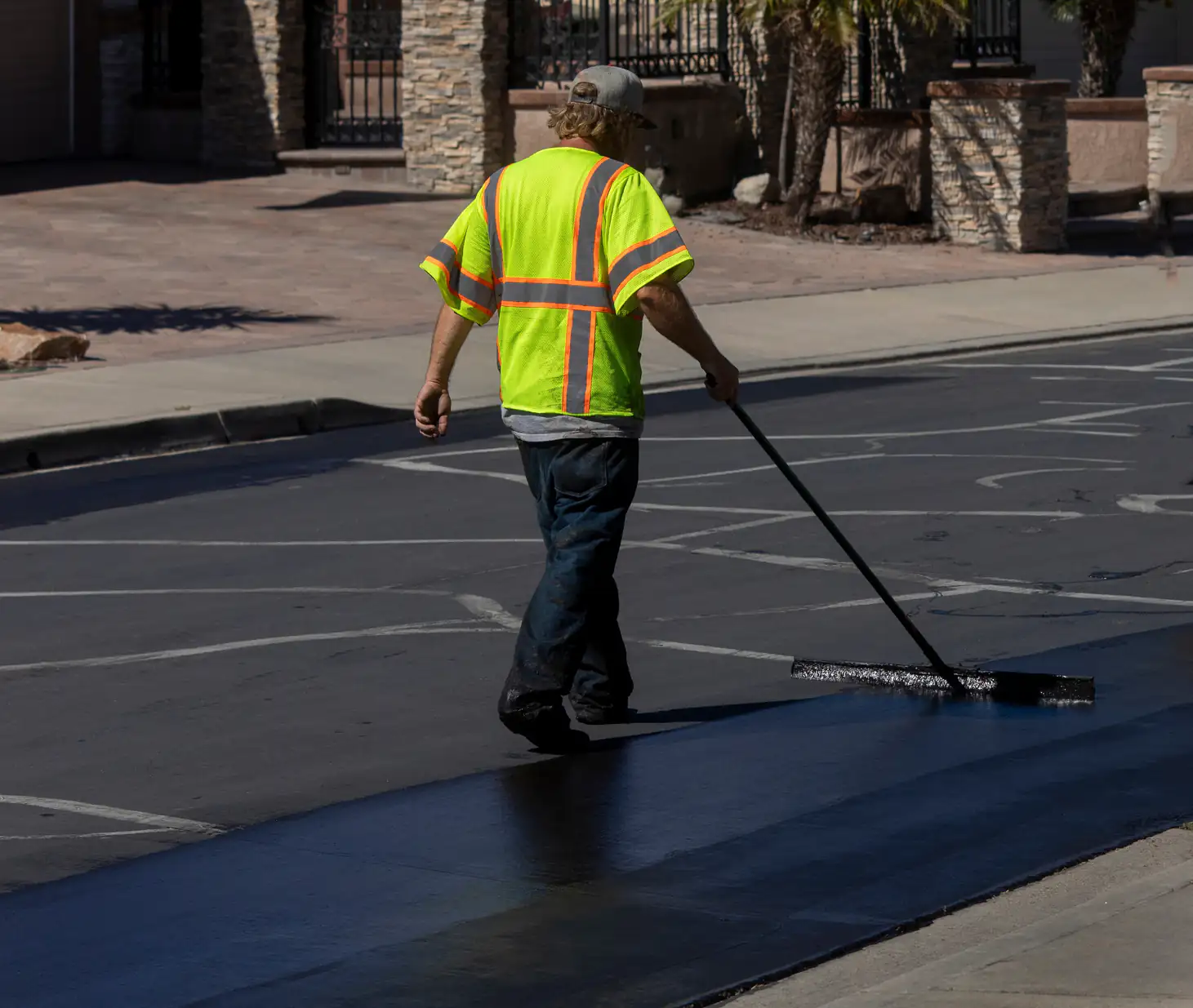
Hear from Our Customers
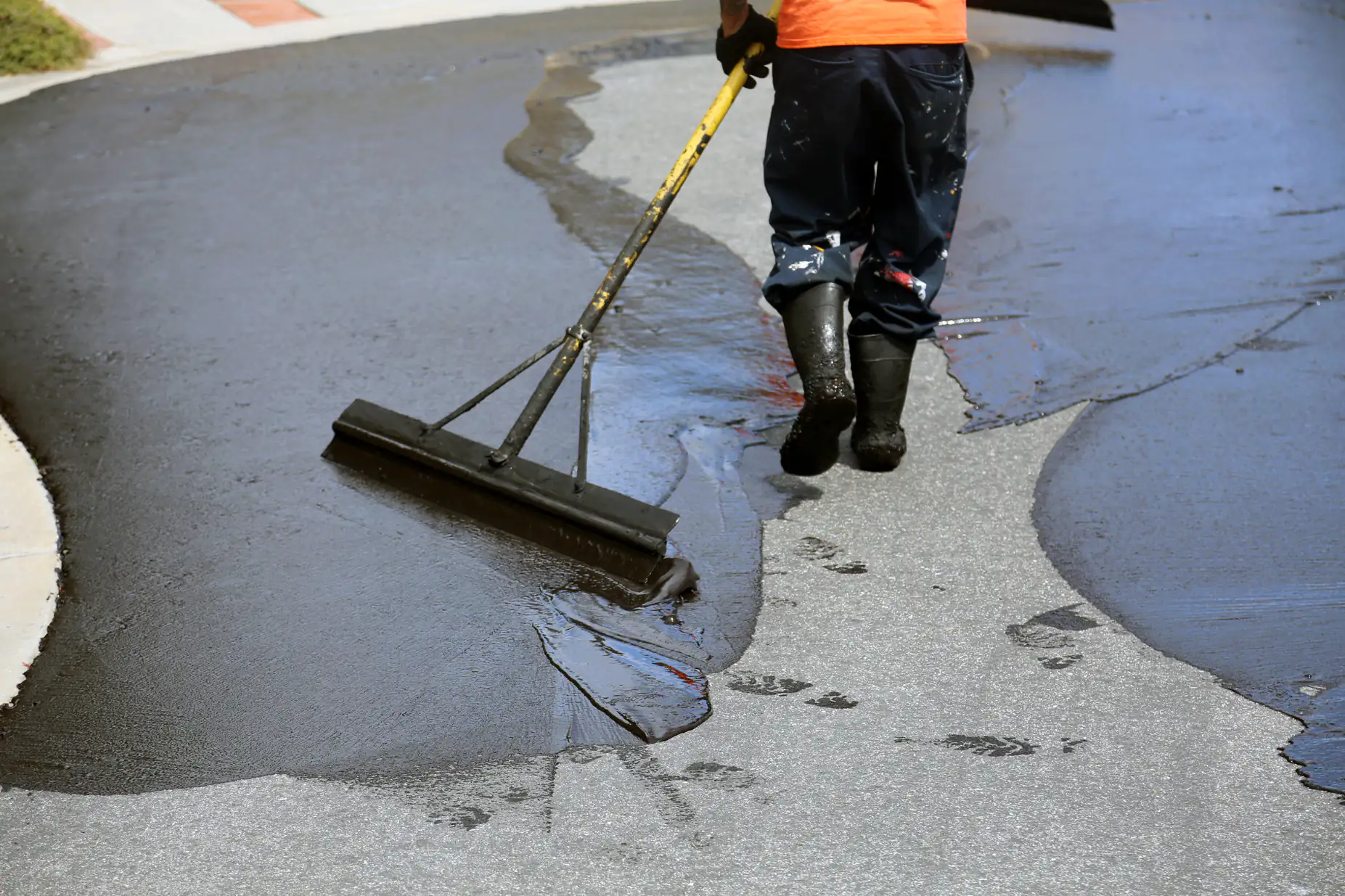
Here’s what happens when you seal your driveway the right way. Water stops getting into the cracks. That matters because Flanders sees 55 to 75 freeze-thaw cycles every winter—each one letting water expand by 9% and crack your asphalt wider.
Your driveway stays dark and clean-looking instead of faded and gray. The sealant blocks UV damage and creates a barrier against oil stains, gas drips, and the salt you’re spreading all winter.
The math is simple. A sealcoat job today runs a few hundred dollars. Repaving that same driveway costs $5,000 or more. Professional driveway sealcoating can push your asphalt lifespan from 15 years to 25+ years. That’s not marketing talk—that’s what happens when you keep water out and maintain the surface every few years.
We work across Morris, Sussex, and Somerset County. We’re based in Dover, and we’ve seen what happens to driveways in Flanders when they’re not maintained properly. The freeze-thaw cycles here are 40% more intense than Central or South Jersey.
We’re not the cheapest option, and that’s intentional. You’re paying for hot mix asphalt applied at the right temperature, proper base preparation, and materials that actually hold up through a North Jersey winter. We don’t rush jobs to squeeze in more appointments.
When you request a quote online, you’ll hear back within 24 to 48 hours. We show up when we say we will, we explain what we’re doing and why, and we don’t leave until the job meets our standard. That’s how we’ve built our reputation in Morris County.
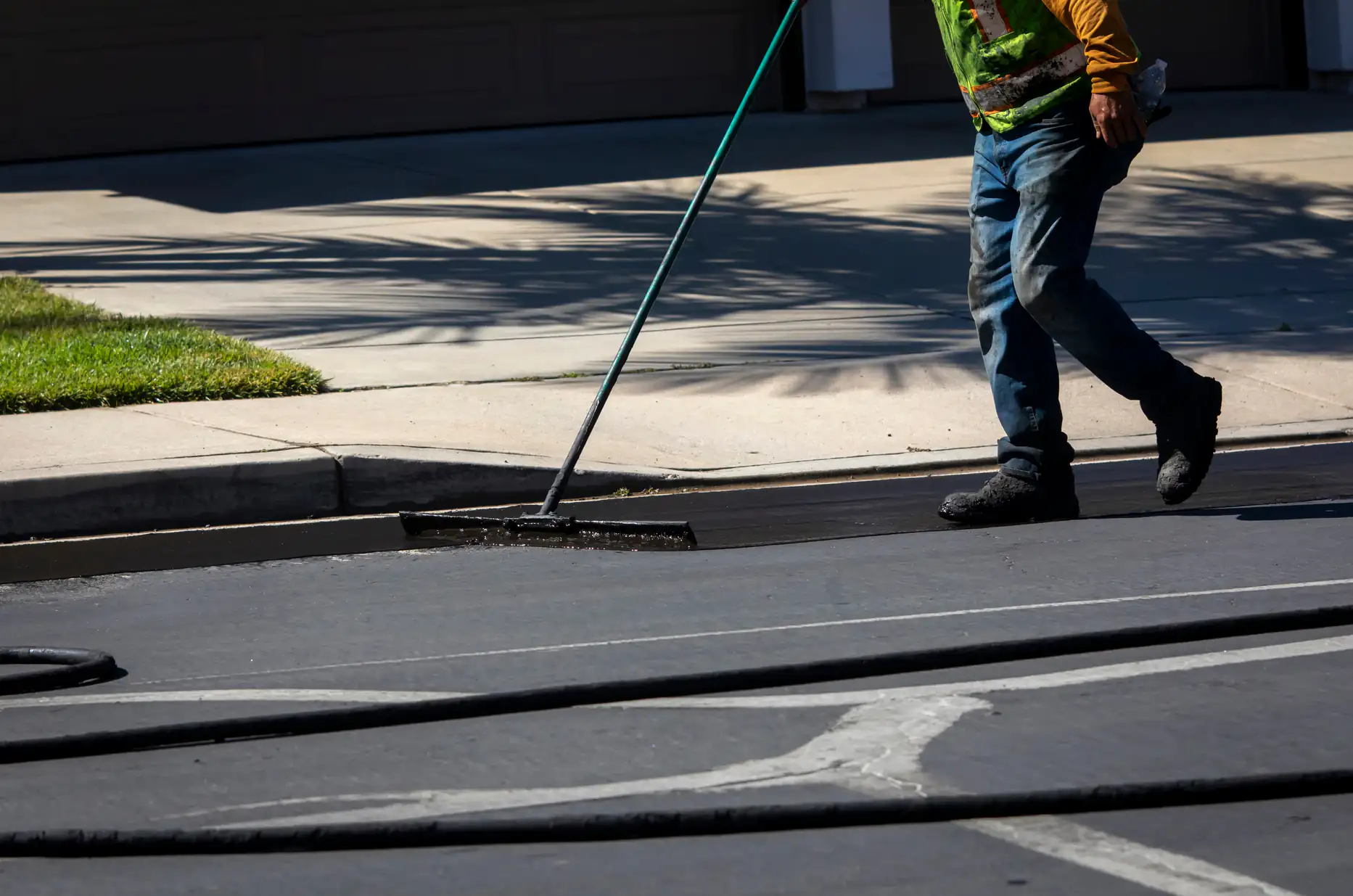
First, we inspect your driveway for cracks, potholes, and drainage issues. If there’s damage, we repair it before sealing—otherwise you’re just covering up problems that’ll get worse. Cracks get filled with rubberized crack filler that flexes with temperature changes.
Next, we clean the surface. Oil stains, dirt, and debris prevent sealant from bonding properly. We use commercial-grade cleaners and let everything dry completely. Moisture under the sealant causes peeling and failure within months.
Then we apply two coats of commercial-grade sealer using professional equipment. The first coat soaks into the asphalt and fills surface voids. The second coat creates the protective barrier. We apply at the right temperature—too cold and it won’t cure, too hot and it dries before it bonds.
You’ll need to stay off the driveway for 24 to 48 hours depending on weather. We’ll tell you exactly when it’s safe to park on it. After that, your driveway is protected and you’re looking at another 2 to 3 years before the next application.
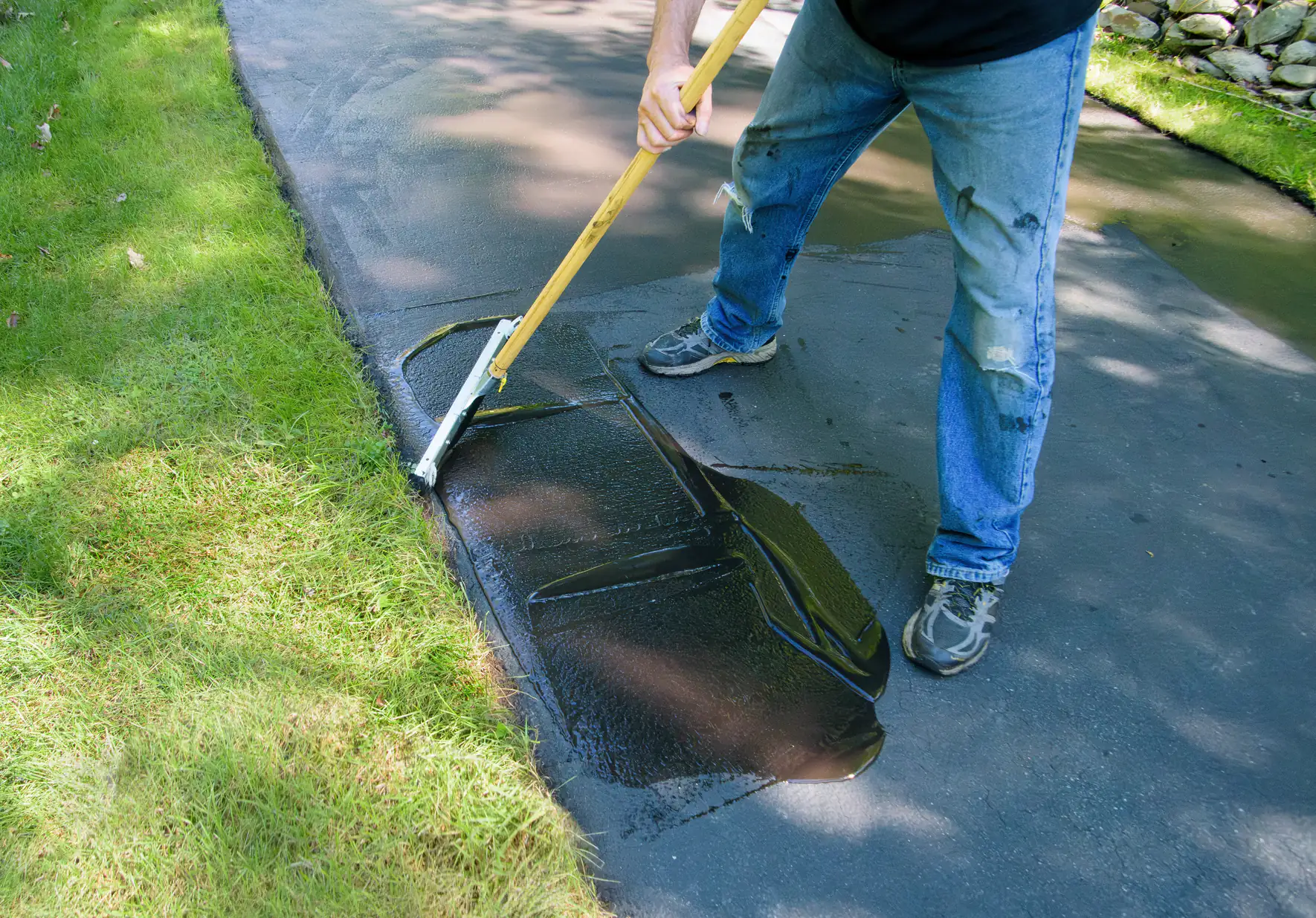
Ready to get started?
Driveway sealcoating isn’t just about slapping black coating on asphalt. You’re paying for crack repair, surface prep, commercial-grade materials, and proper application technique. The cheap guys skip steps. That’s why their work fails in a year.
In Flanders and Morris County, most residential driveways run between $300 and $800 for professional sealcoating, depending on size and condition. That includes crack filling, cleaning, and two coats of sealer. If you need pothole repairs first, those run $100 to $300 each for small holes, more for larger damage.
Here’s the part most driveway sealer companies won’t tell you: timing matters. Spring and fall are ideal because temperatures stay between 50°F and 85°F. Too cold and the sealer won’t cure. Too hot and it dries too fast. We don’t book jobs when the weather won’t cooperate, even if it means turning down work.
You should reseal every 2 to 3 years in North Jersey. That schedule keeps the protective layer intact and prevents water infiltration. Miss that window and you’re looking at crack repairs, then pothole repairs, then full replacement. Each stage costs exponentially more than the last.
Professional driveway sealcoating lasts 2 to 3 years in Flanders before you need to reapply. That timeline is shorter than warmer climates because North Jersey winters are brutal on asphalt.
You’re dealing with 55 to 75 freeze-thaw cycles every winter. Each cycle breaks down the sealant layer faster than normal wear. Add in the salt and chemicals you’re using for ice control, and the protective coating degrades quicker than it would in, say, South Jersey.
The quality of the original application matters too. If a contractor skips surface prep, uses diluted sealer, or only applies one thin coat, you might see failure in 12 months. Proper application with two coats of commercial-grade material gets you the full 2 to 3 years. After that, you’ll notice the surface starting to fade from black to gray—that’s your signal to reseal.
Late spring through early fall is your window for driveway sealing in Flanders. You need consistent temperatures between 50°F and 85°F, and no rain in the forecast for at least 24 hours after application.
September and October are actually ideal in North Jersey. Temperatures are stable, humidity is lower than summer, and you’re getting ahead of winter damage. The problem is that’s when everyone else wants to seal their driveway too. Good contractors book out 4 to 6 weeks during peak season.
Here’s a strategy most people miss: call in February or March to schedule for April or May. You get priority scheduling and you’re protected before the worst of summer heat. Just avoid sealing in temperatures above 90°F—the material dries too fast and won’t bond properly. And never seal if rain is coming within 24 hours. Water hits uncured sealer and you’ve wasted your money.
You can buy sealer at the hardware store and do it yourself. Whether you should depends on whether you want it done right or done over.
DIY sealcoating usually fails because homeowners skip the prep work. You need to fill every crack, remove all oil stains, and clean the surface completely. Most people don’t have commercial-grade crack filler or the equipment to clean properly. They also use consumer-grade sealer that’s pre-diluted and weaker than professional products.
Application technique matters too. We use spray equipment that applies an even coat at the right thickness. Homeowners use squeegees or brushes and end up with thin spots, thick spots, and visible lines. Those inconsistencies mean inconsistent protection.
The bigger risk is timing and weather. If you apply sealer and it rains 12 hours later, you’re starting over. If temperatures drop overnight, it won’t cure. We watch the forecast and know when conditions are right. One bad application costs more to fix than hiring someone who knows what they’re doing from the start.
No. Sealcoating is not crack filler. It’s a protective coating that goes over the surface. If you have cracks, they need to be filled separately before sealcoating happens.
This is where a lot of cheap driveway sealer contractors cut corners. They’ll spray sealer over cracked asphalt and tell you it’s fine. It’s not. Water still gets into those cracks, freezes, expands, and makes them bigger. You’ve just hidden the problem under a black coating.
Proper crack filling uses rubberized material that flexes with temperature changes. It gets applied into the crack, not over it. Once the crack filler cures, then you can sealcoat over the entire surface. That gives you actual protection instead of cosmetic coverage.
If your driveway has a lot of cracks—say, more than 30% of the surface—you might be past the point where sealing makes sense. At that stage, you’re looking at resurfacing or replacement. A good contractor will tell you that instead of taking your money for a sealcoat job that won’t fix the underlying damage.
Most residential driveways in Morris County cost between $300 and $800 for professional sealcoating. That price includes crack filling, surface cleaning, and two coats of commercial-grade sealer.
Size is the biggest factor. A standard two-car driveway around 600 square feet runs $300 to $400. Larger driveways or those with significant cracking cost more because of the prep work. If you need pothole repairs before sealing, add $100 to $300 per pothole depending on size.
The lowest bid isn’t always the best value. Some contractors dilute their sealer to cut costs, or they only apply one thin coat instead of two proper coats. That job might cost $200, but it’ll fail in a year and you’ll pay to have it done again. You’re better off paying $400 once every 3 years than $200 every year.
Compare what’s included in each quote. Are they filling cracks? Cleaning oil stains? Applying two coats? Using commercial or consumer-grade materials? Those details determine whether you’re getting protection or just black paint on your driveway.
Sealcoating prevents water from getting into your asphalt, which is what causes winter cracking. It doesn’t make your driveway indestructible, but it dramatically reduces freeze-thaw damage.
Here’s what happens without sealcoating: water seeps into tiny cracks and pores in the asphalt. When temperatures drop below freezing, that water expands by about 9%. It pushes the asphalt apart and makes the crack bigger. When it thaws, more water gets in. Repeat that 55 to 75 times per winter and you’ve got serious damage.
Sealcoating creates a waterproof barrier over the surface. Water can’t penetrate, so there’s nothing to freeze and expand. Your asphalt still experiences temperature fluctuations, but without the internal pressure from frozen water, it holds together much longer.
The key is maintaining that barrier. Once the sealcoat wears down—usually after 2 to 3 years in North Jersey—water can get back in. That’s why regular resealing every few years is what actually extends your driveway’s life. One application helps. Consistent maintenance over 20 years is what takes a driveway from 15-year lifespan to 25+ years.