
Hear from Our Customers
You’re not dealing with emergency pothole repairs every March. That’s the first thing you’ll notice.
When your driveway is properly sealed before winter hits, water can’t get into the surface. That means when temperatures drop below freezing in Brookdale and across Morris County, there’s nothing inside your asphalt expanding and pushing it apart. No freeze-thaw damage. No cracks turning into craters by spring.
Your driveway stays dark, smooth, and intact. Snow and ice melt faster on the sealed surface, so you’re not chipping away at stubborn buildup all winter. Road salt and de-icing chemicals sit on top instead of soaking in and breaking down the asphalt from the inside.
And when buyers drive up to your home, they see a well-maintained property. A sealed driveway doesn’t just protect your asphalt—it protects your curb appeal and your property value. Most homeowners spend under $500 on sealcoating. Compare that to the $3,000 to $8,000 you’ll pay to replace a driveway that wasn’t protected.
We’ve handled asphalt driveway sealing across Brookdale, Morristown, Madison, and the surrounding Morris County area for over two decades. We’re not new to this climate or these driveways.
We know what 40 to 50 freeze-thaw cycles per winter do to asphalt. We know how road salt eats through unprotected surfaces. And we know exactly which materials and methods actually hold up in northern New Jersey.
You’ll get a detailed written estimate before we start, clear communication throughout the job, and work that’s completed on schedule. We’re licensed, insured, and grounded right here in Morris County. When you call, you’re talking to people who’ve seen what happens when driveways aren’t maintained—and what’s possible when they are.
We start by cleaning your driveway completely. Any dirt, debris, oil stains, or vegetation gets removed because sealer won’t bond to a dirty surface. This step matters more than most homeowners realize.
Next, we inspect for cracks and damage. Small cracks get filled with hot rubberized crack filler before we seal. If we find structural issues, we’ll tell you upfront—sealcoating protects healthy asphalt, but it won’t fix a driveway that’s already failing.
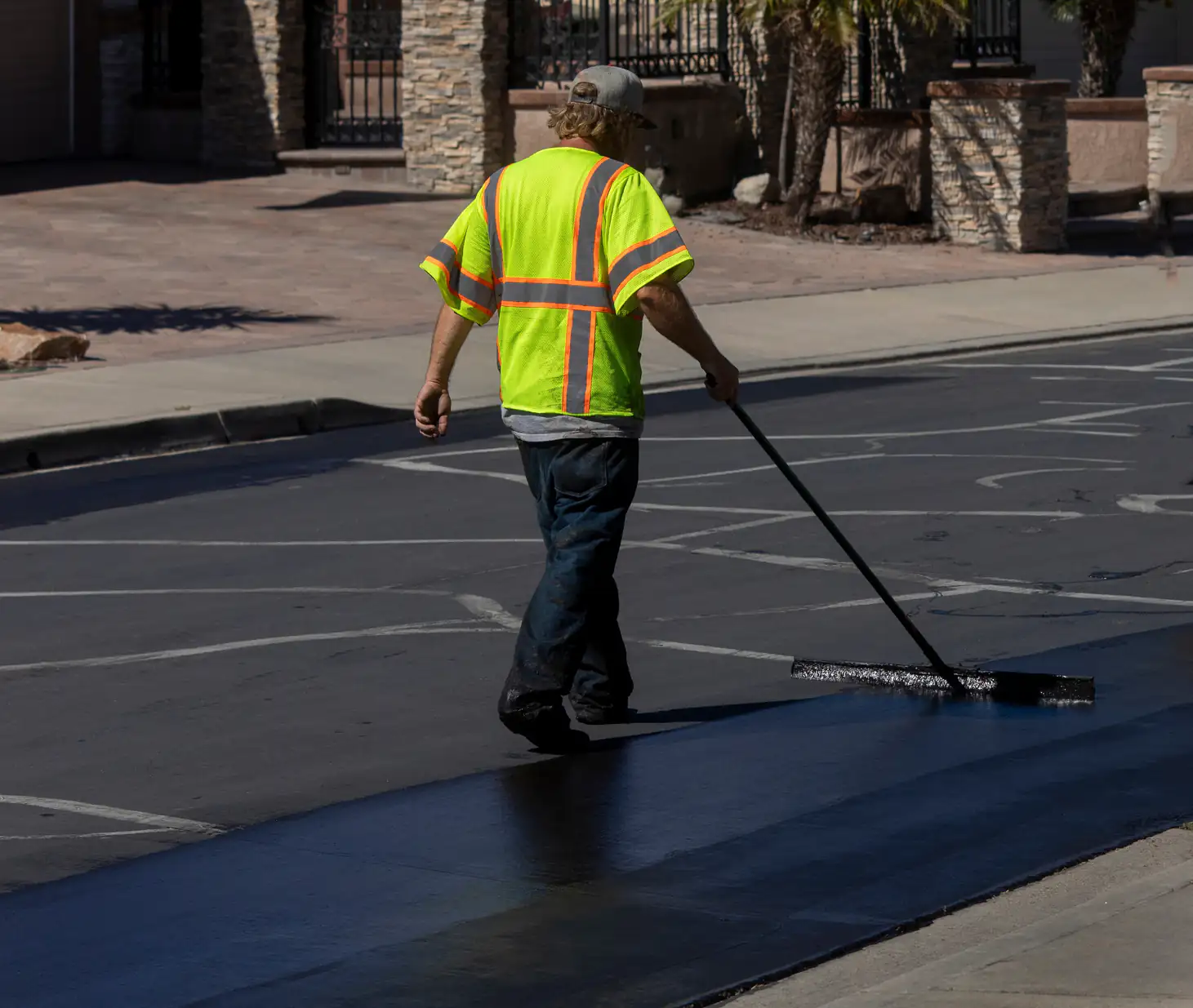
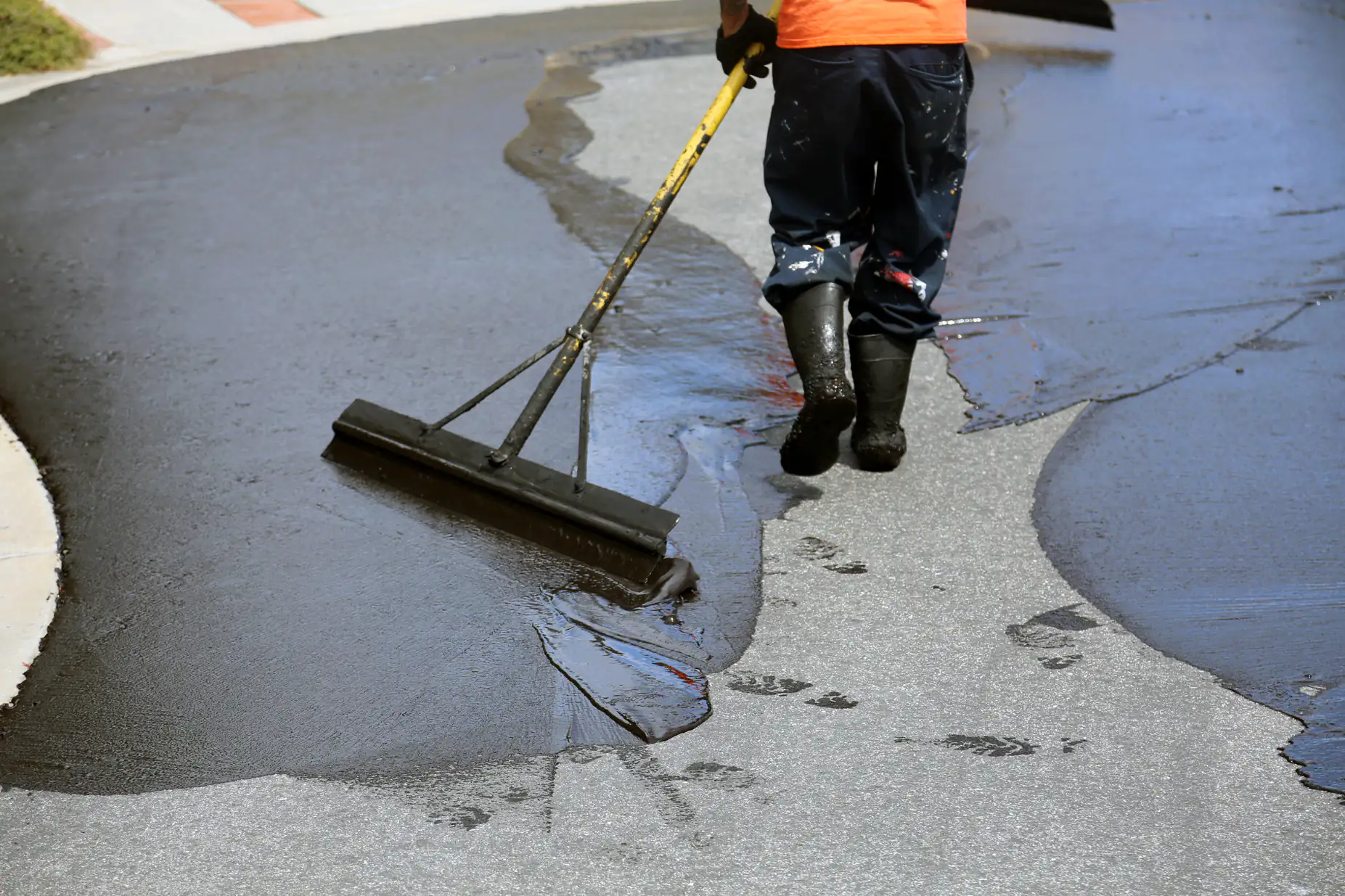
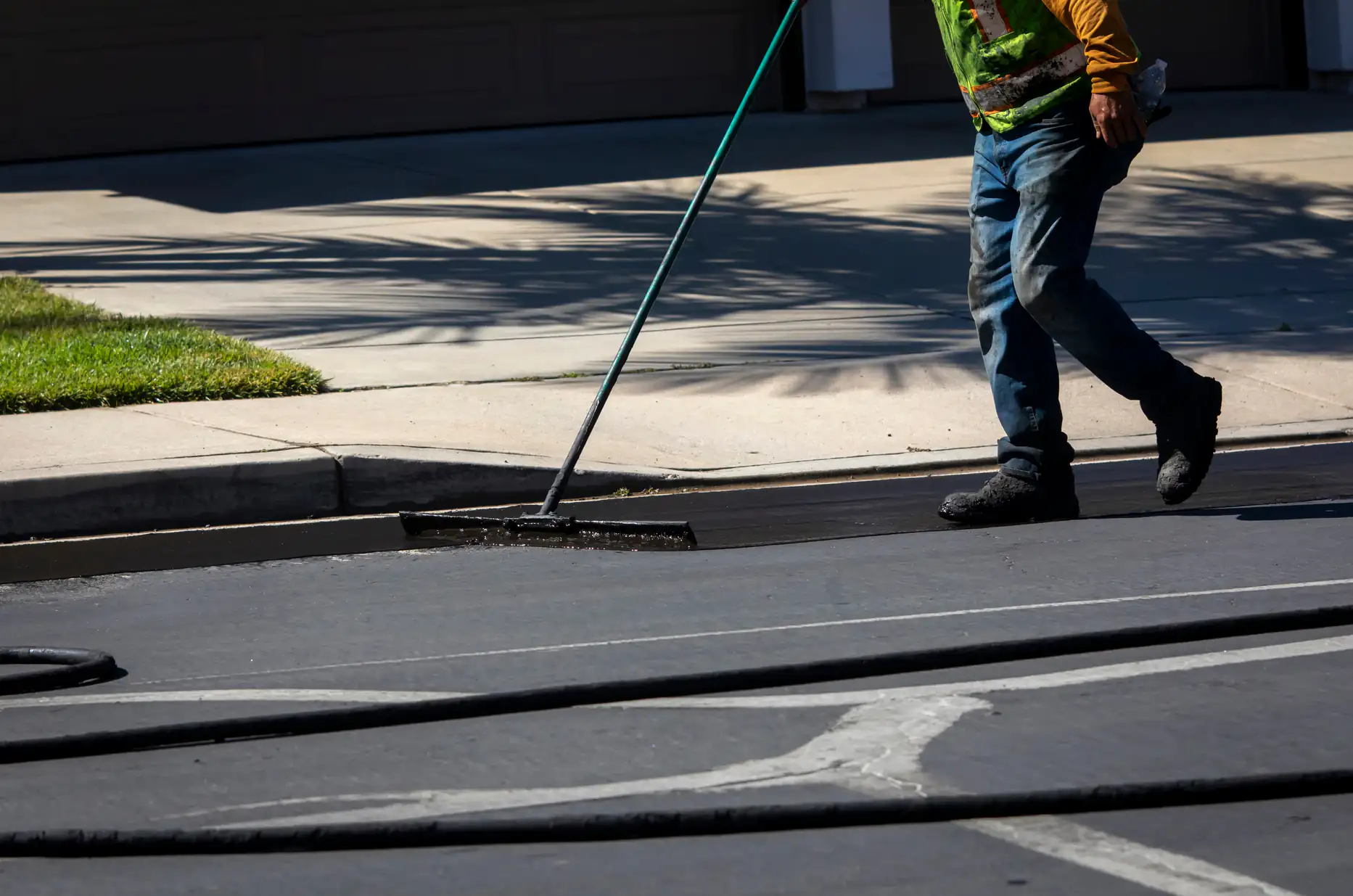
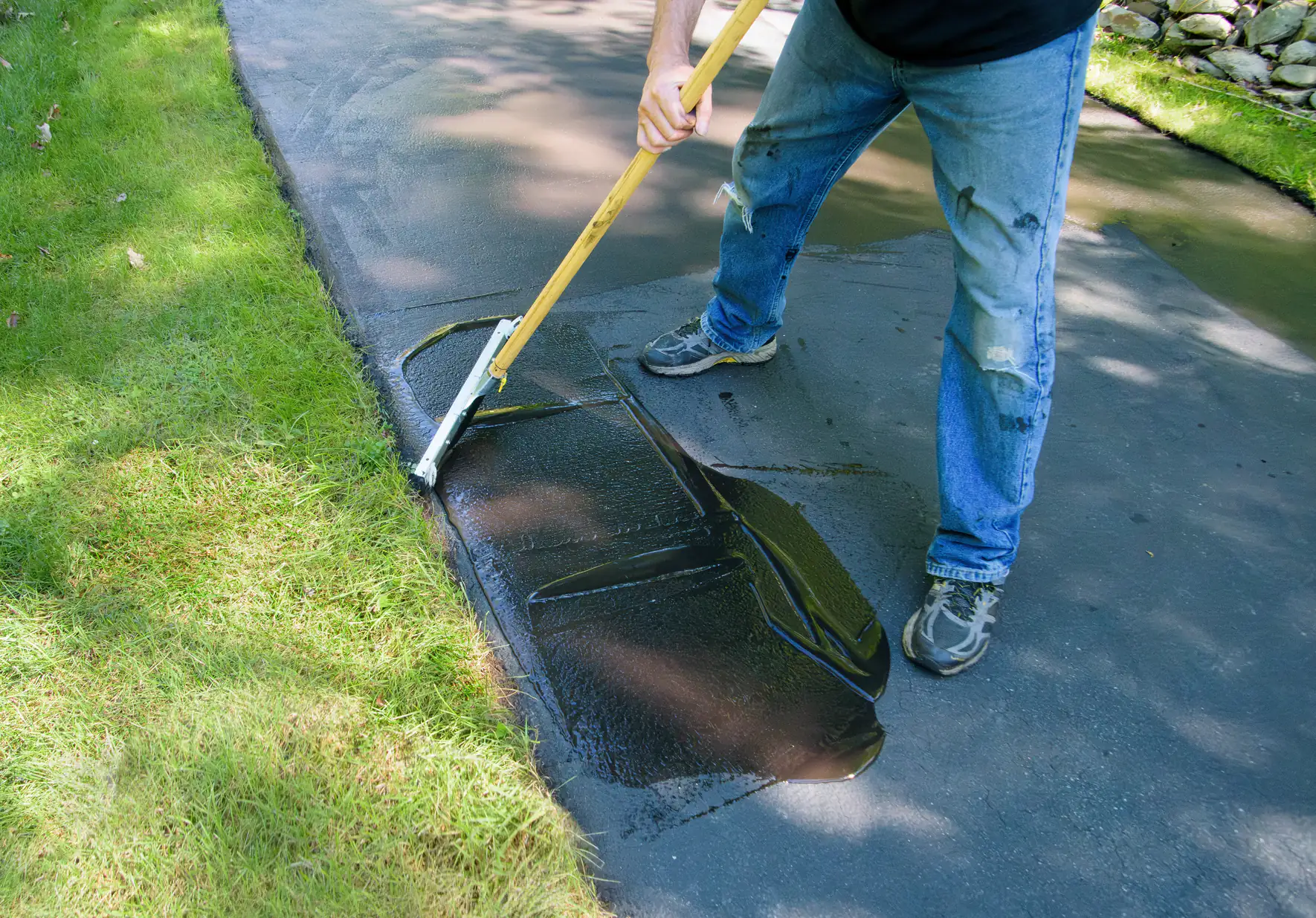
Then we apply two coats of commercial-grade coal tar sealer. Two coats give you 3 to 4 years of protection instead of having to reseal every year or two. We add sand to the mix for traction and durability, and we use professional application equipment to ensure even coverage and proper thickness.
The sealer needs 24 to 48 hours to cure depending on temperature and humidity. We’ll tell you exactly when you can drive on it again. Once it’s cured, you’ve got a protective barrier that keeps water out, resists oil and gas stains, and stands up to New Jersey winters.
Ready to get started?
Professional driveway sealcoating in Brookdale includes complete surface cleaning, crack filling for damage up to a quarter-inch wide, and two coats of commercial-grade coal tar sealer with sand additive. You’re also getting proper edge work and a crew that knows how to handle New Jersey’s temperature swings and moisture levels.
Most driveways in Morris County run between $300 and $500 for sealcoating, depending on size and condition. That’s roughly $0.25 to $0.45 per square foot. Compare that to $5 to $10 per square foot for complete driveway replacement, and you’ll see why sealcoating every 3 years makes financial sense.
Timing matters in this area. The best window for sealing is late spring through early fall when temperatures stay consistently above 50°F and you’ve got at least 48 hours of dry weather ahead. Fall is ideal because you’re creating a protective barrier right before winter arrives. Spring sealing works too, but you’re repairing damage instead of preventing it.
We use coal tar sealers because they perform better than asphalt emulsion in northern New Jersey. They offer superior resistance to gas and oil stains, better flexibility during freeze-thaw cycles, and a richer, darker finish that lasts longer. It’s what actually works in this climate.
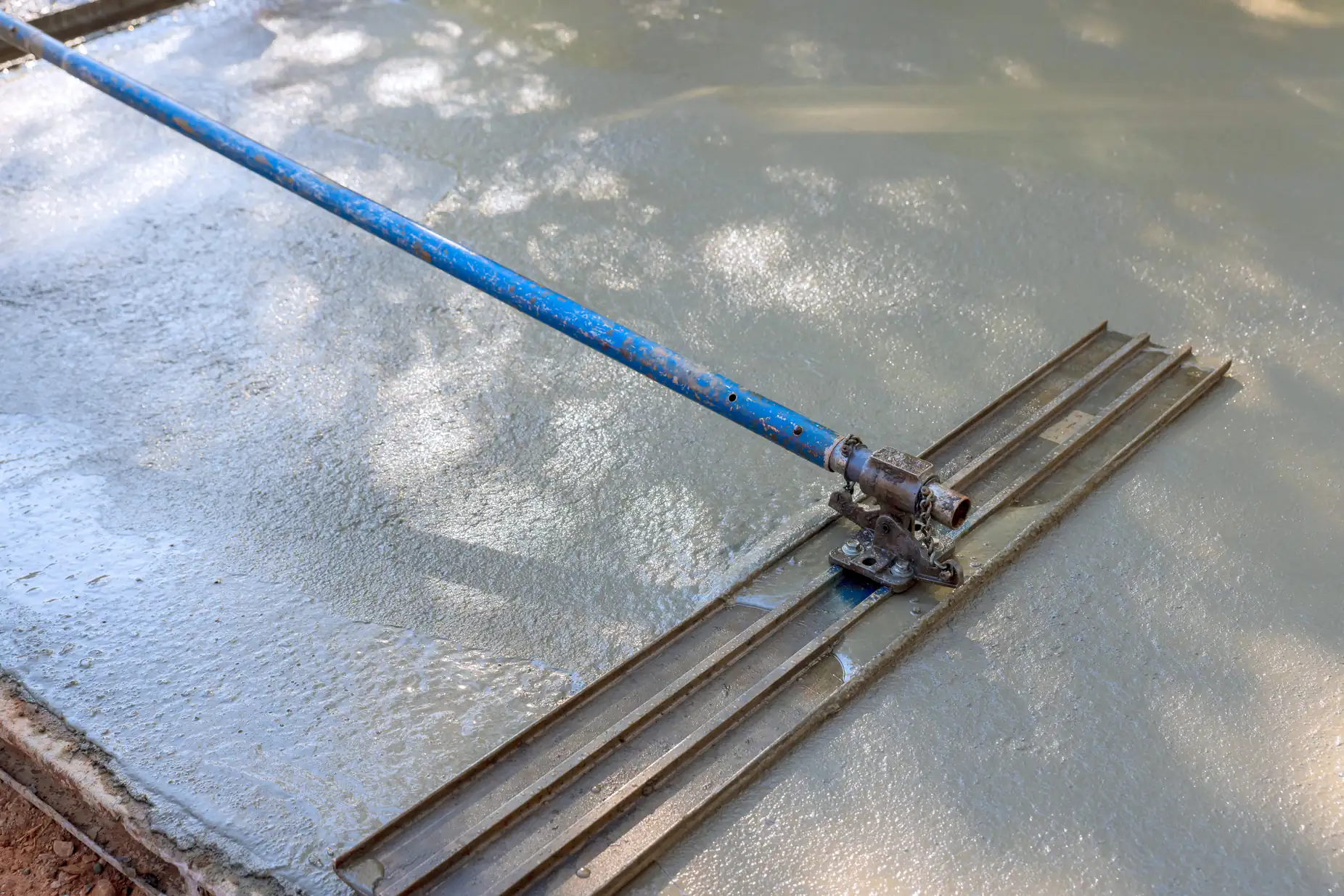
Most residential driveways in Brookdale cost between $300 and $500 to seal professionally. That breaks down to about $0.25 to $0.45 per square foot, which runs 15 to 20% higher than national averages but reflects New Jersey’s cost of doing business and the quality materials needed for this climate.
A typical two-car driveway is around 600 to 800 square feet. If yours is larger or has significant cracking that needs repair first, expect costs on the higher end. If it’s smaller and in good shape, you’ll pay less.
The real question isn’t what sealcoating costs—it’s what not sealcoating costs. A $400 sealcoat job today can prevent a $5,000 repaving job three years from now. Every crack you seal now is a pothole you won’t be fixing next spring. When you look at it that way, sealcoating is the cheapest insurance you can buy for your driveway.
Late spring and early fall are your best windows. You need temperatures consistently above 50°F during the day, ideally between 50°F and 85°F, with no rain expected for at least 48 hours after application.
Fall is the smarter choice if you can only seal once. Sealing in September or early October gives the coating time to cure before winter, so you’re entering the freeze-thaw season with full protection. That’s when sealcoating does its most important work—keeping water out of your asphalt so it can’t freeze, expand, and crack the surface apart.
Spring sealing works if you missed the fall window, but you’re playing catch-up. You’re sealing a driveway that just took a beating all winter instead of protecting it before the damage happens. May and June are good months if the weather cooperates. Just avoid sealing in summer heat above 85°F—the sealer can dry too fast and won’t bond properly.
Two coats of quality coal tar sealer will last 3 to 4 years on a residential driveway in Morris County. One coat might only give you 18 to 24 months, which is why we apply two coats—it saves you from having to reseal a year early.
How long your sealcoating actually lasts depends on traffic, weather exposure, and how well the driveway was prepped before sealing. A driveway that gets cleaned and crack-filled before sealing will hold up longer than one where sealer was just slapped over dirt and damage.
You’ll know it’s time to reseal when the surface starts looking faded or gray instead of black, when you see water soaking in instead of beading up, or when small cracks start appearing. Don’t wait until the driveway is falling apart. Sealcoating works best as preventive maintenance, not emergency repair.
You can seal your own driveway, but professional sealcoating lasts 2 to 3 times longer and costs only slightly more than doing it yourself when you factor in materials, tools, and your time.
The difference comes down to materials and application. Homeowner-grade sealer from the hardware store is thinner and doesn’t include the additives that commercial-grade products have. You’re also applying it with a squeegee or brush instead of professional spray equipment, which makes it harder to get even coverage and proper thickness.
Most DIY sealcoating jobs last 12 to 18 months. Professional jobs last 3 to 4 years. If you seal your driveway yourself, you’ll be doing it twice as often, and you’ll still end up with a finish that doesn’t look as good or protect as well. For most homeowners, paying a contractor $300 to $500 every 3 years makes more sense than spending $150 on materials and a weekend of work every 18 months.
Your driveway will deteriorate faster. Instead of lasting 25+ years with regular maintenance, you’re looking at 15 years or less before you need complete replacement.
Here’s what actually happens: UV rays from the sun dry out the asphalt binder, making the surface brittle. Water seeps into the porous asphalt, and when it freezes, it expands and cracks the surface. Those cracks let in more water, which leads to more freeze-thaw damage. Road salt accelerates the breakdown. Oil and gas stains eat through the binder.
Within a few years, you’ve got spiderweb cracking. Then potholes. Then sections that are crumbling and need to be cut out and replaced. By the time you decide to do something about it, you’re past the point where sealcoating can help—you’re looking at resurfacing or full replacement.
The math is simple: spend $400 every 3 years on sealcoating, or spend $5,000 to $8,000 on a new driveway 10 years earlier than you should have needed one.
Yes. We handle asphalt driveway sealing throughout Morris, Sussex, and Somerset Counties. That includes Morristown, Madison, Dover, Parsippany, Florham Park, Chatham, Boonton, Rockaway, and dozens of other towns across northern New Jersey.
We’re based in Morris County, so we’re familiar with the specific conditions your driveway faces—the freeze-thaw cycles, the road salt exposure, the temperature swings, and the heavy rainfall. We’re not driving in from two counties away to do one job and leave.
If you’re in Brookdale or anywhere in the surrounding area and you’re trying to figure out whether your driveway needs sealing, crack repair, or something more extensive, call us. We’ll come out, assess what you’re dealing with, and give you a straight answer about what makes sense. No pressure, no runaround—just clear information so you can make the right call for your property.