
Hear from Our Customers
Dover properties deal with clay soil that shifts, topography that creates runoff issues, and winters that destroy poorly installed pavement. You’ve probably seen driveways around town with cracks spreading every spring, potholes forming by fall, and water pooling instead of draining.
That happens when contractors skip proper excavation, use thin base layers, or ignore grading. You end up paying twice—once for the bad install, again for the repair.
Quality asphalt work accounts for your property’s drainage patterns before any material goes down. The base gets compacted correctly. The surface gets sloped to move water away from structures. And the asphalt itself gets applied at the right temperature with the right thickness for Dover’s climate. That’s what keeps your pavement intact through seasonal extremes instead of falling apart after a few freeze-thaw cycles.
We’ve been handling residential and commercial paving projects across Morris County for over two decades. We’re based locally, we know Dover’s soil and weather challenges, and we show up when we say we will.
You’re not getting a crew that disappears after collecting payment or adds surprise charges halfway through. Dominick, the owner, is on-site from start to finish. You get a detailed estimate upfront, a realistic timeline, and work that’s done right the first time.
We’re licensed, insured, and equipped with professional-grade tools. That means proper excavation equipment, commercial rollers for compaction, and quality hot mix asphalt applied at the correct temperature—not shortcuts that save us time but cost you money down the road.
First, we assess your property and provide a detailed estimate. You’ll know exactly what the project costs, what timeline to expect, and what prep work is required. No surprises, no vague “we’ll figure it out as we go” answers.
Next comes excavation and grading. This is where most paving companies cut corners, and it’s why their work fails early. We remove existing material down to stable soil, address any drainage issues, and install a proper stone base. That base gets compacted in layers—not just dumped and smoothed over. This foundation determines whether your pavement lasts two decades or two years.
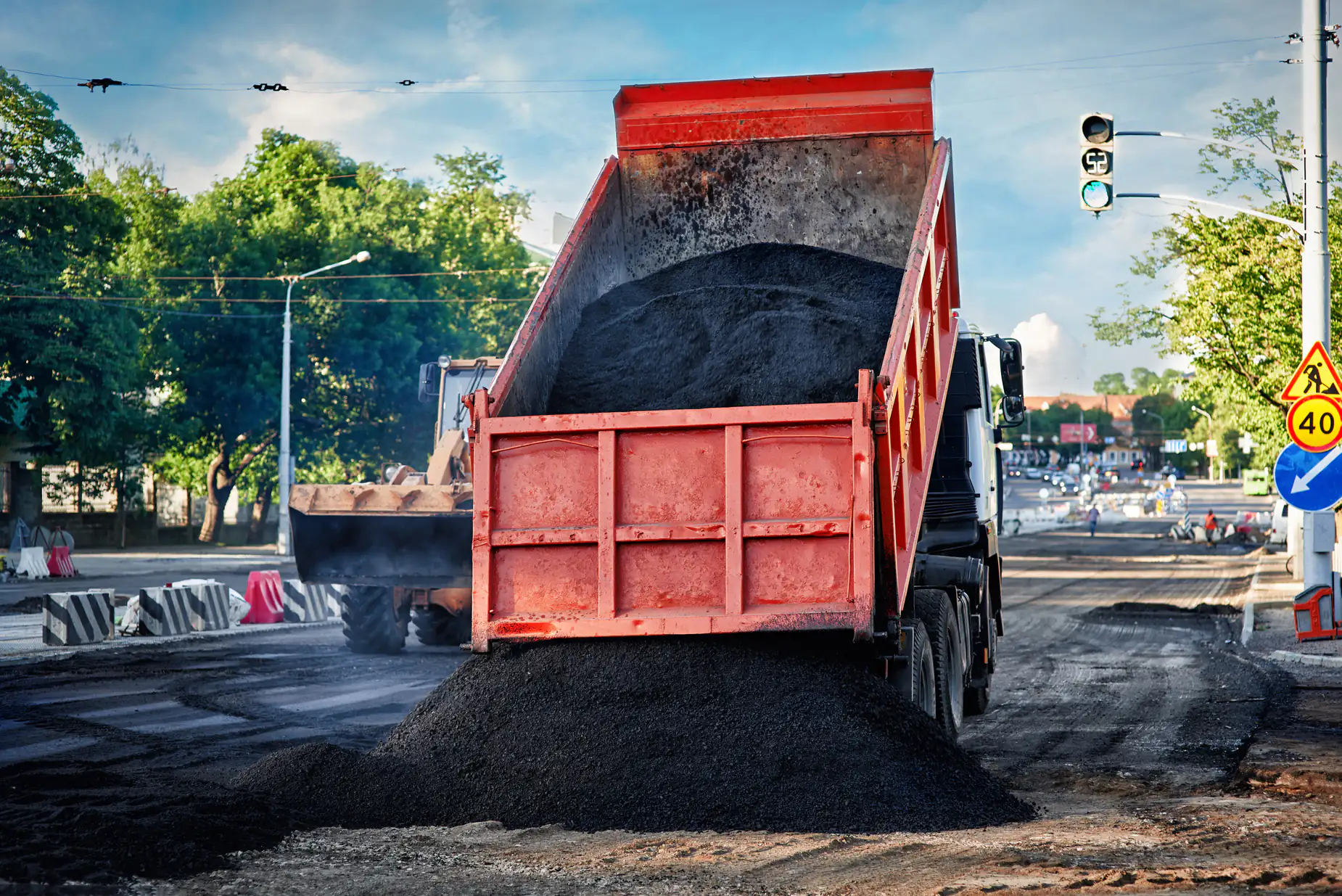
Then we install the asphalt. We use high-grade hot mix asphalt applied at the proper temperature, rolled and compacted to the right density. The surface gets sloped correctly so water drains away from your home or building instead of pooling on the pavement.
After installation, you’ll need to stay off the surface for 24-48 hours while it cures. We’ll walk you through any maintenance recommendations before we leave. Most residential driveways in Dover last 15-20 years with basic sealcoating every few years. Commercial parking lots handle heavy traffic for similar timeframes when installed correctly.
Ready to get started?
We handle full driveway installations for residential properties—new construction or complete replacements. That includes excavation, base installation, grading for drainage, asphalt application, and final grading. You’re getting a finished surface that slopes correctly and handles Dover’s weather.
For commercial properties, we install and resurface parking lots of all sizes. We account for traffic patterns, ADA compliance requirements, and the heavier loads commercial pavement needs to support. If your existing lot has isolated damage, we can handle repairs—patching potholes, fixing cracks, or resurfacing sections without tearing out the entire area.
Dover’s clay soil creates specific challenges. Clay expands when wet and contracts when dry, which puts stress on pavement. We account for this during base prep by using proper stone materials and compaction techniques. Your property’s topography matters too—we grade everything to direct water away from structures and prevent pooling that accelerates pavement breakdown.
Seasonal temperature swings are the other major factor. Water gets into small cracks, freezes, expands, and turns minor damage into major problems. That’s why proper installation matters more here than in milder climates. A well-built base and correctly applied asphalt surface resist this cycle instead of failing under it.
A properly installed asphalt driveway in Dover typically lasts 15-20 years. That lifespan depends on three things: quality base preparation, correct asphalt installation, and basic maintenance.
The base is the most critical factor. If the stone base isn’t thick enough, properly compacted, or graded for drainage, your driveway will fail early no matter how good the asphalt is. Dover’s clay soil and freeze-thaw cycles put extra stress on pavement, so cutting corners on the foundation guarantees problems.
Maintenance extends that lifespan. Sealcoating every 2-3 years protects the surface from UV damage and water intrusion. Filling cracks when they’re small prevents them from spreading. Most driveways that fail early do so because of deferred maintenance or poor initial installation—not because asphalt itself is a bad material.
Drainage problems happen when contractors don’t account for your property’s topography and soil conditions during installation. Dover properties often have natural slopes and clay soil that holds water instead of absorbing it. If your driveway isn’t graded correctly, water pools on the surface or flows toward your foundation instead of away from it.
Poor base preparation makes this worse. The stone base needs to be installed at the right depth and compacted properly to create a stable foundation that allows some water percolation. If that base is too thin or poorly compacted, the pavement above it will settle unevenly, creating low spots where water collects.
The asphalt surface itself needs a minimum slope—typically 1-2% grade—to move water off the pavement. That might not sound like much, but it’s the difference between water draining properly and water sitting on your driveway, seeping into cracks, and causing freeze-thaw damage. We assess your property’s drainage patterns before any work starts and grade everything accordingly.
Residential driveway costs in Dover typically range from $3-$7 per square foot depending on site conditions, access, and prep work required. A standard two-car driveway (about 600 square feet) usually runs $2,000-$4,500 installed.
That range exists because every property is different. If your existing driveway needs extensive excavation, if there are drainage issues to address, or if access is difficult for equipment, costs go up. Properties with significant grading challenges or poor soil conditions require more base prep work, which affects the total price.
Commercial parking lot paving costs vary even more based on size, traffic loads, and site-specific factors. The best approach is to get a detailed estimate that breaks down excavation, base installation, asphalt application, and any additional work like grading or drainage improvements. You’ll know exactly what you’re paying for instead of getting a vague per-square-foot number that doesn’t account for your property’s actual needs.
Asphalt and blacktop are essentially the same material—a mix of aggregate (stone and sand) held together with a petroleum-based binder. The terms get used interchangeably, though “asphalt” is more common in the paving industry and “blacktop” is more common in everyday conversation.
What actually matters is the quality of the mix and how it’s installed. Hot mix asphalt (HMA) is heated to around 300°F and applied while hot, which allows proper compaction and creates a durable surface. Some contractors use cold patch material for repairs—that’s a temporary fix, not a permanent solution.
The aggregate mix matters too. Higher-quality mixes use larger stone and less sand, which creates a stronger surface that resists rutting and cracking. Cheaper mixes use more sand and smaller aggregate, which might look fine initially but breaks down faster under traffic and weather stress. We use high-grade hot mix asphalt for all installations—not budget materials that save money upfront but fail early.
You should wait at least 24-48 hours before driving on new asphalt, and longer in hot weather. The pavement needs time to cool and cure properly. Driving on it too soon can leave tire marks, create ruts, or damage the surface before it’s fully set.
Temperature affects curing time. In cooler weather (spring or fall), asphalt cures faster and you might be able to use it after 24 hours. In summer heat, the pavement stays softer longer, so waiting 48-72 hours is smarter. We’ll give you specific guidance based on weather conditions when your project is completed.
Even after the initial curing period, your new asphalt will continue hardening for several months. Avoid parking in the same spot repeatedly during the first few weeks—especially in hot weather—because heavy vehicles can still leave impressions in pavement that hasn’t fully cured. After a few months, your driveway will be fully hardened and ready to handle normal use without any special precautions.
Most residential driveway replacements in Dover don’t require permits if you’re repaving within your existing driveway footprint. If you’re expanding your driveway, changing its location, or altering drainage patterns, you’ll likely need approval from Dover’s building department.
Commercial paving projects typically require permits, especially for new parking lot construction or significant expansions. You’ll need site plans, drainage plans, and potentially ADA compliance documentation depending on the project scope.
We can help you determine what’s required for your specific project. Dover’s building department has specific requirements around stormwater management and drainage, particularly for larger paved areas. Getting this right upfront prevents problems later—like being required to remove pavement that doesn’t meet code or adding drainage infrastructure after the fact. We’ve worked with Dover’s permitting process for years and know what documentation they need to approve paving projects quickly.