
Hear from Our Customers
You’re not dealing with puddles that freeze into skating rinks every January. Your driveway isn’t developing new cracks after every cold snap. Water runs off instead of seeping in and destroying the base layer.
The blacktop stays smooth enough that you’re not worrying about scraping your car’s undercarriage. It looks clean, not patchy or faded after two seasons. And you’re not calling someone back out to fix problems that shouldn’t have happened in the first place.
When the work is done right from the start, you’re looking at 15-20 years of performance instead of needing major repairs in year five. That’s what happens when the base is compacted correctly, the asphalt is applied at the right temperature, and the grading actually moves water away from your foundation.
We’ve been working in Brookdale, NJ and throughout Morris County for over 20 years. We’re the paving contractor that shows up in marked trucks, provides written contracts, and actually answers the phone when you call back six months later.
We know what happens to asphalt in this area. Brookdale sees 40-50 freeze-thaw cycles every winter, and surface temperatures hit 140°F in summer. Your driveway needs to flex without cracking and drain without pooling. That requires proper base preparation, the right asphalt mix, and installation that doesn’t cut corners.
We carry $2 million in general liability coverage and workers’ comp. Every project gets a clear scope of work, upfront pricing, and a timeline we actually stick to. No surprises, no disappearing acts.
First, we come out to look at your property. We’re checking drainage, measuring the area, and looking at what’s underneath your current surface. If there’s a base problem, we tell you before we start, not after you’ve already paid.
Next, we remove the old asphalt or prep the ground if it’s new construction. The base gets graded so water moves away from your house and garage. We compact it in layers because a solid base is the only thing that keeps asphalt from sinking or cracking prematurely.
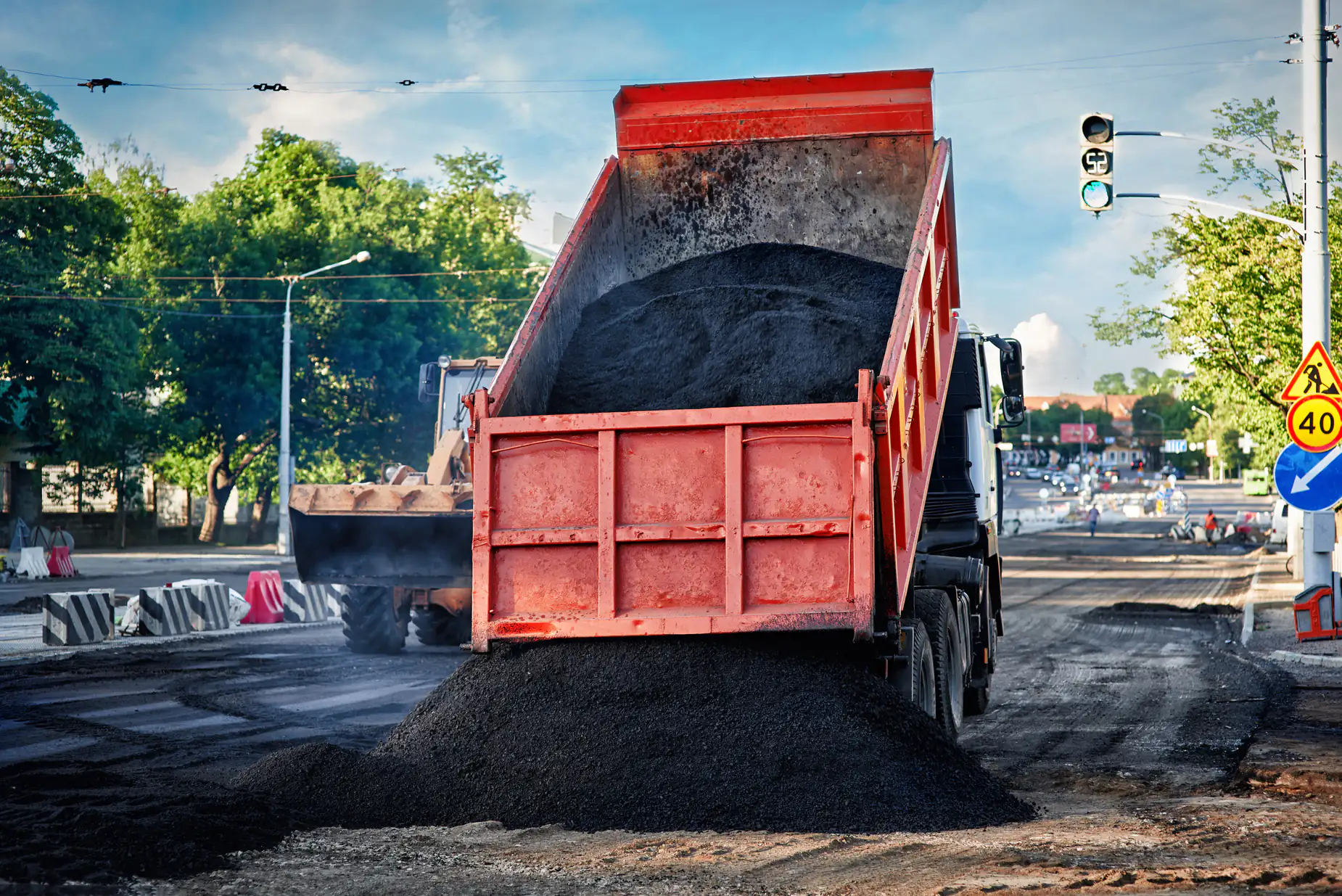
Then we install the asphalt while it’s hot—between 275-300°F. That’s when it compacts properly and bonds correctly. We use commercial-grade rollers to get the density right, and we pay attention to transitions where your driveway meets the garage or the street.
After installation, you’ll need to stay off it for 24-48 hours depending on temperature. We’ll walk you through the curing process and when you can park on it safely. Then we clean up, haul away the old material, and make sure your property looks better than when we arrived.
Ready to get started?
You’re getting full excavation and removal of old material when needed. We’re not paving over problems—we fix them first. The base gets properly graded and compacted, which is what actually determines how long your driveway lasts.
We use high-grade hot mix asphalt applied at the correct temperature. Not the recycled cold patch that fails in two years. The edges get properly tapered so you’re not creating a trip hazard or a spot where water can undercut the asphalt.
In Brookdale, NJ, where homes average $653,984 and sell in 19 days, your driveway is one of the first things buyers notice. A properly installed asphalt driveway adds curb appeal and removes a negotiation point during sale. It also protects your foundation by directing water away from your home instead of pooling against it.
We also handle parking lots, walkways, and asphalt repair for commercial properties throughout Morris County. Same process, same attention to drainage and base prep, scaled to your property size.
A properly installed asphalt driveway in Brookdale, NJ should last 15-20 years with basic maintenance like sealcoating every 3-5 years. Without maintenance, you’re looking at 8-12 years before you’re dealing with significant cracking and deterioration.
The lifespan depends entirely on three things: base preparation, installation quality, and how well you maintain it. If the base isn’t compacted correctly or the grading doesn’t move water away, you’ll see problems within the first few years regardless of the asphalt quality.
Brookdale’s climate is tough on pavement. You’re getting 40-50 freeze-thaw cycles every winter, which means water gets into small cracks, freezes, expands, and makes those cracks bigger. Summer heat causes the asphalt to expand and soften. That cycle repeats every year, so the installation has to account for it from day one.
There’s no practical difference—blacktop and asphalt are the same material. Both terms refer to hot mix asphalt (HMA), which is aggregate mixed with liquid asphalt binder and applied while hot.
Some contractors use “blacktop” when talking about driveways and “asphalt” when talking about roads, but it’s the same product. What actually matters is the quality of the mix and how it’s installed, not what you call it.
You want to make sure you’re getting hot mix asphalt, not cold patch or recycled asphalt that’s been sitting around. Hot mix is applied at 275-300°F and compacts into a dense, durable surface. Cold patch is a temporary fix that deteriorates quickly. When you’re comparing quotes from paving companies near you, ask specifically what type of asphalt mix they’re using and at what temperature it will be applied.
Asphalt paving in Brookdale, NJ typically runs $3-7 per square foot for a standard residential driveway, depending on site conditions, access, and whether we’re removing old material or starting from scratch. A typical two-car driveway (600 square feet) usually falls between $2,500-4,500 installed.
That price includes excavation, base preparation, grading for drainage, and asphalt installation. If your property has drainage issues, needs significant base repair, or requires special grading to protect your foundation, the cost goes up because the work is more involved.
The cheapest quote isn’t always the best value. If a paving contractor is significantly lower than everyone else, they’re either cutting corners on base prep, using thinner asphalt, or skipping proper compaction. Those shortcuts cost you more in repairs within a few years. We provide upfront pricing with a detailed scope of work so you know exactly what you’re getting before we start.
Late spring through early fall is the best time for asphalt paving in Brookdale, NJ. You need consistent temperatures above 50°F for proper installation and curing. That usually means May through October, with the ideal window being June through September.
Asphalt needs to be applied hot and compacted while it’s still warm enough to achieve proper density. If the ground temperature is too cold, the asphalt cools too quickly and won’t compact correctly. That leads to premature cracking and deterioration.
Fall is actually a smart time to pave because you’re getting your driveway protected before winter hits. Once water gets into cracks and starts freezing, damage accelerates fast. If you’re seeing cracks or deterioration now, getting it done before the first hard freeze saves you from much bigger problems next spring. Most asphalt companies near you book up in summer, so calling in early fall often means shorter wait times.
Yes, sealcoating extends your driveway’s lifespan significantly. You should sealcoat every 3-5 years, starting about one year after initial installation. It costs around $300-500 for a typical driveway and can prevent $1,500+ in repair costs down the road.
Sealcoating creates a waterproof barrier that keeps water from seeping into small cracks and reaching the base layer. It also protects against UV damage, gas and oil spills, and the freeze-thaw cycles that destroy unprotected asphalt in North Jersey.
Without sealcoating, small cracks turn into big cracks. Water infiltrates the base, weakens it, and causes sections to sink or heave. What could have been prevented with a $300 sealcoat becomes a $1,500 repair project or a full replacement. Think of it like changing your car’s oil—it’s basic maintenance that prevents expensive damage.
Look for a paving contractor who’s been working in Morris County for years, carries proper insurance, provides written contracts, and can show you local work they’ve completed. Avoid anyone who shows up in an unmarked truck, quotes on the spot, and pushes for immediate cash payment.
Ask for proof of general liability insurance and workers’ compensation coverage. If someone gets hurt on your property and the contractor isn’t insured, you’re liable. We provide this documentation without hesitation, just like any legitimate asphalt company should.
Get everything in writing: scope of work, materials being used, timeline, payment schedule, and warranty details. Be suspicious of quotes that are dramatically lower than others—that usually means they’re skipping base preparation, using inferior materials, or planning to add charges later. A good contractor explains what they’re doing and why, answers your questions clearly, and doesn’t pressure you to sign immediately.