
Hear from Our Customers
Your driveway should look good and function even better. That means no standing water after a storm. No cracks spreading across the surface after the first winter. No settling or sinking where your car sits.
When asphalt is installed correctly, it flexes with temperature changes instead of cracking like concrete does. The dark surface absorbs heat from the sun, which means snow melts faster and you’re not chipping ice every morning in January.
But here’s what actually makes the difference: base preparation. Most paving contractors in Boonton will rush this part because you can’t see it once the blacktop goes down. We don’t. The base determines whether your driveway lasts two years or twenty. It’s that simple.
You’ll also use your new driveway within 24 to 48 hours. Not a week later. And when you pull in after work, you’ll notice the difference immediately—smooth, even, and built to handle whatever North Jersey weather throws at it.
We work across Morris, Sussex, and Somerset Counties. We’ve paved hundreds of driveways in towns like Morristown, Dover, Madison, Parsippany, and throughout the Boonton area.
We’re not the company that knocks on your door with leftover asphalt from another job. We’re licensed (13VH08981600), bonded, insured, and BBB accredited. That matters more than most homeowners realize until something goes wrong.
If a paving contractor isn’t insured and someone gets hurt on your property, your homeowners policy covers it. Then your premiums double or triple for years. We carry full workers comp and liability coverage so you’re never exposed to that risk.
First, we remove your old driveway if needed and grade the area for proper drainage. Water is the enemy of asphalt. If it pools or seeps into the base, you’ll have problems within two years no matter how good the asphalt is.
Next comes the base layer. We use compacted aggregate—not just whatever’s cheap. This layer needs to be thick enough and compacted correctly, or the asphalt above it will buckle and crack. This is where most contractors cut corners because homeowners can’t see it. We don’t.
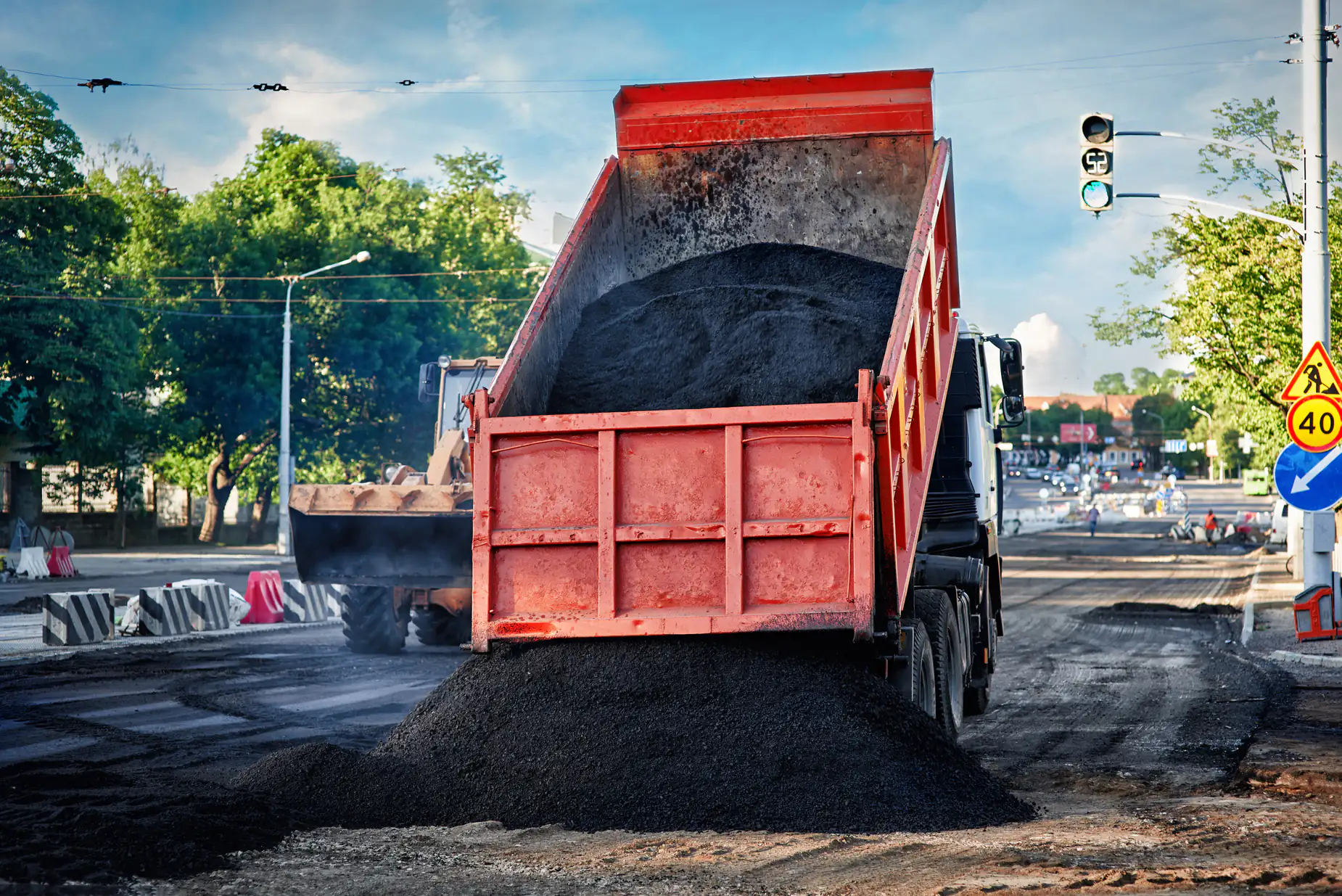
Then we apply hot mix asphalt at the right temperature. If it’s too cold, it won’t compact properly. If the layer is too thin, it won’t hold up. We use high-grade HMA and apply it at the thickness your driveway actually needs based on vehicle weight and usage.
Finally, we compact everything with a roller to ensure a smooth, even surface. Most jobs are done in one to two days. You can drive on it within 24 to 48 hours. Seal it every two to three years, and you’re looking at 15 to 20 years of life in New Jersey’s climate.
Ready to get started?
Every job starts with a site assessment. We look at drainage, soil conditions, and how you’ll use the space. A residential driveway has different requirements than a commercial parking lot.
You’ll get an upfront quote that breaks down the work—no surprise charges later. We’ll tell you exactly what we’re doing, why we’re doing it, and how long it’ll take. If permits are required in Boonton or Morris County, we handle that.
For residential driveways, you’re looking at around $5 to $7 per square foot in 2025. That’s less than concrete, which runs $7 to $13 per square foot. For a standard 600-square-foot driveway, asphalt costs $3,000 to $4,200 compared to $4,200 to $7,800 for concrete.
We also handle parking lot paving, asphalt repairs, and decorative stamped concrete if you want something beyond standard blacktop. Whether you’re in Boonton, Morristown, Parsippany, or anywhere in Morris County, we’ll give you a callback within 24 to 48 hours after you request a quote.
A properly installed asphalt driveway lasts 15 to 20 years in New Jersey’s climate when maintained correctly. The key word is “properly installed.” Most driveways that fail early do so because of poor base preparation, not bad asphalt.
New Jersey winters are brutal on pavement. Freeze-thaw cycles cause water to expand in cracks, which makes small problems bigger every season. Asphalt handles this better than concrete because it’s flexible, but only if the base underneath is solid and drains water away from the surface.
Maintenance matters too. Seal your driveway every two to three years. That’s a $150 to $300 job depending on size, and it keeps water from seeping into small cracks. If you skip it, you’re looking at repairs or replacement much sooner than 15 years.
Asphalt costs less to install because the materials are cheaper and the process is faster. In 2025, asphalt runs about $5 to $7 per square foot installed, while concrete costs $7 to $13 per square foot for basic installation.
For a typical two-car driveway (around 600 square feet), that’s $3,000 to $4,200 for asphalt versus $4,200 to $7,800 for concrete. Asphalt also cures faster—you can drive on it in 24 to 48 hours. Concrete takes a week or more.
The trade-off is maintenance. Asphalt needs to be sealed every few years, while concrete doesn’t. But in North Jersey, asphalt performs better in winter because it’s flexible and doesn’t crack as easily when temperatures drop. It also melts snow faster because the dark surface absorbs heat from the sun.
If an uninsured paving contractor gets hurt on your property or damages something with their equipment, your homeowners insurance covers it. Then your premiums can double or even triple for years.
This is one of the easiest ways contractors offer lower prices—they skip insurance. It saves them money, but it puts all the risk on you. Heavy paving equipment can cause serious property damage, and workers can get injured. Without proper coverage, you’re liable.
Make sure any asphalt contractor you hire carries both workers compensation and general liability insurance. Ask to see proof before they start. It’s not about being difficult—it’s about protecting yourself from a financial disaster that could cost tens of thousands of dollars.
The problem is, you won’t know for a year or two if the base was done wrong. By then, the contractor is long gone and you’re stuck with a driveway that’s buckling, cracking, or sinking.
The base is everything. It needs to be thick enough, properly compacted, and graded for drainage. If water pools on your driveway after rain, that’s a red flag. If you see cracks forming in the first year, the base probably wasn’t prepared correctly.
A good asphalt contractor will explain what they’re doing before they do it. They’ll tell you how thick the base will be, what materials they’re using, and how they’re handling drainage. If someone shows up and just starts paving without talking through the process, that’s a warning sign. The best time to ask these questions is before you sign anything.
Fall is usually the best time for asphalt paving in New Jersey, but spring works too. The key is temperature—asphalt needs to be applied when it’s warm enough to compact properly, but not so hot that it’s difficult to work with.
Avoid paving in winter. Cold temperatures make it nearly impossible to get a good result because the asphalt cools too quickly and won’t compact correctly. You also want to avoid the hottest days of summer when the asphalt can become too soft.
If you’re planning any asphalt work, get it done before the first frost. Once winter hits, any small cracks or drainage issues will get worse fast. Scheduling in early fall gives you time to get the work done and lets the asphalt cure before cold weather arrives.
Hot mix asphalt (HMA) is what you want for a new driveway or major repair. It’s heated to around 300 degrees, applied while hot, and compacted immediately. This creates a durable, long-lasting surface that bonds properly and handles traffic and weather.
Cold patch is a temporary fix. It’s asphalt mixed with additives so it can be applied at any temperature. It’s useful for emergency pothole repairs in winter, but it doesn’t last. Cold patch will break apart within months because it doesn’t bond the same way hot mix does.
If a contractor offers to pave your driveway with cold asphalt or leftover material from another job, walk away. That’s not how quality paving works. You want hot mix asphalt applied at the right temperature with proper base preparation underneath. Anything else is a shortcut that’ll cost you more in the long run.