
Hear from Our Customers
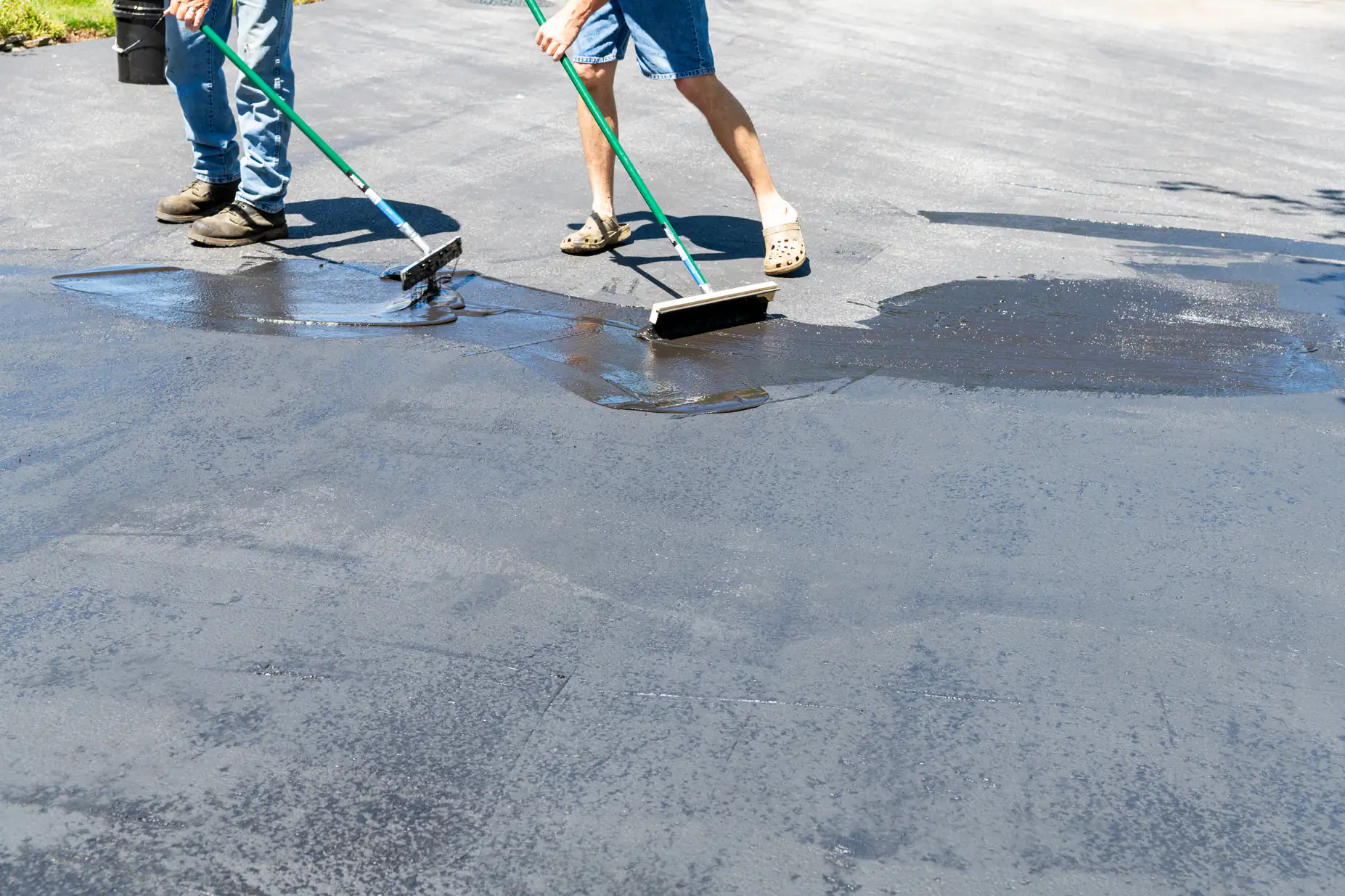
Here’s what most Wharton homeowners don’t realize until it’s too late. New Jersey gets hit with 55 to 75 freeze-thaw cycles every winter. Water seeps into those hairline cracks in your driveway, freezes overnight, and expands by 9%. That pressure pushes the crack wider. By spring, what could’ve been prevented with a $300-$400 sealcoating job becomes a $1,500 repair project.
Sealcoating isn’t just about making your driveway look better. It’s about creating a waterproof barrier that keeps moisture out of the asphalt. When you seal your driveway properly, you’re blocking UV rays that break down the binder, stopping oxidation that turns your surface brittle, and preventing road salt from eating away at the foundation.
The math is simple. A professionally sealed driveway lasts 25-30+ years in Morris County. An unsealed one? You’re looking at 15 years before you’re tearing it out and starting over. That’s the difference between a small maintenance cost now and a full repaving bill later.
We’ve been sealing driveways across Morris County for over 20 years. We’re a third-generation, family-owned contractor based right here in North Jersey, which means we understand exactly what your driveway goes through from November to March.
We’re not the cheapest option in Wharton, and that’s intentional. The contractors offering rock-bottom prices either skip insurance (meaning your homeowner’s policy covers their accidents) or they’re cutting corners on materials. We use professional-grade sealers, apply two coats instead of one, and make sure the surface is prepped correctly before we start.
You’ll get a callback within 24-48 hours when you request a quote. No runaround, no disappearing after the estimate. Just straightforward pricing and a crew that shows up when they say they will.
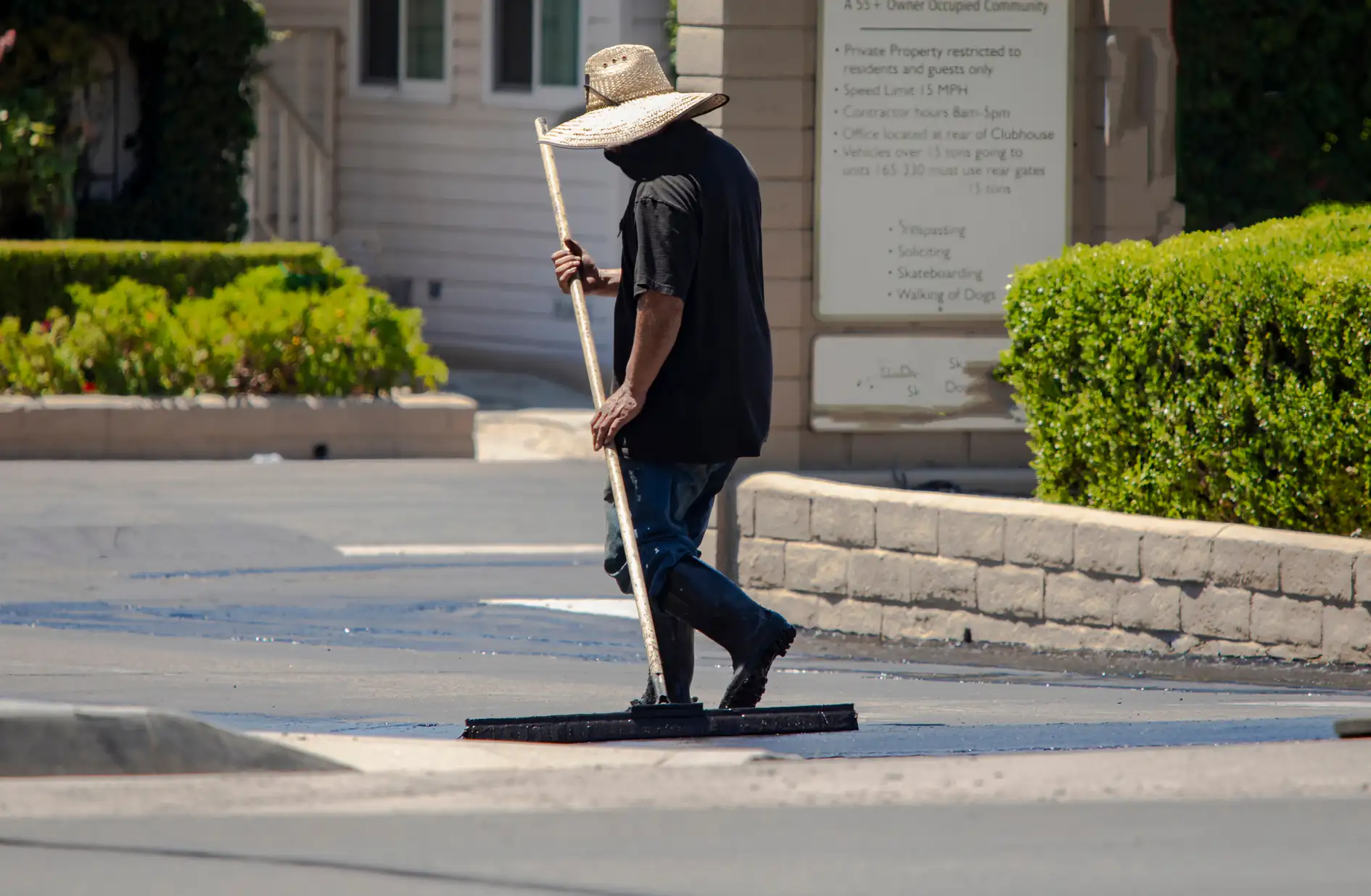
First, we clean the entire surface. That means blowing off debris, removing weeds growing in cracks, and making sure there’s no oil, dirt, or loose material that’ll prevent the sealer from bonding. If your driveway has cracks wider than a quarter-inch, we fill those first with hot rubberized crack filler. Sealer alone won’t fix structural problems.
Once the surface is prepped and dry, we apply the first coat of sealer using commercial-grade equipment. This isn’t the stuff you buy in buckets at the hardware store. We’re using coal tar or asphalt emulsion sealers designed for New Jersey’s climate. The first coat soaks into the surface. The second coat, applied 24 hours later, creates the protective barrier.
After application, your driveway needs 24-48 hours to cure before you can walk on it, and 72 hours before you drive on it. Temperature and humidity affect cure times, which is why fall is the ideal window. You get moderate temps, low humidity, and enough time for the sealer to harden before winter weather arrives. Once cured, that seal protects your driveway for 3-4 years.
Ready to get started?
Timing matters more than most homeowners realize. Sealcoating requires at least 50°F temperatures during application and curing. It also needs 24-48 hours of dry conditions to bond correctly with the asphalt. By late October in Wharton, you’re gambling with the weather. By November, it’s too late.
Spring seems like it would work, but here’s the problem. You’re sealing after the damage has already happened. Those cracks that opened up over winter? They’re now letting water reach the foundation. You’ll spend more on repairs before you can even seal. Fall sealcoating is preventive. Spring sealcoating is reactive.
Morris County pricing typically runs 15-20% above national averages because of higher labor costs and the beating our climate puts on asphalt. For a standard two-car driveway (around 600 square feet), you’re looking at $300-$500 for professional two-coat application. Compare that to $6-$8 per square foot for complete driveway replacement. Sealcoating gives you 2,000%+ more value for your money. The homeowners who skip it are the ones calling us in spring asking why their driveway looks like a war zone.

For a typical residential driveway in Wharton (400-600 square feet), professional two-coat sealcoating runs between $300 and $500. That price includes surface cleaning, crack filling for minor cracks, two coats of commercial-grade sealer, and proper curing time. Larger driveways or surfaces with significant cracking will cost more because they require additional prep work.
New Jersey pricing runs higher than the national average, and there’s a reason for that. Labor costs are higher here, and our freeze-thaw cycles are brutal on asphalt. Contractors using quality materials and carrying proper insurance can’t compete with the $150 quotes you might see online. Those low-ball prices usually mean one coat instead of two, no crack filling, or worse, no insurance coverage.
The real question isn’t what sealcoating costs. It’s what not sealcoating costs. Driveway removal and repaving runs $6-$8 per square foot in Morris County. For that same 500-square-foot driveway, you’re looking at $3,000-$4,000 to replace it. Spending $400 every 3-4 years to avoid a $4,000 bill is an easy decision.
A professional two-coat sealcoating job lasts 3-4 years on residential driveways in New Jersey. Single-coat applications only last 1-2 years, which is why we don’t recommend them. The first coat penetrates and fills surface voids. The second coat creates the actual protective barrier that blocks water, UV rays, and chemicals.
Climate plays a huge role in how long sealer lasts. North Jersey’s freeze-thaw cycles, road salt exposure, and temperature swings are harder on asphalt than most other parts of the country. If your driveway gets heavy use, sits in full sun all day, or has poor drainage, you might need to reseal closer to the 3-year mark instead of 4.
You’ll know it’s time to reseal when the surface starts looking faded or gray instead of black, when water stops beading up and starts soaking in, or when you notice new small cracks forming. Waiting too long between applications means you’re back to repairing damage instead of preventing it. Most Wharton homeowners who stay on a regular 3-4 year schedule avoid major repair costs entirely.
Fall is the best time to seal your driveway in Wharton, specifically September through mid-October. You need consistent temperatures above 50°F during the day and night, low humidity, and no rain in the forecast for at least 48 hours. Fall gives you all three. Spring works in theory, but you’re sealing after winter damage has already happened, which means more repair costs before you can even apply sealer.
Summer seems ideal because it’s warm, but there are two problems. First, if it’s too hot (above 85°F), the sealer can dry too fast and not bond properly. Second, summer is when most people are using their driveways the most. You need to stay off the surface for 24-48 hours after application, and keep cars off for 72 hours. That’s easier to manage in fall.
The other advantage of fall sealcoating is timing. You’re creating that protective barrier right before winter hits. The sealer has time to cure properly in moderate temperatures, and then it’s ready to handle the freeze-thaw cycles, road salt, and moisture that come with Morris County winters. Homeowners who seal in September are protecting their investment. Homeowners who wait until spring are reacting to damage that’s already done.
Yes, but not right away. New asphalt needs 6-12 months to cure before you seal it. When asphalt is first installed, oils in the binder need time to evaporate and harden. If you seal too early, you trap those oils and prevent proper curing. The surface stays soft, the sealer doesn’t bond correctly, and you end up with a mess.
After that first year, sealing becomes critical. New asphalt looks great, but it’s already being attacked by UV rays, oxygen, and water from day one. Oxidation starts immediately, breaking down the binder that holds the aggregate together. That’s what causes the surface to turn gray and brittle. Sealcoating after the first year stops that process and locks in the flexibility and strength of the asphalt.
Most paving contractors in Wharton will tell you when your driveway is ready to seal. If you had your driveway installed in spring or summer, plan to seal it the following fall. If it was installed in fall, wait until the fall after that. Once you start sealing, stay on a 3-4 year schedule. The homeowners who skip sealcoating on new driveways are the ones replacing them at 15 years instead of 30.
You can seal your own driveway, but most homeowners who try it once hire us the next time. The sealer you buy at home improvement stores isn’t the same quality as commercial-grade products. It’s thinner, doesn’t last as long, and doesn’t provide the same level of protection. You’re also doing the work by hand with a squeegee or brush, which makes it nearly impossible to get even coverage.
We use spray equipment that applies sealer uniformly and at the right thickness. We also know how to prep the surface correctly, which is where most DIY jobs fail. If there’s dirt, oil, or loose material on the driveway, the sealer won’t bond. If cracks aren’t filled first, the sealer just bridges over them temporarily and they reopen within months.
The cost difference isn’t as big as you’d think. A quality DIY sealcoating job (buying enough sealer, crack filler, cleaner, and tools) runs $150-$200 for a typical driveway. A professional job costs $300-$500 but lasts twice as long and actually protects your asphalt. Factor in your time, the physical work, and the risk of doing it wrong, and hiring us makes sense. Most Wharton homeowners would rather spend a Saturday doing anything other than sealing their driveway in the heat.
Yes. An unsealed asphalt driveway in New Jersey lasts about 15 years before it needs replacement. A properly maintained, regularly sealed driveway lasts 25-30+ years. That’s not marketing talk, that’s what happens when you prevent water infiltration, oxidation, and UV damage instead of letting them destroy the asphalt structure.
Here’s how it works. Asphalt is aggregate (stone) held together by a petroleum-based binder. Oxygen and UV rays break down that binder over time, making the surface brittle. Water seeps into small cracks, freezes, expands, and turns small cracks into big ones. Road salt accelerates the chemical breakdown. Sealcoating creates a barrier that blocks all three of those threats.
The homeowners who seal their driveways every 3-4 years spend about $1,200-$1,500 total over a 30-year period. The homeowners who skip sealcoating spend $3,000-$4,000 to replace their driveway at year 15, then another $3,000-$4,000 at year 30. You’re either paying for prevention or paying for replacement. One costs a fraction of the other and saves you the headache of a full driveway tear-out and repaving project.