
Hear from Our Customers
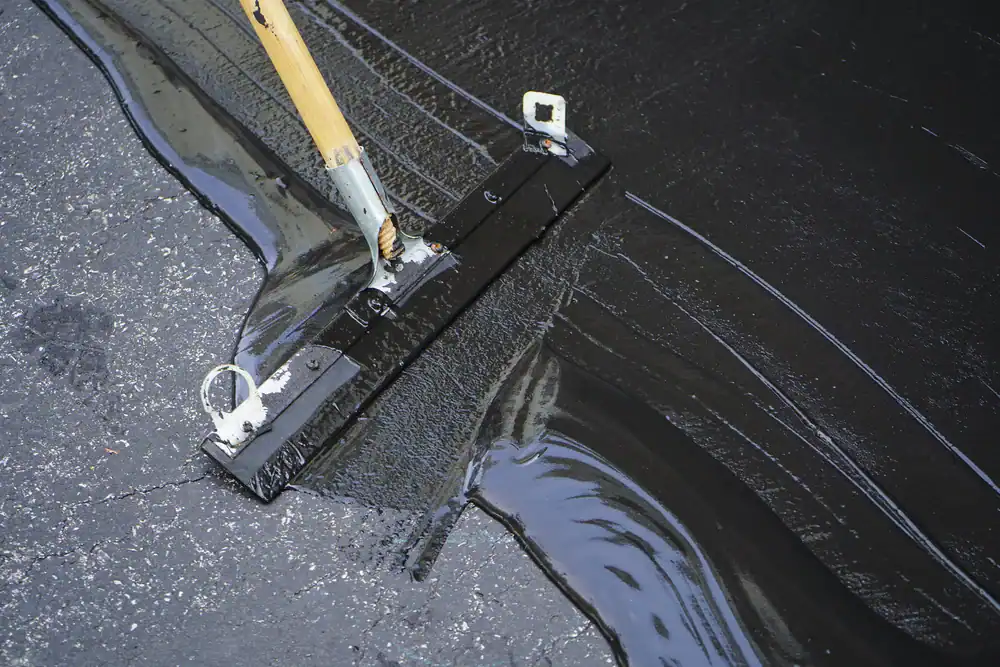
Your driveway stops bleeding money every spring. That’s what changes when you seal it properly before winter hits.
Right now, water’s getting into those hairline cracks you’ve been ignoring. When temperatures drop, that water freezes and expands. The cracks widen. More water gets in. The cycle repeats all winter long until you’re looking at serious foundation damage come April.
Professional driveway sealing creates a waterproof barrier that stops this destruction before it starts. You’re not just making your driveway look darker and newer. You’re adding 3-5 years to its lifespan and preventing those $1,500+ repair bills that hit when the base layer fails.
The difference shows up in your driveway’s resilience against road salt, UV damage, and the constant temperature swings that make North Jersey so hard on asphalt. Two coats of quality sealant, applied at the right temperature with proper curing time, means you’re protected for 3-4 years instead of needing annual touch-ups.
We’ve spent over 20 years at Platinum Paving figuring out exactly what works in Morris County’s climate. We’re not learning on your driveway.
We know that Weston properties sit on everything from clay to rocky soil, which affects drainage and how your base layer holds up. We know that your neighborhood sees temperature swings from single digits to 90+ degrees, which means the sealant chemistry matters. And we know that most homeowners here are dealing with driveways that are 15-30 years old and need more than a quick spray-and-go.
You’ll get a callback within 24-48 hours of your quote request. Not next week when you’ve already called someone else. We show up when we say we will, we give you clear pricing upfront, and we use high-grade materials that actually last in this climate.
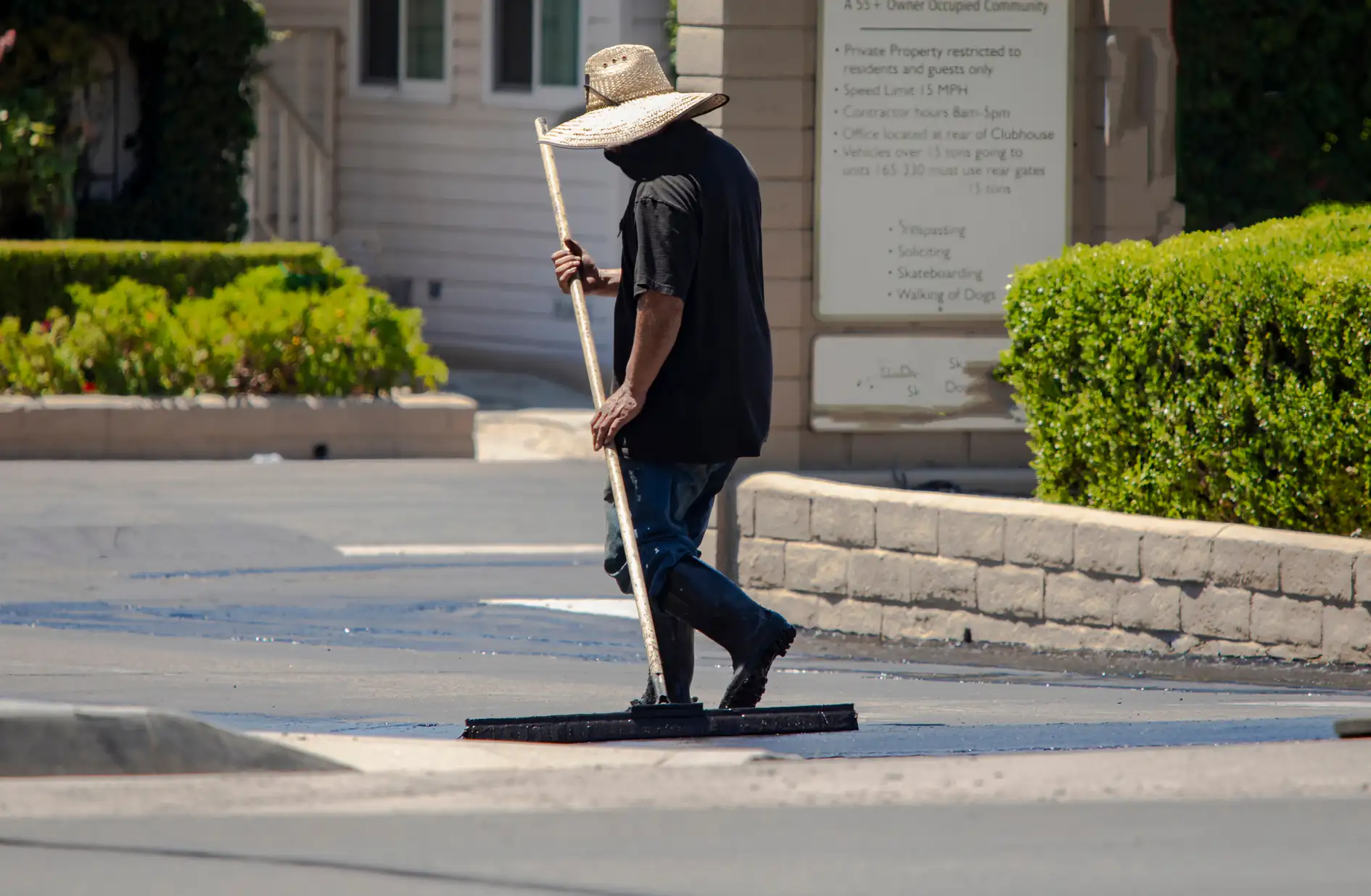
First, we clean your driveway completely. That means removing all dirt, debris, vegetation, and oil spots that would prevent the sealant from bonding properly. Most DIY jobs fail here because people skip this step or don’t do it thoroughly enough.
Next, we fill any cracks wider than a quarter-inch with rubberized crack filler. This prevents water infiltration at the most vulnerable points. Small cracks get sealed by the coating itself, but anything substantial needs dedicated attention first.
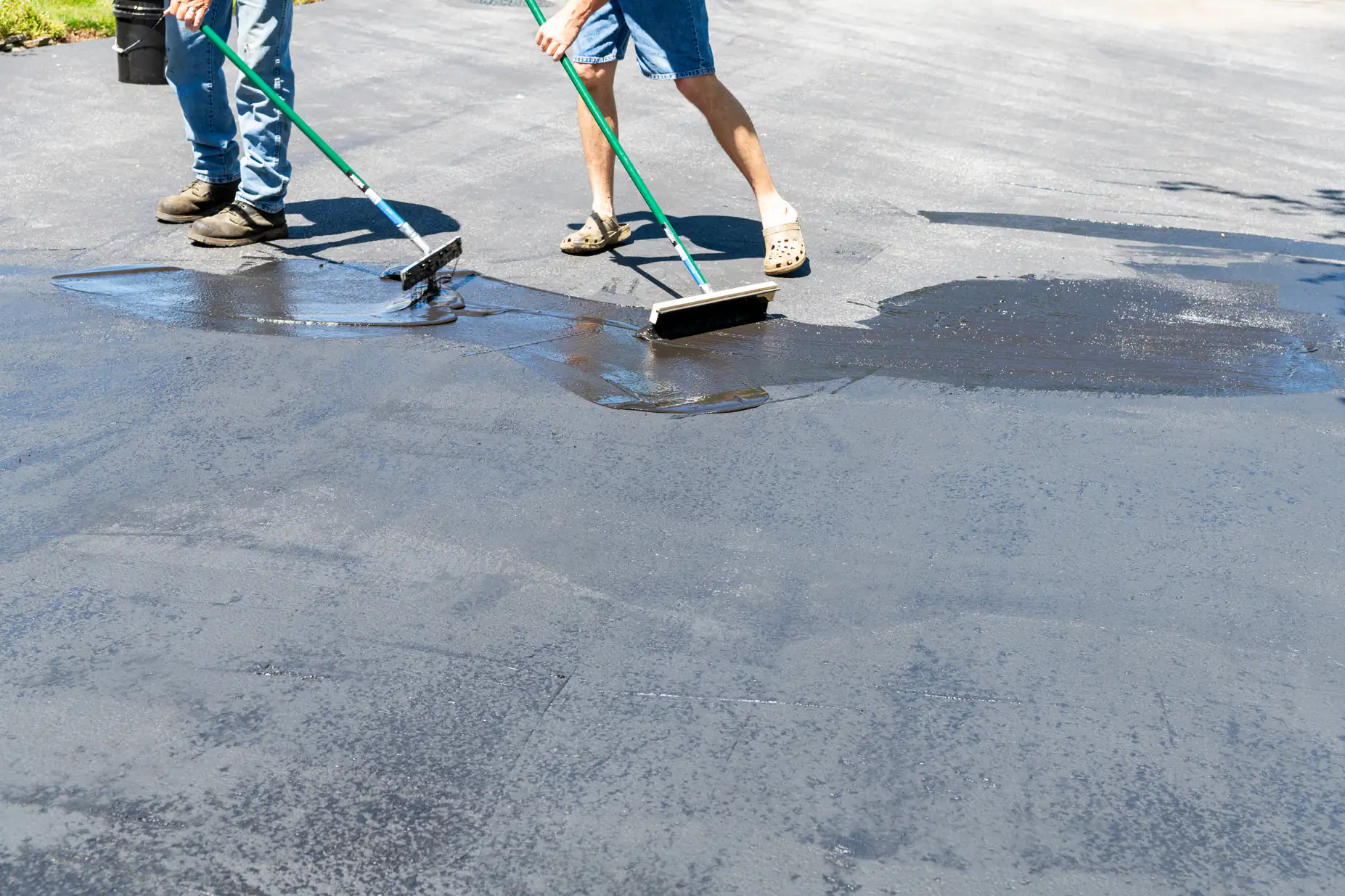
Then we apply two coats of commercial-grade asphalt sealer using professional equipment that ensures even coverage and proper thickness. The first coat gets 24 hours to cure before the second goes on. This isn’t the watered-down stuff you buy at the hardware store. It’s coal tar or asphalt emulsion designed specifically for New Jersey’s freeze-thaw cycles.
You’ll need to stay off the driveway for 24-48 hours depending on temperature and humidity. We only work when conditions are right—between 50-85 degrees with no rain in the forecast. Rushing this process or working in bad weather means the sealant won’t cure properly and you’ve wasted your money.
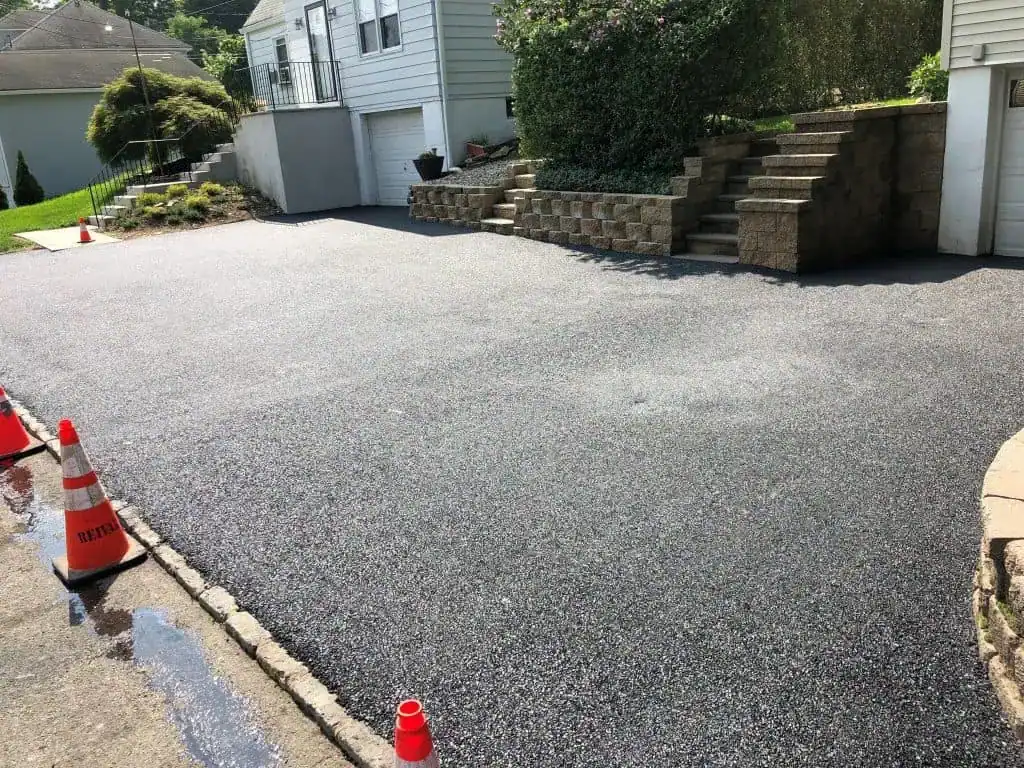
Ready to get started?
Most residential driveways in Weston run between $300-600 for professional two-coat sealcoating. That’s based on the typical 600-800 square foot driveway you’ll find on quarter-acre to full-acre lots around here.
The cost breaks down to about $0.15-0.40 per square foot depending on your driveway’s condition, size, and how much crack repair is needed first. Yes, that’s 15-20% higher than national averages. That’s because labor costs more in North Jersey and because the materials have to be tougher to handle what winter throws at them.
You’re getting crack filling for anything significant, thorough cleaning that actually removes oil and debris, two coats of commercial-grade sealant applied with professional equipment, and proper curing time between coats. We’re not spraying one thin coat and calling it done.
The return on that investment shows up when your driveway makes it through winter without new damage. When you’re not calling for repairs every spring. When you add 3-5 years to your asphalt’s lifespan and avoid a $5,000-8,000 replacement job. The math works heavily in your favor when you maintain instead of replace.
Fall is your best window for this work. Temperatures are stable, humidity is lower, and you’re getting protection in place before winter damage starts. By the time spring rolls around and everyone’s calling because they need repairs, you’re already protected.

Two properly applied coats last 3-4 years on residential driveways in this climate. Single coats only make it 1-2 years before they start breaking down.
The lifespan depends heavily on traffic, weather exposure, and whether the driveway was prepped correctly before sealing. If you’re parking multiple vehicles daily and your driveway gets full sun exposure, you’ll be closer to the 3-year mark. Light use with some shade protection can push you toward 4-5 years.
New Jersey’s freeze-thaw cycles are particularly hard on sealant. Every winter puts stress on the coating as temperatures swing from below freezing to above it repeatedly. That’s why the quality of materials matters more here than in milder climates. Cheap sealant might look fine for six months, but it won’t protect your asphalt when winter hits.
Fall is ideal for driveway sealing in Weston. You want temperatures consistently between 50-85 degrees with no rain for 24-48 hours after application.
September through early November gives you the most stable weather patterns. Spring can work, but you’re dealing with more temperature fluctuations and surprise rain that can ruin a fresh seal job. Summer is too hot—sealant can dry too quickly and not bond properly, plus you’re more likely to track it into your house.
The other advantage of fall is that you’re getting protection in place right before winter damage season. Sealing in spring means your driveway just went through months of freeze-thaw cycles unprotected. You’re essentially closing the barn door after the horse is already gone. Seal in fall, and you’re preventing damage instead of reacting to it.
Concrete and asphalt need completely different products and processes. Asphalt sealcoating uses coal tar or asphalt emulsion. Concrete requires penetrating sealers or acrylic coatings designed specifically for cement.
If you have a concrete driveway, you’re looking at concrete sealing services, not asphalt sealcoating. The goals are similar—protect against water infiltration, prevent cracking, extend lifespan—but the chemistry is entirely different. Using asphalt sealer on concrete won’t work and can actually cause problems.
Many Weston properties have asphalt driveways with concrete aprons near the garage or street. Those need separate treatment. We handle both materials, but it’s important to know what you have before you start calling around for quotes. If you’re not sure, asphalt is the black material that feels slightly softer and shows aggregate stones. Concrete is gray or tan and much harder.
Expect to pay $300-600 for a typical residential driveway in Weston with professional two-coat application. Larger driveways or those needing significant crack repair will run higher.
The price breaks down to roughly $0.15-0.40 per square foot. A standard two-car driveway around 600 square feet usually lands in the $250-350 range. Longer driveways that run 1,000+ square feet can hit $500-700. If your driveway needs extensive crack filling or has oil stains that require special treatment, add another $100-200.
You’ll see cheaper quotes from contractors offering single-coat application or using diluted materials. That’s not a deal—it’s a waste of money. Single coats fail within 1-2 years in this climate, which means you’re paying to have the job done again twice as often. Two coats of quality material cost more upfront but last 3-4 years and actually protect your asphalt investment.
Sealcoating isn’t cosmetic. It’s the difference between a driveway that lasts 20+ years and one that needs replacement in 12-15 years.
Unsealed asphalt oxidizes from UV exposure, which makes it brittle. Water penetrates through the surface into the base layer, especially through cracks. When that water freezes in winter, it expands and breaks apart the asphalt structure from the inside. Road salt accelerates this deterioration by breaking down the binding agents in asphalt.
Sealcoating creates a waterproof barrier that stops this cycle. It blocks UV rays, prevents water infiltration, and protects against salt and chemical damage. The dark appearance is a side benefit, not the main point. You’re adding years to your driveway’s functional life and preventing the kind of foundation damage that requires complete reconstruction instead of resurfacing.
In New Jersey’s climate, this protection matters more than in places with mild winters. Every freeze-thaw cycle without protection is doing permanent damage to your driveway’s structure. You can’t see it happening until cracks appear, and by then you’re already behind on maintenance.
Plan on 24-48 hours before you drive on it, and 72 hours before it’s fully cured. Temperature and humidity affect these timelines significantly.
You can walk on the driveway after about 4-6 hours in good conditions. But vehicle traffic is different—cars are heavy and their tires will mark or damage sealant that hasn’t fully cured. If you drive on it too soon, you’ll leave tire marks that are permanent and you’ll compromise the protective barrier you just paid for.
Hot weather speeds up curing but can also cause the sealant to dry too quickly on the surface while staying soft underneath. Cool weather slows everything down. High humidity extends curing time. This is why we check the forecast before scheduling and why we won’t seal your driveway if conditions aren’t right. We’d rather reschedule than do a job that fails because we rushed the process or worked in bad weather.