
Hear from Our Customers
Vernon Center sees 55 to 75 freeze-thaw cycles every winter. Water gets into tiny cracks, freezes, expands by 9%, and pushes those cracks wider. By spring, you’re looking at damage that costs hundreds to patch—or thousands to replace.
Sealcoating creates a waterproof barrier that keeps moisture out before it freezes. It also protects against UV rays that dry out asphalt, road salt that eats through the surface, and oil stains that weaken the binder holding everything together.
The result? Your driveway stays smooth, black, and intact for years longer than it would without protection. You’re not just improving how it looks—you’re preventing the kind of deterioration that forces expensive repairs or full replacement down the road.
We’ve been working in Morris, Sussex, and Somerset Counties long enough to see what happens when homeowners skip sealcoating. We’ve repaired driveways that could’ve been saved with one application at the right time.
Vernon Center’s homeownership rate sits at 86%, and most properties were built between 1970 and 1999. That means a lot of aging driveways that need protection before winter hits. We understand the local climate, the soil conditions, and the specific challenges that come with maintaining asphalt in this area.
When you call us, you’re working with a team that’s seen it all—and knows how to prevent it.
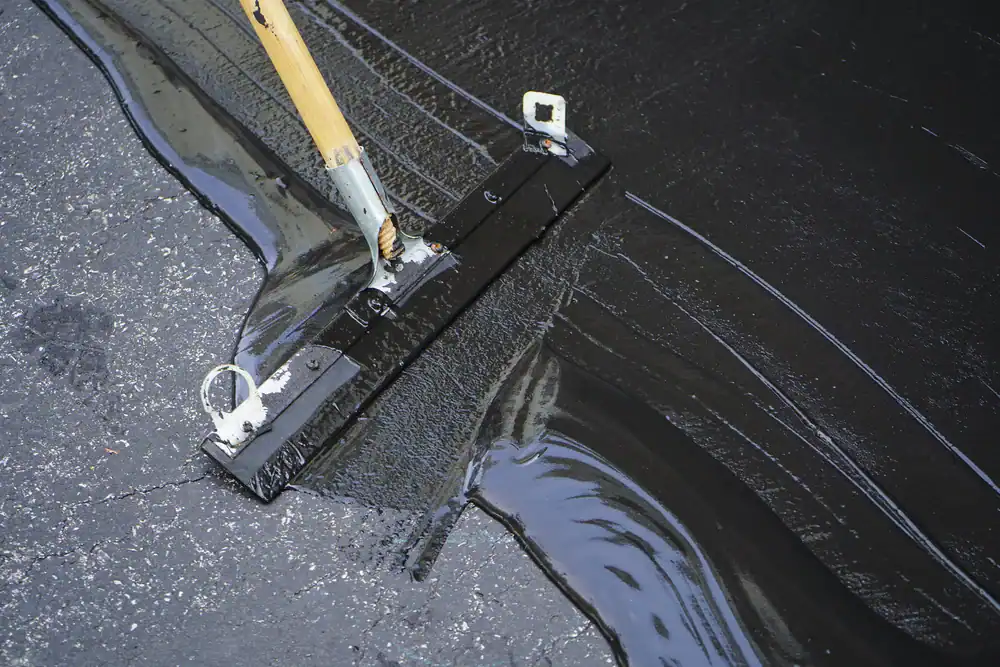
First, we clean the entire surface. Dirt, debris, oil stains—anything that would prevent the sealer from bonding properly gets removed. If there are cracks, we fill them before sealing so water can’t sneak through.
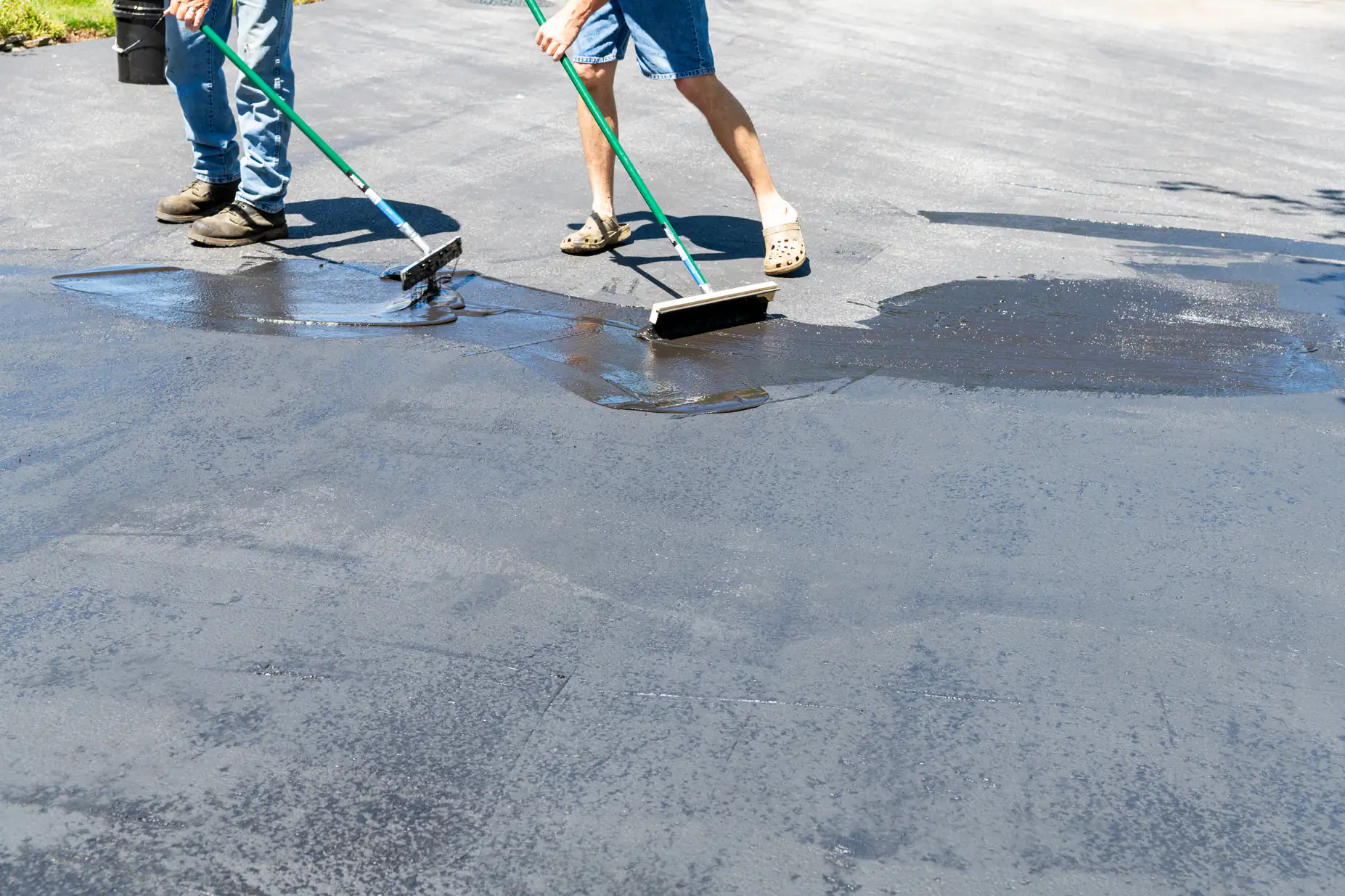
Next, we apply the first coat by hand. This isn’t a spray-and-go job. Hand application ensures even coverage and gets sealer into every pore of the asphalt. We let that coat dry, then apply a second coat for maximum protection. Two coats last 3 to 4 years in New Jersey’s climate, compared to 1 to 2 years for a single coat.
After application, your driveway needs 24 to 48 hours of dry weather to cure properly. We time the work around the forecast so you’re not stuck with a half-cured surface. Once it’s fully cured, you’ve got a smooth, protected driveway that’s ready for whatever winter throws at it.
Ready to get started?
Our sealcoating service includes crack filling, surface cleaning, two-coat application, and a 2-year warranty against peeling or flaking. You’re not paying for a quick cosmetic fix—you’re getting a system that extends the life of your asphalt.
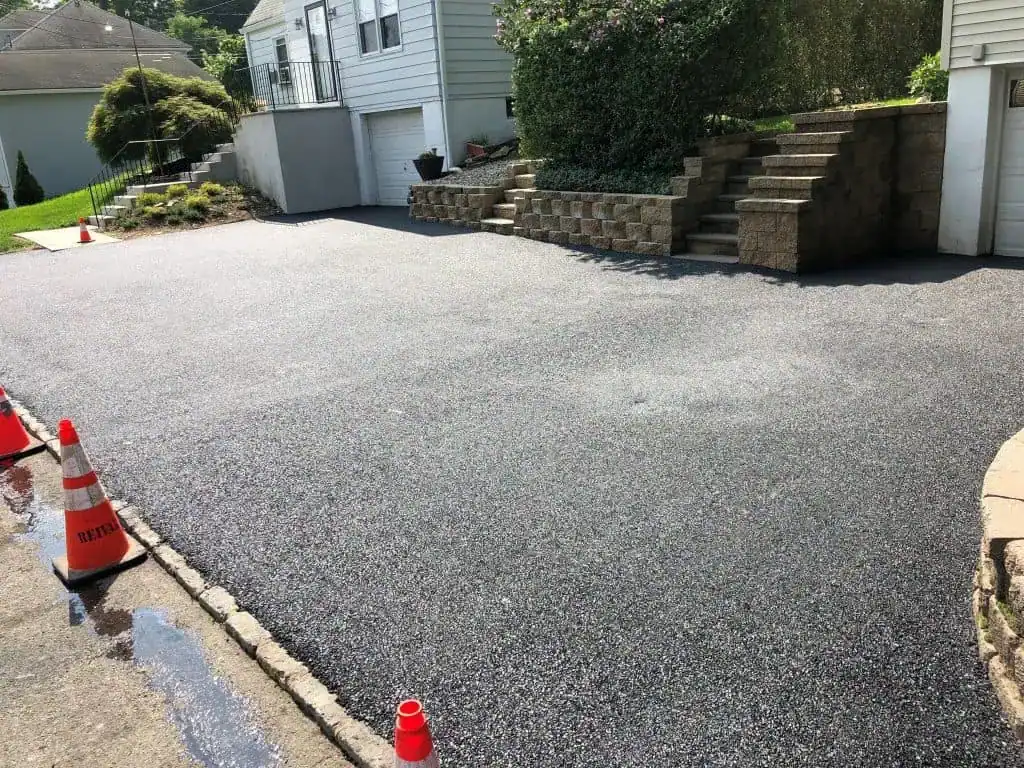
In Vernon Center, where the median property value is $160,300, your driveway plays a bigger role in curb appeal than you might think. A fresh sealcoat transforms a faded gray surface into a clean, black finish that makes your whole property look maintained. It’s not just about protection—it’s about presentation.
The cost of sealcoating runs between $0.15 and $0.40 per square foot in New Jersey. For a typical residential driveway, that’s $150 to $500. Compare that to $3,000 to $10,000 for full replacement, and the math is obvious. You’re spending a fraction of the cost to avoid a massive expense later.
We also guarantee a 24 to 48 hour callback for online quote requests. You’re not waiting a week to hear back—we respond fast because we know you’re trying to get this done before the weather turns.

Every 2 to 3 years is the standard recommendation for New Jersey driveways. If you’re using a two-coat application with professional-grade materials, you can stretch that to 3 to 4 years.
The key is timing. You want to seal before you see significant cracking or fading. Once the surface starts breaking down, you’re playing catch-up instead of staying ahead of the damage.
Fall is the best time to seal in Vernon Center. Temperatures are mild, humidity is lower, and you’re giving the sealer time to cure before winter. Spring is the second-best option, but demand spikes after everyone sees their winter damage, so you’ll wait longer for an appointment.
Most residential driveways in Vernon Center run between $150 and $500, depending on size and condition. If your driveway has a lot of cracks that need filling first, the cost goes up slightly.
Commercial lots or larger properties can run $1,000 to $5,000 or more. The price per square foot drops as the job gets bigger, but surface prep and crack repair add to the total.
We give you clear upfront pricing with no surprise charges. You’ll know exactly what you’re paying before we start, and we stick to that number unless you ask us to do additional work.
You can buy sealer at a hardware store and do it yourself, but the results won’t match professional application. DIY sealers are thinner, don’t last as long, and often leave streaks or uneven coverage.
Professional-grade materials bond better and hold up to New Jersey winters. We also prep the surface properly—cleaning, filling cracks, and making sure the sealer actually adheres instead of sitting on top of dirt and oil.
The other issue is timing. If you apply sealer and it rains within 24 hours, you’ve wasted your time and money. We check the forecast and schedule around weather conditions so the sealer cures correctly. That’s harder to control when you’re doing it yourself on a weekend.
Yes, and it’s the single most important reason to seal your driveway in New Jersey. When water gets into cracks and freezes, it expands by 9%. That expansion pushes cracks wider, which lets in more water, which freezes again and makes the problem worse.
Sealcoating creates a waterproof barrier that keeps moisture out. No water means no freeze-thaw cycle. Your driveway still experiences temperature changes, but the damage that comes from water expansion doesn’t happen.
Vernon Center sees 55 to 75 freeze-thaw cycles every winter. That’s 55 to 75 chances for water to destroy your asphalt. Sealcoating eliminates that risk for 3 to 4 years per application.
Coal tar is more durable and offers better protection against gas, oil, and freeze-thaw damage. It also gives you a richer, darker finish that lasts longer. The downside is that some New Jersey municipalities have restricted or banned it due to environmental concerns.
Asphalt-based sealers are more environmentally friendly and still provide solid protection. They don’t last quite as long as coal tar, but they’re a good option if coal tar isn’t available in your area.
We use professional-grade materials either way. The choice often comes down to local regulations and your priorities. If you want maximum durability and it’s allowed in Vernon Center, coal tar is the stronger option. If you prefer an eco-friendly approach, asphalt-based sealers still do the job.
Fall is ideal. Temperatures are between 50 and 85 degrees, humidity is manageable, and you’re sealing before winter damage starts. You also avoid the spring rush when everyone’s scrambling to fix cracks after the snow melts.
Spring is the second-best option, but demand is higher and scheduling takes longer. You’re also dealing with unpredictable weather—rain delays are more common in spring than fall.
Summer works too, but extreme heat can make the sealer dry too fast, which affects how well it bonds. We avoid sealing in winter because the sealer won’t cure properly in cold temperatures. If you’re planning to seal, aim for September or October in Vernon Center.