
Hear from Our Customers
Your driveway takes a beating. Sun breaks down the binder that holds asphalt together. Rain seeps into small cracks. Winter freeze-thaw cycles turn hairline fractures into potholes. Every season without protection shortens the life of your pavement.
Sealcoating creates a protective barrier against all of it. UV rays, water infiltration, oil spills, tire wear—it all gets blocked before it can damage the asphalt underneath. You’re looking at an extra five to ten years of usable life, sometimes more, depending on how often you maintain it.
The math is simple. A typical driveway sealcoating job in Vauxhall runs a few hundred dollars and should be done every two to three years. Compare that to repaving, which costs $6 to $8 per square foot. For a standard two-car driveway, that’s easily $3,000 to $5,000. Sealcoating isn’t just cheaper—it’s preventive. You’re stopping expensive problems before they start.
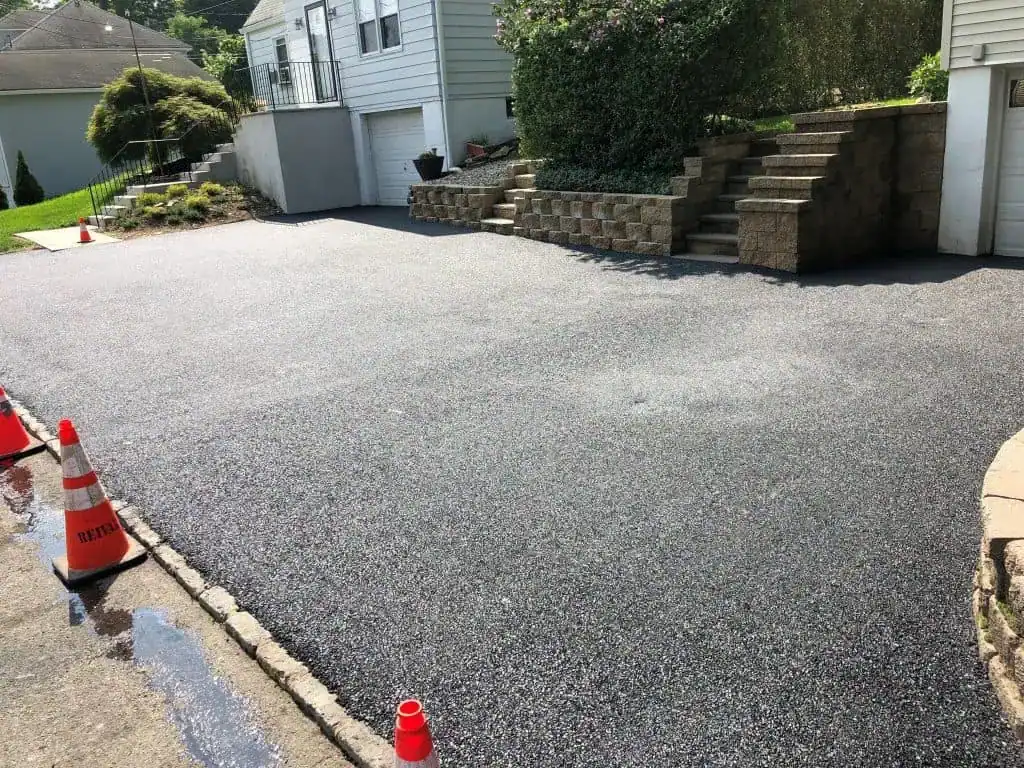
And it’s not just about function. A freshly sealed driveway looks clean, sharp, and well-maintained. That matte black finish makes your home’s exterior look intentional. It’s one of those small upgrades that people notice without realizing why your property looks better than the one next door.
Platinum Paving is a third-generation, family-run paving company based in Morris County. We’ve been doing asphalt and concrete work across North New Jersey for over 20 years. That means we’ve seen what happens when sealcoating is done right—and what happens when it’s not.
Vauxhall sits in Union County, just outside our home base, but we know the area well. The weather patterns, the soil conditions, the way driveways age here—it’s all familiar. We’re not a national franchise or a crew passing through. We’re local, and we’re staying local.
You’ll get a callback within 24 to 48 hours when you request a quote online. No runaround, no high-pressure sales pitch. Just a straightforward conversation about what your driveway needs and what it’ll cost. We show up when we say we will, and we don’t leave until the job is done right.
First, we inspect the surface. If there are cracks wider than a quarter-inch, we fill them. If there’s oil staining or surface damage, we address it. Sealcoating doesn’t fix structural problems—it prevents them. So anything that needs repair gets handled before we apply sealer.
Next, we clean the driveway. Dirt, debris, oil residue—it all has to go. We use blowers and power brooms to get the surface as clean as possible. Sealer only bonds to clean asphalt. If there’s buildup, it won’t adhere properly, and you’ll end up with peeling or uneven coverage.
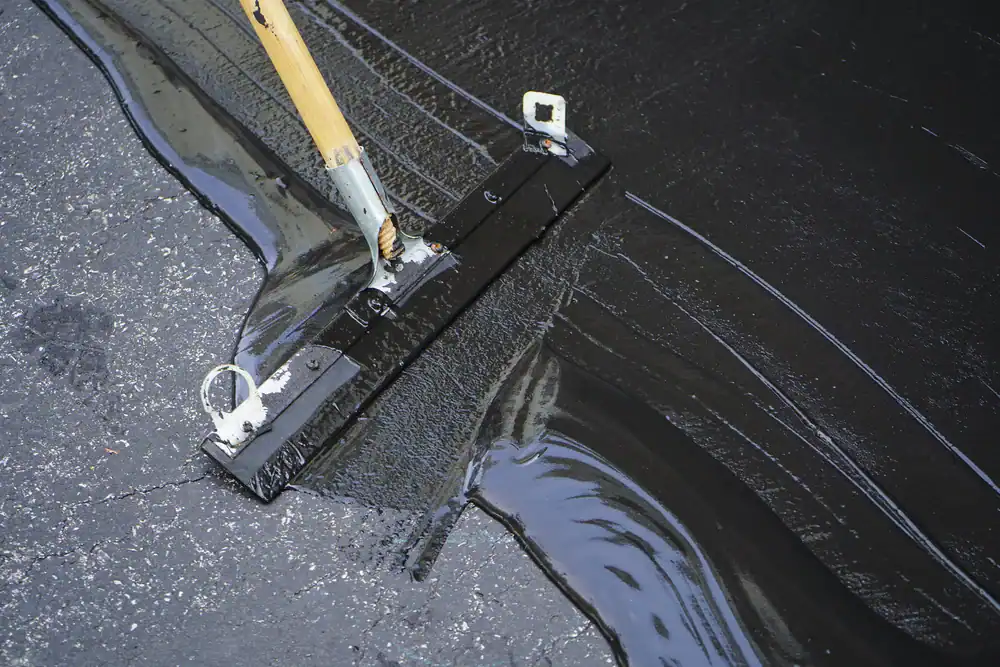
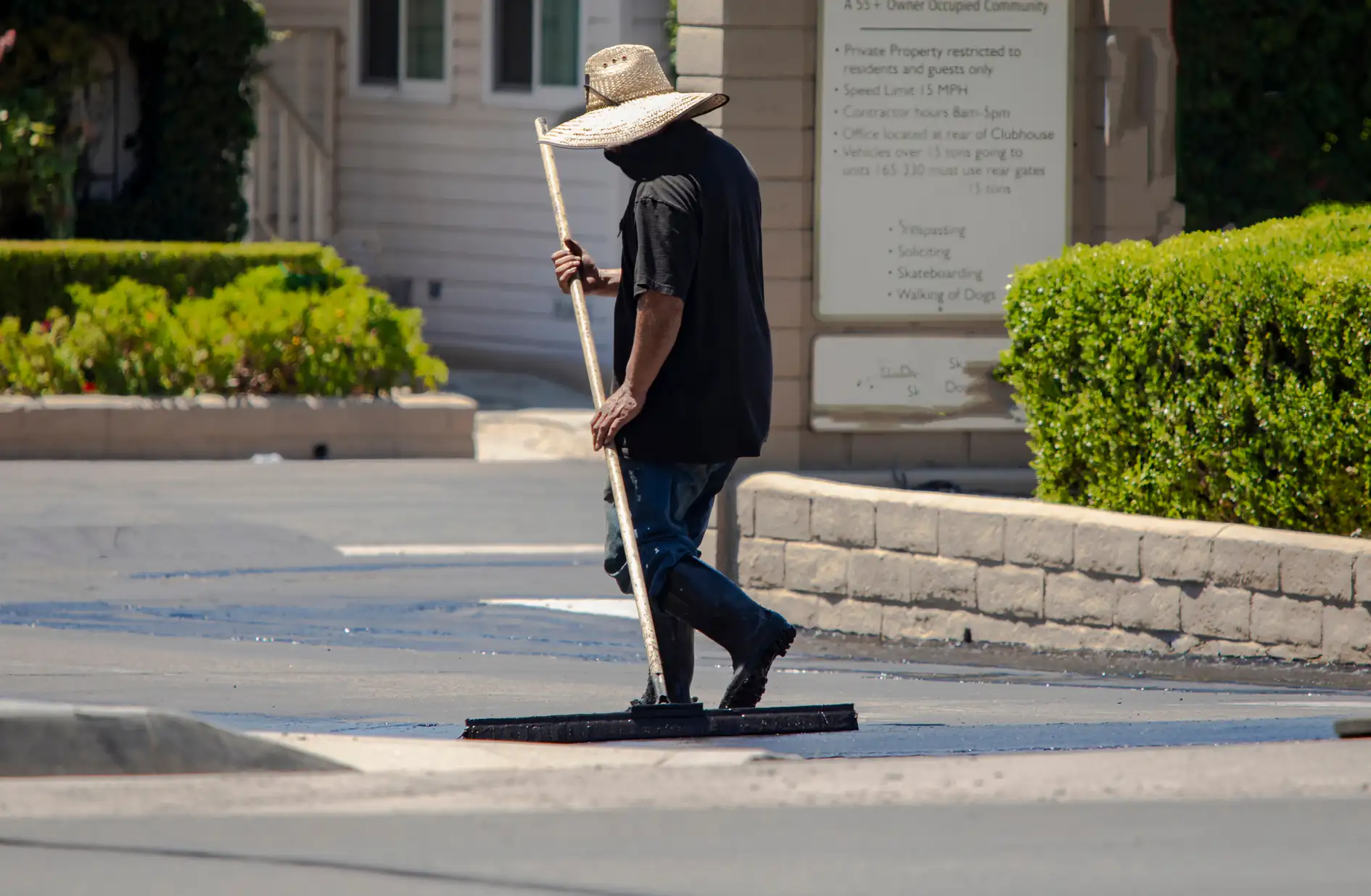
Then we apply the sealant. We use commercial-grade material, not the watered-down stuff you’ll find at a big-box store. It goes on in two thin coats for even coverage and maximum durability. The application is done with professional equipment that ensures consistent thickness across the entire surface.
After that, it’s a waiting game. You’ll need to stay off the driveway for 24 to 48 hours depending on weather. We’ll give you a specific timeline based on temperature and humidity. Once it’s cured, you’re good to go. The surface will be smooth, protected, and ready to handle whatever New Jersey throws at it.
Ready to get started?
You’re getting more than just a coat of sealer. The service includes crack filling for any damage up to a certain width, full surface cleaning, two coats of commercial-grade sealant, and edge work to keep lines clean. We also mark off the area so no one drives or walks on it while it cures.
In Vauxhall and the surrounding Union County area, driveways face specific challenges. You’ve got the same freeze-thaw cycles we see across North Jersey, but you’re also close enough to Newark and the Parkway to deal with higher traffic wear if your driveway connects to a busy street. That means more tire scuffing, more oil drips, more surface stress. Sealcoating helps, but only if it’s done with the right materials and proper prep.
We also pay attention to drainage. If water pools on your driveway, sealer alone won’t fix it, but we’ll let you know what’s happening and what your options are. Some driveways in older Vauxhall neighborhoods were poured without much pitch, and that can cause standing water. It’s worth knowing about before it becomes a bigger issue.
The cost of asphalt sealing depends on square footage and condition, but you’re typically looking at $0.20 to $0.50 per square foot in this market. For most residential driveways, that’s $300 to $600 total. It’s one of the most cost-effective maintenance tasks you can do as a homeowner.

Every two to three years is the standard recommendation. That timing gives the previous coat enough time to wear down naturally while still protecting the asphalt underneath. If you wait longer than three years, you start losing that protective layer, and the asphalt becomes vulnerable again.
Some driveways need it sooner. If your driveway gets a lot of sun exposure or heavy vehicle traffic, the sealer breaks down faster. If you park commercial vehicles, trailers, or anything with significant weight, you might want to seal every two years instead of three.
You can tell it’s time when the surface starts looking faded or grayish instead of black. That’s the asphalt showing through. If you see small cracks forming or the texture feels rougher than it used to, don’t wait. The longer you go without sealing, the more likely you are to need actual repairs, and that’s where costs start climbing.
The material itself is different. Consumer-grade sealer from a hardware store is thinner and breaks down faster. It’s designed to be easy to apply, not to last. Professional-grade sealant has a higher solids content, better adhesion, and additives that improve flexibility and UV resistance.
Then there’s the prep work. Most DIYers skip crack filling, don’t clean the surface thoroughly, and apply the sealer too thick or too thin. If the surface isn’t prepped right, the sealer won’t bond. If it’s applied unevenly, you’ll get streaks, puddles, or areas that wear through early.
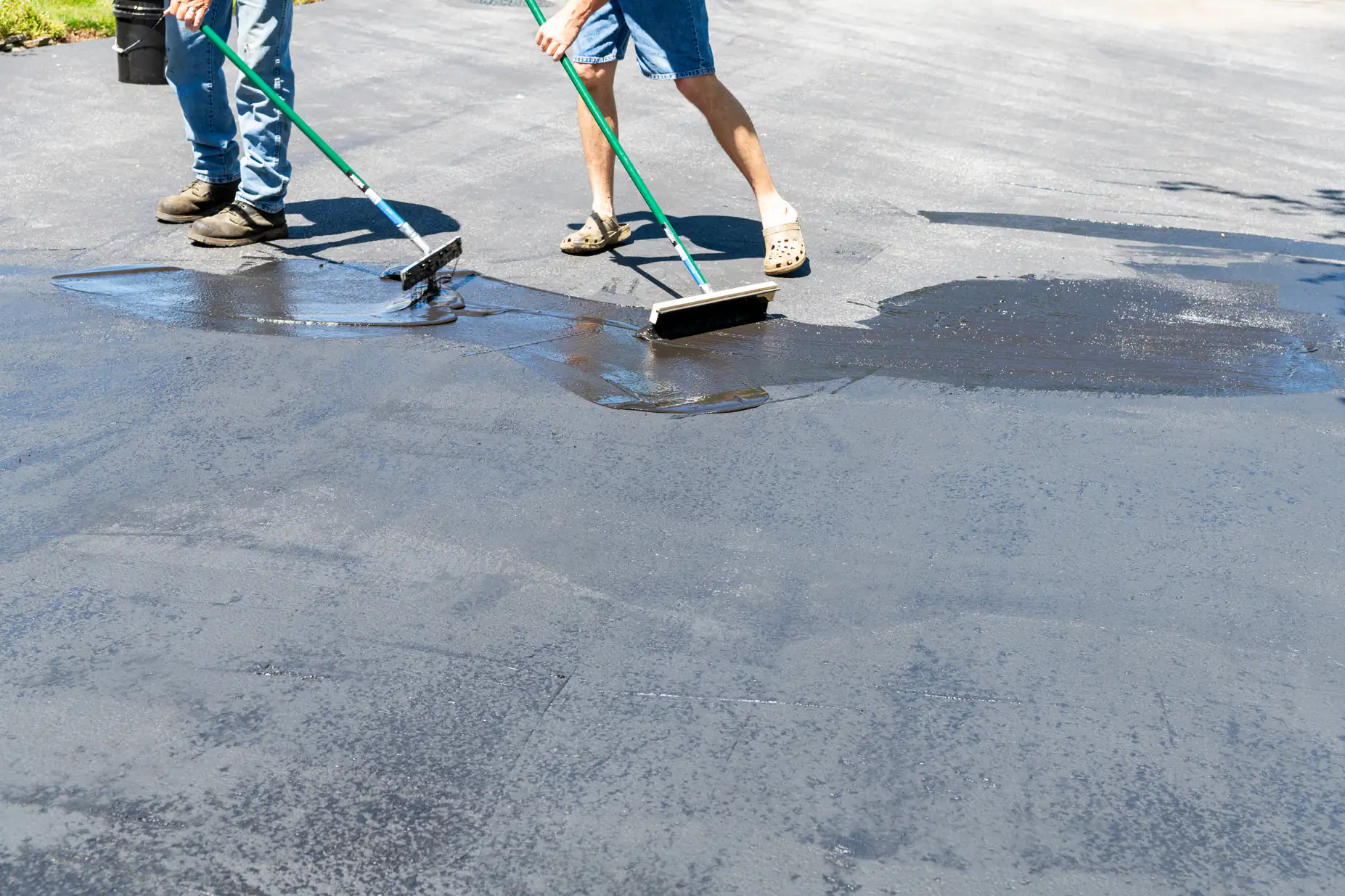
Equipment matters too. We use commercial sprayers and squeegees that distribute the material evenly and at the right thickness. Brush application or rolling it on by hand usually results in inconsistent coverage. You might save money upfront doing it yourself, but if it fails in a year and you have to redo it, you’ve spent more time and money than if you’d hired someone the first time.
Sealcoating is specifically for asphalt. Concrete driveways need a different type of sealer—usually a penetrating or film-forming concrete sealer. The chemistry is completely different because the materials are different. Asphalt is petroleum-based, and concrete is cement-based. They deteriorate in different ways and need different protection.
If you have a concrete driveway, you still want to seal it, just not with asphalt sealer. Concrete sealers protect against moisture infiltration, freeze-thaw damage, and surface staining. They don’t change the appearance as dramatically as asphalt sealcoating does, but they’re just as important for longevity.
We handle both asphalt sealcoating and concrete sealing, so if you’re not sure what you have or what it needs, we can take a look and give you a straight answer. Some driveways in Vauxhall have asphalt with concrete aprons or borders, and in those cases, we treat each material appropriately.
A properly applied sealcoat typically lasts two to three years before it needs to be reapplied. That lifespan depends on a few factors: weather exposure, traffic volume, and the quality of the application. Driveways that face south or west get more UV exposure and wear down faster. Driveways with heavy vehicle traffic or frequent turning also see more wear.
New Jersey winters are hard on sealcoating. The freeze-thaw cycle doesn’t damage the sealer the way it does asphalt, but it does cause expansion and contraction that can stress the surface. Snow plows, salt, and sand all contribute to faster breakdown. If you’re in an area that gets plowed regularly, expect the sealer to wear thinner in high-traffic zones.
The good news is that sealcoating is cumulative. Each time you reseal, you’re adding another layer of protection. Driveways that get sealed on schedule tend to last significantly longer than driveways that don’t. You’re looking at 25 to 30-plus years of life instead of 15 to 20. That difference adds up to thousands of dollars in avoided repaving costs.
Late spring through early fall—basically May through October. Sealcoating requires warm temperatures to cure properly. Ideally, you want daytime temps in the 70s or 80s and nighttime temps above 50. You also need dry conditions for at least 24 hours after application. Rain or heavy dew can ruin a fresh seal job.
Summer is the busiest season for driveway sealing, and for good reason. The weather is predictable, cure times are fast, and the sealer bonds well in the heat. But early fall is actually a great time too. The temperatures are still warm enough, the humidity is lower, and we tend to have more availability.
Avoid sealing in early spring if your driveway is newer. Asphalt needs time to cure fully before it’s sealed—usually six months to a year after installation. If you seal too soon, you can trap oils in the asphalt that need to evaporate, and that can cause premature failure. If your driveway was paved recently, wait until the following season.
For most residential driveways, you’re looking at $300 to $600 depending on size and condition. The cost breaks down to about $0.20 to $0.50 per square foot. A standard two-car driveway is around 600 to 1,000 square feet, so that gives you a ballpark range.
If your driveway has significant cracking or needs repairs before sealing, that’ll add to the cost. Crack filling is usually included up to a certain amount, but if there’s alligatoring or large sections that need patching, that’s additional work. We’ll let you know upfront if your driveway needs more than standard prep.
Compare that to the cost of repaving, which runs $6 to $8 per square foot, and you’re talking about a difference of thousands of dollars. Sealcoating every few years is one of the smartest investments you can make in your property. It’s not glamorous, but it works, and it saves you money in the long run.