
Hear from Our Customers
You’re looking at your driveway right now and wondering if it’ll make it through another winter. The cracks are spreading. The color’s fading. And you know what’s coming—New Jersey winters don’t mess around.
Here’s what happens when you sealcoat before the cold hits. Water can’t seep in. Salt can’t eat away at the surface. Freeze-thaw cycles can’t create new cracks or widen old ones. Your driveway stays flexible, protected, and intact.
The cost difference is real. Sealcoating runs $150 to $500 for most Upper Montclair driveways. Replacement? You’re looking at $3,000 to $7,000. And if you sealcoat every three to four years, you’re adding decades to your asphalt’s lifespan. That’s not marketing talk—that’s how the material works when it’s protected.
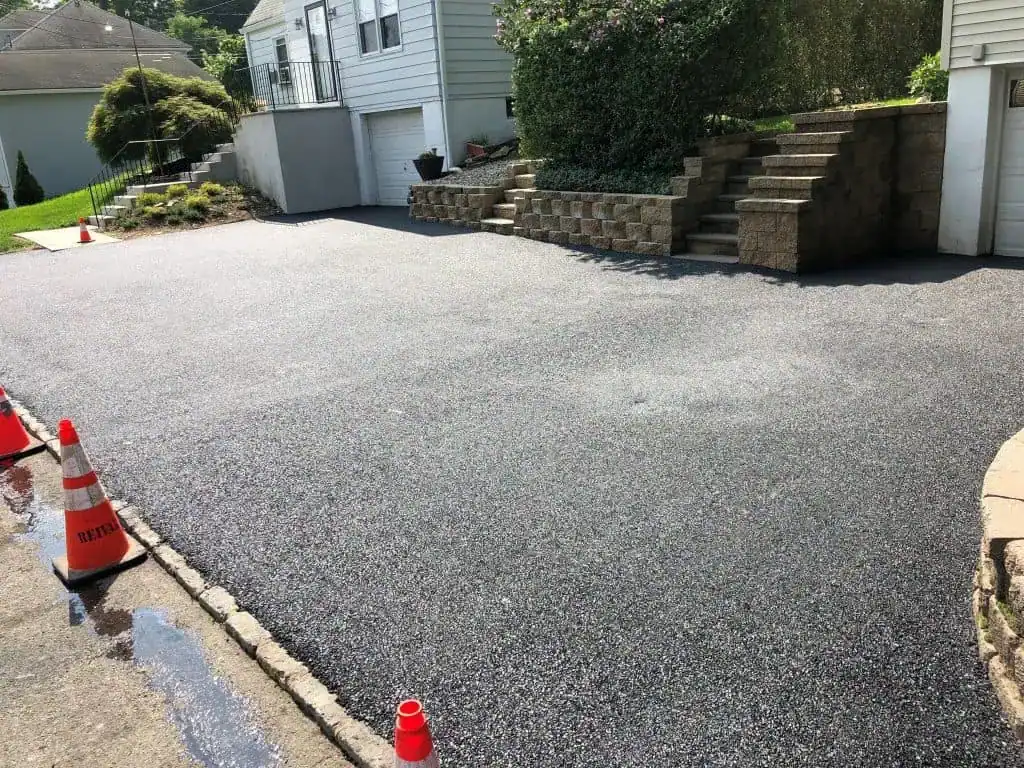
You also get your curb appeal back. Fresh sealcoating brings back that deep black finish. It makes your property look maintained, not neglected. And in a neighborhood like Upper Montclair, that matters.
We work throughout Morris, Essex, Union, and Warren Counties. We’ve been handling Upper Montclair’s driveways, parking lots, and roadways for over two decades. That means we know the terrain, the climate, and what actually holds up here.
Upper Montclair isn’t flat. The hills, the mature trees, the older properties—they all create specific challenges. Water runoff behaves differently. Tree roots shift things. Freeze-thaw cycles hit harder on sloped driveways. You need contractors who’ve seen it all and know how to prep and seal accordingly.
We’re licensed, insured, and local. We’re not a national franchise. We live here, work here, and stand behind what we do long after the job’s finished. When you call, you’re talking to people who’ve worked on hundreds of Morris County properties and understand what you’re dealing with.
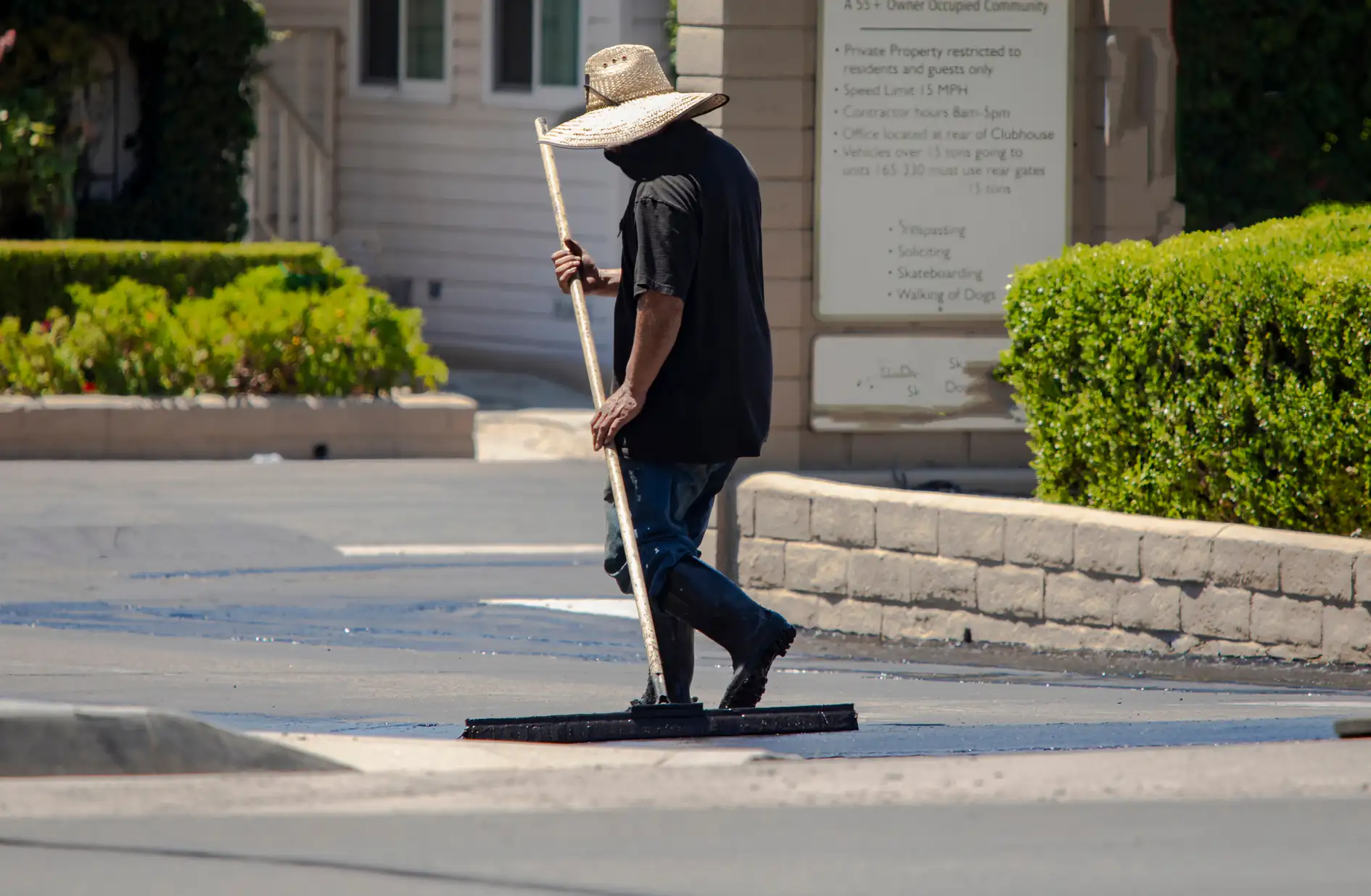
First, we clean the surface. Not with a garden hose—with steel wire brooms and industrial blowers. Every bit of dirt, debris, leaves, and loose material has to come off. If it doesn’t, the sealer won’t bond properly.
Next, we handle the cracks. We use hot rubberized crack sealant, not the cold stuff that fails in six months. This material stays flexible through temperature swings and actually prevents water from getting below the surface. If there are potholes or damaged sections, we repair those first. Sealcoating doesn’t fix structural problems—it prevents them.
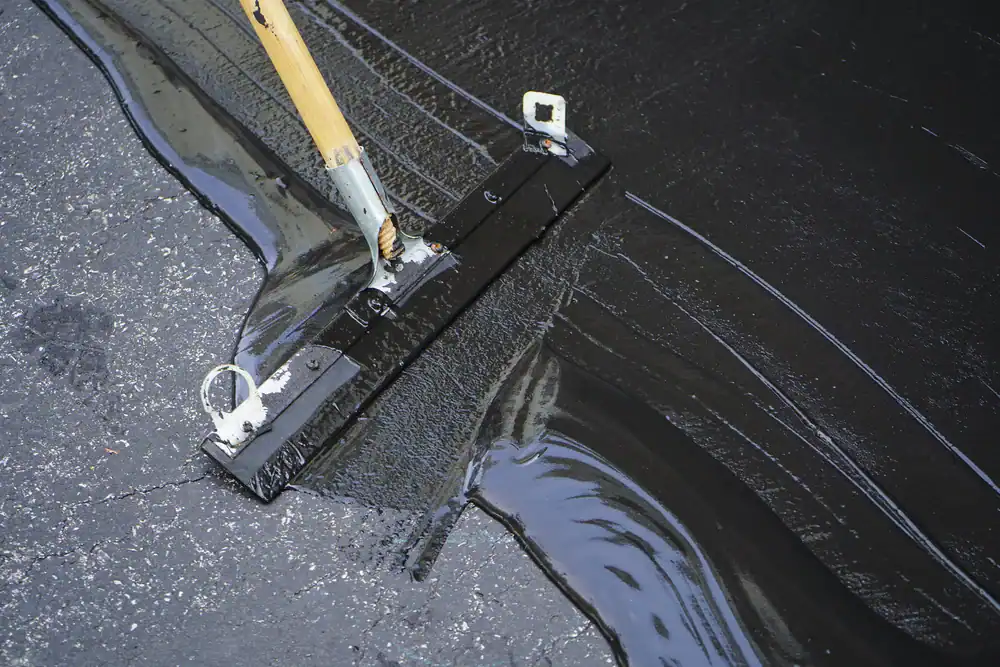
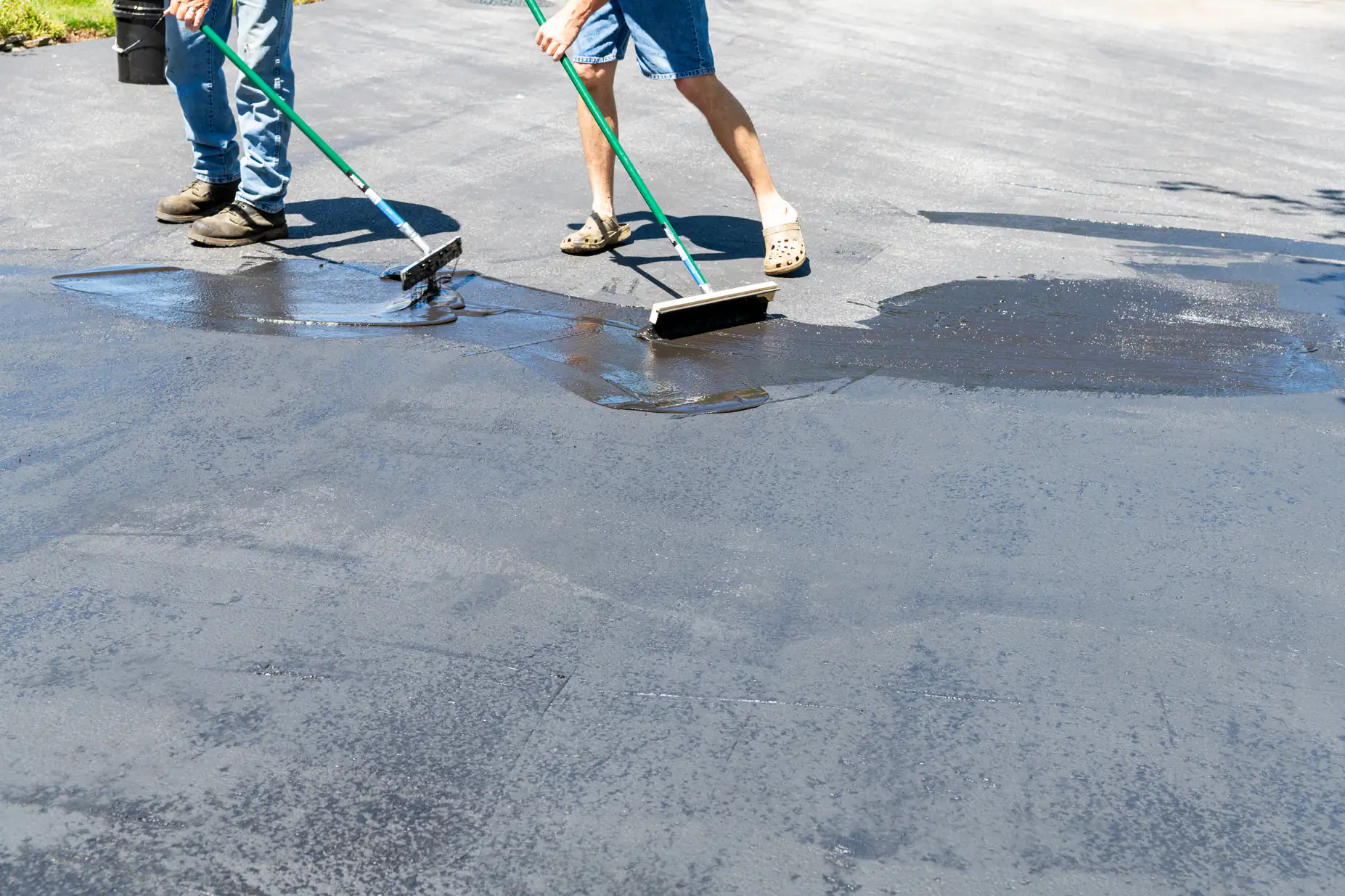
Then we apply the sealcoat. We use two coats on residential driveways because that’s what lasts three to four years. Single-coat applications might save you money upfront, but they wear out in one to two years. You end up paying more in the long run.
Temperature and timing matter. We don’t sealcoat if it’s below 50 degrees or above 85. We don’t work if rain’s coming within 24 hours. Fall is ideal because temperatures stay consistent, humidity is lower, and the sealer has time to cure properly before winter hits. You’re not scrambling in spring when contractors are slammed and your driveway’s already damaged.
Ready to get started?
When you hire us for driveway sealcoating in Upper Montclair, you’re getting a complete process. Surface cleaning with professional equipment. Crack filling with hot rubberized material that actually works. Repairs to any damaged areas that need attention before sealing. And two coats of quality sealer applied at the right thickness.
We’re also protecting your property while we work. Sealcoat splashes. Rain can kick it onto your garage door, siding, or walkways if the crew isn’t careful. We mask off edges, protect surrounding areas, and clean up properly when we’re done.
You’ll also get straight answers about timing. If your driveway is too new, we’ll tell you to wait. Fresh asphalt needs six to twelve months to cure before sealcoating. If it’s too damaged, we’ll tell you that too. Sealcoating isn’t a miracle fix for driveways that are already failing—it’s preventive maintenance that works best when the asphalt is still in decent shape.
Upper Montclair properties deal with heavy tree cover, which means more organic debris and moisture. We account for that. We also know that your driveway probably has some slope to it, which affects how water drains and where cracks tend to form. Local knowledge matters when you’re trying to make asphalt last.

Most residential driveways in Upper Montclair run between $150 and $500 for professional sealcoating. The price depends on square footage, current condition, and how much crack repair you need before sealing.
New Jersey pricing runs about 15 to 20 percent higher than the national average. That’s because of labor costs and the fact that our freeze-thaw cycles are harder on asphalt, so the prep work is more involved. If a contractor quotes you significantly less, ask what corners they’re cutting—single coat instead of two, cheaper materials, or skipping the crack filling.
Compare that to replacement costs. A new asphalt driveway in Upper Montclair runs $3 to $7 per square foot. For a standard two-car driveway, you’re looking at $3,000 to $7,000. Sealcoating every three to four years is a fraction of that cost and keeps you from needing replacement for 20 to 30 years.
Late spring (May to June) or early fall (September to October) are your best windows. You need temperatures between 50 and 85 degrees, and you need at least 24 hours without rain after application.
Fall is better for most people. Temperatures are stable, humidity is lower, and the sealer has time to cure before winter. You’re also beating the spring rush when every homeowner suddenly realizes their driveway is cracked and contractors are booked out for weeks.
If you wait until spring, you’re dealing with damage instead of preventing it. Water’s already gotten into the cracks, frozen, expanded, and made things worse. Now you’re paying for repairs on top of sealcoating. Fall timing means you’re protecting your driveway before winter does its damage, not after.
Two-coat applications on residential driveways last three to four years. Single-coat jobs last one to two years, which is why we don’t recommend them. You end up paying more frequently for less protection.
How long your sealcoating lasts also depends on traffic, weather exposure, and maintenance. If you’re parking heavy vehicles on it daily or it’s under full sun with no tree cover, it’ll wear faster. If you keep it clean and avoid using metal shovels or harsh de-icers in winter, it’ll last longer.
The real benefit isn’t just the sealcoat itself—it’s what it prevents. Properly maintained and sealcoated asphalt can last 20 to 30 years. Without sealcoating, you’re looking at major repairs or replacement in 10 to 15 years. The math is pretty straightforward.
You can buy sealer at the hardware store and do it yourself. But here’s what you’re up against: improper surface prep, wrong application thickness, bad timing, and materials that aren’t commercial grade.
Most DIY sealcoating fails because the surface wasn’t cleaned properly. If there’s dirt, oil, or debris under the sealer, it won’t bond. You’ll see it peeling or flaking within months. Crack filling is another issue—cold pour crack filler from a caulk gun doesn’t hold up like hot rubberized sealant applied with professional equipment.
We also know how to read the weather, apply consistent coats, and avoid common mistakes like sealing too soon after asphalt installation or working in the wrong temperatures. If your driveway is large, sloped, or has drainage issues, the risk of a bad DIY job goes up. For small, flat driveways in perfect condition, maybe you can pull it off. For most Upper Montclair properties, it’s worth hiring someone who does this daily.
Your driveway will deteriorate faster. UV rays break down the asphalt binder, which makes the surface dry and brittle. Water seeps into small cracks, freezes, expands, and turns those small cracks into big ones. Salt and chemicals from winter de-icing eat away at the surface.
Within a few years, you’ll see fading, cracking, and surface raveling (that’s when the top layer starts to crumble and come apart). Once water gets below the surface and compromises the base, you’re looking at potholes, heaving, and structural failure. At that point, sealcoating won’t help—you need repairs or replacement.
The cost of ignoring sealcoating adds up fast. A $300 sealcoating job every three years costs $1,500 over 15 years. Replacing your driveway after 10 years because you didn’t maintain it costs $5,000-plus. It’s not about whether you’ll pay—it’s about when and how much.
Sealcoating is specifically for asphalt driveways. Concrete driveways need a different type of sealer—usually a penetrating or film-forming concrete sealer that protects against moisture, stains, and freeze-thaw damage.
If you have a concrete driveway, you still need to seal it, but the process and materials are completely different. Concrete sealers don’t restore color the way asphalt sealcoating does, but they do protect the surface and make it last longer.
Some Upper Montclair properties have combination driveways—asphalt in some areas, concrete in others, or decorative pavers mixed in. Each material needs its own maintenance approach. If you’re not sure what you have or what it needs, a quick site visit will clear that up. We handle asphalt and concrete work, so we can walk you through what makes sense for your specific property.