
Hear from Our Customers
Your driveway stops breaking down. That’s the simple version.
The detailed version: sealcoating creates a barrier between your asphalt and everything trying to destroy it. Water can’t seep into cracks and expand when it freezes. Road salt can’t eat away at the binder holding everything together. UV rays can’t dry out and oxidize the surface. Oil drips from your car won’t penetrate and weaken the structure.
You’re looking at a driveway that can last 25 to 30 years instead of limping along for 10 to 15. The difference shows up in your bank account too—spending a few hundred dollars every few years beats dropping $8,000 to $15,000 on full replacement. That’s not marketing speak. That’s math.
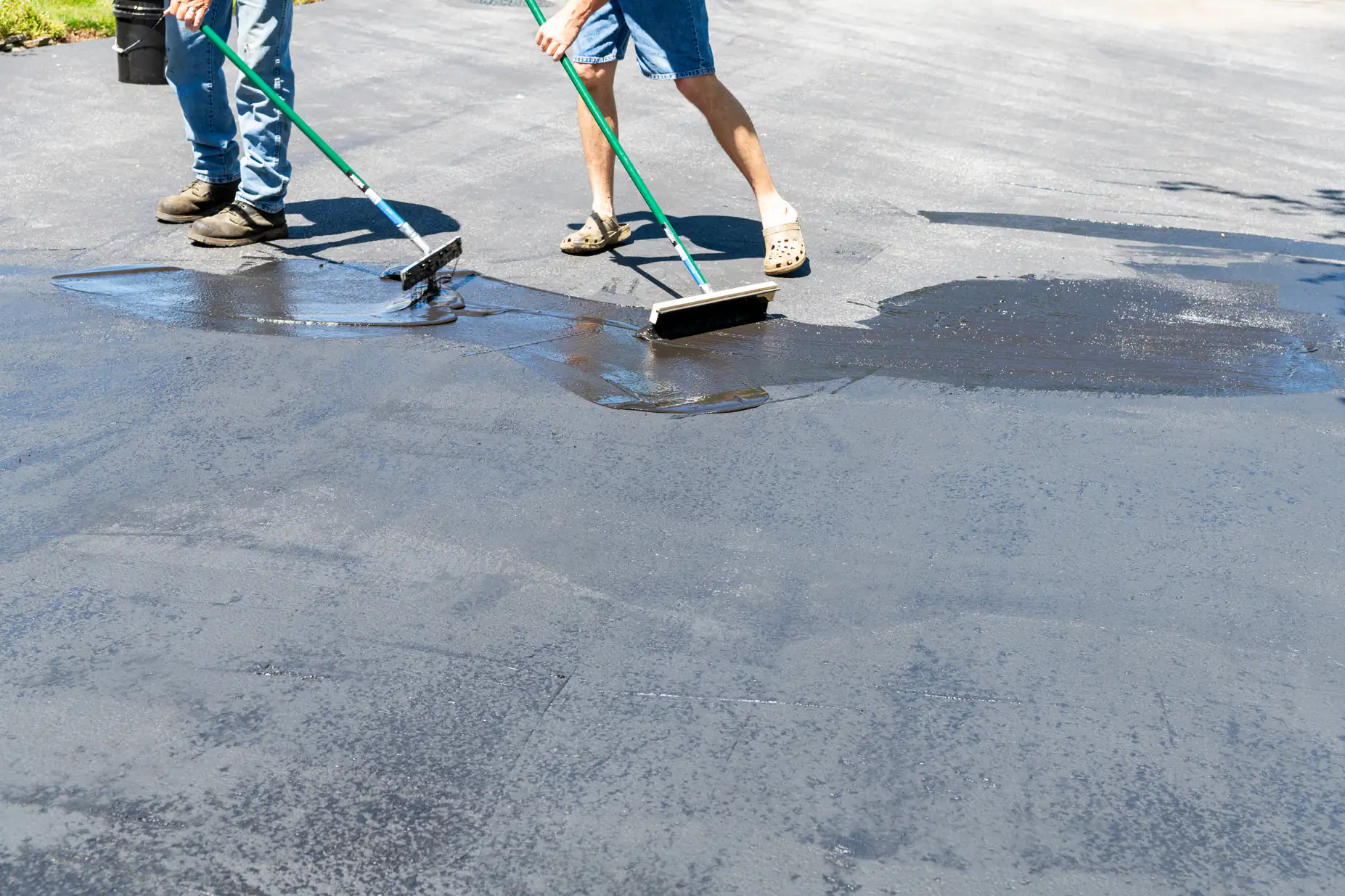
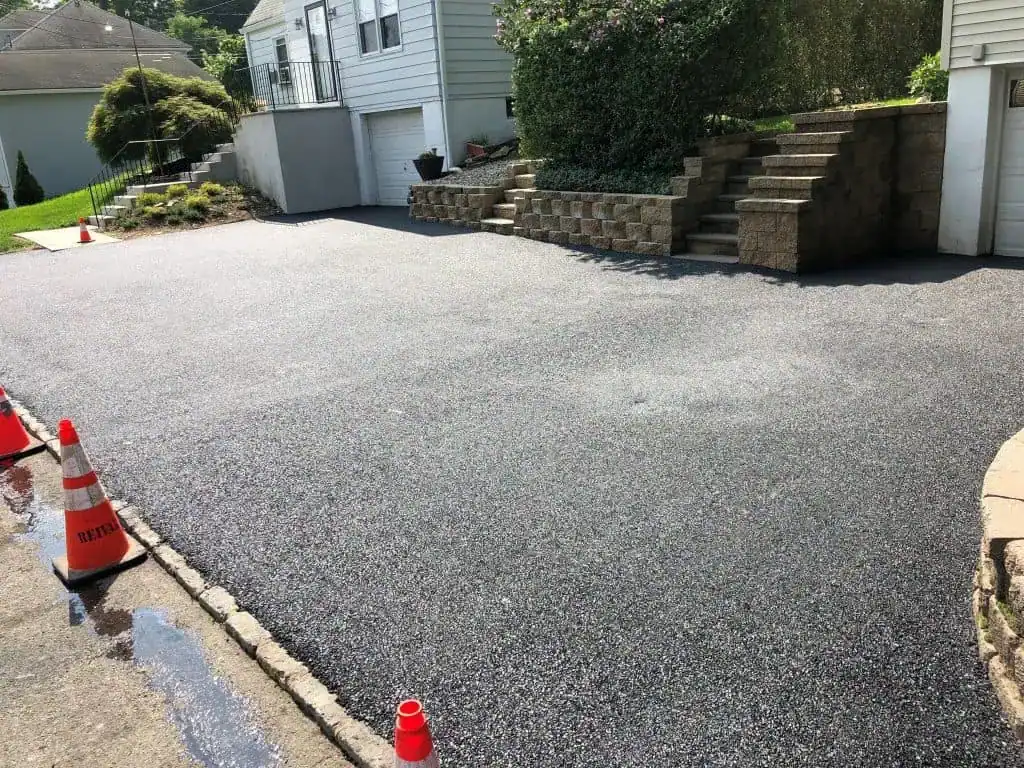
And here’s what you notice immediately: your driveway looks new again. That faded gray surface turns deep black. Cracks get filled. The whole thing looks like you just moved in. Your neighbors notice. Potential buyers notice if you’re thinking about selling.
We’ve spent four decades watching what Morris County weather does to asphalt. We’ve seen driveways that looked fine in December fall apart by March. We know exactly how many freeze-thaw cycles your driveway endures each year—over 40, for the record.
That’s why we don’t cut corners on materials or application. We use commercial-grade equipment with hydraulically agitated tanks that keep sealer mixed properly. We apply two coats because one coat doesn’t hold up in New Jersey’s climate. We include crack filling up to 50 linear feet and add sand for traction because that’s what actually works.
You get a 2-year warranty on the work. You get upfront pricing with no surprise charges. You get callbacks within 24 to 48 hours when you request a quote. We’re not trying to be the cheapest option in The Hills—we’re trying to be the one you don’t regret hiring.
We start with power washing because sealer won’t bond to dirty asphalt. All the dirt, oil, and debris gets stripped away so you’re working with clean surface.
Next comes crack filling. We inspect every crack and fill anything significant—up to 50 linear feet is included. This step matters because water infiltration through cracks is what destroys driveways in The Hills. You can’t just seal over problems and hope they disappear.
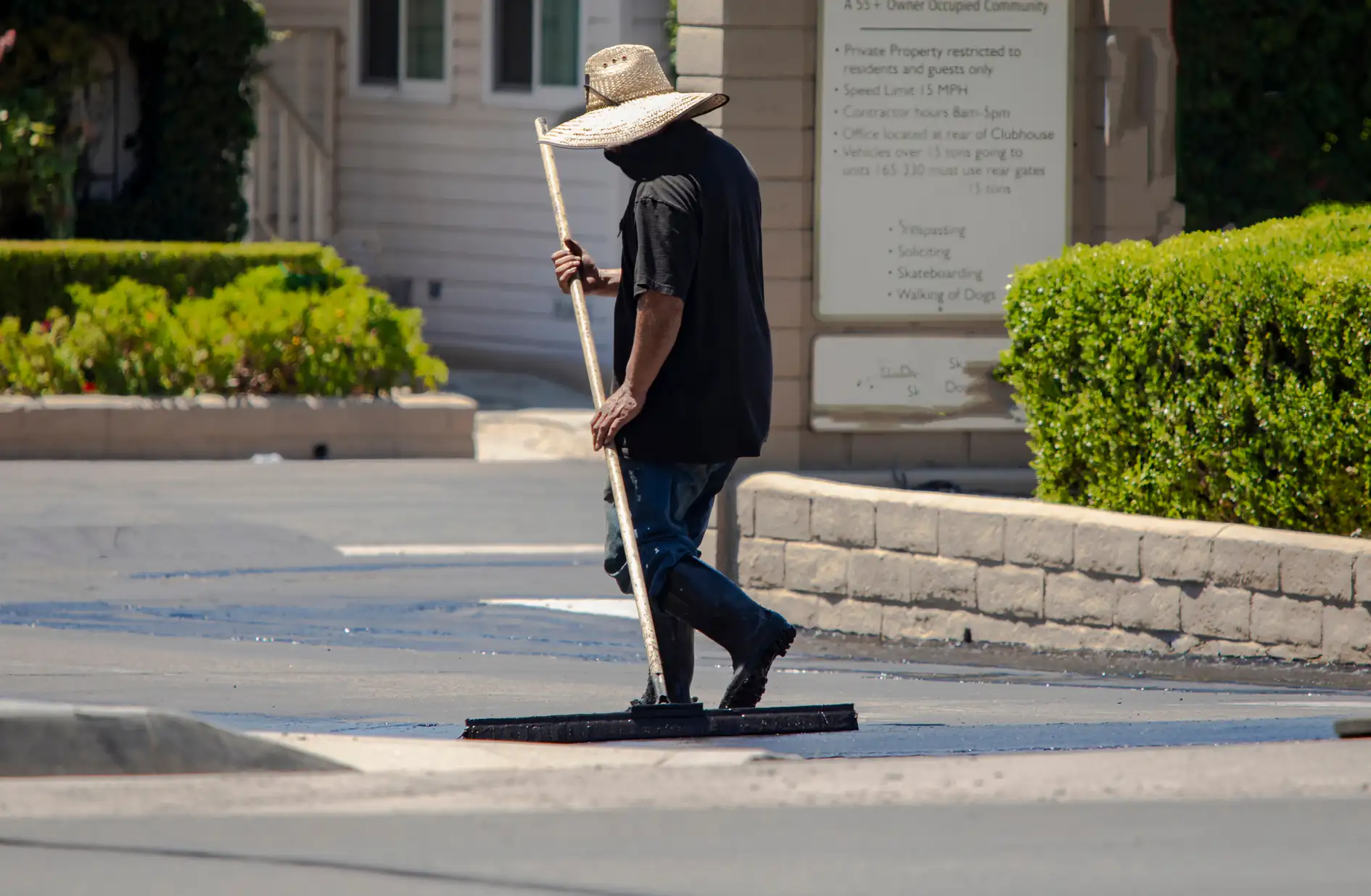
Then we apply the first coat of sealer. We’re using professional-grade material mixed in-house, not the watered-down stuff you see with fly-by-night operations. The first coat soaks in and creates the foundation.
The second coat goes on after the first one cures. Two coats aren’t optional in New Jersey—they’re necessary. This is what gives you that thick, dark finish and the protection that actually lasts three to four years.
We add sand to the final coat for traction. Without it, sealed driveways can get slippery when wet. You’ll need to stay off the driveway for 24 to 48 hours depending on weather. Then it’s ready for traffic.
Ready to get started?
Every sealcoating job includes power washing, crack filling up to 50 linear feet, two full coats of commercial-grade sealer, sand additive for traction, and a 2-year warranty against peeling or flaking. That’s the standard package.
Here’s why that matters in The Hills specifically: your driveway faces temperature swings from below zero in January to 95 degrees in July. It gets hit with road salt all winter. It sits through summer thunderstorms and fall leaf debris. Generic one-coat applications don’t survive that cycle.
The two-coat system we use is designed for Morris County conditions. The crack filling prevents water infiltration during freeze-thaw cycles—and you’re getting 40-plus of those every winter. The sand additive keeps your driveway from turning into an ice rink when it rains.
Pricing runs higher in New Jersey than national averages—typically 15% to 20% more—because the climate demands better materials and more thorough application. A typical residential driveway in The Hills costs between $300 and $600 depending on size and condition. That’s still pennies compared to the $6 to $8 per square foot you’d pay for complete replacement.

Most residential driveways in The Hills run between $300 and $600 for professional sealcoating. The range depends on square footage, current condition, and how much crack repair you need.
Here’s the breakdown: you’re paying for power washing, crack filling (up to 50 linear feet), two coats of commercial-grade sealer, sand additive, and labor. New Jersey prices run 15% to 20% higher than national averages because our climate requires better materials and more thorough application.
Compare that to replacement costs. Full driveway repaving runs $6 to $8 per square foot in Morris County. A standard two-car driveway is roughly 600 square feet. You’re looking at $3,600 to $4,800 minimum for replacement versus a few hundred for sealcoating that extends your driveway’s life by years.
Quality two-coat sealcoating lasts three to four years in New Jersey’s climate. One-coat applications break down faster—usually within two years—because they can’t handle the freeze-thaw cycles and road salt exposure.
The lifespan depends on traffic, weather exposure, and application quality. Driveways that see heavy vehicle traffic or sit in full sun all day wear faster. But even in tough conditions, professional two-coat sealing with proper prep work gives you three solid years of protection.
You’ll know it’s time to reseal when the surface starts looking faded or gray instead of black. Small cracks might appear. Water stops beading up and starts soaking in. That’s your signal to schedule another application before real damage starts.
Fall is ideal in The Hills—specifically September through early November. You need temperatures above 50 degrees during application and for 24 hours after. You also need dry weather for at least 24 hours so the sealer can cure properly.
Spring works too, usually late April through June, but you’re competing with everyone else who just saw winter damage. Fall gives you better scheduling flexibility and the sealer has time to cure before winter hits.
Avoid summer if possible. Temperatures above 90 degrees make sealer dry too fast, which creates application problems and reduces effectiveness. And don’t even think about sealing in winter—the material won’t cure properly in cold temperatures, and you’ll waste your money on a job that fails within months.
Concrete and asphalt need different approaches. Asphalt sealcoating uses coal tar or asphalt-based sealers that protect against water, UV damage, and chemicals. Concrete sealing uses penetrating sealers or topical coatings that prevent moisture infiltration and surface damage.
If you have a concrete driveway, you still need protection—just different products. Concrete is porous and absorbs water. When that water freezes in winter, it creates the same expansion damage you see in asphalt. Road salt also eats away at concrete surfaces over time.
The process is similar: clean the surface thoroughly, repair cracks, apply sealer. But concrete sealers are typically clear or slightly tinted rather than black. They don’t change the appearance dramatically like asphalt sealcoating does. You’re protecting the surface without covering up the concrete finish.
You can buy sealer at home improvement stores and do it yourself. But most DIY jobs don’t last in New Jersey’s climate, and here’s why: the sealer you get at retail stores is pre-mixed and often watered down compared to professional-grade material. You’re also working with a squeegee or brush instead of commercial spray equipment.
The bigger issue is surface prep. If you don’t power wash properly or fill cracks correctly, the sealer won’t bond right. It’ll peel within months. You’ll end up paying professionals to fix the mess and redo the job—which costs more than hiring us in the first place.
Professional equipment makes a difference too. Hydraulically agitated tanks keep sealer properly mixed during application. Commercial sprayers create even coats. These aren’t minor details—they’re what separates a job that lasts four years from one that fails after one winter. If your driveway is small and you’re comfortable with the risk, DIY might work. For most homeowners in The Hills, professional application is worth the cost.
Sealcoating works when your asphalt is structurally sound but showing surface wear. Look for fading color, minor cracks, and slight weathering. If water still runs off instead of pooling, and you don’t see major potholes or crumbling edges, sealcoating will extend the life significantly.
Replacement becomes necessary when you see alligator cracking (interconnected cracks that look like reptile skin), large potholes, significant crumbling at edges, or areas where the base is failing and asphalt is sinking. If water pools in multiple spots or your driveway has deep ruts from years of traffic, sealing won’t fix structural problems.
Here’s a practical test: if more than 30% of your driveway surface shows serious damage, replacement makes more sense than sealcoating. But if you’re looking at isolated problem areas with mostly intact asphalt, sealcoating buys you years of additional life. Get an honest assessment from a contractor who does both services—we can tell you whether you need a $400 sealcoating job or a $6,000 replacement.