
Hear from Our Customers
Your driveway stops bleeding money. That’s the short version.
New Jersey throws 55 to 75 freeze-thaw cycles at your asphalt every year. Water gets into small cracks, freezes, expands by 9%, and turns hairline damage into potholes by March. You’ve seen it happen.
Sealcoating creates a waterproof barrier before winter arrives. It blocks UV rays that dry out your asphalt. It prevents gas and oil from eating through the surface. And it gives you 3 to 4 years of protection when applied correctly with two coats.
The math is simple. Professional driveway sealing costs $150 to $500 for most Ten Mile Run homes. A full replacement runs $3,000 to $8,000. You’re looking at protection that costs pennies compared to what you’d spend ripping everything out and starting over.
Your driveway also looks better. The matte black finish makes your home’s exterior sharper. But more than curb appeal, you’re extending the lifespan of your asphalt from 15 years to 25-plus years in this climate.
We work across Morris, Sussex, and Somerset County. We’re based here, and we’ve seen what happens when homeowners wait too long or hire someone who cuts corners.
Ten Mile Run sits in one of New Jersey’s higher-income areas. Homes here average $875,000 to over $1 million. You didn’t invest that much to let your driveway crack apart because someone skipped proper prep or used thin sealer.
We use commercial-grade materials mixed in-house. Two coats minimum. Hot rubberized crack filler. Sand additive for traction. And we back it with a 2-year warranty that actually means something. You get a callback within 24 to 48 hours when you request a quote, and the price we give you is the price you pay.
First, we power wash your driveway to remove dirt, debris, and anything that would prevent the sealer from bonding. Clean surface means better adhesion.
Next, we fill every crack with hot rubberized filler. This isn’t the cold pour stuff that fails in six months. We’re sealing out water before it becomes a problem. Oil spots get primed so sealer sticks properly.
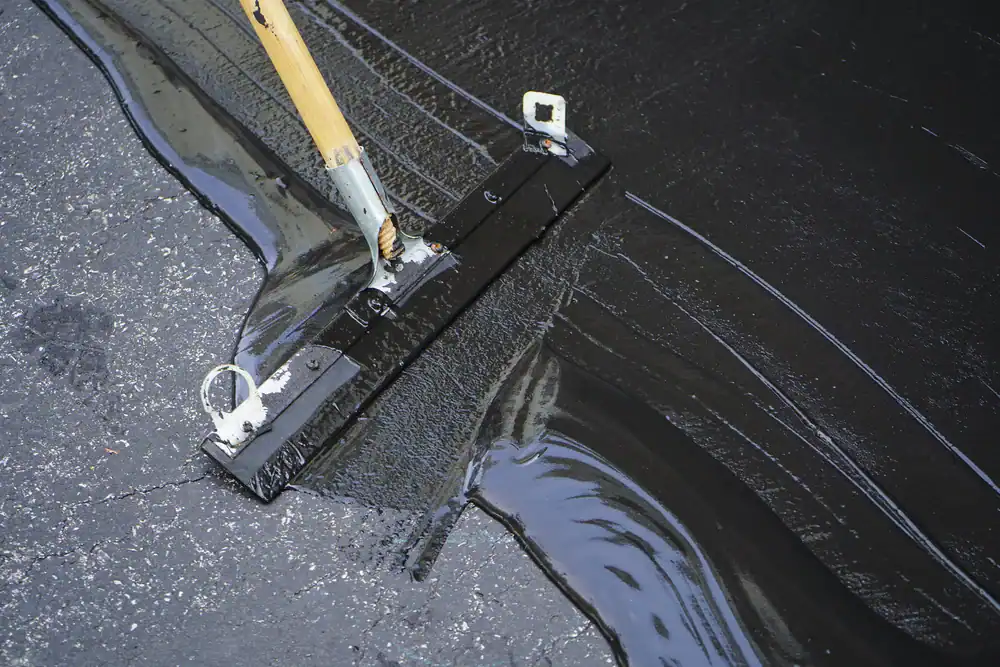
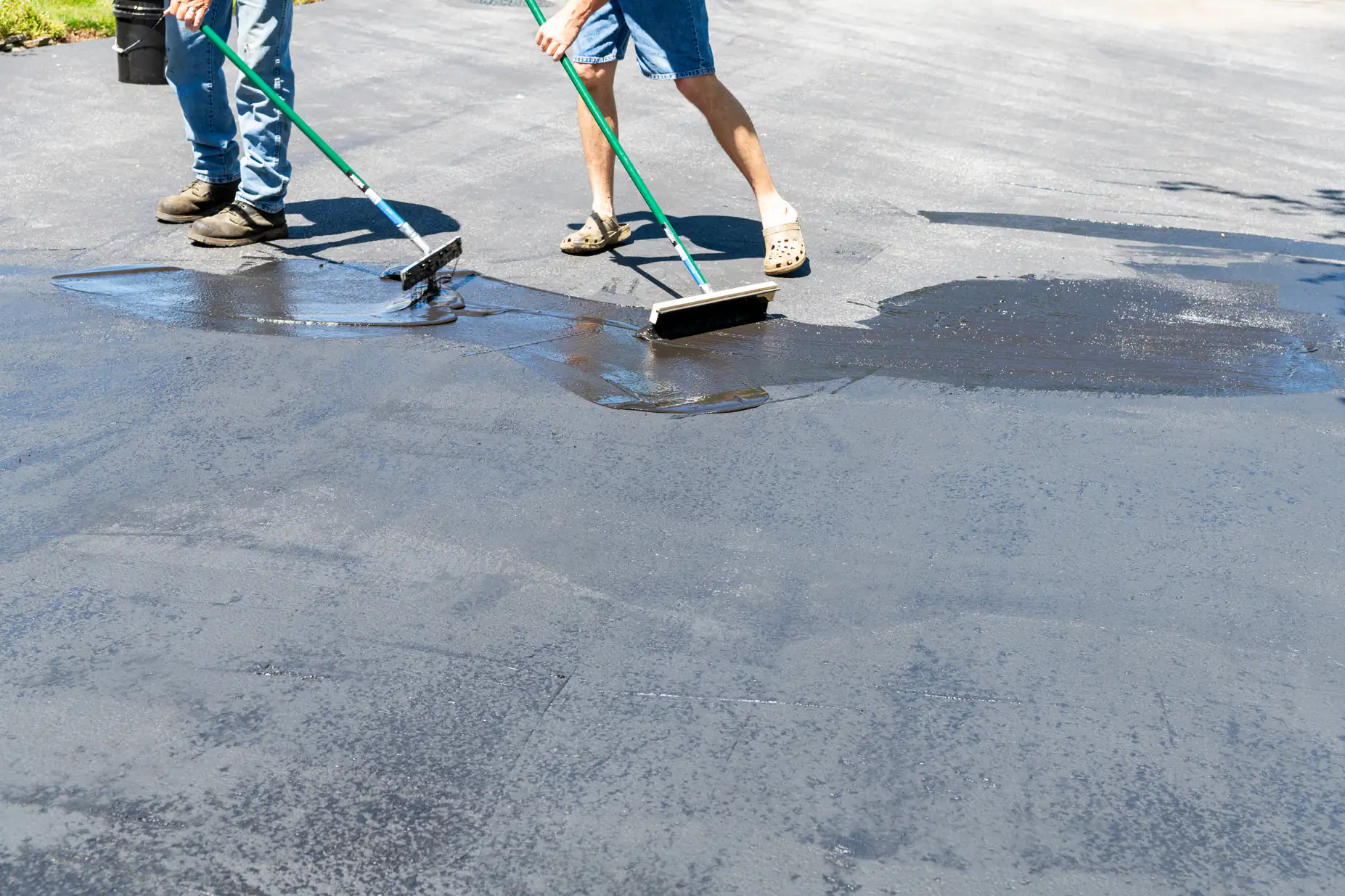
Then we apply two coats of coal tar or asphalt-based sealer, depending on local regulations and your driveway’s needs. The sealer goes on at the right thickness using professional equipment—hydraulically agitated tanks that keep the mix consistent from start to finish.
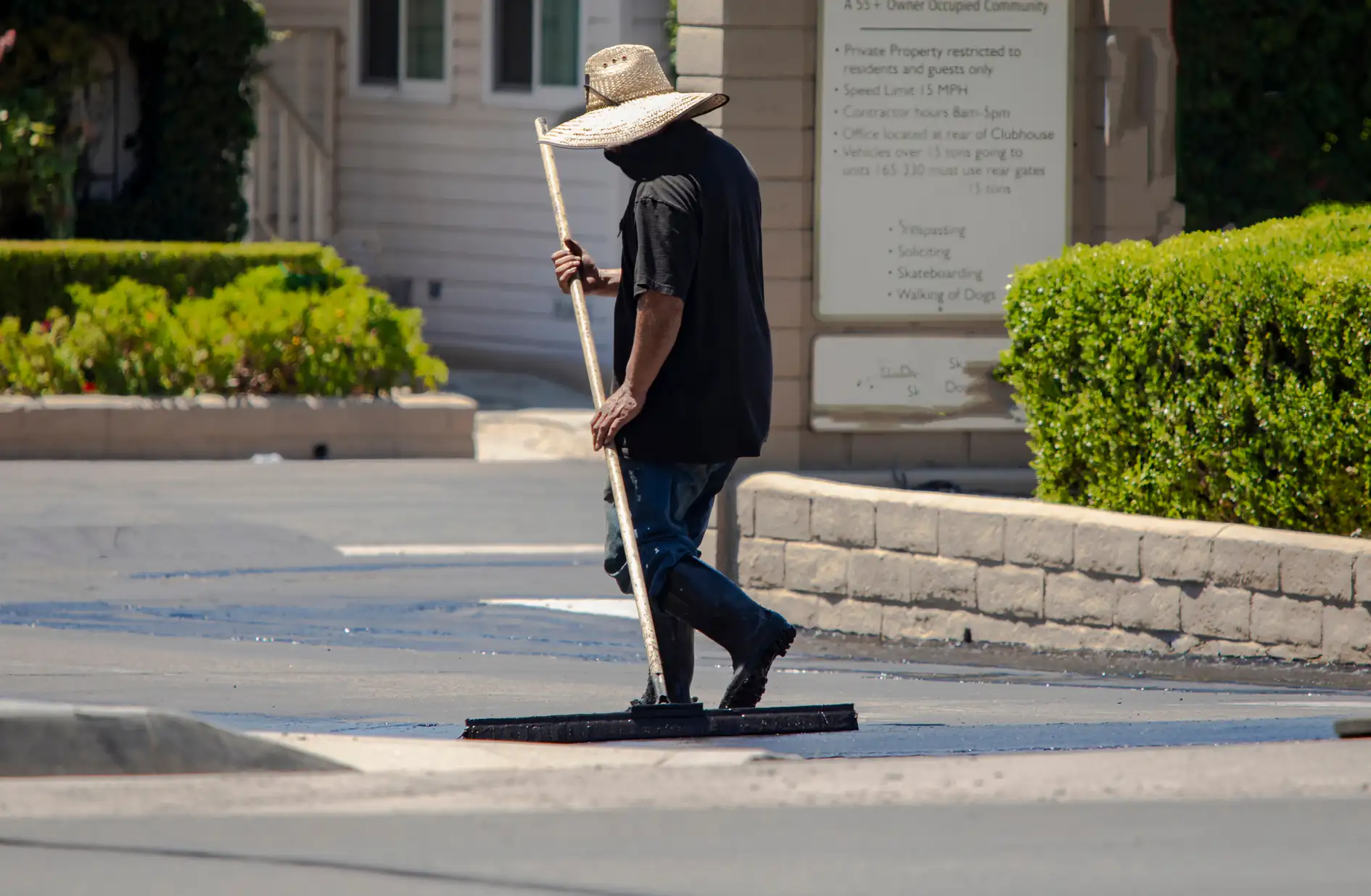
We edge and trim carefully so your driveway looks clean, not sloppy. And we let it cure properly. That means staying off it for 24 to 48 hours depending on weather. Rushing this step ruins the job.
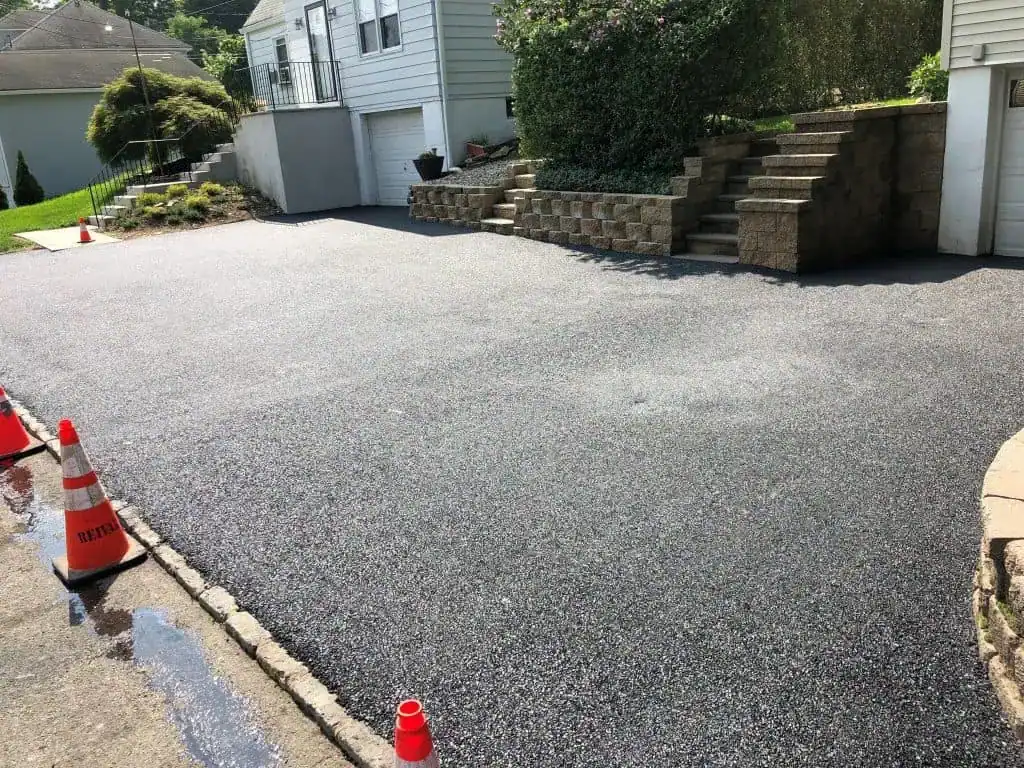
You’re left with a smooth, protected surface that sheds water, resists chemicals, and holds up against everything New Jersey winters throw at it.
Ready to get started?
You get surface preparation that matters. Power washing removes years of grime. Crack filling stops water infiltration before winter. Oil spot priming ensures sealer doesn’t peel off in sheets next spring.
You get two coats of sealer applied at proper thickness. One coat might save money upfront, but it only lasts 1 to 2 years in New Jersey’s climate. Two coats give you 3 to 4 years of protection. We’re not cutting corners to win a bid.
You get materials rated for extreme temperatures. Coal tar sealers handle the freeze-thaw cycles that Ten Mile Run sees every winter. Asphalt-based sealers work where coal tar is restricted. Either way, you’re getting commercial-grade protection.
Ten Mile Run homeowners deal with specific challenges. Your neighborhood has less density and larger properties. Driveways here are longer. They take more abuse from daily commutes to New York City. And with home values this high, letting your driveway deteriorate isn’t just a maintenance issue—it’s a property value issue.
We price by square footage, typically $0.15 to $0.40 per square foot depending on condition. Most residential driveways in this area run $150 to $500 for complete sealcoating. That’s a fraction of what you’d spend on repairs or replacement.

Two coats of professional sealer last 3 to 4 years in New Jersey’s climate. One coat only gives you 1 to 2 years.
The difference comes down to thickness and protection. New Jersey’s freeze-thaw cycles are brutal. You’re looking at 55 to 75 cycles every winter. Water penetrates thin sealer faster, which means cracks open up sooner.
Two coats create a thicker barrier against water, UV rays, and chemicals. You’re doubling your protection and extending the time between resealing. That saves you money and hassle over the long run. Most quality sealcoating contractors recommend resealing every 3 to 4 years to keep your driveway in top shape.
Late spring through early fall works best. You need temperatures above 50°F for proper curing.
Sealer won’t cure correctly in cold weather. It stays tacky, doesn’t bond right, and fails early. That’s why most driveway sealing happens between May and October in New Jersey.
Fall is ideal because you’re protecting your driveway right before winter hits. You’re sealing out water before the first freeze. But spring and summer work too, as long as you’re not sealing in extreme heat or right before rain. We book up fast in September and October because homeowners realize winter is coming. If you’re thinking about it, schedule early.
Most residential driveways in Ten Mile Run cost $150 to $500 to seal professionally. Larger or more damaged driveways cost more.
Pricing runs $0.15 to $0.40 per square foot depending on your driveway’s condition. Heavy cracking means more prep work. Oil stains require priming. Older asphalt needs extra attention.
New Jersey pricing runs 15% to 20% higher than national averages because the climate demands better materials and more thorough prep. But compare that to $3,000 to $8,000 for replacement. You’re spending a few hundred dollars now to avoid spending thousands later. That’s not an expense—it’s an investment in your property.
You can do it yourself, but professional results require professional equipment and materials. Most DIY jobs fail within a year.
Homeowner-grade sealer from big box stores is thinner and less durable. It doesn’t include the sand additive that provides traction. And without proper surface prep—power washing, crack filling with hot rubberized filler, oil spot priming—the sealer won’t bond correctly.
We use hydraulically agitated tanks that keep sealer mixed consistently. We apply it at the right thickness. We know how to handle edges and transitions. And we guarantee our work. If you’re protecting a $500,000-plus home in Ten Mile Run, hiring someone who knows what they’re doing makes sense. The cost difference isn’t worth the risk of a failed DIY job.
Sealcoating prevents new damage by blocking water, UV rays, and chemicals. It doesn’t fix existing structural problems.
If your driveway already has deep cracks or potholes, sealing won’t repair them. You need crack filling and patching first. But once those repairs are done, sealer protects against future damage.
Water is your driveway’s biggest enemy. It seeps into small cracks, freezes, expands, and breaks asphalt apart. Sealcoating creates a waterproof barrier that stops this cycle. It also blocks UV rays that dry out and weaken asphalt over time. And it prevents gas and oil spills from penetrating the surface. You’re not making your driveway indestructible, but you’re giving it the best chance to survive New Jersey winters without falling apart.
Coal tar sealer is more durable and handles extreme temperatures better. Asphalt-based sealer is required in areas where coal tar is restricted.
Coal tar creates a tougher, longer-lasting seal. It resists gas and oil better. It holds up against freeze-thaw cycles more effectively. That’s why it’s been the standard for commercial and residential sealcoating for decades.
But some New Jersey municipalities have restricted coal tar use due to environmental concerns. In those areas, asphalt-based sealer is your option. It still protects your driveway, but it doesn’t last quite as long. Either way, professional-grade sealer applied correctly will outperform anything you buy at a retail store. We know which product is allowed in Ten Mile Run and which one makes sense for your specific driveway.