
Hear from Our Customers
Your driveway takes a beating in North Jersey. Winter freezes crack the surface. Spring thaw lets water seep in. Summer heat oxidizes the asphalt. Without protection, you’re looking at 8-12 years before you need a complete replacement.
Professional driveway sealcoating changes that timeline completely. You’re adding a waterproof barrier that blocks the freeze-thaw cycle before it starts. Water can’t infiltrate what it can’t penetrate. That means no expansion, no cracking from the inside out, and no surprise damage when the snow melts.
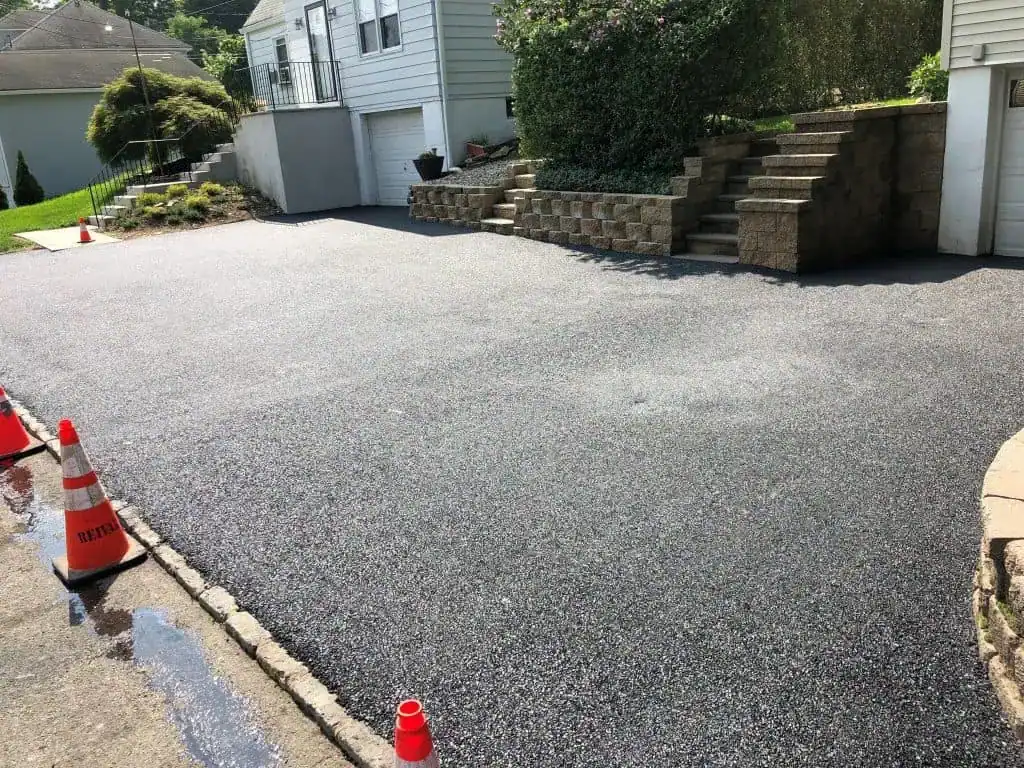
A properly sealed driveway in Succasunna, NJ lasts 25+ years instead of 15. The dark, smooth surface sheds water instead of absorbing it. It melts snow faster because it absorbs more solar energy. And it looks better—like you actually maintain your property instead of letting it fall apart.
Most homeowners spend under $500 on preventive sealcoating. Compare that to $3,000-$8,000 for tearing out and replacing sections of damaged asphalt. The math isn’t complicated.
We work exclusively in Morris, Sussex, and Somerset Counties. We’re not a franchise or a national chain. We’re local contractors who understand exactly what North Jersey weather does to asphalt.
Morris County sits in a weather pattern that’s especially tough on driveways. You don’t get sustained cold—you get freeze-thaw cycles. Temperatures swing above and below freezing multiple times per week during winter. That’s what destroys asphalt. And that’s why we adjust our sealcoating methods specifically for this climate.
We use high-grade materials designed for your conditions. Our crews know when to seal and when to wait. And we give you clear upfront pricing with a 24-48 hour callback guarantee when you request a quote online.
We start with a full inspection of your asphalt. If there are cracks wider than a quarter-inch, we fill them first. Sealcoating doesn’t fix structural damage—it prevents it. So we make sure your base is solid before we apply anything.
Next, we clean the surface. Oil stains, dirt, and debris all interfere with adhesion. A pressure wash removes contaminants and opens up the pores in your asphalt so the sealer actually bonds instead of sitting on top.
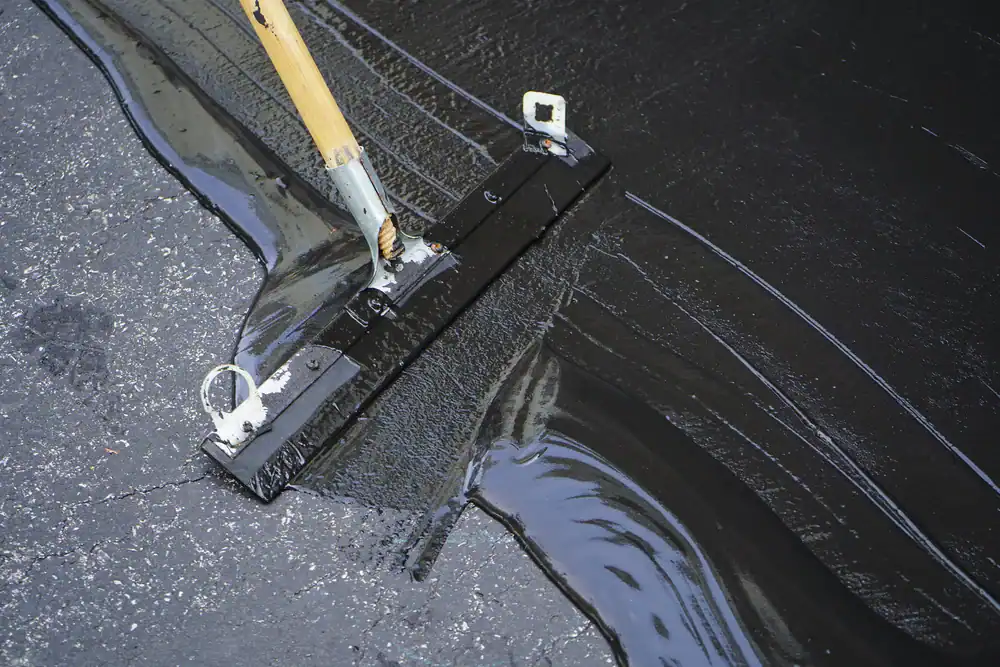
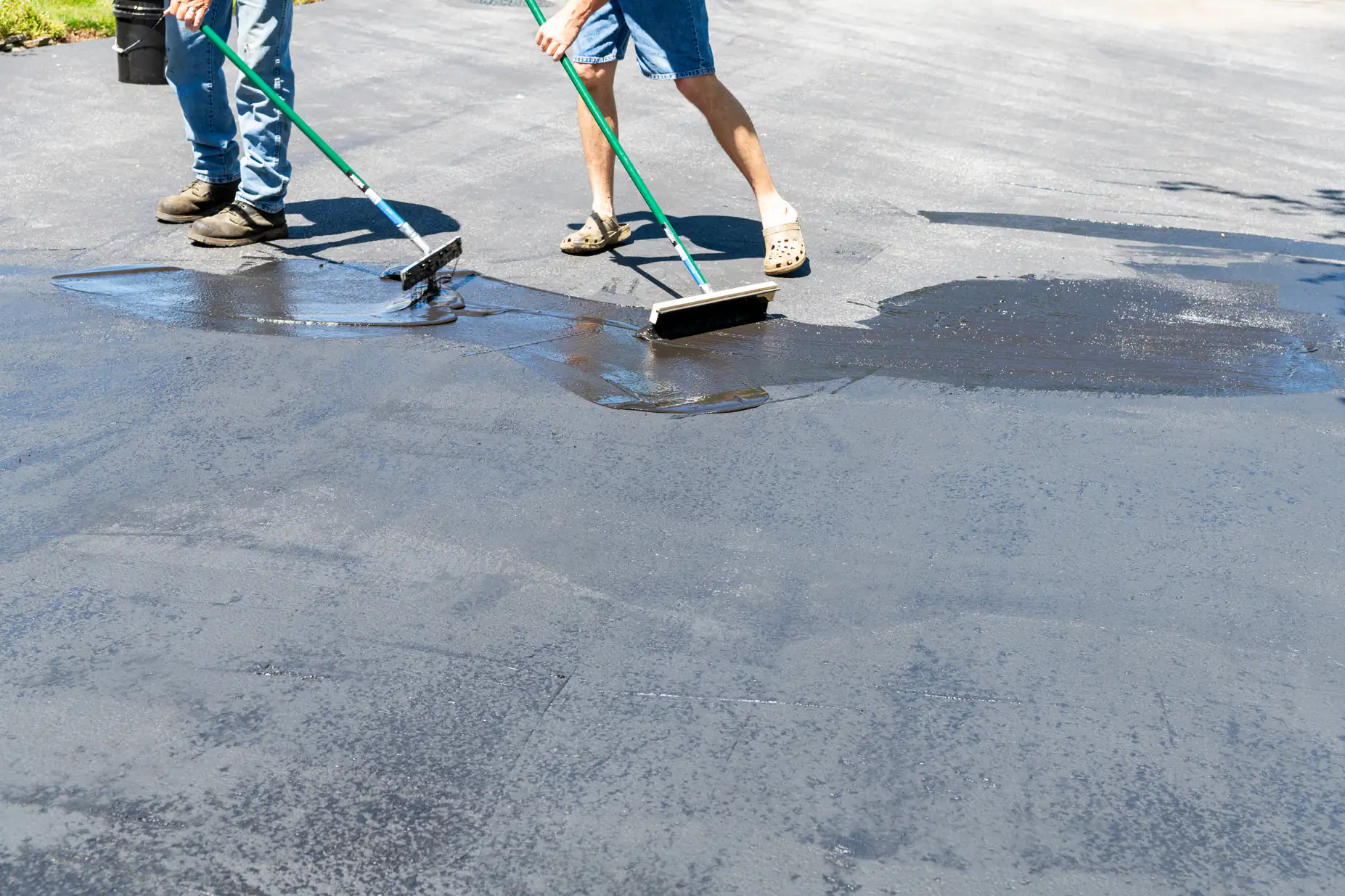
Then we apply a professional-grade coal tar or asphalt emulsion sealer. This isn’t the bucket you buy at a hardware store. It’s a commercial formula with UV inhibitors, polymers, and additives designed to handle Morris County’s climate. We apply it evenly with commercial equipment—no brush marks, no thin spots.
The sealer needs 24-48 hours to cure depending on temperature and humidity. During that time, you stay off the driveway completely. Once it’s cured, you’ve got a waterproof, UV-resistant surface that’s ready for whatever winter throws at it.
Ready to get started?
Our driveway sealcoating service in Succasunna, NJ includes crack filling for any damage under a quarter-inch wide. Larger cracks get a different treatment, but we’ll tell you exactly what’s needed before we start.
You also get edge work. We don’t just roll sealer down the middle and call it done. We hand-apply along borders, around drains, and near garage doors where equipment can’t reach. Every inch gets covered.
Fall is the optimal time for sealcoating in Morris County. Temperatures are moderate, humidity is lower, and you’ve got time for the sealer to cure before winter hits. That’s when we’re busiest—because that’s when it makes the most sense for your driveway.
We also work with your schedule. Most residential driveways take 4-6 hours from start to finish, including prep and cleanup. You’ll need to keep cars off for 24-48 hours, but we’ll give you an exact timeline based on weather conditions when we’re there.

Driveway sealcoating costs $0.15 to $0.40 per square foot in Morris County. A typical residential driveway runs $150 to $500 depending on size and condition.
North Jersey prices run about 15-20% above national averages. That’s partly due to higher labor costs, but mostly because our climate is harder on asphalt. We deal with more freeze-thaw cycles than most of the country, so the materials and methods need to be better.
If someone quotes you $100 for a full driveway, they’re either using bargain-bin sealer or skipping steps. Professional-grade materials cost more. Proper surface prep takes time. But that’s what actually protects your asphalt instead of just making it look darker for a few months.
You should seal your driveway every 2-3 years in Succasunna, NJ. Some contractors will tell you every year, but that’s overkill unless your driveway sees heavy commercial traffic.
Asphalt needs time to breathe between applications. Seal it too often and you’re just building up layers that can peel or flake. Seal it too rarely and you’re letting UV damage and water infiltration do their work.
The best indicator is how the surface looks. If water beads up when it rains, your sealer is still working. If water soaks in and leaves dark spots, it’s time to reseal. Most driveways in Morris County hit that point around the 2-3 year mark.
Sealcoating protects the asphalt you already have. Repaving means tearing out damaged asphalt and replacing it with new material. One costs a few hundred dollars. The other costs thousands.
Sealcoating works when your driveway is structurally sound but showing early signs of wear—minor cracks, fading color, small areas of deterioration. It’s preventive maintenance that stops small problems from becoming big ones.
Repaving is what happens when you skip the preventive maintenance. Water gets into cracks, freezes, expands, and destroys the base underneath. At that point, sealer won’t help. You need to remove the damaged sections and start over. That’s the $3,000-$8,000 job you’re trying to avoid with a $300 sealcoat.
You can seal your own driveway, but most homeowners get better results hiring professional sealcoating contractors. The materials at hardware stores aren’t the same quality as commercial-grade sealers. And application matters more than most people realize.
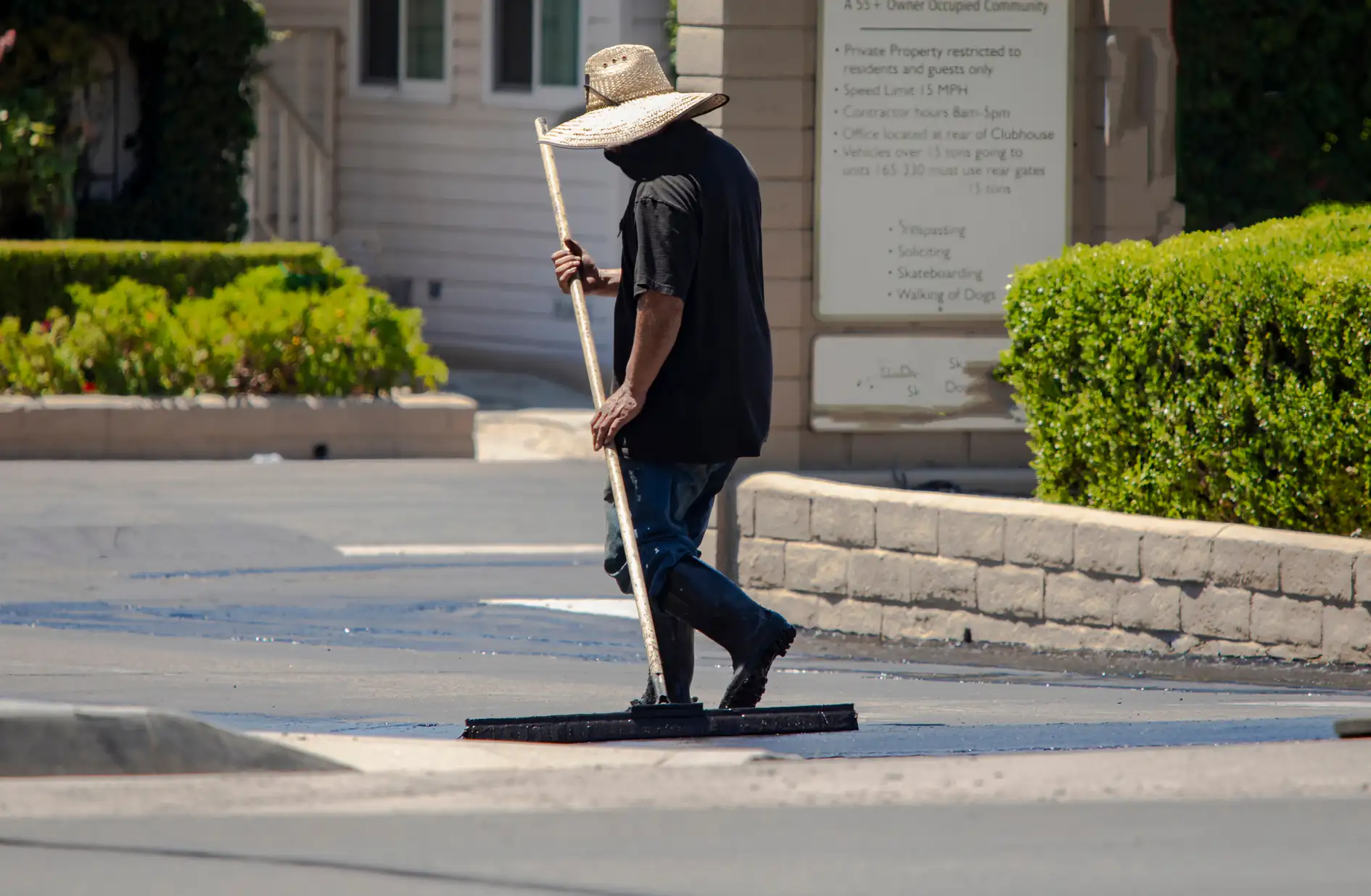
Professional crews have commercial squeegees and spray equipment that create an even coat without streaks or thin spots. They know how to prep the surface properly—which means the sealer actually bonds instead of peeling off in six months.
The bigger issue is time and mess. Sealcoating is labor-intensive and you’ll get it on everything—your shoes, your clothes, your garage floor. Most people try it once, realize how much work it is, and hire someone the next time. If your time is worth anything, the cost difference isn’t that significant.
Fall is the best time for driveway sealing in Succasunna, NJ. You want temperatures consistently above 50°F during the day and no rain in the forecast for 24-48 hours.
September and October give you the ideal conditions—moderate temps, lower humidity, and enough time for the sealer to cure before winter. Spring works too, but you’re racing against unpredictable weather and you’ve already let your driveway go through winter unprotected.
Summer sealcoating is possible, but extreme heat can cause problems. Sealer dries too fast in 90°+ temperatures, which affects how well it bonds. And you can’t use your driveway during the hottest part of the year, which is inconvenient. Fall just makes more sense for timing and results.
Yes. Sealcoating creates a waterproof barrier that prevents water from penetrating your asphalt. No water infiltration means no freeze-thaw damage.
Here’s what happens without sealer: water seeps into small cracks and pores in your asphalt. When temperatures drop below freezing, that water expands by about 9%. That expansion creates pressure from inside the asphalt, forcing cracks to widen. When it thaws, more water gets in. The cycle repeats 30-40 times every winter in Morris County.
Sealcoating stops that cycle before it starts. The sealed surface sheds water instead of absorbing it. Even when temperatures fluctuate around freezing—which happens constantly here—your driveway stays protected. That’s why sealed driveways last 25+ years while unsealed ones need replacement after 8-12 years.