
Hear from Our Customers
Your driveway stops breaking down. Water can’t seep into the surface, which means it can’t freeze, expand, and crack your asphalt from the inside out. That’s the real problem in North Jersey—not the cold itself, but the 40% more freeze-thaw cycles we get compared to Central and South Jersey.
Sealcoating creates a barrier. It keeps road salt, UV rays, and oil from eating away at the binder that holds your asphalt together. You’re looking at 15-20 years of life instead of 8-12. That’s not marketing talk—that’s what happens when you maintain asphalt correctly.
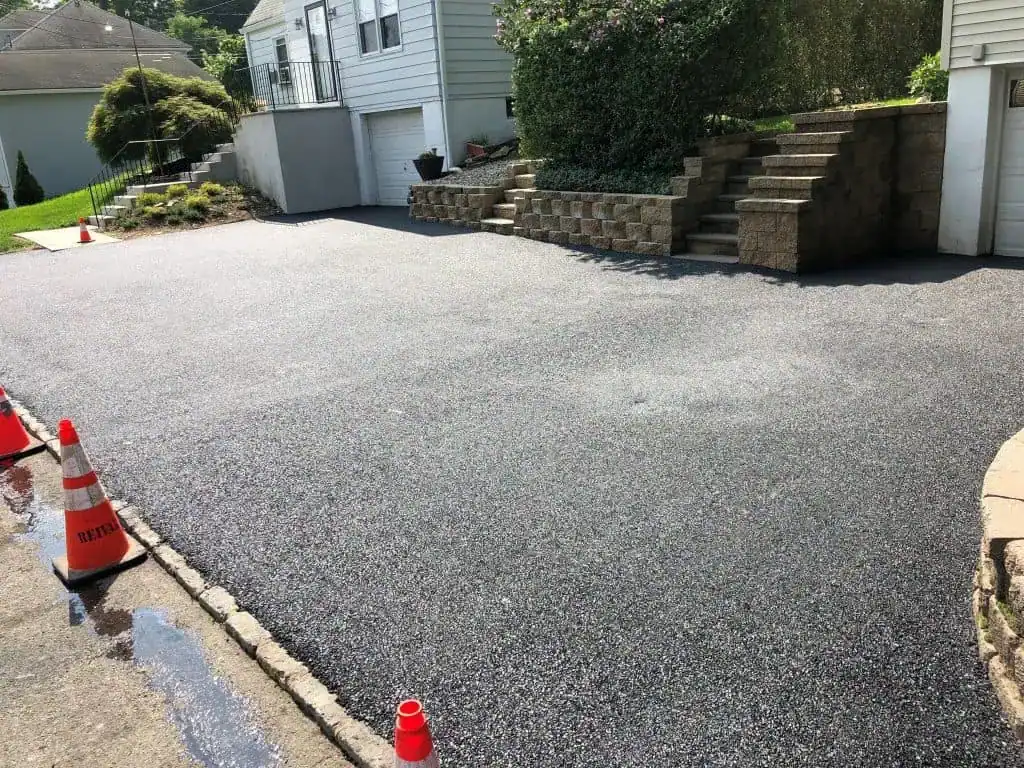
The difference shows up in two ways: your driveway looks sharp instead of faded and cracked, and you’re not calling for emergency repairs every spring. Most homeowners in Stirling, Madison, and Morristown don’t realize how much a few hundred dollars in fall maintenance saves them until they’re staring at a $3,000 repair estimate.
We’re a third-generation, family-owned business based in Morris County. We’re not trying to cover the entire state—we focus on Morris, Sussex, and Somerset Counties because we know the climate, the soil conditions, and what actually holds up here.
We’ve seen what happens when contractors from out of the area use the wrong materials or skip steps to save time. Sealcoating isn’t complicated, but it has to be done right. Surface prep matters. Temperature during application matters. The quality of the sealer matters.
You’re not going to get a hard sell from us. We’ll tell you if your driveway needs sealcoating now or if it can wait another season. That’s how we’ve built a reputation in Stirling and the surrounding towns—by being straight with people about what they actually need.
First, we clean the surface. Any dirt, debris, or vegetation gets removed because sealer won’t bond to a dirty surface. We’re not just blowing leaves off—we’re making sure the asphalt is actually ready to accept the coating.
Next, we fill cracks and repair any damaged areas. If water’s already getting into your driveway, sealing over the top doesn’t fix anything. We address those spots first with proper crack filler that’s designed for New Jersey’s temperature swings.
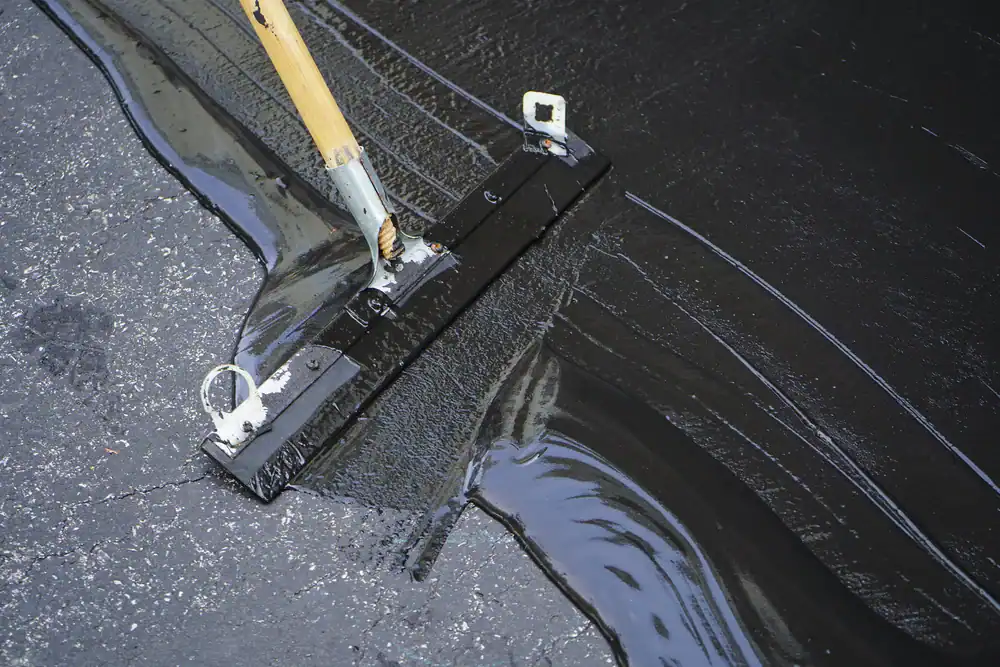
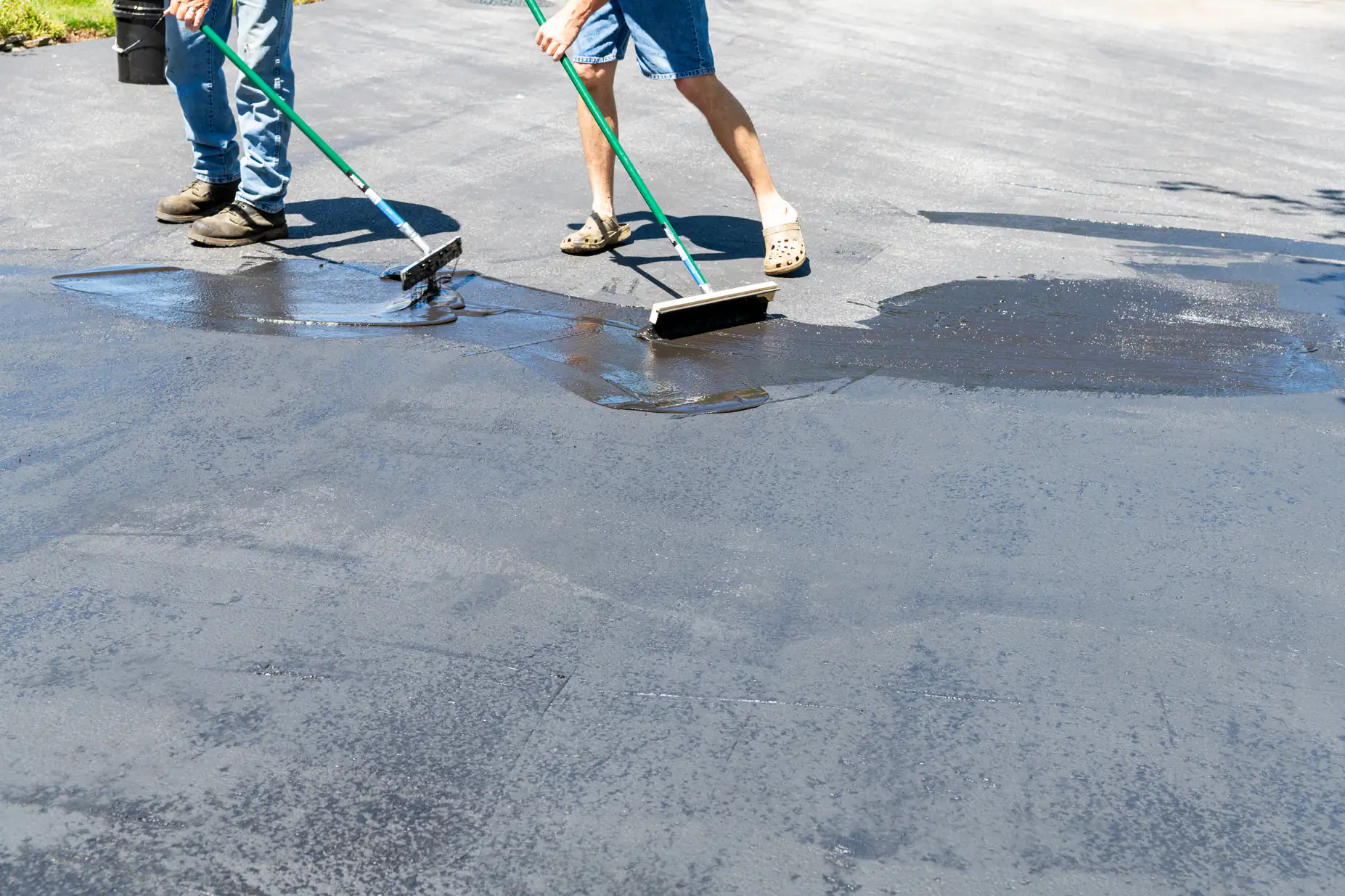
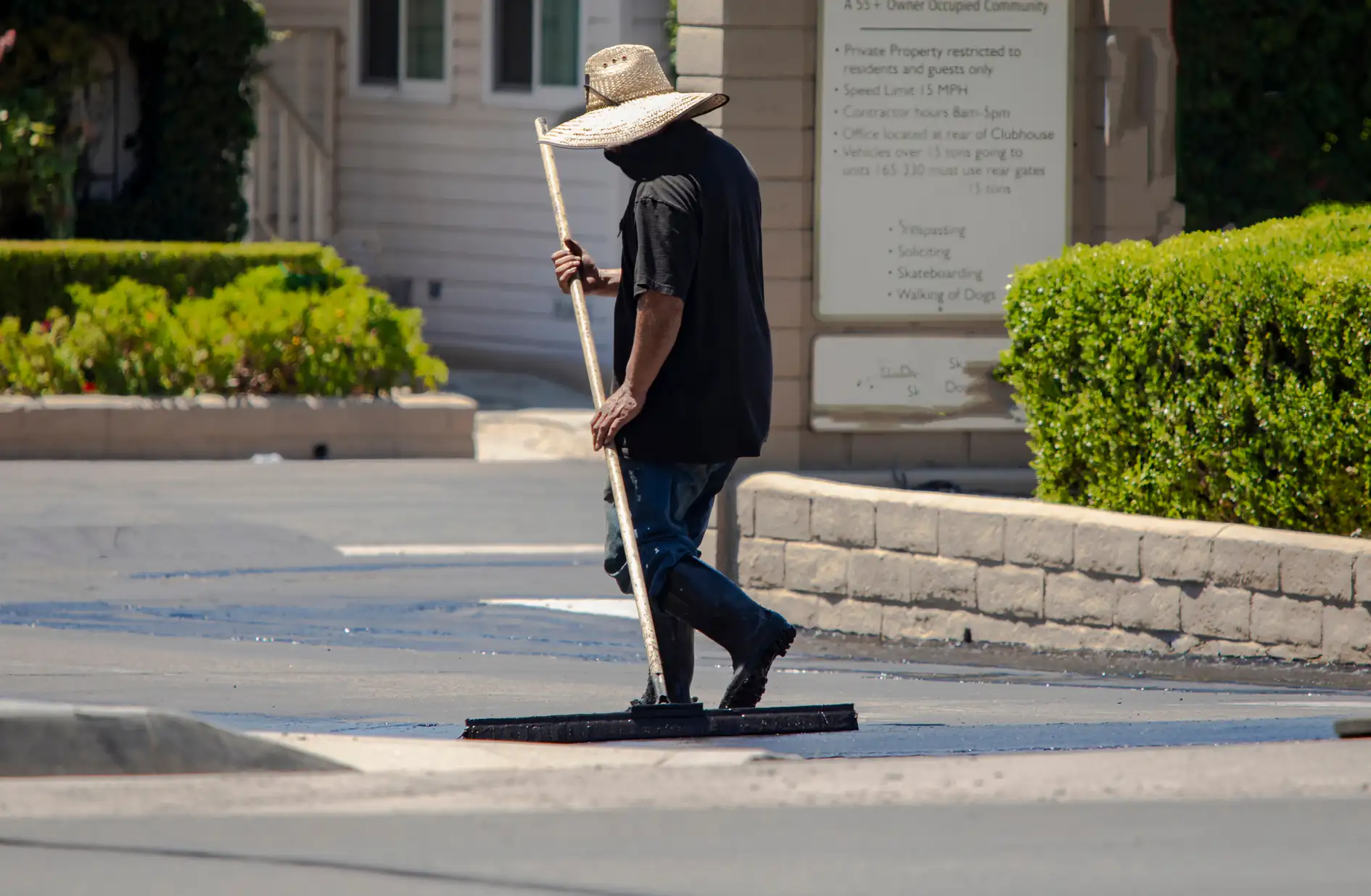
Then we apply the sealcoat by hand. Most companies spray because it’s faster, but hand application creates a thicker, more uniform layer. It takes longer, but it lasts longer too. We typically apply two coats for residential driveways.
The final step is curing. You’ll need to stay off the driveway for 24-48 hours depending on weather conditions. We only sealcoat when temperatures are above 55 degrees and no rain is forecasted, because proper curing is what makes the difference between a sealcoat that lasts three years and one that starts failing after one winter.
Ready to get started?
Every sealcoating job includes surface cleaning, crack filling, edge work along garage doors and walkways, and two coats of commercial-grade sealer. We’re using coal tar or asphalt emulsion depending on your driveway’s condition and your preferences—not the watered-down stuff you’ll find at hardware stores.
In Stirling and the surrounding Morris County area, drainage is often an issue. Properties here weren’t all built with perfect grading, and water that pools on your driveway will find its way into cracks no matter how well we seal it. If we spot a drainage problem, we’ll point it out. Sometimes a few hundred dollars in drainage work now prevents thousands in foundation repairs later.
Timing matters more than most people realize. Fall is ideal for sealcoating in North Jersey—temperatures are moderate, conditions are usually dry, and you’re creating a protective barrier right before winter hits. Spring works too, but you’re playing catch-up after winter damage has already happened. We work April through October, and we won’t schedule your job if the weather isn’t going to cooperate.

Most residential driveways in Stirling run between $300-$600 for professional sealcoating, depending on size and condition. You’re looking at roughly $0.15-$0.40 per square foot, which is slightly higher than the national average because North Jersey’s climate demands better materials and more thorough prep work.
A standard two-car driveway is usually around 600 square feet. If your driveway has significant cracking or needs repairs before sealing, that’ll add to the cost—but it’s necessary work, not an upsell. Sealing over damaged asphalt doesn’t fix anything.
DIY sealcoating might seem cheaper at $50-$100 for materials, but the results don’t compare. You won’t get the same coverage, the sealer won’t last as long, and you’ll likely need to redo it within a year. Professional application with proper equipment and commercial-grade materials is more economical long-term, especially given how harsh our winters are in Morris County.
Every 2-3 years is the standard recommendation for driveways in Stirling and Morris County. That timeline accounts for our freeze-thaw cycles, road salt exposure, and UV damage during summer months. Some driveways can stretch to four years if they’re not getting heavy use or direct sun all day, but that’s the exception.
You’ll know it’s time when the asphalt starts looking gray instead of black, or when you notice small cracks forming. Those are signs the previous sealcoat is breaking down and no longer protecting the surface underneath. Waiting too long means water infiltration, and once water gets into your asphalt’s base layer, you’re looking at repair work instead of maintenance.
New asphalt is different—don’t sealcoat it immediately. Let it cure for 6-12 months first. The oils in fresh asphalt need time to evaporate, and sealing too early can actually trap them and cause problems. If your driveway was just installed, we’ll tell you to wait.
Fall is ideal in Stirling—September and October specifically. Temperatures are consistently above 55 degrees, humidity is lower than summer, and you’re getting ahead of winter damage instead of reacting to it in spring. You need at least 24-48 hours of dry weather after application for proper curing, and fall typically offers more predictable conditions.
Spring is your second-best option, usually late April through May once nighttime temperatures stay above 50 degrees. The downside is you’re sealing after winter has already done its damage. Any cracks that formed over the winter will need repair first, which adds time and cost to the job.
Summer works but isn’t optimal. When temperatures hit 85-90 degrees, sealer can dry too quickly and not bond properly to the surface. Early morning applications help, but you’re still dealing with heat and often afternoon thunderstorms. We can work around it, but fall gives you the best conditions for a sealcoat that’ll last the full 2-3 years.
You can do it yourself, but the results won’t match professional work—and in North Jersey’s climate, that difference matters more than it would in milder areas. Hardware store sealers are thinner and less durable than commercial products. You’re also unlikely to have the equipment for proper surface prep, which is half the job.
The real issue is application technique. Spraying goes on too thin and uneven. Hand application with a squeegee creates the thick, uniform coating that actually protects your asphalt through multiple freeze-thaw cycles. Most DIY jobs need redoing within 12-18 months, while professional sealcoating lasts 2-3 years minimum.
If your driveway is small, in good condition, and you’re comfortable with the physical work, DIY might make sense for a temporary solution. But if you’re dealing with cracks, drainage issues, or an older driveway, you’re better off hiring driveway sealers contractors who know how to prep and repair the surface correctly. Doing it wrong doesn’t just waste your time—it can actually trap moisture and accelerate damage.
Yes, significantly. Properly maintained asphalt driveways last 15-20 years in North Jersey. Driveways that never get sealed typically fail at 8-12 years. The difference is water infiltration—once water gets into the base layer and starts freezing, your driveway deteriorates fast.
Sealcoating blocks water from penetrating the surface. It also protects against oxidation from UV rays, which breaks down the petroleum binders in asphalt and makes it brittle. Road salt is another factor—it doesn’t just sit on top of your driveway, it seeps into porous asphalt and breaks down the material from inside.
The math is straightforward. Sealcoating every 2-3 years costs $300-$600 per application. Over 20 years, you might spend $3,000-$4,000 on maintenance. Replacing a driveway runs $4,000-$10,000 depending on size. You’re either paying for maintenance or paying for replacement—and replacement always costs more. That’s not even accounting for the hassle of tearing out and repaving your entire driveway.
Coal tar sealer is more durable and offers better protection against gas, oil, and road salt—which matters in areas like Stirling where driveways see regular exposure to deicing chemicals. It creates a harder, longer-lasting surface and typically holds up better through multiple winters. The tradeoff is it takes longer to cure and has a stronger odor during application.
Asphalt-based sealer is more environmentally friendly and has less odor, which some homeowners prefer. It’s still effective, especially for driveways that don’t get heavy vehicle traffic or significant oil exposure. It’s also slightly more flexible, which can be beneficial if your driveway experiences a lot of movement from freeze-thaw cycles.
For most residential driveways in Morris County, either option works well when applied correctly. The bigger factors are surface preparation, application thickness, and timing. A properly applied asphalt-based sealer will outperform a poorly applied coal tar sealer every time. We’ll recommend what makes sense for your specific driveway based on its age, condition, and how you use it.