
Hear from Our Customers
Your driveway looked fine last October. Then winter hit—road salt, freezing rain, and 60-plus freeze-thaw cycles that turned small cracks into structural problems. By April, you’re looking at damage that could’ve been prevented with a $300-500 sealcoat job in the fall.
Sealcoating creates a protective barrier that keeps water from seeping into your asphalt. When water can’t penetrate, it can’t freeze, expand, and crack your driveway from the inside out. That’s how a 15-year driveway becomes a 25-year driveway in Northern New Jersey’s climate.
The cost difference is significant. Professional asphalt sealcoating runs $0.15-$0.40 per square foot for most Stanhope properties. Compare that to $3,000-$7,000 for driveway replacement when neglected asphalt finally fails. You’re not just maintaining your driveway—you’re protecting a major property investment from predictable, preventable damage.
We’ve spent over 20 years working in Morris County, which means we understand exactly what Stanhope winters do to asphalt. We’re a third-generation family business, not a national franchise that rotates crews through different states.
We use high-quality asphalt emulsion sealer—not the coal tar products that are restricted in parts of New Jersey due to environmental concerns. Our materials are selected specifically for this climate, applied at proper thickness with professional spray equipment, and backed by a 5-year warranty.
You’ll get clear upfront pricing with no surprise charges, and we guarantee a callback within 24-48 hours on quote requests. We’re grounded in Morris County because this is where we live and work, and your driveway’s performance reflects directly on our local reputation.
First, we assess your driveway’s current condition and repair any cracks or structural issues before sealing. Sealcoating doesn’t fix existing damage—it prevents new damage. If your asphalt has problems now, we address those first so the sealer can do its job properly.
Next, we clean the surface thoroughly and wait for optimal weather conditions. Temperature matters—we need at least 50°F and 24-48 hours of dry weather for proper curing. Moisture is sealcoating’s enemy during application, which is why fall typically offers better conditions than spring in New Jersey.
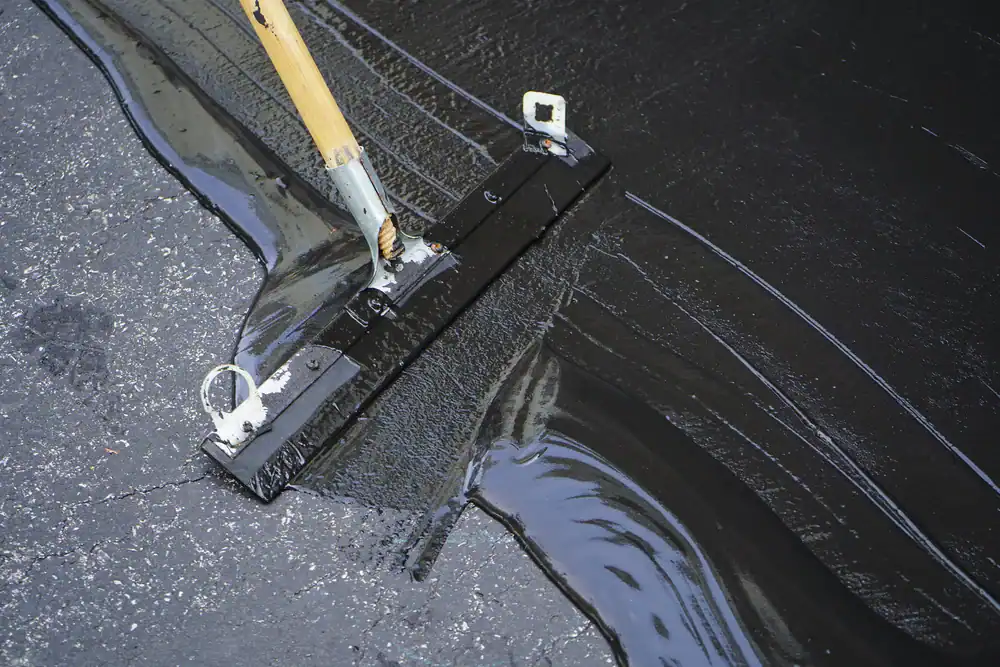
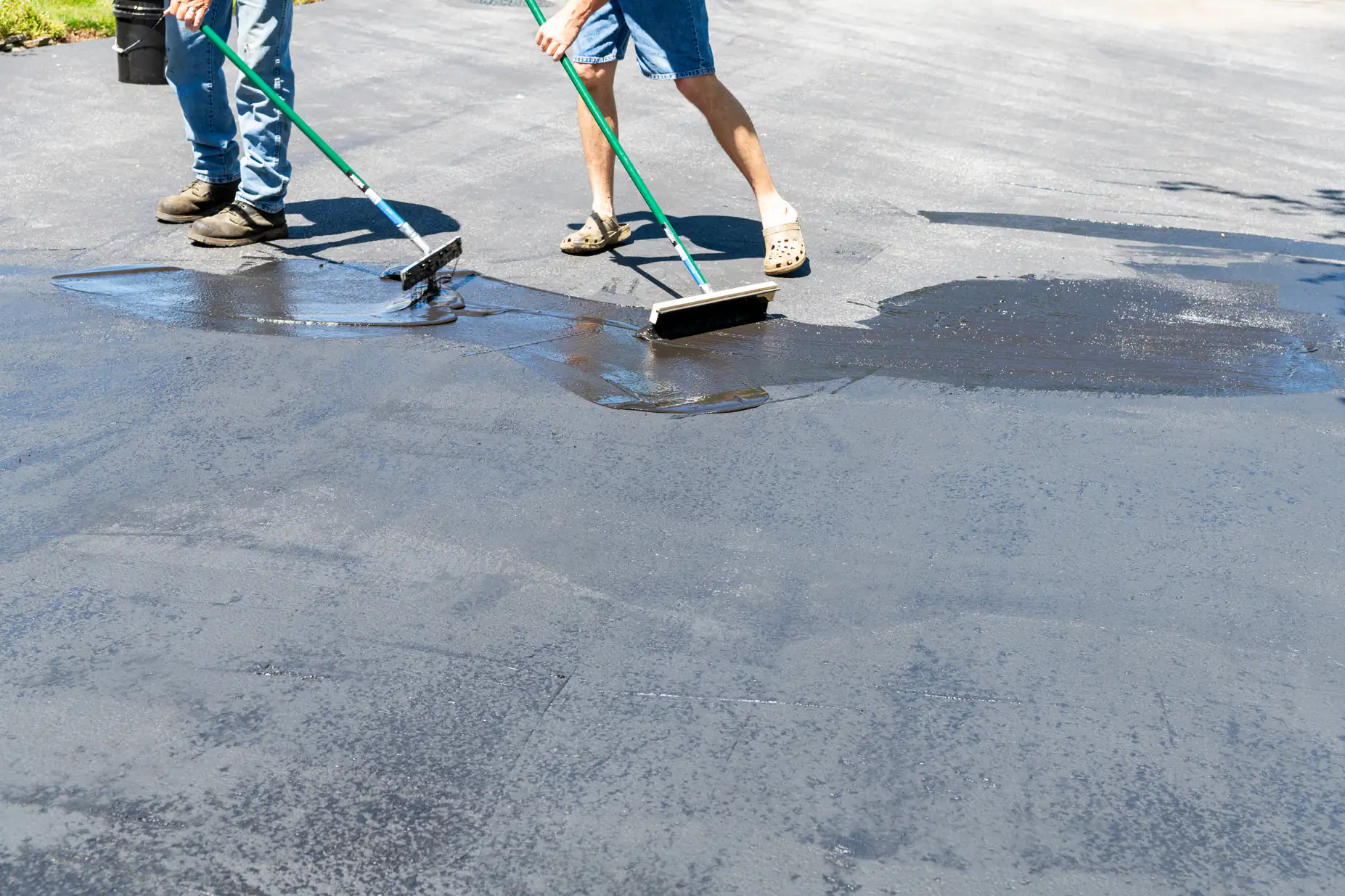
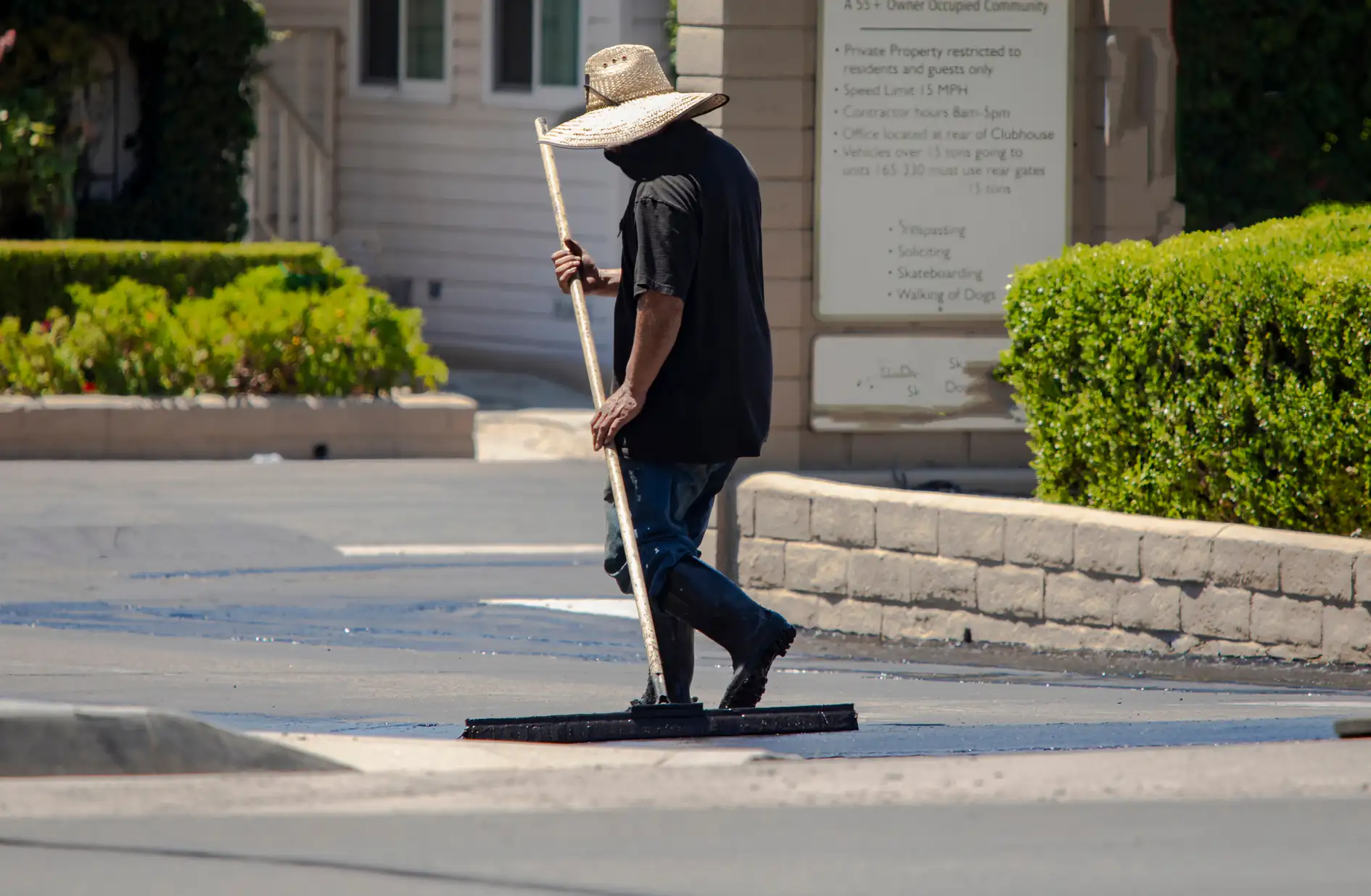
We apply two coats of commercial-grade sealer with professional spray equipment, not the squeegee-and-bucket approach you’d get with DIY products from a home improvement store. We add sand for traction and ensure even coverage at the right thickness. Then we give it time to cure properly before you drive on it—usually 24-48 hours depending on conditions.
Ready to get started?
You’re getting commercial-grade asphalt emulsion sealer applied in two coats—the minimum needed for proper protection. Single-coat applications don’t provide adequate thickness to withstand Northern New Jersey winters. We include sand additive for traction and safety, especially important during wet conditions.
The typical Stanhope driveway runs between $300-$500 for professional sealcoating, depending on size and condition. That’s roughly $0.15-$0.40 per square foot. Compare that to the $5,000+ you’ll spend on premature repaving when unprotected asphalt deteriorates after just a few harsh winters.
Timing matters as much as materials. Fall sealcoating gives the sealer months to cure and bond before winter stress begins. Spring applications mean you’re reacting to damage instead of preventing it—and you’re competing with everyone else who waited until their driveway cracked. We recommend sealcoating every 2-3 years for optimal protection, though frequency depends on traffic, weather exposure, and how well the previous application has held up.

Fall is the optimal season for driveway sealcoating in Northern New Jersey. You need temperatures consistently between 50-70°F and at least 24-48 hours of dry weather for proper application and curing.
September through early November typically provides these conditions. The sealer has time to penetrate and cure properly before winter, which is exactly when you need that protection most. Lower humidity in fall also helps with curing compared to summer’s heat and moisture.
Spring seems logical because you’re seeing winter damage, but you’re already dealing with the consequences instead of preventing them. Plus, spring weather in New Jersey is unpredictable—temperature swings and rain delays make scheduling difficult. By the time conditions are right, you’ve already lost months of protection.
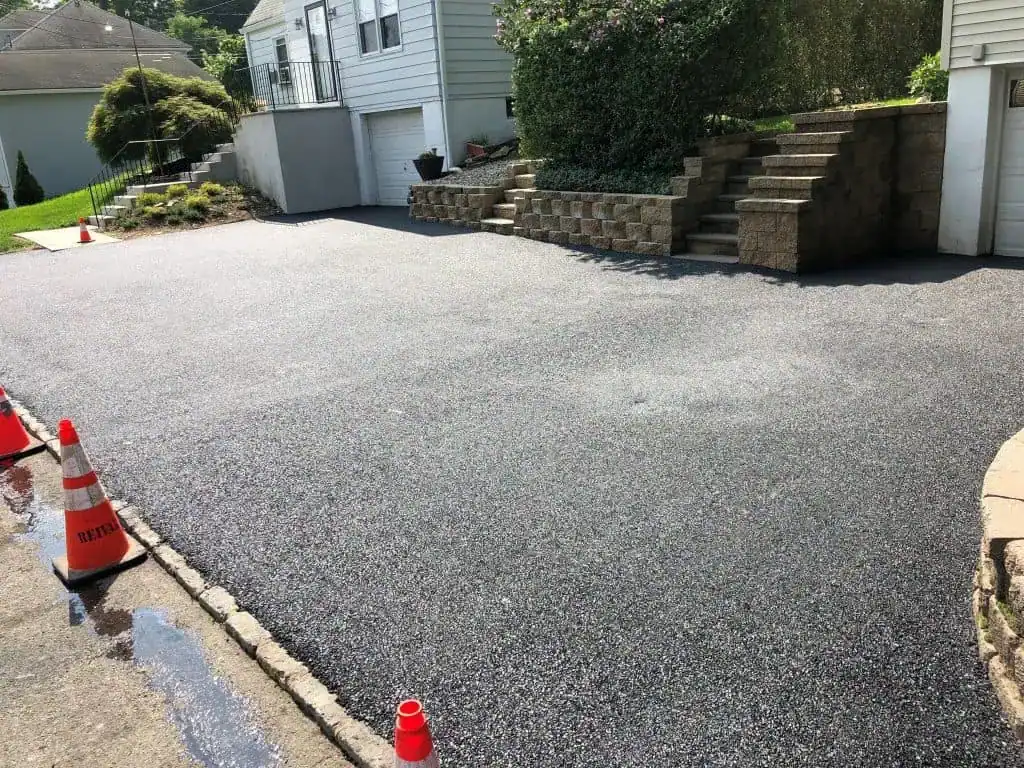
Professional sealcoating typically lasts 2-3 years in Northern New Jersey’s climate, though this varies based on traffic, sun exposure, and winter severity. You’ll know it’s time to reseal when the rich black color fades to gray and the surface starts looking worn.
The protection itself degrades gradually. UV rays, road salt, temperature extremes, and vehicle traffic all break down the sealer over time. That’s why sealcoating is ongoing maintenance, not a one-time fix—similar to painting your house or changing your car’s oil.
Properties with heavy vehicle traffic or full sun exposure may need resealing closer to every 2 years. Driveways with lighter use and some shade protection can stretch to 3 years. The key is staying ahead of deterioration—once you see significant wear, you’re already losing protection and risking damage to the asphalt underneath.
Professional sealcoating uses commercial-grade materials applied with spray equipment at proper thickness—typically two coats minimum. DIY products from home improvement stores are lower-grade sealers applied with squeegees, often in a single thin coat that doesn’t provide adequate protection.
The material quality matters significantly. Professional asphalt emulsion sealers contain higher concentrations of asphalt and additives designed for durability. We also add sand for traction and apply at consistent thickness across the entire surface. DIY application usually results in uneven coverage, thin spots, and shorter protection lifespan.
There’s also the preparation and timing factor. We repair cracks first, clean thoroughly, and wait for optimal weather conditions. Most DIY attempts skip proper prep or get applied in less-than-ideal conditions because homeowners are working around their own schedules rather than the weather’s requirements. The result is a sealer that fails prematurely and doesn’t deliver the protection you paid for—even if you paid less upfront.
No, sealcoating prevents future damage but doesn’t repair existing structural problems. If your driveway has cracks, potholes, or deteriorated areas, those need to be fixed before sealcoating—otherwise you’re just covering up problems that will continue getting worse underneath.
Think of sealcoating as a protective coating, not a repair compound. It creates a barrier against water, UV rays, and chemicals, but it doesn’t fill significant cracks or restore structural integrity. Small surface cracks (hairline) get filled during the sealcoating process, but anything larger requires crack filling or patching first.
This is why we assess your driveway’s condition before quoting sealcoating work. If your asphalt needs repairs, we tell you upfront and include those costs separately. Applying sealer over damaged asphalt wastes your money and delays the inevitable repairs—it’s not a solution, just a temporary cosmetic cover-up that doesn’t address the underlying problem.
Professional driveway sealcoating in Stanhope typically costs $300-$500 for an average residential driveway, which translates to roughly $0.15-$0.40 per square foot. The exact price depends on your driveway’s size, current condition, and whether any crack repair is needed before sealing.
A standard two-car driveway (about 600-800 square feet) usually falls in the $250-$400 range for sealcoating alone. Larger driveways or those requiring significant prep work and crack repair will cost more. But even at the higher end, you’re spending a fraction of what driveway replacement costs—$3,000-$7,000 for full repaving.
The cost-benefit calculation is straightforward. A $400 sealcoat job every 2-3 years can extend your driveway’s lifespan from 15 years to 25+ years in New Jersey’s climate. That’s an extra decade of use for less than $2,000 in total maintenance costs. Compare that to replacing your driveway a decade early because you skipped preventive maintenance, and the value becomes obvious.
There are two main types of driveway sealer: coal tar-based and asphalt emulsion. Coal tar sealants are banned or restricted in several New Jersey municipalities due to environmental concerns about polycyclic aromatic hydrocarbons (PAHs) that wash into waterways. Asphalt emulsion is now the preferred choice for most professional contractors in this area.
Asphalt emulsion sealers are petroleum-based products that bond well with asphalt driveways and meet environmental standards without restrictions. They provide excellent protection against water, UV damage, and chemicals while maintaining flexibility through temperature changes. The performance is comparable to coal tar without the environmental issues.
Some contractors still use coal tar where it’s not restricted because it’s been the industry standard for decades and some believe it offers slightly better durability. But asphalt emulsion technology has improved significantly, and the performance gap has narrowed. More importantly, using environmentally responsible products protects local water quality—something that matters in communities like Stanhope where residents value both property maintenance and environmental stewardship.