
Hear from Our Customers
Your driveway isn’t just taking hits from your car. It’s dealing with 40-plus freeze-thaw cycles every winter, summer heat that breaks down the binder, and water that finds every crack and makes it worse.
Sealcoating creates a barrier. It keeps water out, slows UV damage, and gives you a surface that’s easier to clean and maintain. The difference between a sealed driveway and an unsealed one shows up fast in South Bound Brook, NJ—usually within the first winter.
Here’s what matters: a single-coat application might look good for a year or two. A proper two-coat job, applied with the right materials at the right temperature, protects your asphalt for three to four years. That’s the difference between spending $300 now or $6,000 later on a full replacement.
When you sealcoat within the first year of new asphalt installation, you’re locking in that investment. When you maintain an older driveway with regular sealing, you’re extending its life by up to 30 years. Either way, you’re getting ahead of the damage instead of reacting to it.
We’ve been handling residential and commercial asphalt work across Morris, Somerset, and Sussex Counties for over 20 years. We’re a third-generation, family-owned contractor, which means we’re not showing up, doing the job, and disappearing.
We know South Bound Brook, NJ. We know what winter does to driveways here. We know the difference between a contractor who applies sealer and one who understands substrate prep, temperature windows, and material selection.
You’ll get a callback within 24 to 48 hours when you request a quote. No surprises on pricing. No crews that don’t show up. Just clear communication and work that holds up through the seasons.
First, we clean the surface. Any dirt, debris, or vegetation gets removed because sealer won’t bond to a dirty driveway. If there are cracks, we fill them with hot rubberized crack filler—not the cold stuff that fails in six months.
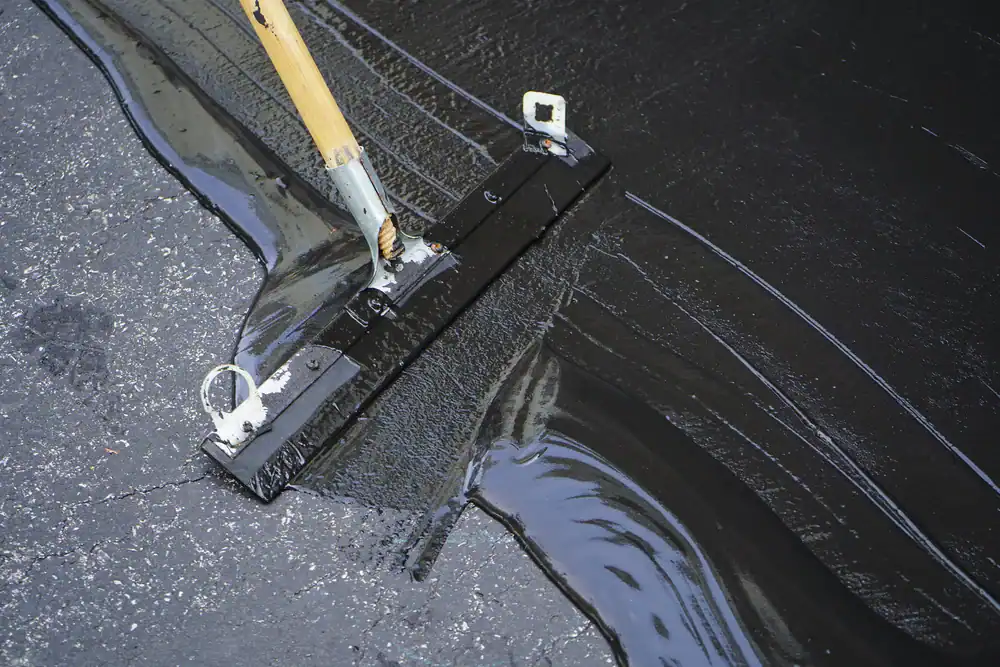
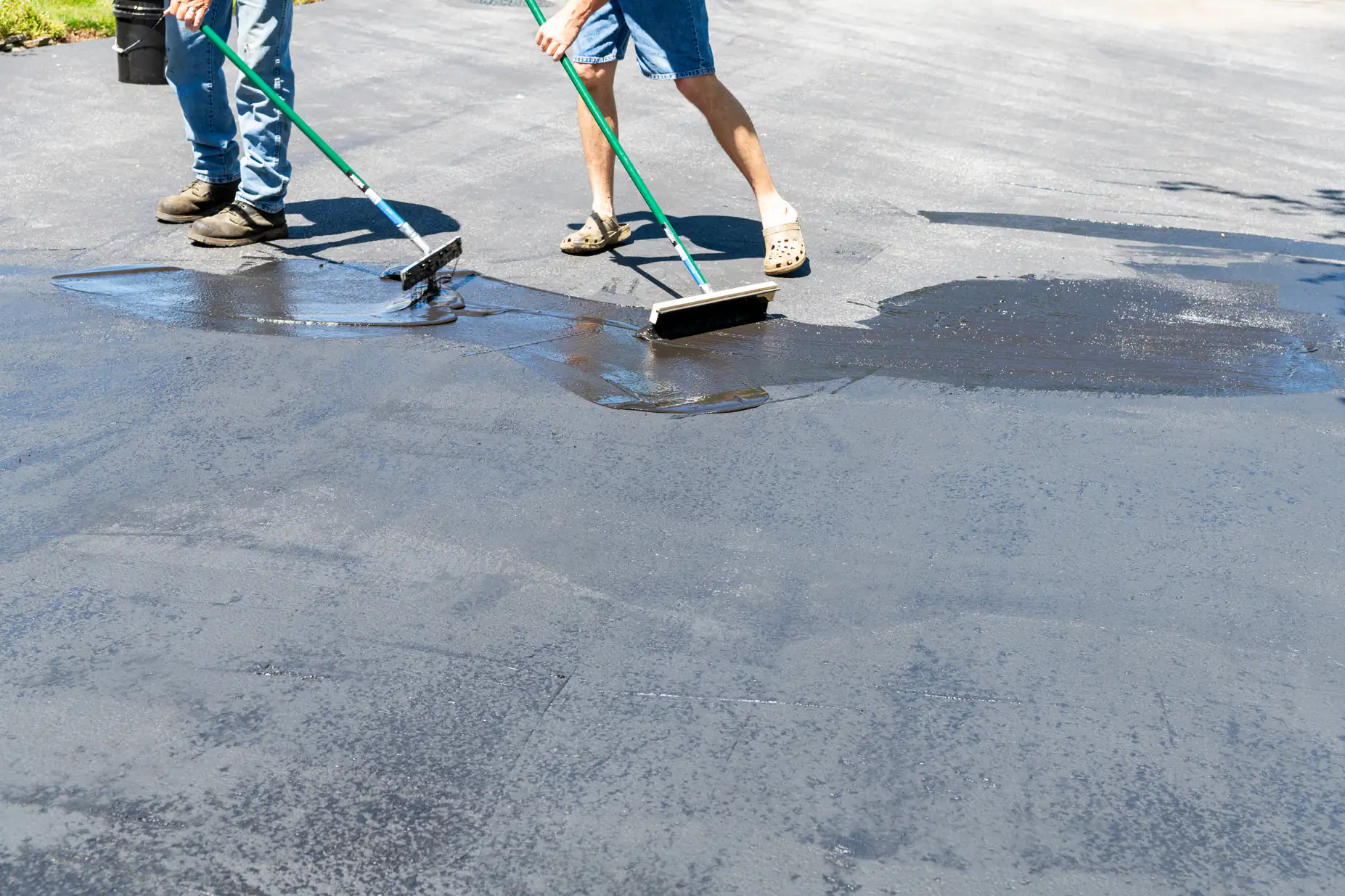
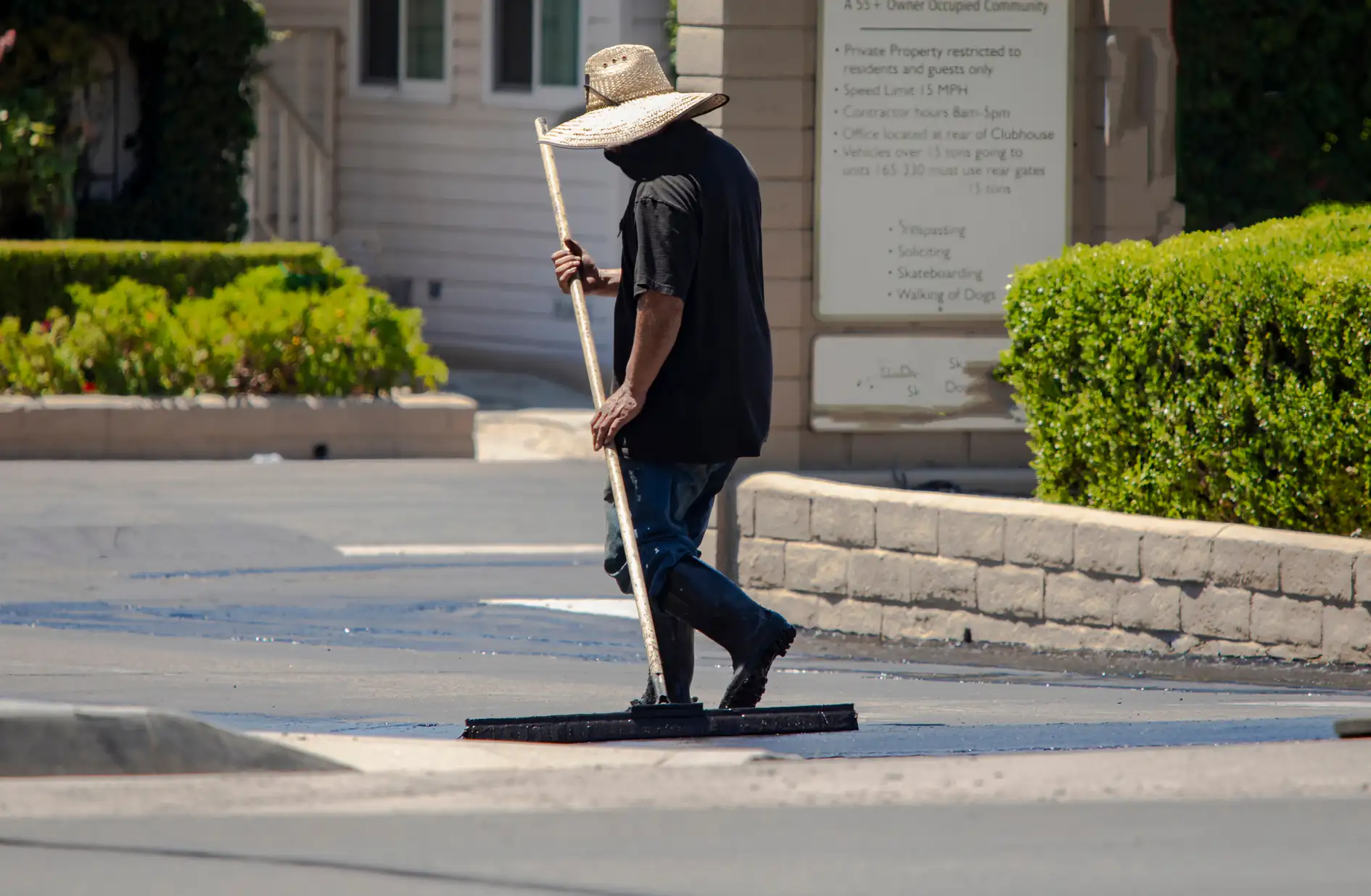
Next, we apply the first coat of sealer using professional-grade equipment. This isn’t a brush-and-bucket job. We’re using state-of-the-art application tools that ensure even coverage and proper thickness.
The second coat goes on after the first has cured. Two coats give you a thicker protective layer that stands up to New Jersey’s climate. You’re looking at 3 to 4 years of protection instead of 1 to 2.
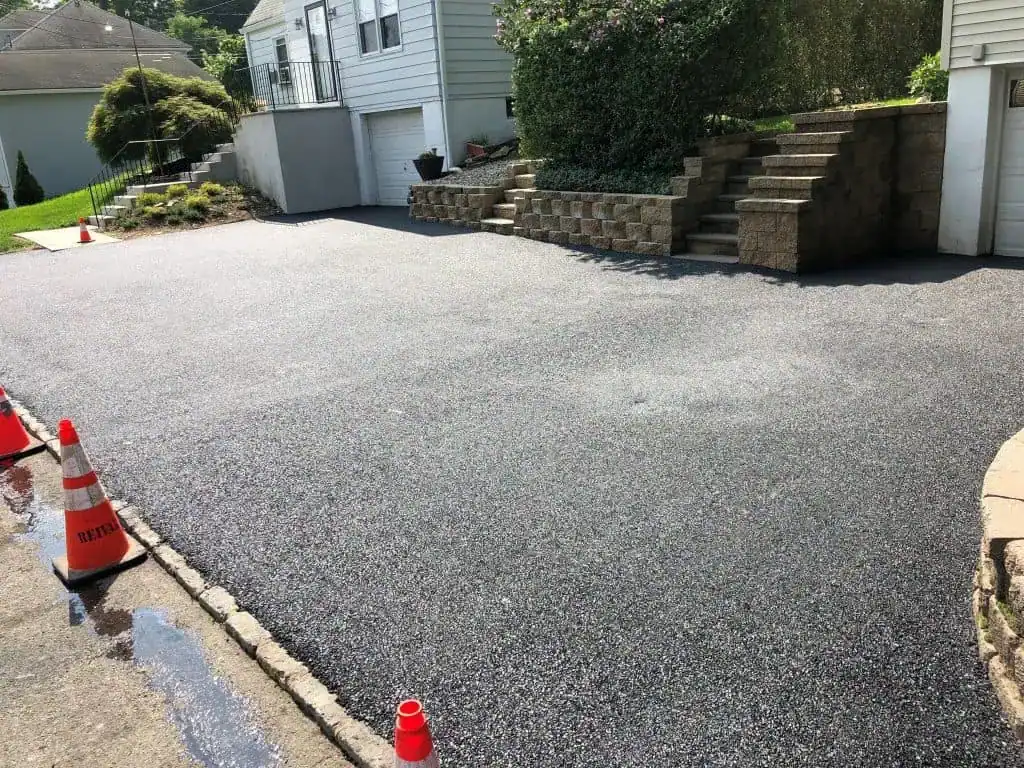
After application, the driveway needs time to cure—usually 24 to 48 hours depending on temperature and humidity. Once it’s cured, you’ve got a smooth, dark surface that sheds water, resists stains, and makes your property look sharp.
Ready to get started?
Every sealcoating job includes surface cleaning, crack filling with hot rubberized material, and two full coats of commercial-grade sealer. We’re not cutting corners with single coats or bargain materials that break down in one winter.
In South Bound Brook, NJ and throughout Somerset County, driveways face specific challenges. The freeze-thaw cycle is brutal—water gets into small cracks, freezes, expands, and turns minor damage into major problems. Our two-coat application creates a thicker barrier that holds up against this cycle.
You’re also getting a crew that understands timing. Sealcoating needs to be done when temperatures are right—ideally during summer when the heat helps the sealer bond properly. We don’t rush jobs in marginal weather because that’s how you end up with peeling sealer and callbacks.
The cost for most residential driveways in this area runs between $150 and $500, depending on size and condition. Compare that to $6 to $8 per square foot for removal and replacement, and you’re looking at roughly 2,000% more value from maintenance versus replacement.

With a proper two-coat application, you’re looking at 3 to 4 years of protection on a residential driveway in South Bound Brook, NJ. Single-coat jobs typically last 1 to 2 years, which is why we don’t recommend them for this climate.
The lifespan depends on a few factors: traffic volume, weather exposure, and whether the driveway was properly prepped before sealing. If cracks weren’t filled or the surface wasn’t cleaned, even good sealer won’t perform as expected.
New Jersey’s freeze-thaw cycles are the real test. Between November and March, your driveway can go through 40-plus freeze-thaw events. Water infiltration is the enemy, and a thick, two-coat seal is what keeps it out. That’s not marketing talk—it’s basic physics and material science applied to local conditions.
Most residential driveways in South Bound Brook, NJ cost between $150 and $500 to sealcoat, depending on square footage and current condition. The price breaks down to roughly $0.15 to $0.40 per square foot for quality work.
If your driveway has significant cracking or damage, you might need additional crack filling, which adds to the cost but is necessary for the sealer to work properly. Skipping crack repair to save money just means you’ll be redoing the job sooner.
Here’s the comparison that matters: sealcoating costs pennies on the dollar compared to replacement. Full removal and repaving runs $6 to $8 per square foot in today’s market. A 500-square-foot driveway could cost $3,000 to $4,000 to replace versus $200 to $300 to seal. The math is straightforward—maintenance now or major expense later.
Summer is ideal for driveway sealcoating in New Jersey. The heat helps the sealer bond properly to the asphalt surface, and you get longer cure times with consistent temperatures.
You want temperatures above 50°F for at least 24 hours after application, with no rain in the forecast. Spring can work if the weather cooperates, but summer gives you the most predictable conditions. Fall is possible but risky—if temperatures drop unexpectedly, the sealer won’t cure correctly.
For new asphalt, wait at least 90 days before sealcoating. The pavement needs time to cure and release oils. But don’t wait too long—sealing within the first year gives you maximum protection and extends the life of your driveway significantly. After that, you’re looking at resealing every 3 to 4 years to maintain protection.
In New Jersey, yes. The freeze-thaw cycles here are too aggressive for single-coat applications to hold up for more than a year or two. Two coats give you a thicker protective layer that lasts 3 to 4 years.
Think of it this way: the first coat penetrates and seals the surface. The second coat builds thickness and durability. Together, they create a barrier that can handle water infiltration, UV exposure, and the temperature swings we get from November through March.
Single-coat jobs are cheaper upfront, but you’ll be resealing more often. Two coats cost maybe 30% more but last twice as long. The cost per year of protection actually favors the two-coat approach, plus you’re not dealing with the hassle of scheduling and prepping your driveway every other year.
Look at the color first. If your asphalt has faded from black to gray, it’s lost its protective oils and is vulnerable to water damage. That’s your clearest sign that sealing is overdue.
Check for small cracks, even hairline ones. Water gets in, freezes, expands, and turns small cracks into big problems fast. If you’re seeing any cracking, it’s time to seal and fill before the damage spreads.
Another indicator is surface texture. If the asphalt feels rough or you can see aggregate (the stones in the mix) starting to show through, the binder is breaking down. Sealcoating restores that protective layer and prevents further deterioration. Most driveways in South Bound Brook, NJ should be sealed every 3 to 4 years as preventive maintenance, even if they don’t look damaged yet.
Water infiltration is the first problem. It gets into cracks, freezes during winter, and expands. Small cracks become large cracks. Large cracks become potholes. A 4-inch pothole can become a 4-foot problem in a matter of weeks once the base is compromised.
UV damage breaks down the asphalt binder over time. Without protection, your driveway becomes brittle and more susceptible to cracking under normal traffic and temperature changes. The surface deteriorates faster, and repairs become more expensive.
Eventually, you’re looking at full replacement instead of maintenance. In South Bound Brook, NJ, that means $6,000 to $8,000 or more for a typical residential driveway. Sealcoating every few years costs a few hundred dollars. The difference between proactive maintenance and reactive replacement is significant—not just in cost, but in the hassle and disruption of a full repaving job.