
Hear from Our Customers
Your driveway takes a beating every year. New Jersey winters bring freezing temperatures, road salt, and that freeze-thaw cycle that cracks unprotected asphalt. Summers aren’t much better—UV rays dry out the binder, making your driveway brittle and faded.
Here’s what most homeowners in Six Mile Run don’t realize: a $300 sealcoating job today can prevent a $5,000 repaving project three years from now. Water seeps into small cracks, freezes, expands, and turns minor surface issues into structural damage that requires tearing up entire sections.
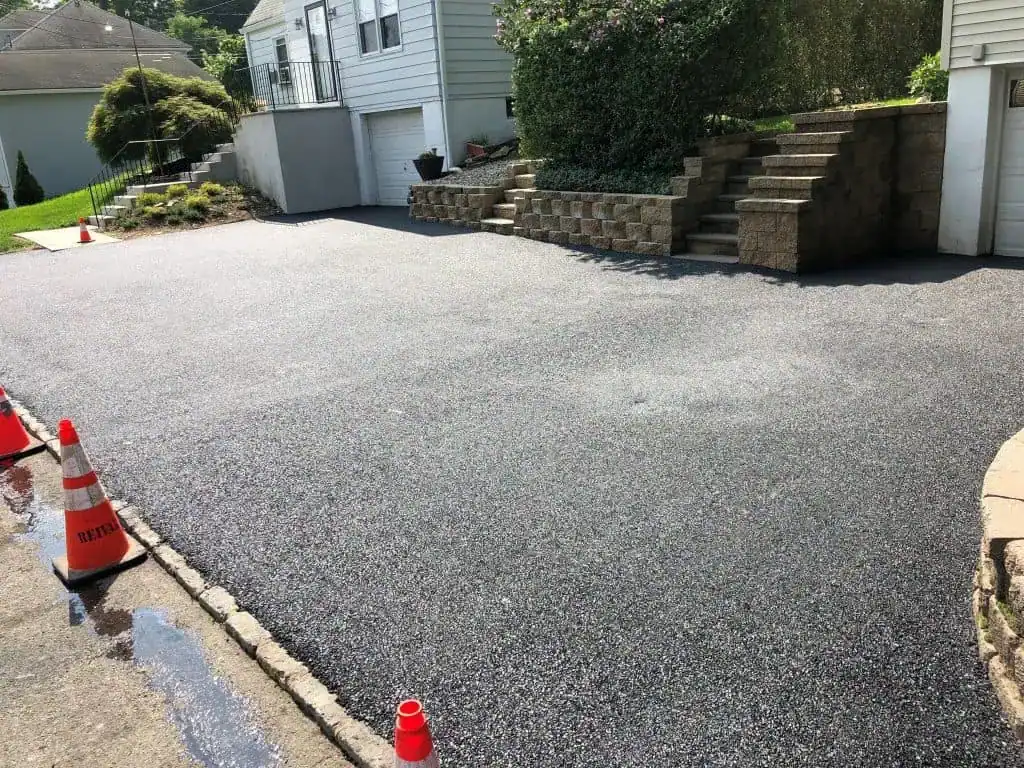
Professional sealcoating creates a waterproof barrier that blocks moisture, resists oil and gas stains, and protects against UV damage. Your driveway goes from dull gray to deep black. It’s easier to clean, looks maintained, and can add years to the lifespan of your asphalt—often extending it from 15 years to 25+ years with proper care.
We’ve been serving Morris, Somerset, and Sussex Counties for over 20 years. We’re a third-generation, family-owned contractor based right here in Dover, NJ. That means we understand exactly what Six Mile Run driveways face—the weather, the wear, the specific challenges that come with living in Somerset County.
We’re not the cheapest option, and that’s intentional. You’re paying for materials that actually last, equipment that applies sealer at the right temperature and thickness, and a crew that shows up when we say we will. We back our work with a 2-year warranty because we use a custom-blended sealer mixed in-house that outperforms the thin, watered-down products most companies spray on.
Over 75 customers have rated us 4.5 stars. They mention our transparency, our cleanup, and the fact that we do the job right the first time.
First, we inspect your driveway for cracks, oil stains, and surface damage. Any cracks wider than a quarter-inch get filled with hot-pour rubberized crack filler—this is critical because sealer alone won’t stop water from getting into open cracks.
Next, we power wash the entire surface to remove dirt, debris, and loose material. Sealer won’t bond to a dirty surface, so this step matters more than most homeowners realize. If there are oil stains, we treat them with a primer so the sealer adheres properly.
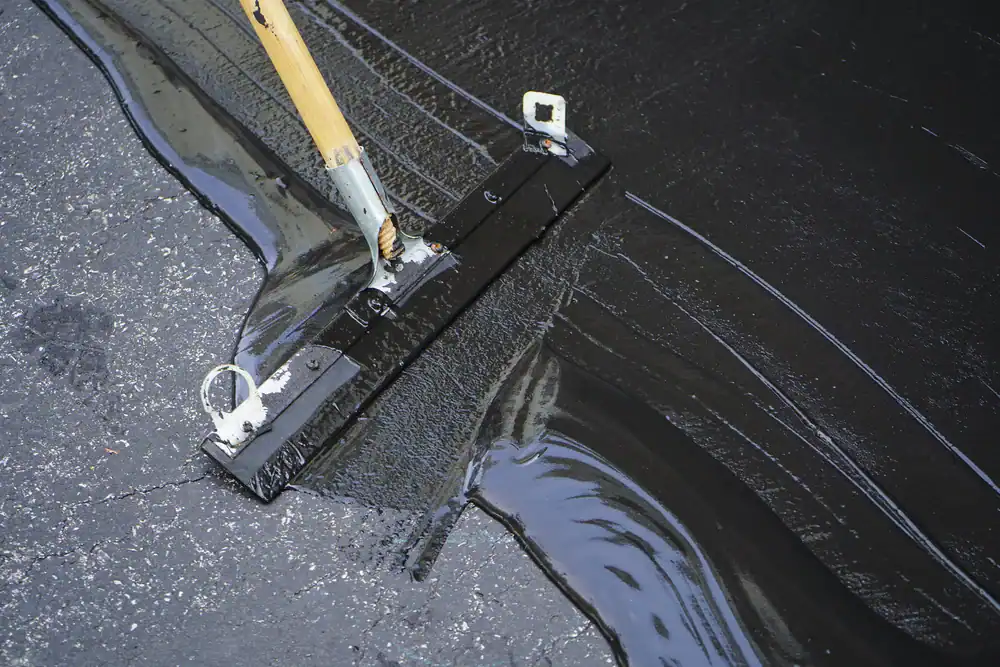
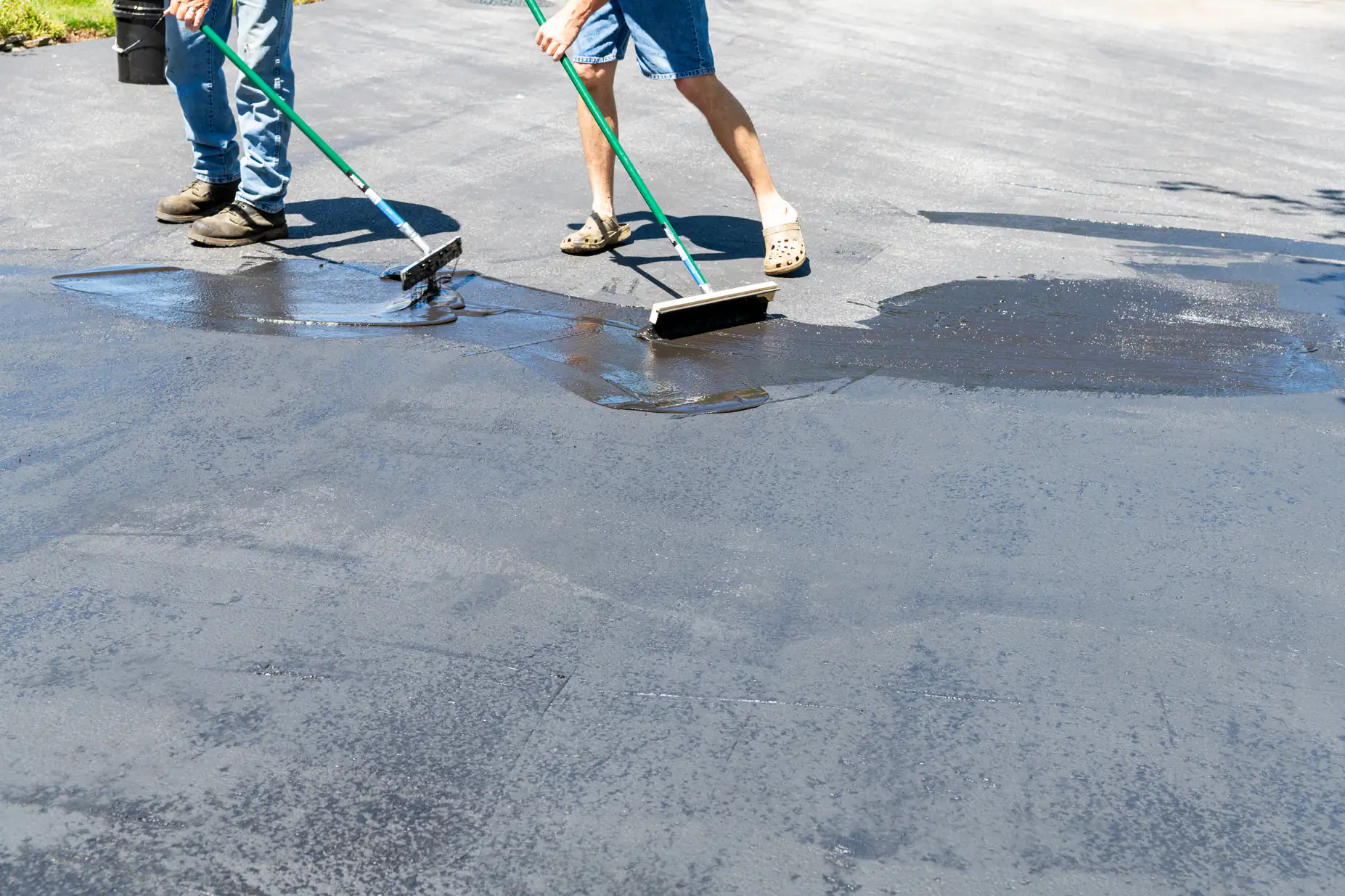
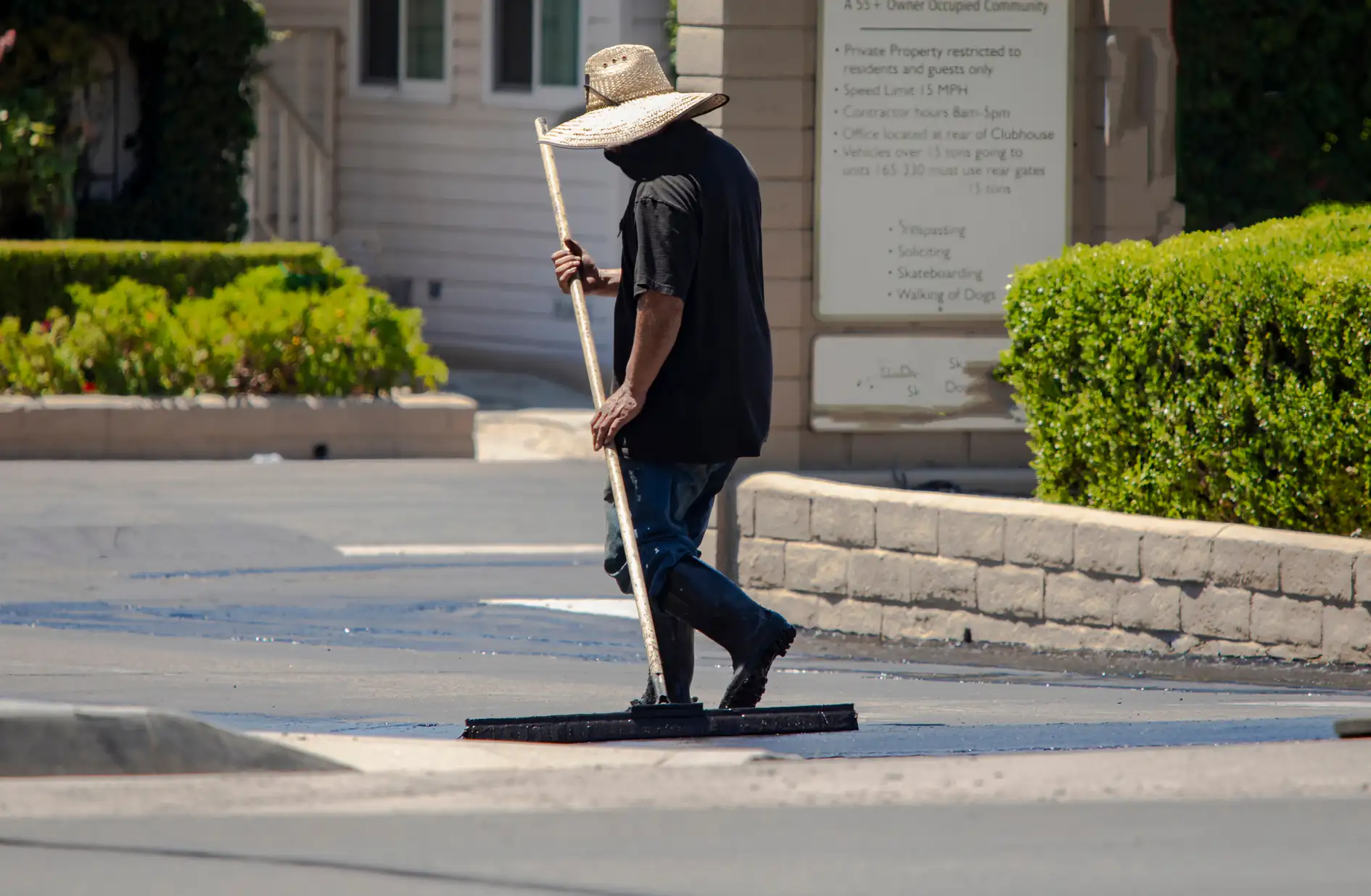
Then we apply two coats of our custom-blended coal tar sealer. We add sand for traction and UV protection. The first coat soaks in and seals the surface. The second coat creates that rich, dark finish and adds an extra layer of protection. We use professional-grade squeegees and spray equipment—not a brush and bucket—so the application is even and the coverage is consistent.
You’ll need to stay off the driveway for 24 to 48 hours depending on temperature and humidity. After that, it’s fully cured and ready for regular use.
Ready to get started?
Every sealcoating job includes power washing, crack filling up to 50 linear feet, two coats of sealer, sand additive for traction, and a 2-year warranty. For a standard 600-square-foot driveway in Six Mile Run, you’re looking at $180 to $270 depending on condition and prep work required.
That’s about $0.15 to $0.25 per square foot, which is competitive for Somerset County. Some companies charge less, but they’re usually applying one thin coat or skipping the crack repair. That might save you $50 today, but it costs you years of protection.
Here’s the bigger picture: replacing your driveway runs $6 to $8 per square foot in today’s market. That same 600-square-foot driveway would cost $3,600 to $4,800 to repave. Sealcoating every 2 to 3 years for $200 to $300 is a fraction of that cost—and it can double your driveway’s lifespan.
Six Mile Run sits in Franklin Township, where the median home value is over $540,000. A well-maintained driveway isn’t just about function—it’s about curb appeal and protecting your investment. A freshly sealed driveway signals to neighbors and potential buyers that your property is cared for.

You should sealcoat your driveway every 2 to 3 years for optimal protection. That timeline can shift depending on how much traffic your driveway gets, whether it’s shaded or in full sun, and how harsh the previous winter was.
If your driveway is starting to look gray instead of black, or if you’re seeing small cracks forming, it’s time. Waiting too long means water gets into the base layer, and at that point you’re looking at repairs, not just maintenance.
New driveways are different—you need to wait 3 to 6 months after installation before sealing. Fresh asphalt needs time to cure and release oils. Sealing too early traps those oils and prevents proper bonding.
Fall is the best time to seal your driveway in New Jersey. Temperatures are moderate, humidity is lower, and the sealer has time to cure before winter hits. You want daytime temps above 50°F and no rain in the forecast for at least 24 hours.
Spring is the second-best option, but you’re racing against unpredictable weather and trying to repair any damage from the winter that just passed. Sealing in the fall means your driveway enters winter fully protected, which prevents the freeze-thaw damage that leads to expensive spring repairs.
Summer works too, but if it’s too hot the sealer can dry too fast and not bond properly. We don’t sealcoat when temperatures are above 90°F or in direct, intense sun for that reason.
Yes—by a lot. An unsealed driveway in New Jersey typically lasts 12 to 15 years before it needs major repairs or replacement. A driveway that’s been sealcoated every 2 to 3 years can last 25 years or more.
Sealcoating blocks water from penetrating the surface, which is the main cause of cracking and base failure. It also protects against UV rays that dry out and weaken the asphalt binder, and it resists damage from oil, gas, and de-icing chemicals.
Think of it like changing the oil in your car. Skipping it won’t destroy your engine immediately, but over time the damage adds up. Sealcoating is preventive maintenance that pays for itself many times over by delaying or eliminating the need for expensive repairs.
We specialize in asphalt sealcoating, which uses a coal tar or asphalt-based sealer designed specifically for asphalt surfaces. Concrete driveways require a completely different type of sealer—usually a penetrating silane or siloxane product that protects against moisture and staining without changing the appearance.
If you have a concrete driveway in Six Mile Run, we can discuss options, but the process and materials are different. Concrete sealing is more about stain resistance and preventing water intrusion than restoring color or filling surface voids.
Paver driveways are another category. Pavers need joint sand stabilization and a sealer that enhances color without creating a slippery surface. If you’re searching for “paver sealing near me,” let us know what material your driveway is made from and we’ll point you in the right direction.
Crack filling is a repair. Sealcoating is protection. They’re both important, but they do different things.
Crack filling uses a hot-pour rubberized material that stays flexible and prevents water from getting into the crack. If you have cracks wider than a quarter-inch, they need to be filled before sealcoating. Sealer will bridge small cracks, but it won’t stop water from entering larger ones.
Sealcoating goes over the entire surface and creates a protective layer that blocks UV rays, water, and chemicals. It also restores the dark color and smooth texture of your driveway. Most professional sealcoating jobs include crack filling up to a certain amount—usually 50 linear feet—because it’s a necessary prep step for a quality result.
The actual application takes 2 to 4 hours for a typical residential driveway, depending on size and how much prep work is needed. You’ll need to keep cars off the driveway for 24 to 48 hours after we finish.
Cooler temperatures and higher humidity slow down curing time. If we seal your driveway on a warm, dry fall day, you can usually park on it the next day. If it’s cooler or more humid, wait the full 48 hours to be safe.
You can walk on it sooner—usually after 4 to 6 hours—but avoid dragging anything across the surface or turning your steering wheel while stationary for the first few days. The sealer is fully cured after about 30 days, but it’s functional and durable well before that.