
Hear from Our Customers
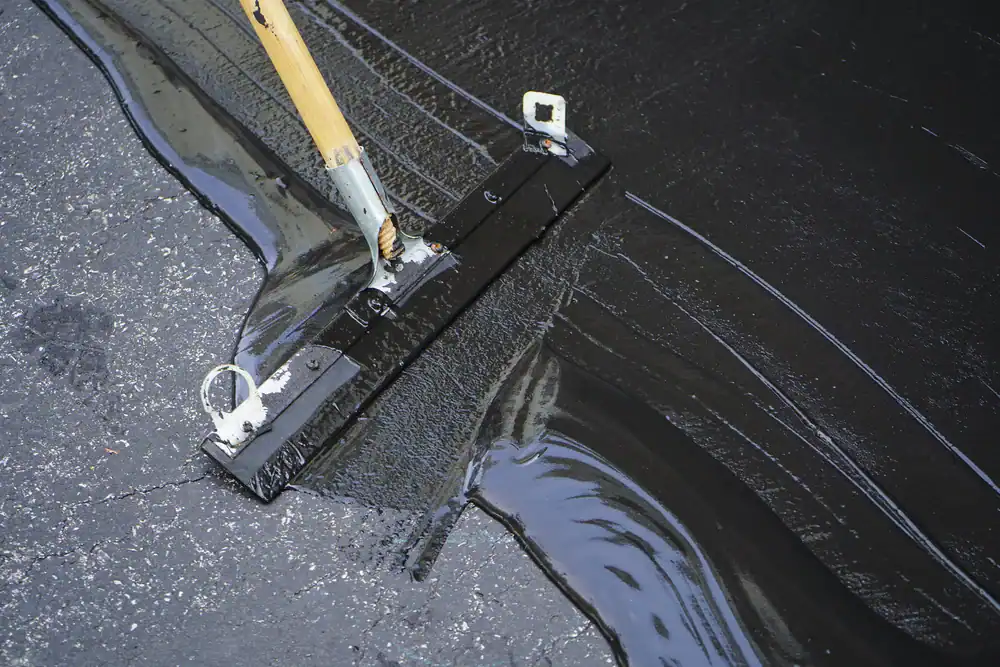
Your driveway stops absorbing water. That’s the whole point, and it matters more than you think in Morris and Essex County where temperatures swing from 45 and raining to 15 with snow in the same week.
When water gets into asphalt and freezes, it expands by about 9%. That pressure widens every crack it finds. Come spring, more water rushes in, and the cycle repeats until you’re looking at a replacement bill between $3,500 and $5,500 for a standard two-car driveway.
Sealcoating creates a waterproof barrier. The dark, smooth surface sheds water instead of soaking it up. You’re not just making your driveway look better—though that’s a nice bonus—you’re buying yourself years before you need to think about repaving. Most driveways last about 25 years. Seal them right, and you can push that past 30.
It’s not complicated. It’s just about doing it before the damage starts, not after.
We work across Morris, Essex, and Somerset Counties. We’re grounded in Morris County, so we know what freeze-thaw cycles do to asphalt around here. We’ve seen what happens when homeowners wait too long, and we’ve seen what proper maintenance looks like after 10 years.
We don’t spray sealer and call it done. Hand application takes longer, but it creates a thicker, more uniform layer that actually lasts. We use quality materials, apply two coats on residential driveways, and we’re clear about pricing upfront—no surprises when the job’s finished.
You’ll get a callback within 24 to 48 hours when you request a quote online. We’re not the biggest operation in New Jersey, but we’re the kind of company that shows up when we say we will and finishes the job right.
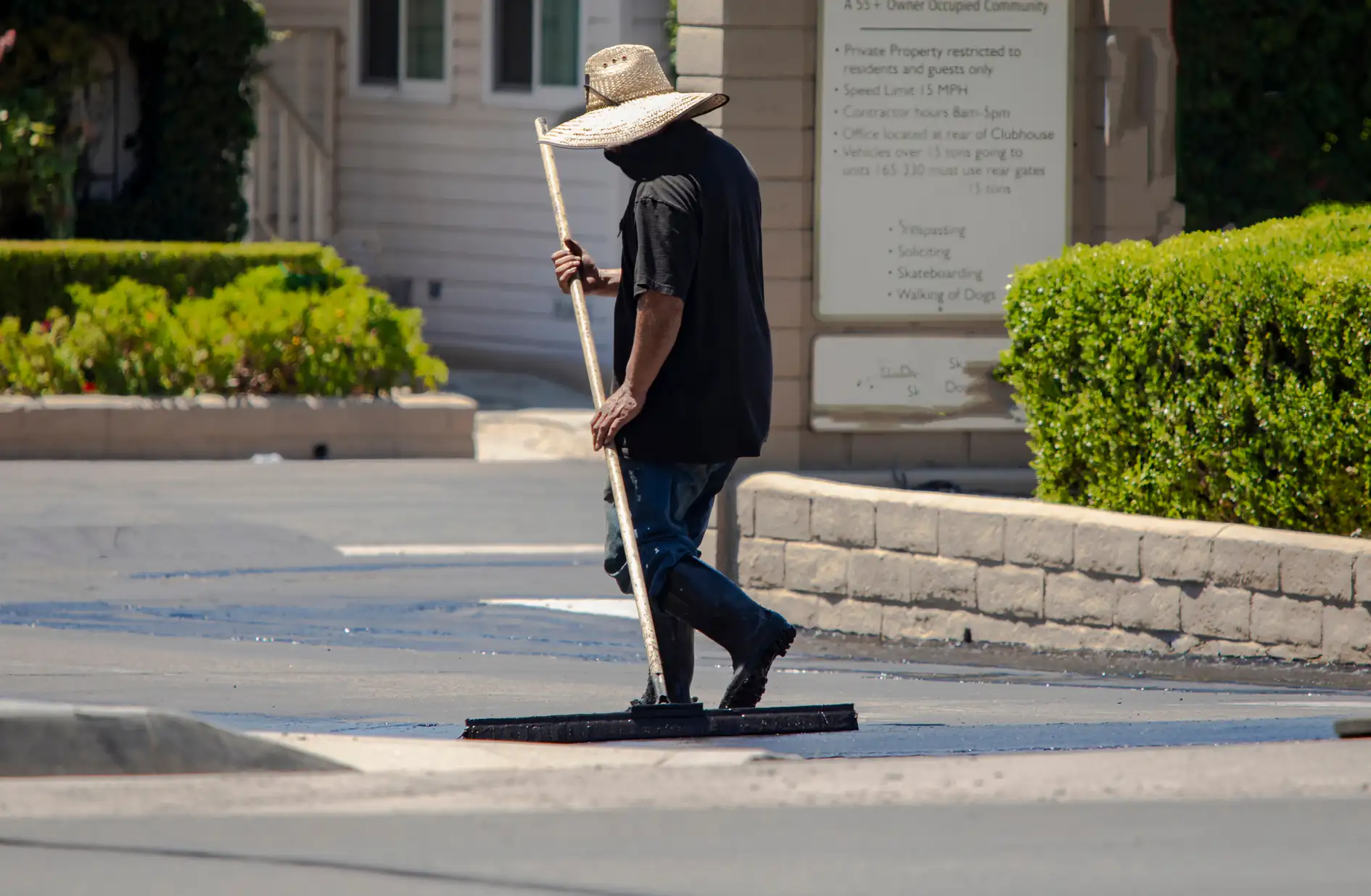
First, we clean your driveway thoroughly. That means removing dirt, debris, oil spots, and anything else that would prevent the sealer from bonding properly. We scrub the surface with a wire brush if needed because the sealer only works when it can actually stick to the asphalt.
Next, we fill any cracks. If water’s already getting in through existing damage, sealing over it doesn’t solve anything. We address those spots first so the protective layer actually protects.
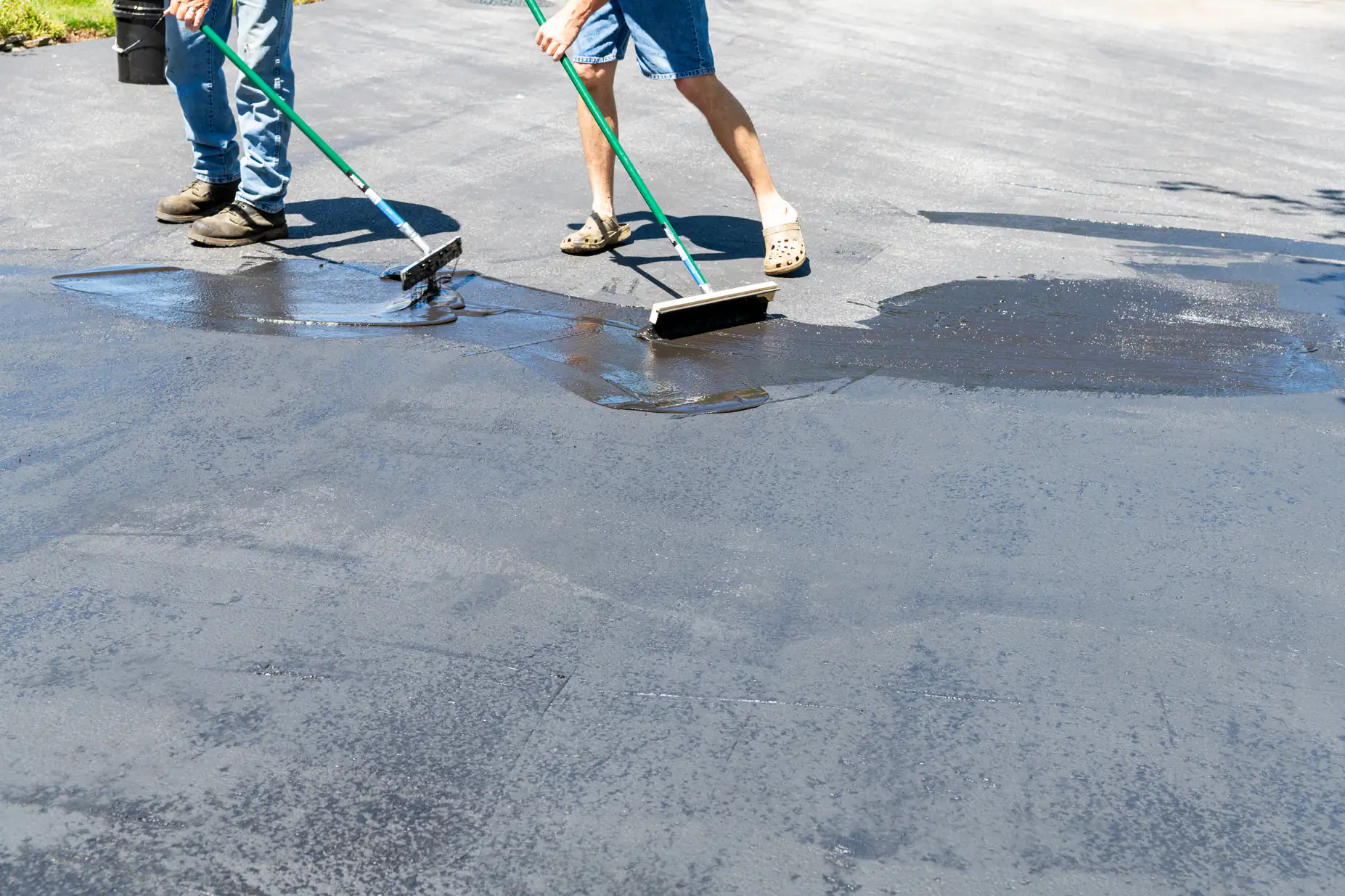
Then we apply the first coat by hand. It goes on thicker and more evenly than spray applications. We let that cure, then apply the second coat. Two coats are standard for New Jersey driveways because one coat typically lasts only one to two years—not worth your money given our winters.
The whole process takes 24 to 48 hours to cure. After that, you can drive and park on it again. Fall is the best time to do this work because moderate temperatures let the sealer penetrate properly without evaporating too fast or setting too slowly.
Ready to get started?
Sealcoating costs between $0.15 and $0.40 per square foot for most driveways in Pleasantdale and surrounding areas. A typical residential driveway runs $150 to $500 depending on size and condition. If your driveway needs significant prep work—filling deep cracks, repairing edges, cleaning heavy staining—add another $100 to $300.
New Jersey prices run about 15 to 20% above national averages. That’s partly labor costs, partly the reality that our climate beats the hell out of asphalt. You’re not overpaying—you’re paying for materials and application methods that can actually handle what winter throws at them.
Two coats with quality sealer last three to four years on residential driveways in this area. That’s your maintenance cycle. Some companies will try to sell you on annual applications or single-coat jobs. Annual is overkill and unnecessary. Single coat won’t make it through one hard winter in Morris or Essex County.
We’re transparent about what the job costs and what you’re getting. You’ll know the price before we start, and that’s the price you’ll pay when we’re done.

Two coats of quality sealer last three to four years on residential driveways in Pleasantdale and the surrounding Morris County area. That lifespan depends on a few things: how much traffic your driveway gets, how much sun exposure it receives, and how harsh the winter is.
Single-coat applications typically last one to two years, which is why we don’t recommend them. You’re paying for labor and materials either way—might as well get a job that actually holds up through multiple freeze-thaw cycles.
If you’re seeing significant wear after two years, either the sealer quality was poor, the application was too thin, or the prep work wasn’t done right. Proper sealcoating should give you several years before you need to think about it again.
Fall is the best time to seal your driveway in New Jersey. Moderate temperatures allow the sealer to penetrate into the asphalt’s pores while maintaining the right consistency for smooth, even coverage. Cooler air means less evaporation, so you get a thicker, more durable protective layer.
Spring is when everyone comes out of hibernation wanting their driveways fixed, but by then you’re dealing with damage instead of preventing it. You’re also competing with everyone else for scheduling, which means longer wait times.
You can seal in summer, but if it’s too hot, the sealer dries too fast and doesn’t penetrate properly. You need temperatures between 50 and 85 degrees, and you need at least 24 hours without rain. Fall gives you the most consistent conditions for quality work.
Hand application creates a thicker, more uniform layer. Spray applications are generally thinner and less durable, though they’re faster and cheaper to apply. For residential driveways in areas with harsh winters like Pleasantdale, hand application is worth the extra cost.
When you spray sealer, you’re covering the surface quickly, but you’re not working it into the asphalt the same way. The coating sits on top more than it bonds. That means it wears off faster, especially in high-traffic areas near the garage or the street.
Hand application takes longer because you’re physically spreading the sealer with squeegees and brushes. You’re pushing it into the pores of the asphalt, creating better adhesion. It’s more labor-intensive, but it’s the difference between a sealcoat that lasts one winter and one that lasts three or four.
Concrete driveways need sealing too, but the process and materials are different. Concrete sealers are typically acrylic or penetrating sealers designed to protect against moisture, salt, and staining. They don’t create the same thick coating that asphalt sealers do.
Concrete is more porous than asphalt, so water infiltration is still a problem, especially with freeze-thaw cycles. Sealing helps prevent cracking and surface damage, but you’re not applying the same coal-tar or asphalt-based products you’d use on an asphalt driveway.
If you have a concrete driveway in Pleasantdale or the surrounding area, you should seal it every two to three years depending on wear. The process is simpler and usually less expensive than asphalt sealcoating, but it’s still necessary maintenance if you want to avoid replacement costs down the line.
Most residential driveways in Pleasantdale cost between $150 and $500 to seal, depending on size. The average two-car driveway is about 400 square feet, and sealcoating runs $0.15 to $0.40 per square foot in this area. If your driveway needs significant crack filling or cleaning, add another $100 to $300.
New Jersey prices are higher than the national average—about 15 to 20% more—because labor costs are higher and our winters are harder on asphalt. You’re not being overcharged. You’re paying for materials and methods that can actually survive the freeze-thaw cycles we get from November through March.
The cheapest option isn’t always the best option. If a company quotes you significantly less than the range above, ask what they’re cutting. Single coat instead of two? Spray application instead of hand? Skipping the prep work? Those shortcuts cost you more in the long run when the sealer fails after one winter.
You can seal your own driveway if you’re comfortable with the prep work and application process, but most homeowners underestimate how much effort it takes to do it right. Cleaning, crack filling, and applying two even coats by hand is a full weekend project, and mistakes cost you in durability.
The sealer itself isn’t expensive—you can buy it at any home improvement store. The issue is application. If you don’t clean the surface thoroughly, the sealer won’t bond. If you apply it too thin, it won’t last. If you apply it unevenly, you’ll have weak spots that fail first. And if you only do one coat because you’re tired, you’ve wasted your time.
Professional sealcoating costs a few hundred dollars and comes with experience, proper equipment, and a result that lasts three to four years. DIY might save you $150, but if the job fails after one winter, you’re paying to have it done again—or worse, paying to repair damage that could have been prevented.