
Hear from Our Customers
Your driveway takes a beating. Sun exposure fades the surface. Rain seeps into cracks. Winter freeze-thaw cycles push water into tiny openings, and when that water freezes, it expands with enough force to crack concrete—up to 30,000 psi.
Sealcoating creates a protective barrier against all of it. The sealer blocks UV rays that break down asphalt binders. It repels water before it penetrates the surface. It fills small surface voids that would otherwise become cracks.
Most driveways last about 20-25 years without maintenance. With regular sealcoating every 3-4 years, that number jumps past 30 years. The math is simple: spend a few hundred dollars now, or spend $6-8 per square foot to replace the whole thing later. For a standard 600 square foot driveway, that’s $150-300 for sealcoating versus $3,600-4,800 for replacement.
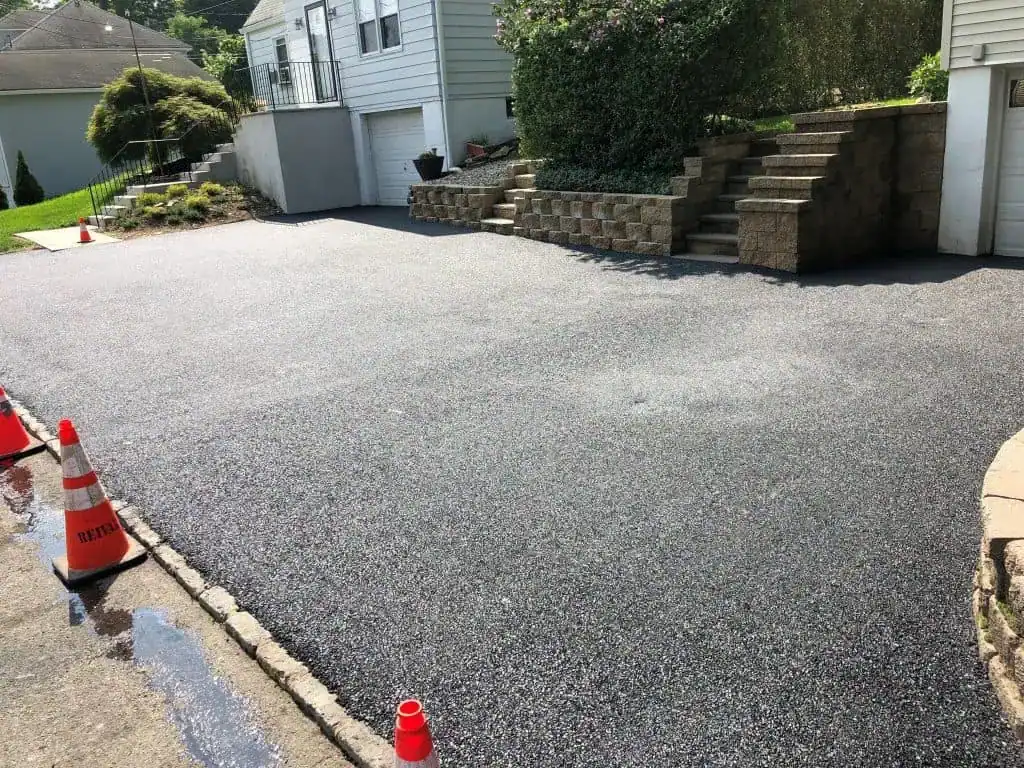
The visual difference is immediate too. Sealcoating transforms faded gray asphalt back to a deep matte black finish. It’s the kind of upgrade that makes neighbors ask who did the work.
We operate throughout Morris County, Somerset County, and Sussex County. We’re not a franchise or a crew passing through. When something needs attention down the road, we’re still here.
Our sealcoating work comes with a 2-year warranty on materials and workmanship. We use a custom-blended sealer mixed in-house—thicker, darker, longer-lasting than the standard products most contractors spray on. Two coats, not one, because New Jersey winters demand it.
Parsippany sits in a climate zone that sees more freeze-thaw cycles than most of the state. We account for that in material selection and application timing. You’re not getting a cookie-cutter approach. The sealer needs to cure properly before temperatures drop, and we schedule accordingly.
First, we inspect the surface. If there are cracks wider than a quarter-inch, we fill them with hot rubberized crack filler before any sealer goes down. Skipping this step means the cracks will telegraph through the new coating within months.
Next, we clean the entire surface. Oil stains, dirt, debris—all of it has to come off or the sealer won’t bond properly. We’re not just blowing leaves off with a backpack blower. This is pressure washing and scrubbing where needed.
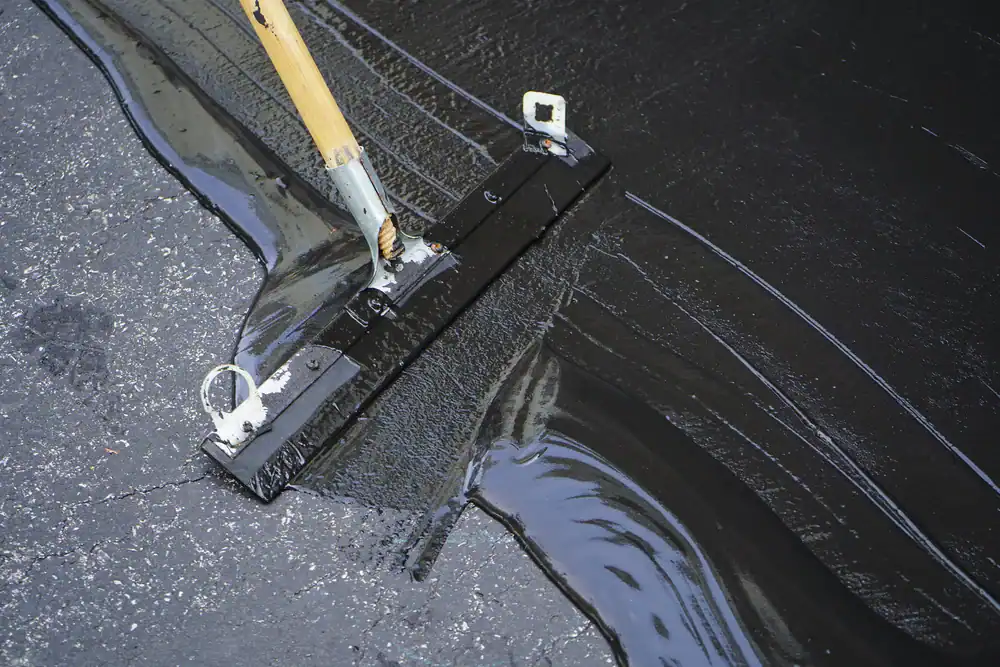
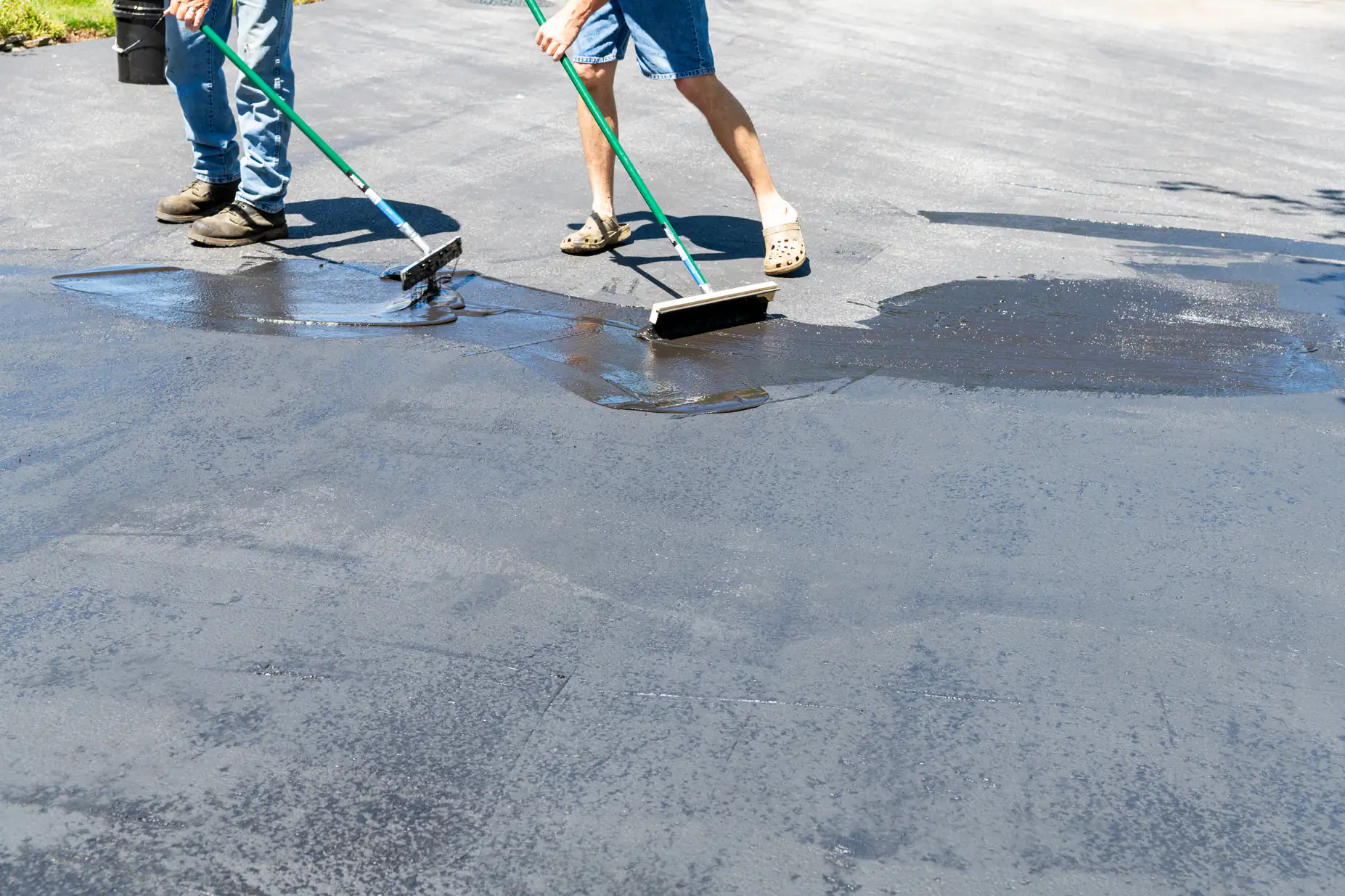
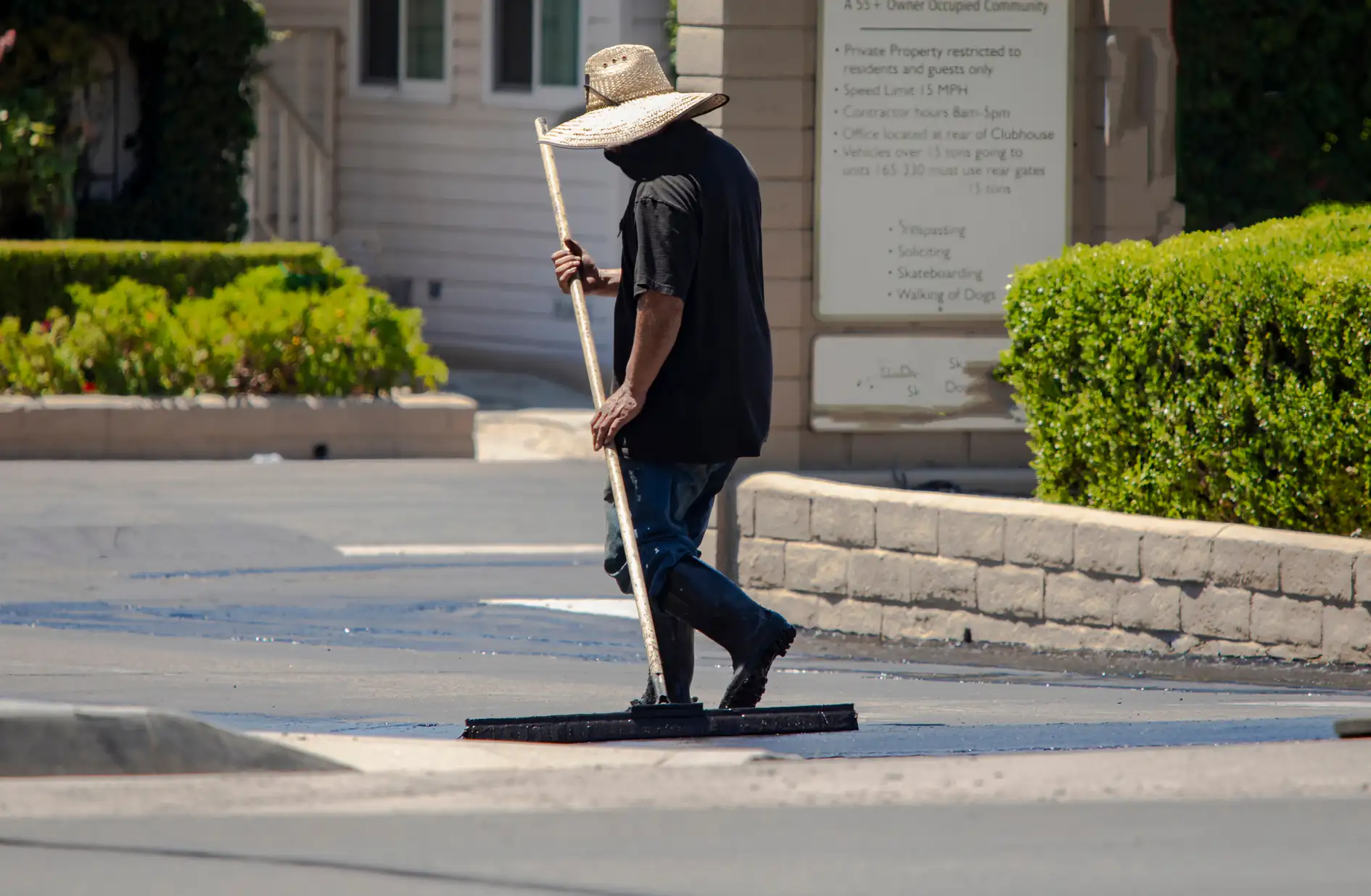
Then we apply two coats of our custom-blended sealer. The first coat soaks in and fills surface voids. The second coat creates the protective top layer. Each coat needs time to dry before the next goes on, and before you can use the driveway again.
Foot traffic is usually fine after 12-24 hours. Vehicles need to stay off for a full 48 hours. Rushing it leaves tire marks and ruins the finish. We’ll tell you exactly when it’s safe to park again, and we mean it.
The whole process takes 1-2 days depending on drying conditions. Weather matters. We don’t sealcoat if rain is coming or if temperatures are dropping below 50°F at night.
Ready to get started?
Sealcoating in New Jersey typically runs $0.15-$0.40 per square foot. A standard residential driveway costs $150-500 depending on size and condition. That includes surface prep, crack filling for minor cracks, two coats of sealer, and cleanup.
If your driveway has significant cracking or damage, those repairs are separate. We’ll walk the surface with you and point out what needs attention before sealing. There’s no point in sealing over structural problems—it won’t fix them, and it won’t last.
Morris County properties deal with harsher conditions than central or southern New Jersey. We see about 40% more freeze-thaw cycles up here. That’s why we don’t cut corners on material thickness or application method. Single-coat jobs might last 1-2 years. Two coats done right last 3-4 years.
Timing matters too. Spring and fall are ideal. Summer heat can make the sealer dry too fast. Winter cold prevents proper curing. We’ll tell you the best window for your specific property and schedule accordingly.
You’ll get a callback within 24-48 hours after requesting a quote online. We’ll ask about square footage, current condition, and when you last sealed it. Then we’ll give you a clear number with no surprise charges later.

Two-coat sealcoating lasts 3-4 years on residential driveways in New Jersey. Single-coat applications only last 1-2 years, which is why we don’t offer them.
The difference comes down to climate. New Jersey’s freeze-thaw cycles from November through March are brutal on asphalt. Water gets into small surface voids, freezes, expands, and breaks down the pavement. A thicker, two-coat application gives you a protective layer that holds up against that cycle for multiple winters.
Commercial lots with heavier traffic see 2-3 years from a two-coat job. Residential driveways with lighter use get the full 3-4 years. After that, the sealer starts to wear thin and it’s time to reapply before the underlying asphalt gets exposed to the elements again.
Sealcoating protects existing asphalt. Repaving replaces it. They solve different problems.
If your driveway has surface wear, minor cracks, and fading but the base is still solid, sealcoating extends its life for a fraction of the cost. Think of it as preventive maintenance. Repaving costs $6-8 per square foot. Sealcoating costs $0.15-$0.40 per square foot. For a 600 square foot driveway, that’s $90-240 for sealing versus $3,600-4,800 for replacement.
But if your driveway has deep potholes, major cracking, or base failure where sections are sinking, sealcoating won’t fix that. At that point, the structure is compromised and you need to remove and replace the damaged areas. We’ll walk your property and tell you honestly which approach makes sense. There’s no point in sealing a driveway that needs repaving—it’s throwing money away.
You can buy sealer at a home improvement store and do it yourself. Whether you should depends on what result matters to you.
DIY sealcoating usually means one thin coat applied with a squeegee or brush. The sealer is pre-mixed and lower quality than what we use. You’ll spend $100-150 on materials for an average driveway, and it’ll last maybe 1-2 years before it wears through.
Professional sealcoating costs $150-500 depending on size, and you get two coats of commercial-grade sealer that lasts 3-4 years. The surface prep is more thorough—pressure washing, crack filling, proper edging. The application is even and consistent. The cure time is managed correctly so you don’t end up with tire marks or soft spots.
If saving $50-100 is worth the shorter lifespan and the physical work, DIY makes sense. If you want it done right once and not have to think about it again for several years, hire it out. Most of our clients in Parsippany choose professional application because their time is worth more than the cost difference.
Late spring and early fall are ideal for driveway sealcoating in Parsippany. You need consistent temperatures above 50°F for at least 48 hours after application, and no rain in the forecast.
Sealer needs warmth to cure properly. If temperatures drop below 50°F at night before it’s fully cured, the sealer won’t bond correctly and you’ll end up with a weak finish that peels or wears off quickly. Summer works too, but extreme heat can make the sealer dry too fast, which also affects bonding.
Spring gives you moderate temperatures and lower humidity. Fall works for the same reasons, but you’re racing against the first freeze. We typically stop scheduling sealcoating work by late October in Morris County because the weather becomes too unpredictable.
If your driveway is new asphalt, wait at least 90 days before sealing it. Fresh asphalt needs time to cure and release oils. Sealing too early traps those oils and prevents proper adhesion. Most contractors won’t tell you that, but it matters if you want the sealcoat to actually last.
Sealcoating fills tiny surface voids and hairline cracks, but it doesn’t repair structural cracks. Anything wider than a quarter-inch needs to be filled separately before the sealer goes down.
We use hot rubberized crack filler for larger cracks. It’s a flexible material that moves with the asphalt as temperatures change, which prevents the crack from reopening. The crack filler goes in first, cures, and then we apply the sealcoat over the entire surface.
If we skip crack filling and just sealcoat over damaged areas, those cracks will telegraph through the new coating within a few months. Water will still get in, freeze, expand, and make the cracks worse. It’s not a real repair—it’s just hiding the problem temporarily.
Some contractors will sealcoat without addressing cracks because it’s faster and cheaper for them. Then six months later, the homeowner wonders why the driveway still looks damaged. Proper prep work costs a little more upfront but it’s the difference between a sealcoat job that lasts three years versus one that fails in the first winter.
Most residential driveways in Morris County cost $150-500 to sealcoat, depending on size and condition. The price breaks down to about $0.15-$0.40 per square foot for a professional two-coat application.
A typical two-car driveway runs around 600 square feet, which puts the cost at $90-240 for just the sealcoating. Add crack filling, and you’re looking at $150-300 total. Larger driveways or those with significant damage cost more because there’s more prep work involved.
New Jersey prices run about 15-20% higher than the national average due to labor costs and material expenses in this region. Morris County specifically tends toward the higher end of that range because of the local cost of living and the fact that properties here expect quality work, not the cheapest option.
We give you a firm quote upfront after looking at your driveway. No surprise charges later. If additional repairs are needed beyond basic crack filling, we’ll point them out and price them separately so you know exactly what you’re paying for and why.