
Hear from Our Customers
You’re tired of watching your driveway fade to grey and crack after every winter. Water gets in, freezes, expands, and turns small cracks into potholes. Then you’re looking at repair bills that keep climbing.
Sealcoating stops that cycle. It fills surface cracks, blocks water penetration, and creates a protective barrier against UV rays, chemicals, and tire wear. The result is a driveway that looks fresh and black again, not one that’s limping along until you can afford to replace it.
Most driveways in Ogdensburg, NJ run between $150 and $500 to seal, depending on size. Compare that to $6-$8 per square foot for full replacement. You’re looking at nearly 2,000% more value for a fraction of the cost. And if you stay on a regular schedule every 3-4 years, your asphalt can last decades instead of needing early replacement.
We’ve been working in Morris County since before most of the newer subdivisions in Ogdensburg even existed. We know what the terrain does to driveways here. The clay soils, the drainage issues, the way freeze-thaw cycles hit harder in this part of Sussex County than they do twenty miles south.
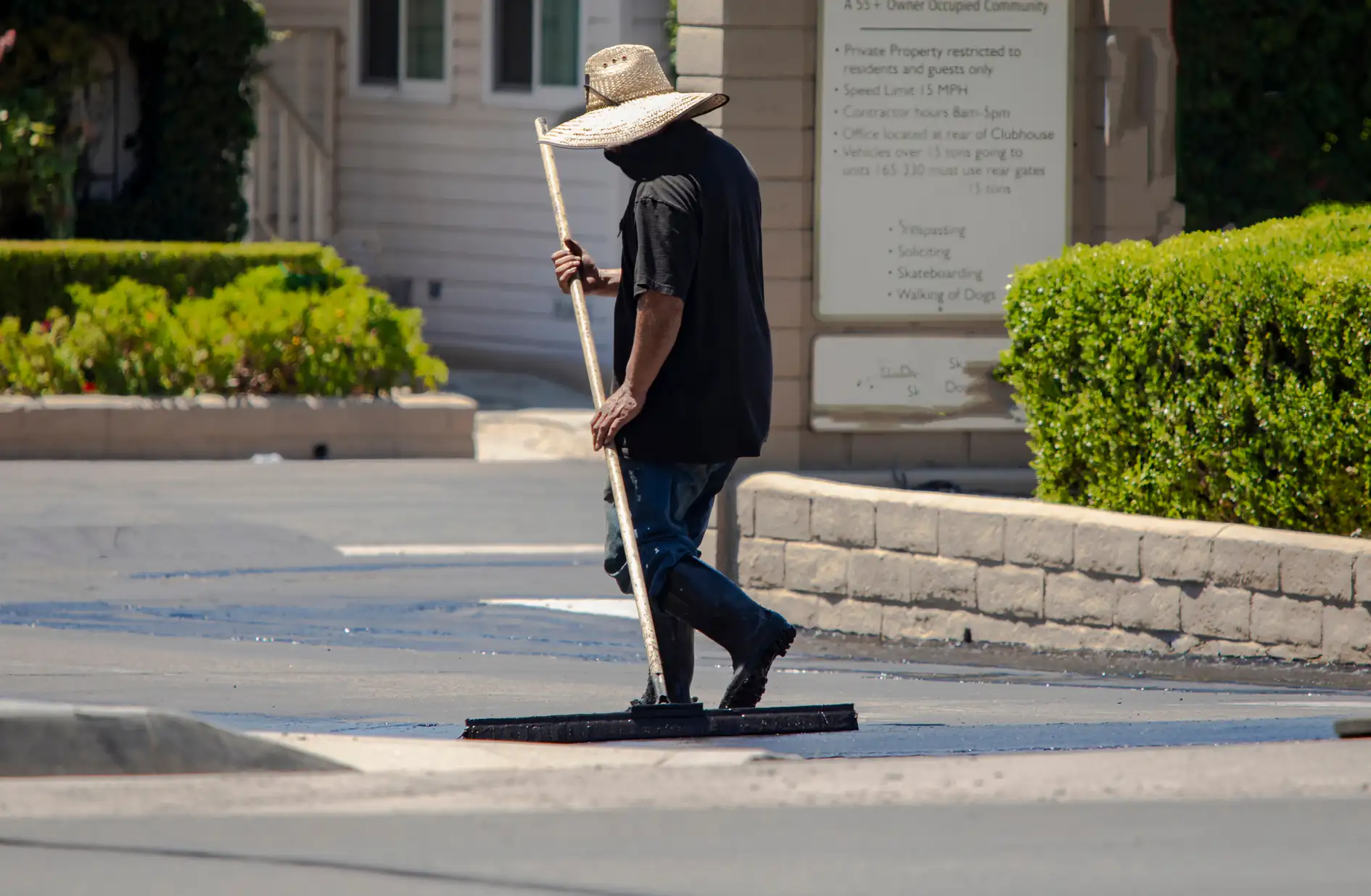
We’re not a crew that shows up, slaps down some sealer, and disappears. Our owner Dominick is on-site throughout the job. We use a custom-blended sealer mixed in-house because the off-the-shelf stuff gets watered down and doesn’t hold up to New Jersey winters.
You’ll get a 5-year warranty on the work, a 4.5-star rating backed by 83 reviews, and upfront pricing with no surprise charges. We’ve built our reputation here by doing what we say we’re going to do.
First, we clean the surface completely. Any dirt, oil, or debris left behind will prevent the sealer from bonding properly. We’re talking pressure washing and scrubbing, not just a quick sweep.
Next, we fill any cracks wider than a quarter-inch with hot rubberized crack filler. This step matters because sealer alone won’t bridge gaps. If water’s getting through cracks now, it’ll keep getting through after sealing unless we address it first.
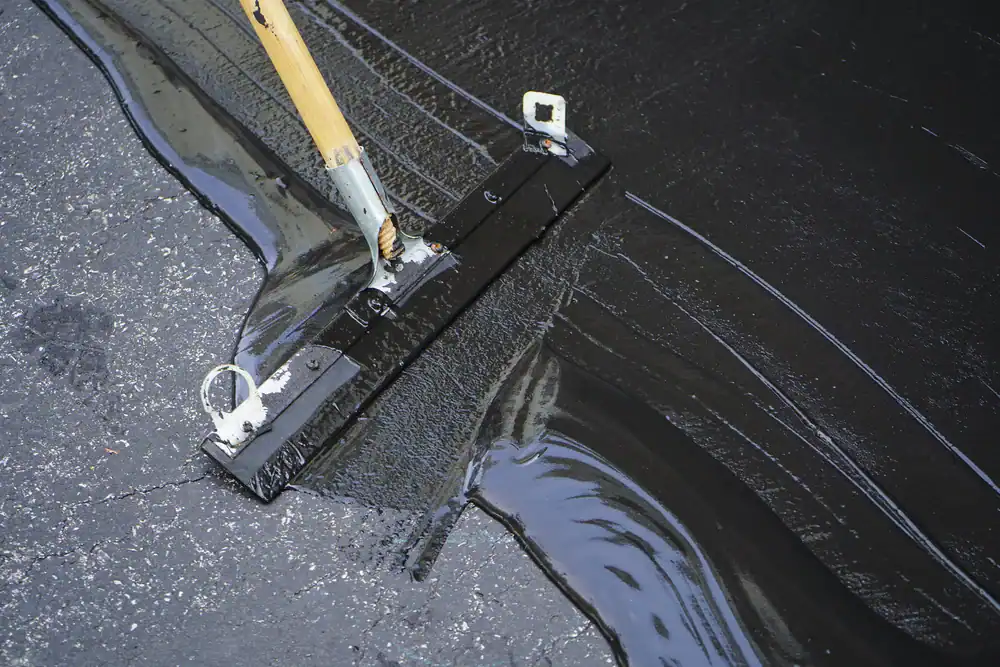
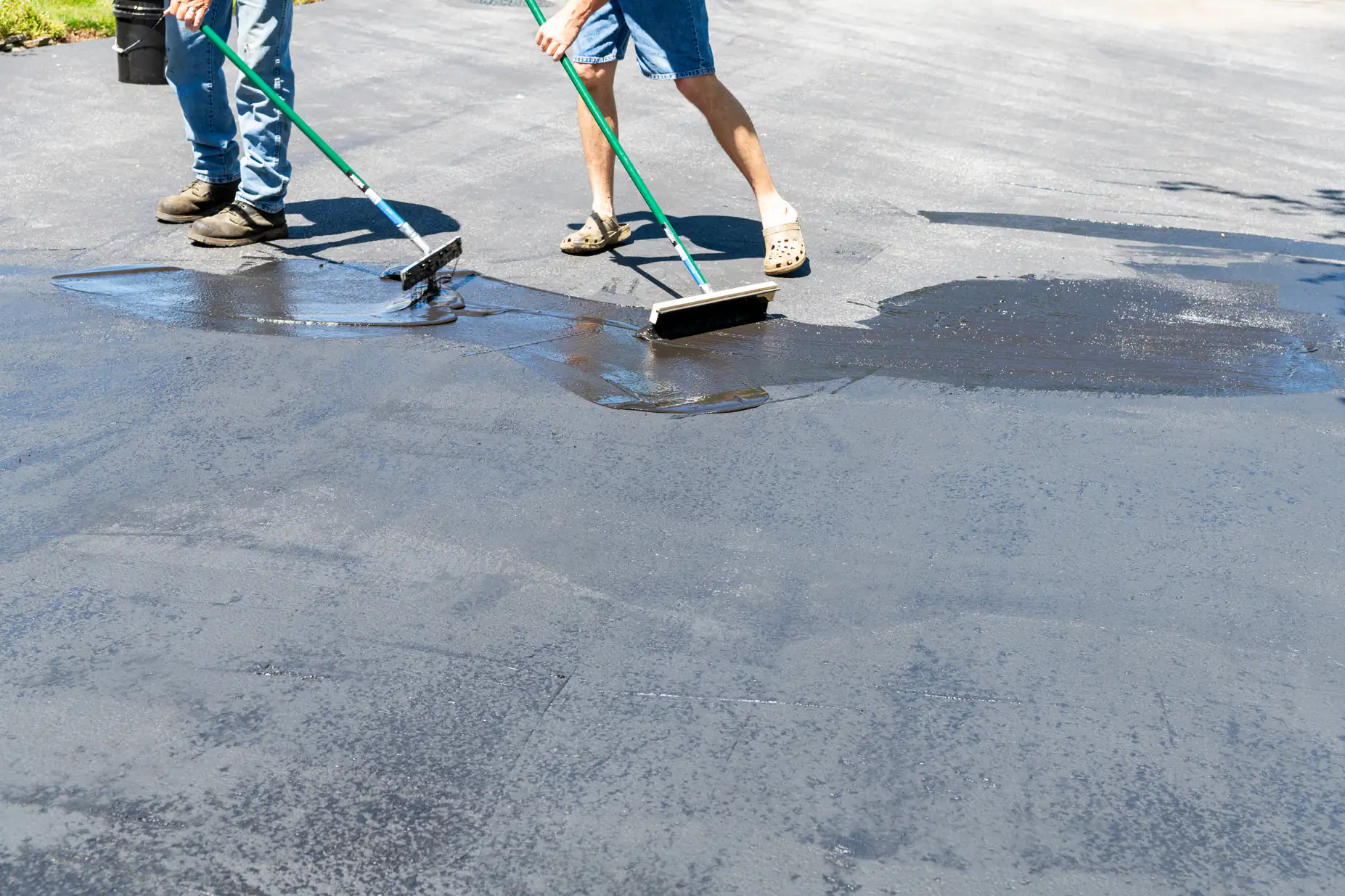
Then we apply two coats of our custom-blended sealer. The first coat soaks into the asphalt and fills surface imperfections. The second coat creates the protective top layer that blocks water, UV damage, and chemical wear. Two coats give you 3-4 years of protection instead of the 1-2 years you’d get from a single coat.
We let each coat dry completely before applying the next one, and you’ll need to stay off the driveway for 24-48 hours depending on temperature and humidity. After that, you’re good to go.
Ready to get started?
Every sealcoating job starts with a full inspection of your driveway’s condition. We’re looking at drainage patterns, existing damage, and whether the asphalt is even a good candidate for sealing. If your driveway has deep structural problems or the asphalt is too far gone, we’ll tell you that upfront instead of taking your money for a band-aid fix.
In Ogdensburg, drainage is critical because of the terrain and clay soils. If water’s pooling on your driveway now, sealing won’t fix that. We’ll point out those issues during the estimate so you know what you’re dealing with.
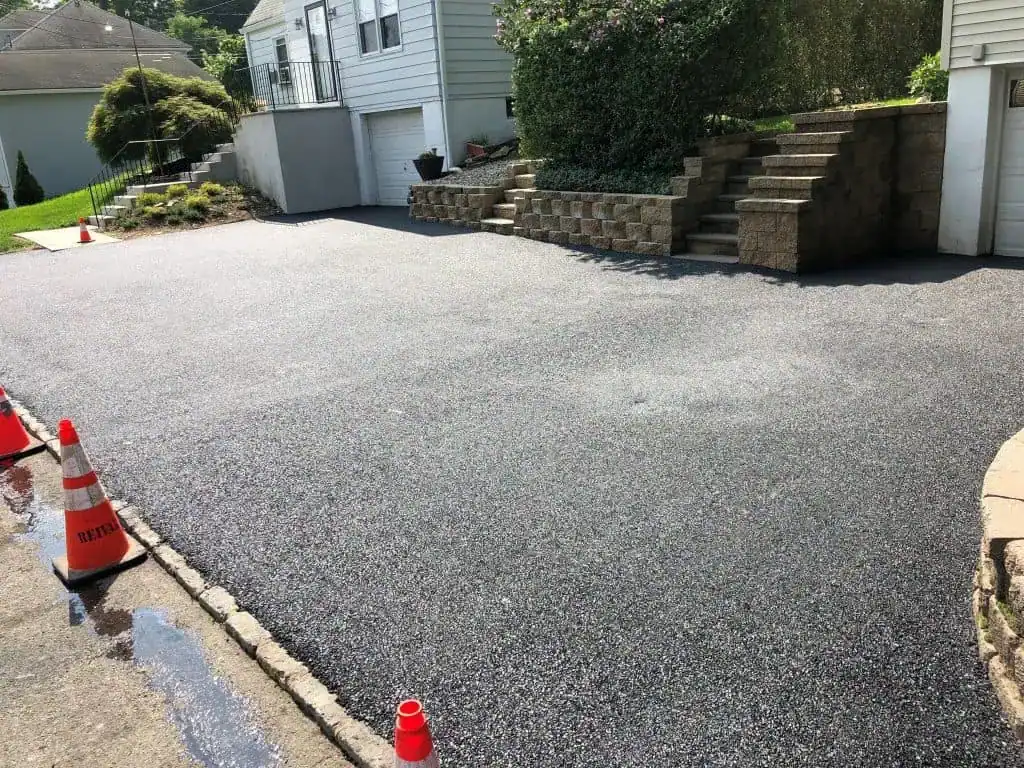
Our sealer is thicker and darker than what most contractors use because we mix it ourselves. You’re not getting a watered-down product that barely changes the color of your asphalt. The finish is a deep matte black that makes your driveway look like it was just installed.
The work comes with a 5-year warranty, and we’re fully licensed and insured through the NJ Division of Consumer Affairs. You’ll get a detailed written estimate before we start, and we guarantee a callback within 24-48 hours if you request a quote online.

Most residential driveways in Ogdensburg run between $150 and $500 for professional sealcoating, depending on square footage and condition. The typical cost per square foot in New Jersey is $0.15 to $0.40, which is about 15-20% higher than the national average because of labor costs and the extra wear our climate puts on asphalt.
A standard two-car driveway is usually around 600-800 square feet, so you’re looking at $200-$350 for most properties. If your driveway has significant cracking that needs to be filled first, or if there are drainage issues that need addressing, that’ll add to the cost.
The real question isn’t what it costs to seal your driveway. It’s what it costs not to. Removing and replacing a driveway runs $6-$8 per square foot. For that same 700-square-foot driveway, you’re looking at $4,200 to $5,600. Sealcoating every 3-4 years for $300 is a lot easier to stomach than a full replacement because you waited too long.
Two coats of quality sealer will last 3-4 years on a residential driveway in New Jersey if it’s applied correctly. Single-coat applications only give you 1-2 years because they don’t build up enough thickness to withstand our freeze-thaw cycles.
The lifespan depends on a few factors. Traffic volume matters—a driveway with four cars coming and going daily will wear faster than one with light use. Weather exposure plays a role too. Driveways that get full sun all day will break down faster from UV damage than ones with tree cover.
The quality of the sealer makes a huge difference. Lower-grade products or sealers that have been watered down might darken your driveway temporarily, but they lack the chemistry and additives needed for real protection. That’s why we mix our own sealer in-house instead of using whatever’s cheapest at the supply yard. And if you stay on a regular schedule, each application actually performs better because you’re maintaining the asphalt instead of trying to rescue it.
Late spring through early fall is your window for sealcoating in Ogdensburg. You need air and surface temperatures above 50 degrees for at least 24 hours before and after application, and the forecast needs to be clear of rain for 24-48 hours so the sealer can cure properly.
In northern New Jersey, that usually means May through September are your best months. October can work if we get a warm stretch, but by then you’re gambling with the weather. Paving season typically wraps up by late October in this region.
If you have a newer driveway, wait at least 3-6 months after installation before sealing. Fresh asphalt needs time to cure and release oils. Sealing too early traps those oils and prevents proper bonding. Most contractors won’t tell you that because they want the work, but it’ll cause problems down the road. If your driveway was installed last fall, plan on sealing it next summer.
Asphalt and concrete need completely different types of sealers, and the process isn’t the same. Asphalt sealcoating uses a coal tar or asphalt-based sealer that’s designed to bond with petroleum-based asphalt. Concrete sealing uses penetrating sealers or topical coatings that work with the chemical makeup of cement.
For concrete driveways, you’re typically looking at a penetrating silane or siloxane sealer that soaks into the concrete and repels water, or an acrylic topical sealer that sits on the surface and provides a protective coating. The goal is the same—protect against water intrusion, freeze-thaw damage, and surface wear—but the products and application methods are different.
We handle both asphalt sealcoating and concrete sealing, but it’s important to know what you have before you start calling around for quotes. Some contractors only work with one or the other. And if you have a stamped or decorative concrete driveway, you’ll want someone who understands how to seal those surfaces without damaging the finish or color.
The difference is in the formulation and how much actual sealer you’re getting versus filler and water. Cheap sealer is often watered down to stretch the product further, which means you’re applying a thinner coat that won’t last as long or protect as well.
Quality sealer has higher concentrations of asphalt or coal tar, plus additives like sand for traction, rubberized polymers for flexibility, and UV blockers to prevent sun damage. These ingredients cost more, but they’re what actually protect your driveway. When you water down the sealer to save money, you’re diluting all of those protective properties.
You can usually tell the difference just by looking at the finished product. Cheap sealer dries to a lighter grey color and you can still see the aggregate underneath. Quality sealer gives you a deep, rich black finish that looks almost like new asphalt. It’s also thicker going on, which means better coverage and longer protection. We mix our sealer in-house specifically so we control the quality and don’t have to rely on whatever watered-down product shows up from the supplier.
If your driveway is starting to fade from black to grey, you’re already past the ideal time to seal it. That color change means the top layer of asphalt is oxidizing and breaking down from UV exposure. Once that process starts, it accelerates.
Sealing isn’t just about making your driveway look better, though that’s a nice benefit. It’s about preventing water from penetrating the surface and causing freeze-thaw damage. Every time water seeps into small cracks and freezes, it expands and makes those cracks bigger. By the time you can see significant cracking, you’re looking at more expensive repairs.
The best time to seal is before you think you need to. If your driveway is 1-2 years old and still looks decent, that’s actually the perfect time for a first seal coat. You’re protecting the asphalt while it’s still in good shape, which extends its lifespan significantly. Waiting until it’s obviously deteriorating means you’re playing catch-up instead of staying ahead of the damage.