
Hear from Our Customers
Your driveway stops absorbing water. That matters more than you might think in Morris County, where we get 55 to 75 freeze-thaw cycles every winter.
Water seeps into cracks, freezes, and expands by 9%. That’s what forces asphalt apart. By the time spring arrives, those hairline cracks you ignored in November have turned into potholes that need real money to fix.
Sealcoating creates a barrier. Water stays on the surface instead of working its way into the base. Road salt can’t penetrate and break down the binder. UV rays that fade and dry out asphalt get blocked before they cause damage.
You’re looking at 3 to 4 years of protection from a single application. That’s 3 to 4 winters where your driveway isn’t deteriorating. And when you compare the cost of sealing to the cost of replacing sections or repaving entirely, you’re spending pennies on the dollar.
We’re a third-generation, family-owned contractor based in Dover. We’ve worked throughout Morris County long enough to know exactly what Mount Hope driveways face every winter.
The climate here is harder on asphalt than most places. Temperatures swing from 45 and raining to 15 with snow in the same week. That’s why we recommend two coats for residential driveways and why we mix our sealer in-house to create a thicker, longer-lasting finish.
You’re not getting a crew that showed up last year. You’re working with people who’ve been serving this area for over 20 years and who’ll still be here when you need us again.
We start by cleaning your driveway completely. Oil stains, dirt, debris—anything that would prevent the sealer from bonding gets removed. If there are cracks wider than a quarter-inch, we fill them first. Sealer won’t fix structural damage, so those need to be addressed before we apply anything.
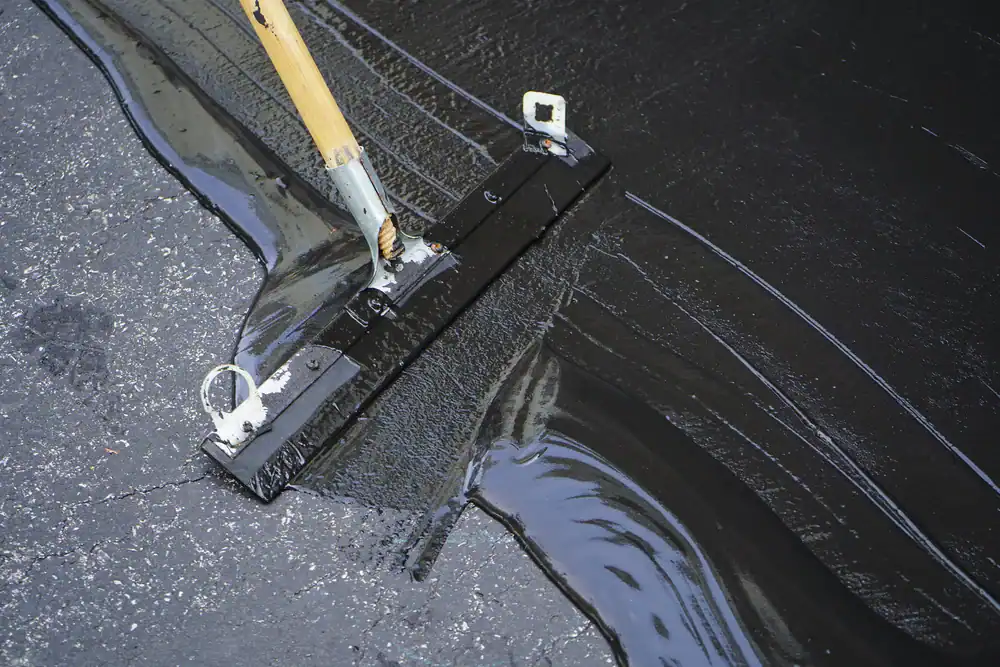
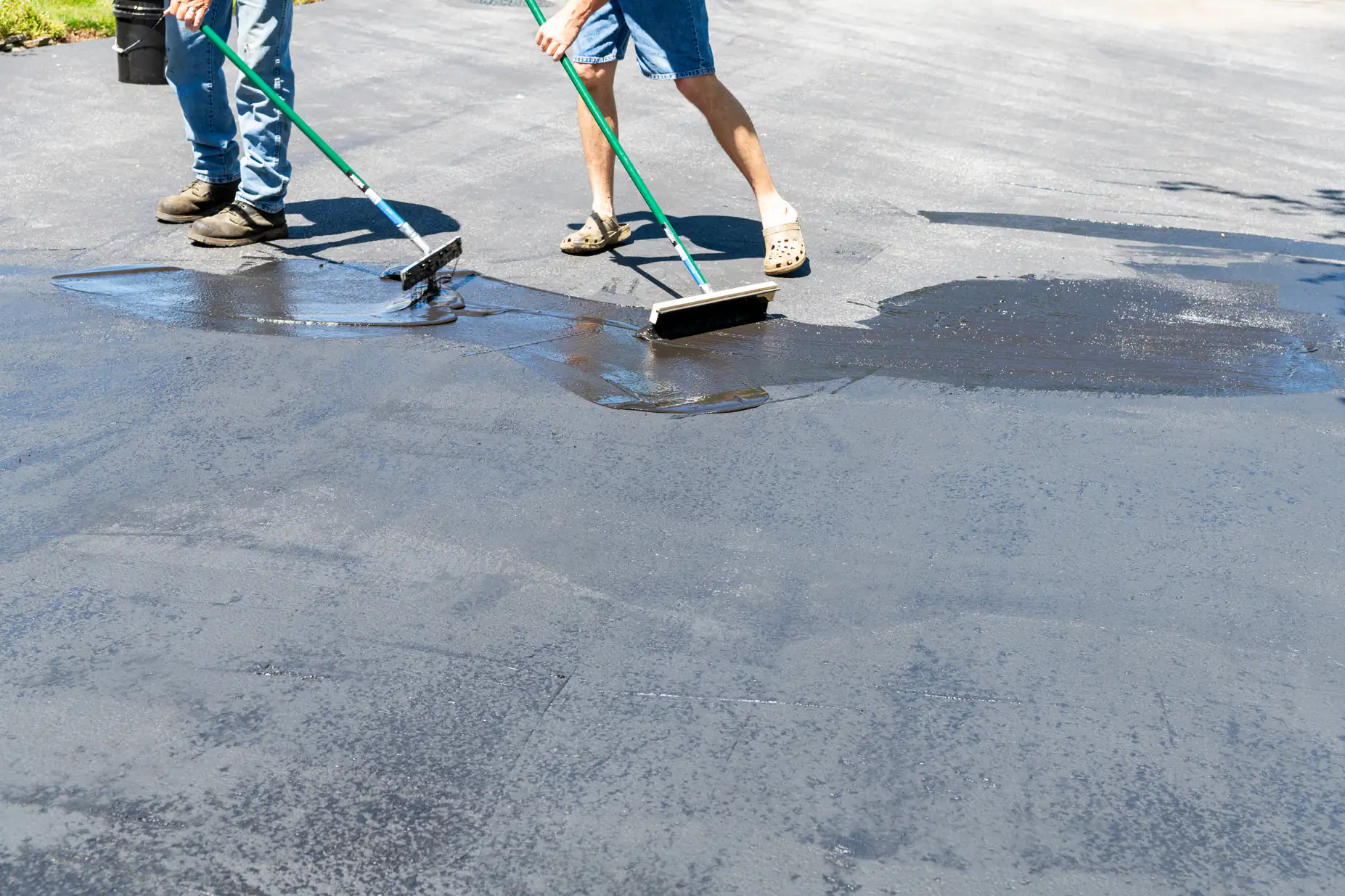
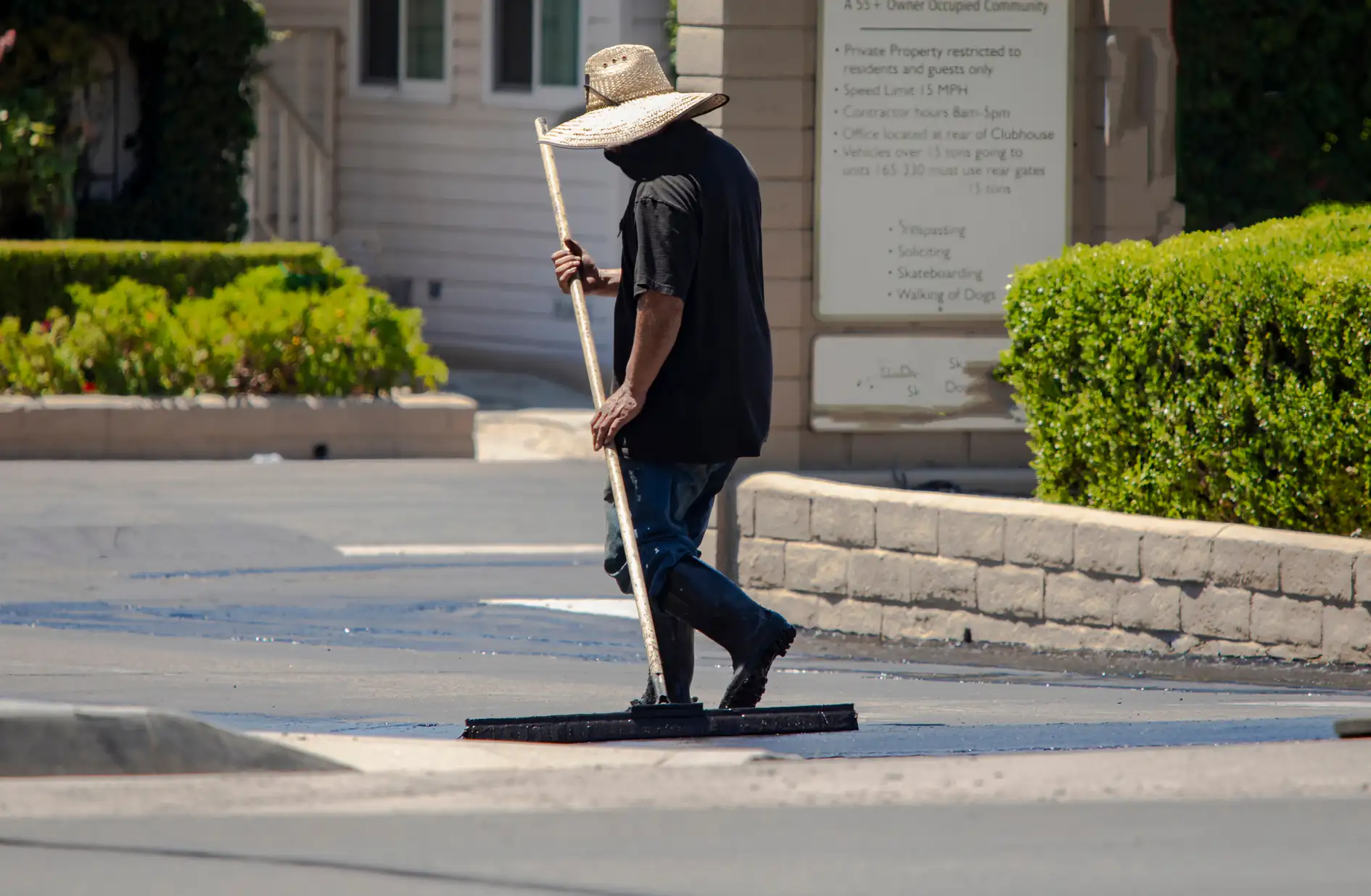
Once the surface is prepped and dry, we apply the first coat by hand. That gives us even coverage and lets us work the sealer into the asphalt properly. After it dries, we apply the second coat. Two coats are standard here because of how harsh our winters are.
The sealer needs 24 to 48 hours to cure, depending on temperature and humidity. During that time, you’ll need to stay off the driveway. Once it’s cured, you’ve got a fresh, protective layer that’s ready to handle whatever weather comes next.
The whole process usually takes one day for a typical residential driveway, plus cure time. We schedule jobs during dry weather windows in late summer and fall when temperatures are ideal for application and curing.
Ready to get started?
You’re getting a complete prep and application process designed specifically for New Jersey’s climate. That includes crack filling for any damage that needs attention before sealing, thorough cleaning to ensure proper adhesion, and two coats of custom-blended sealer mixed in-house.
The sealer we use creates a thicker, darker finish than the thin, watered-down products some driveway sealer companies apply. It’s formulated to handle the freeze-thaw cycles we experience from November through March and the UV exposure your driveway gets the rest of the year.
Mount Hope sits in an area where winter hits hard and summer sun is relentless. Your driveway is exposed to both extremes. The protection you get from professional sealcoating addresses both—blocking moisture penetration during winter and preventing UV degradation during summer.
The cost of asphalt sealing typically runs $150 to $500 for most residential driveways in this area, depending on size and condition. Compare that to $3,000 to $8,000 for replacement, and you’re looking at a 2,000% difference in cost for protection that extends your pavement’s life by years.

Every 3 to 4 years for residential driveways in Morris County. That timeline is based on how our climate wears down sealcoating—not just winter damage, but also summer UV exposure and the general wear from vehicles.
If you’re seeing faded areas or water soaking into the asphalt instead of beading on the surface, it’s time to reseal. Those are signs the protective layer has worn through and your driveway is exposed again.
Some driveway sealer contractors will tell you every 2 years. That’s overkill for most residential properties and usually means they’re applying thin coats that don’t last. Two thick coats applied properly should give you 3 to 4 years of solid protection in this area.
Late summer through fall, before temperatures drop below 50 degrees at night. Sealer needs warm weather to cure properly—ideally between 50 and 85 degrees with low humidity.
September and October are usually the best months in Mount Hope. You’ve got warm days, the asphalt has had all summer to fully cure if it’s newer pavement, and you’re getting the sealer down with enough time to cure before winter arrives.
Spring can work, but you’re gambling with unpredictable weather. If you seal too early and temperatures drop, the sealer won’t cure right. If you wait too long, you’re pushing into summer heat, which can cause application issues. Fall gives you the most reliable conditions and maximum protection heading into the season that does the most damage.
Sealcoating protects the asphalt you already have. Repaving means tearing out damaged pavement and installing new asphalt. They solve different problems.
If your driveway has surface cracks, fading, and minor wear but the base is still solid, sealcoating extends its life and prevents those small issues from becoming big ones. You’re spending a few hundred dollars for years of protection.
If you’ve got major structural failure—deep potholes, widespread cracking, sections that have sunk or heaved—sealing won’t fix that. You need repair work or full replacement, which runs $3,000 to $8,000 for a typical residential driveway.
Most driveways in Mount Hope that have been maintained don’t need repaving for 25 to 30 years. Regular sealcoating is what keeps them in that “maintained” category instead of letting them deteriorate to the point where replacement is the only option.
You can buy sealer at a hardware store and do it yourself. Whether you should depends on what you’re trying to accomplish and what you’re willing to accept as a result.
DIY sealcoating usually means brush or squeegee application with pre-mixed sealer that’s been sitting in a bucket. It’s thin, the coverage is often uneven, and it typically lasts 1 to 2 years before it’s worn through. You’ll also need to handle all the prep work yourself—cleaning, crack filling, edging.
Professional application means proper surface prep, crack repair, custom-mixed sealer applied by hand for even coverage, and a thicker finish that lasts 3 to 4 years. The cost difference isn’t as big as you’d think when you factor in materials, equipment rental, and your time.
If your driveway is small and you’re comfortable with a shorter lifespan and potentially uneven results, DIY can work. If you want protection that actually lasts through multiple New Jersey winters and looks professional, hire someone who does this regularly.
No. Sealer is a protective coating, not a crack filler. If you’ve got cracks, they need to be filled before sealcoating—otherwise you’re just sealing over damage that will continue to get worse.
Cracks wider than a quarter-inch should be cleaned out and filled with rubberized crack filler. That material flexes with temperature changes and prevents water from getting into the base. Once the filler has cured, then you can apply sealer over the entire surface.
Some driveway sealcoating contractors skip crack filling or do a poor job of it because it takes time. That’s a mistake. Sealing over unfilled cracks means you’re not actually protecting your driveway where it needs it most—at the points where water is already penetrating.
Proper crack filling before sealing is part of the process. If someone is quoting you for sealcoating without mentioning crack repair, ask specifically what they’re planning to do about existing damage. The answer will tell you whether they’re doing the job right.
Most residential driveways in Mount Hope run between $150 and $500 for professional sealcoating, depending on size and condition. That’s for complete prep, crack filling, and two coats of sealer.
Price varies based on square footage, how much crack repair is needed, and how accessible your driveway is. A small, well-maintained driveway with minimal cracking will be on the lower end. A larger driveway with significant crack damage will cost more because of the additional prep work.
If you’re getting quotes significantly below that range, ask what’s included. Some contractors apply one thin coat, skip crack filling, or use watered-down sealer to hit a lower price point. That’s not a deal—it’s a job that won’t last and won’t protect your driveway through a New Jersey winter.
The real comparison isn’t between sealcoating companies. It’s between spending a few hundred dollars now for protection versus spending several thousand later for repairs or replacement. Sealcoating costs about 15 cents to 40 cents per square foot. New asphalt costs $3 to $8 per square foot. That’s the math that matters.