
Hear from Our Customers
Your driveway stops absorbing water. That’s the whole game in North Jersey, where freeze-thaw cycles hit 40% harder than Central or South Jersey.
When water can’t seep into cracks, it can’t freeze and expand. That means no new cracks forming over winter, no potholes by spring, and no emergency repair bills that could’ve been avoided for a fraction of the cost.
You’re also blocking UV rays that fade asphalt to dull gray, plus road salt and oil that break down the binder holding everything together. The result is a driveway that looks newer, lasts longer, and costs you less over time. Most driveways in Morristown last about 15-20 years without maintenance. With regular sealcoating every 3-4 years, you’re looking at 25-30 years or more.
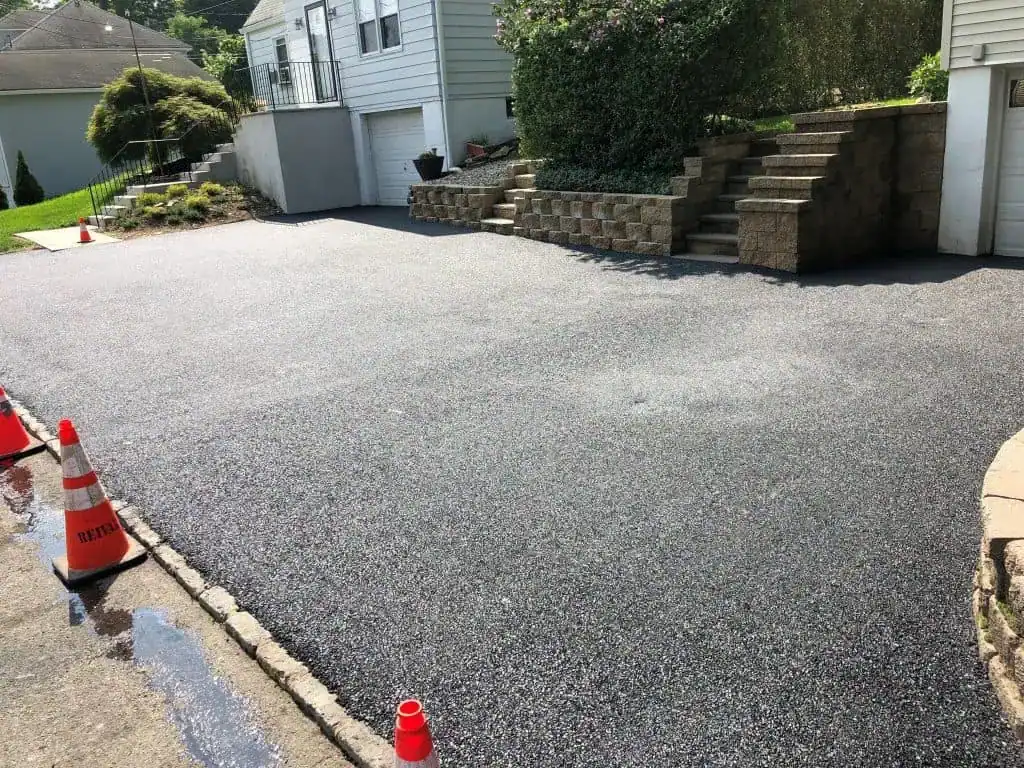
And it’s not just about function. A freshly sealed driveway goes from washed-out gray to deep matte black. It’s the kind of upgrade that makes your landscaping look better, your home feel more put-together, and your property stand out when people drive by.
Most driveway sealer companies in Morris County use pre-mixed product diluted with water to stretch their margins. We don’t. We buy concentrate and mix it ourselves to the right thickness for New Jersey’s climate.
That’s why our finish is darker, thicker, and lasts longer than what you’ll get from most contractors. It’s also why we can back it with a real warranty and actually mean it.
We’ve been working in Morristown, Madison, Chatham, and throughout Morris County long enough to know what holds up here. The freeze-thaw cycles, the road salt, the summer heat—it all matters when you’re choosing materials and application methods. We’re not guessing. We know what works because we’ve seen what fails.
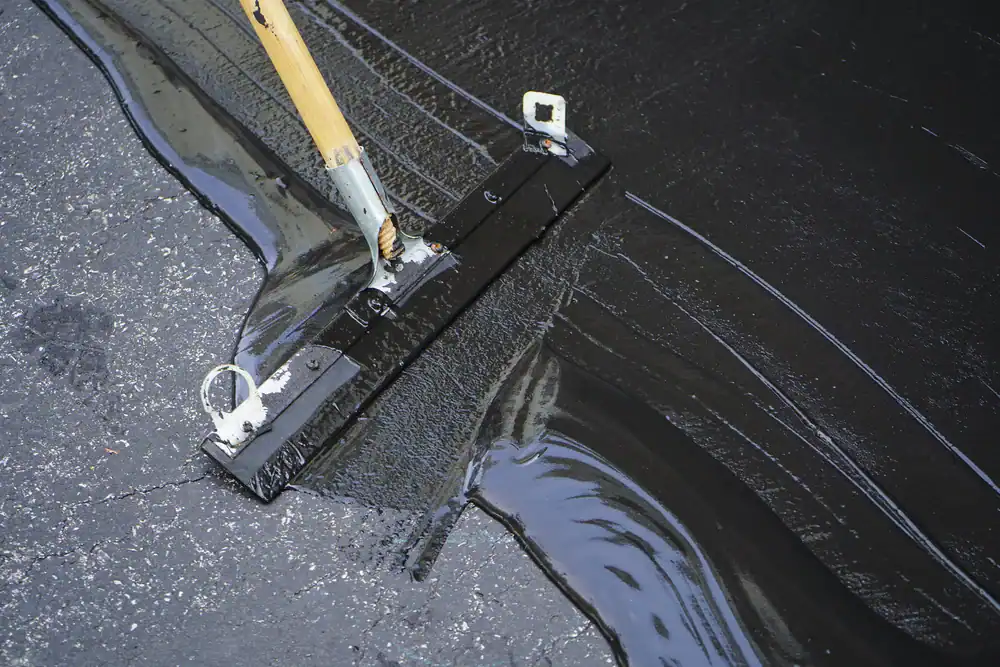
We start by cleaning your driveway completely. That means blowing off debris, power washing if needed, and making sure the surface is dry and ready to bond with sealer. If there are cracks wider than a quarter-inch, we fill them with hot rubberized crack filler first. Sealer alone won’t fix structural issues.
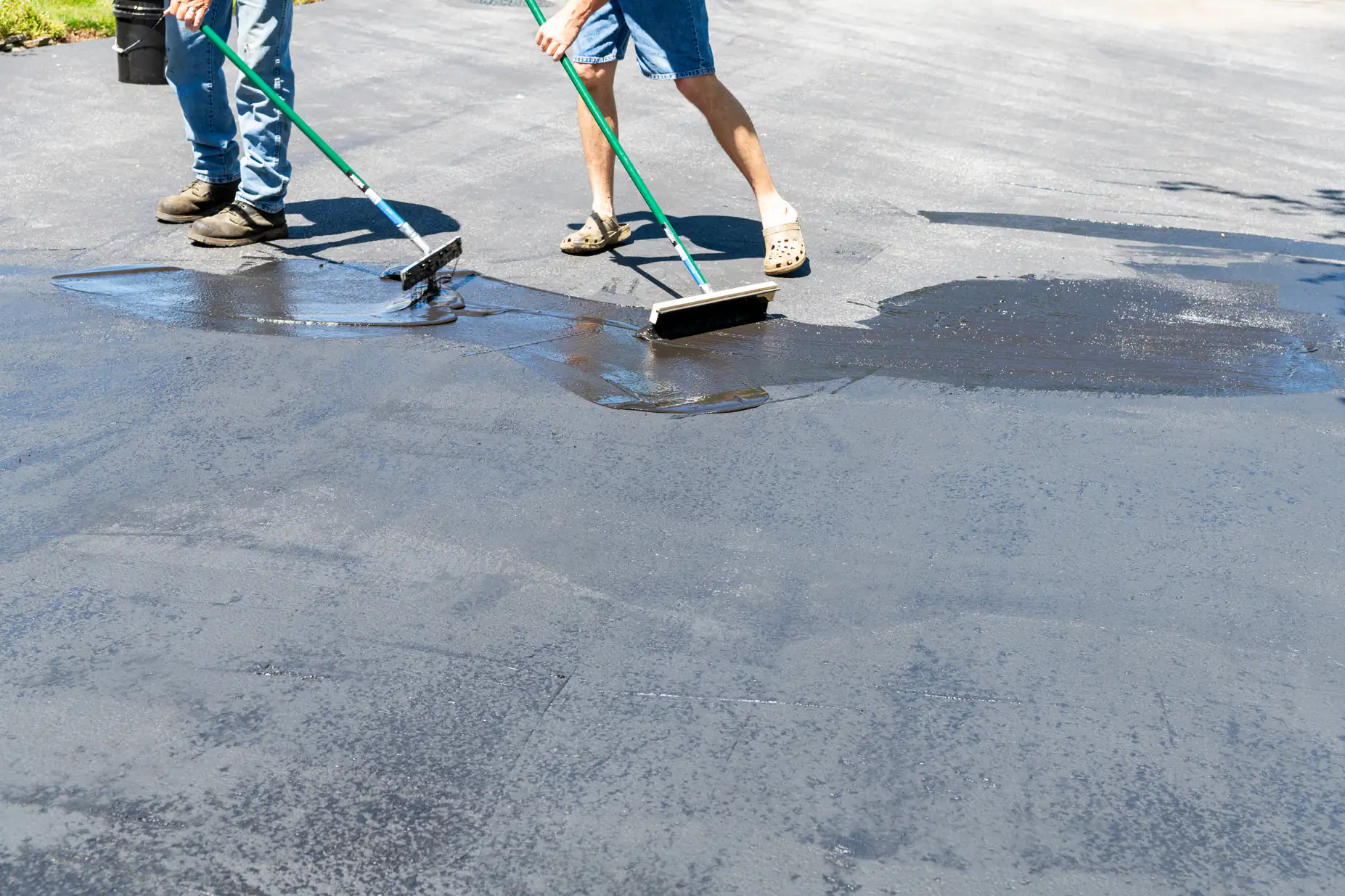
Then we apply the first coat using commercial-grade squeegees or spray equipment, depending on your driveway’s texture and condition. This coat soaks into the asphalt and creates the foundation. After it dries—usually 4-6 hours in good conditions—we apply the second coat. This one sits on top and gives you that rich, protective finish.
You’ll need to stay off the driveway for 24-48 hours depending on temperature and humidity. We’ll give you a specific timeline before we leave. After that, it’s fully cured and ready for traffic, weather, and whatever else Morristown throws at it.
The whole process usually takes one day for a standard residential driveway, and we’ll schedule it when the forecast is clear. Rain within 24 hours ruins the application, so timing matters.
Ready to get started?
Driveway sealcoating in Morristown typically runs between $0.15 and $0.25 per square foot for two coats, depending on the size and condition of your driveway. That’s a fraction of what you’d pay to repave, which costs $6-$8 per square foot in this area. You’re looking at roughly 2,000% more value with sealcoating versus replacement.
What you get for that price is surface preparation, crack filling for anything under an inch wide, two coats of custom-mixed sealer, and protection that lasts 3-4 years in North Jersey’s climate. Some contractors offer one coat for less, but it only lasts 1-2 years and you’ll end up paying more in the long run when you have to reseal sooner.
We also handle paver sealing near Morristown if you’ve got a brick or stone driveway that needs protection from weeds, stains, and shifting. And if you’re comparing options for sealing a concrete driveway, we can walk you through what makes sense for your specific surface and how long you can expect each option to hold up.
The goal isn’t to upsell you. It’s to make sure you’re spending money on something that actually works for your property and your timeline.

Two-coat applications last 3-4 years in Morris County if the driveway was prepped correctly and the sealer was applied in good conditions. Single-coat jobs only last 1-2 years, which is why we don’t recommend them here.
North Jersey gets hit harder by freeze-thaw cycles than most of the state. Water seeps in, freezes, expands, and breaks down the sealer faster than it would in a milder climate. That’s why thickness matters and why the quality of the product you use makes a real difference.
If your driveway is on a regular sealcoating schedule, each application tends to perform better than the last. The surface stays smoother, water runs off instead of pooling, and you’re not starting from scratch every time.
Late summer through mid-fall is ideal. You want temperatures consistently above 50°F during the day and no rain in the 24-hour forecast before or after application.
Spring is when everyone realizes their driveway got destroyed over winter, so contractors are slammed and you’re dealing with damage instead of preventing it. Fall lets you get ahead of the freeze-thaw season, and the conditions are usually more stable than spring when weather swings wildly.
If your driveway is new asphalt, wait at least 90 days before sealing. It needs time to cure and release oils. Sealing too early traps moisture and actually shortens the lifespan of your pavement.
Most low-cost contractors use sealer that’s been diluted way past manufacturer recommendations. They’re mixing one part concentrate with three or four parts water to save money, and you end up with a thin, grayish coat that wears off in under a year.
Professional-grade sealcoating uses the right mix ratio, which gives you a thicker, blacker finish that actually protects the asphalt underneath. The upfront cost is higher, but you’re not resealing every year or dealing with cracks that could’ve been prevented.
You’ll also see the difference in prep work. Cheap jobs skip crack filling, don’t clean the surface properly, and apply sealer over dirt and debris. That means poor adhesion and early failure. If someone’s significantly cheaper than everyone else, there’s a reason.
Yes, but the cracks need to be filled first. Sealer isn’t thick enough to fill gaps—it just bridges over them temporarily and fails within months.
We use hot rubberized crack filler for anything wider than a quarter-inch. It’s flexible, so it moves with the asphalt as temperatures change, and it actually bonds to the edges of the crack instead of just sitting on top.
If your driveway has major structural damage—like wide alligator cracking, sunken areas, or potholes—sealcoating won’t fix that. You’d need patching or possibly resurfacing before sealing makes sense. We’ll tell you upfront if that’s the case. There’s no point in sealing a driveway that’s too far gone.
For a standard two-car driveway (around 600 square feet), you’re looking at $150-$200 for two coats. Larger driveways or ones that need significant crack filling will cost more, but we’ll give you an exact price before we start.
That price includes surface cleaning, crack filling up to a certain amount, two coats of sealer, and cleanup. If your driveway hasn’t been sealed in years or has heavy staining, there may be extra prep work involved, but we’ll walk through that during the estimate.
Compared to the $3,600-$4,800 you’d spend to repave that same 600-square-foot driveway, sealcoating is a no-brainer if your asphalt is still in decent shape. You’re extending its life by years for a fraction of replacement cost.
In North Jersey, yes. One coat might work in milder climates, but Morristown’s freeze-thaw cycles are too aggressive for a single layer to hold up more than a year or two.
The first coat penetrates the asphalt and fills in surface voids. The second coat sits on top and provides the actual protective barrier against water, UV, and chemicals. Without that second layer, you’re not getting the durability you’re paying for.
The cost difference between one and two coats is usually $50-$150, but you’ll save that by not having to reseal again in half the time. It’s one of those situations where spending a little more upfront saves you a lot more down the road.