
Hear from Our Customers
Here’s what actually matters: your driveway either gets sealed every few years, or it gets replaced in 15. That’s the difference between spending a few hundred dollars now or $6-$8 per square foot later. For a typical Mendham driveway, that’s $4,000 to $6,000 you’re not spending.
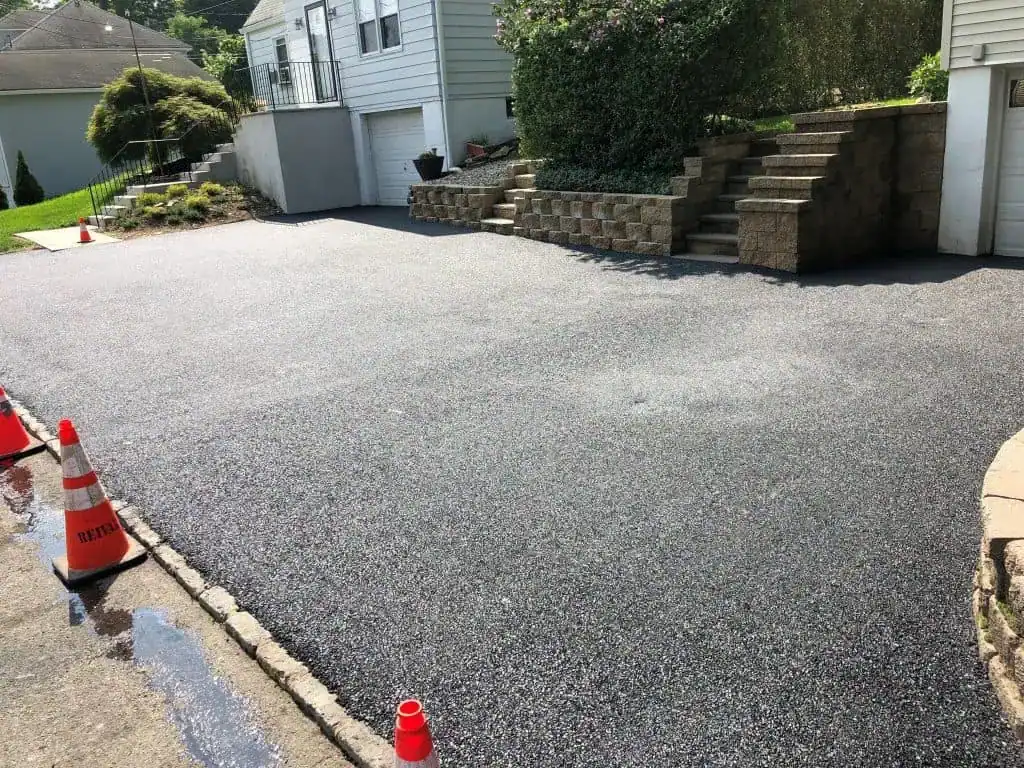
Sealcoating does more than save money. It brings back that deep black finish that makes your property look maintained instead of neglected. Water can’t seep in. Cracks don’t spread. The surface stays smooth and easy to clean.
Morris County winters are brutal on asphalt. Freeze-thaw cycles crack unsealed driveways apart from the inside out. Summer heat dries out the binder. Rain washes away the aggregate. Sealcoating stops all of it by creating a protective barrier that keeps moisture out and flexibility in. Your driveway weathers the seasons instead of breaking down under them.
We’re a third-generation, family-owned business based in Morris County. We’ve been doing asphalt and concrete work throughout Mendham, Morristown, Madison, Chatham, and the surrounding areas since the early 2000s. We’re not new to this market, and we’re not learning on your property.
We know what Morris County weather does to asphalt. We know how freeze-thaw cycles work in this specific climate. We know which materials hold up and which ones fail after one winter. That’s not something you get from a crew that works three counties away and shows up once.
You’ll get clear pricing upfront, no surprise charges, and a callback within 24 to 48 hours when you request a quote. We show up when we say we will, and we finish on schedule. It’s not complicated—just consistent, quality work done by people who live and work in the same area you do.
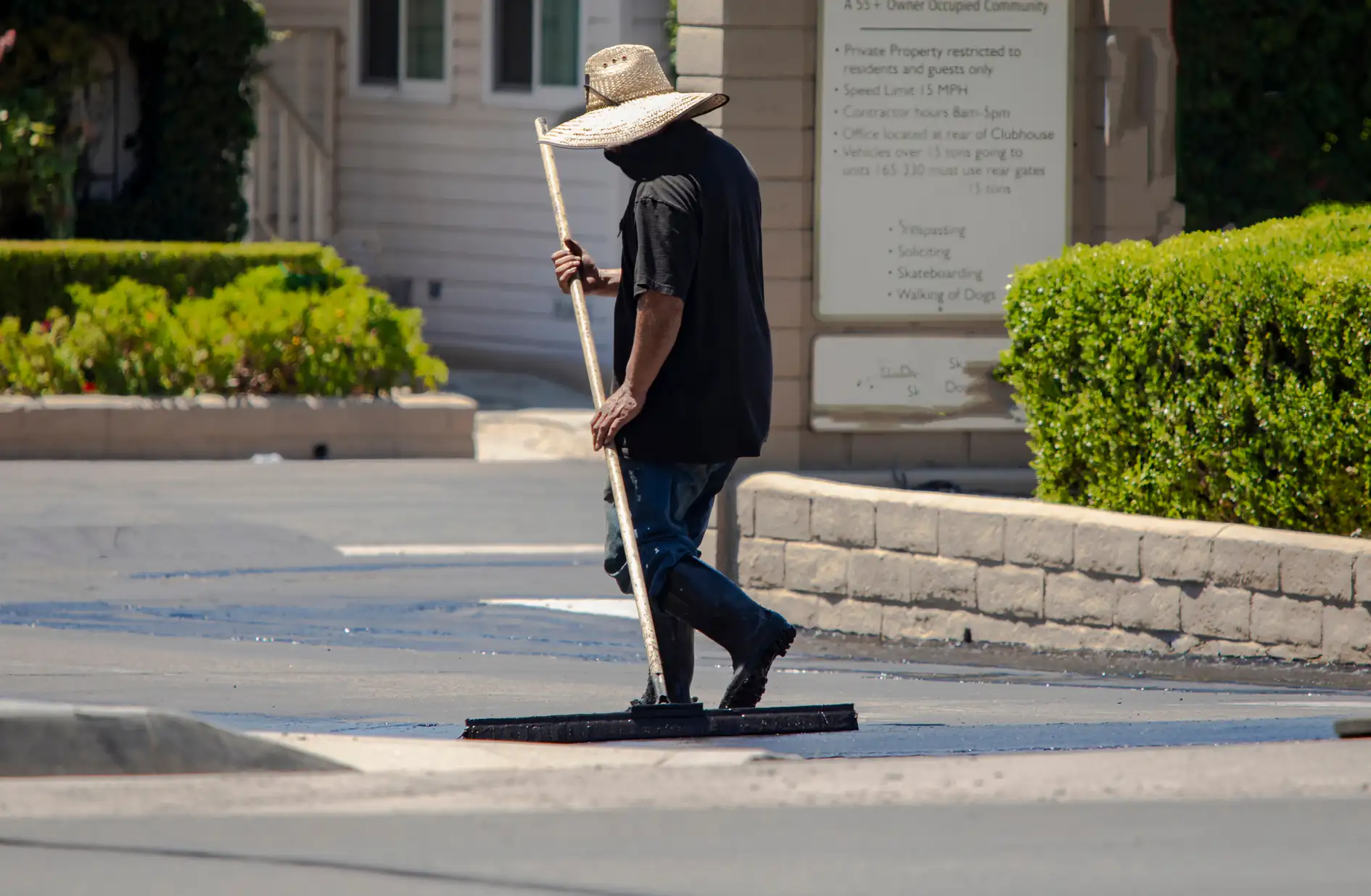
First, we clean the entire surface. That means sweeping, blowing out debris, and removing any vegetation growing in cracks. Oil stains get treated separately because sealer won’t bond to petroleum. If there are cracks wider than a quarter-inch, we fill them with hot rubberized crack filler before sealing. Skipping this step is how you end up with a nice-looking driveway that still falls apart underneath.
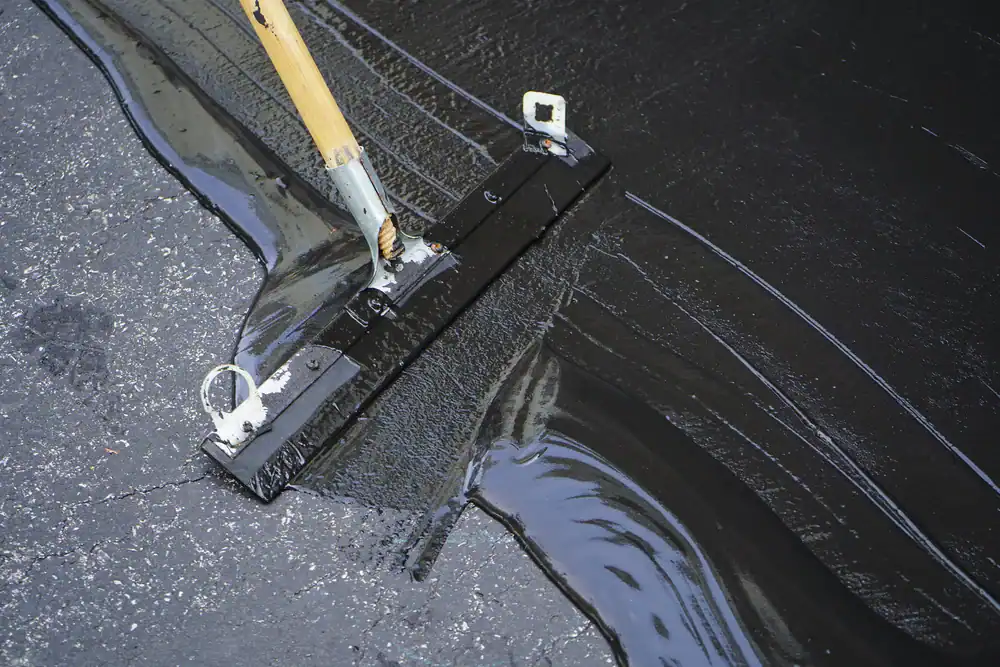
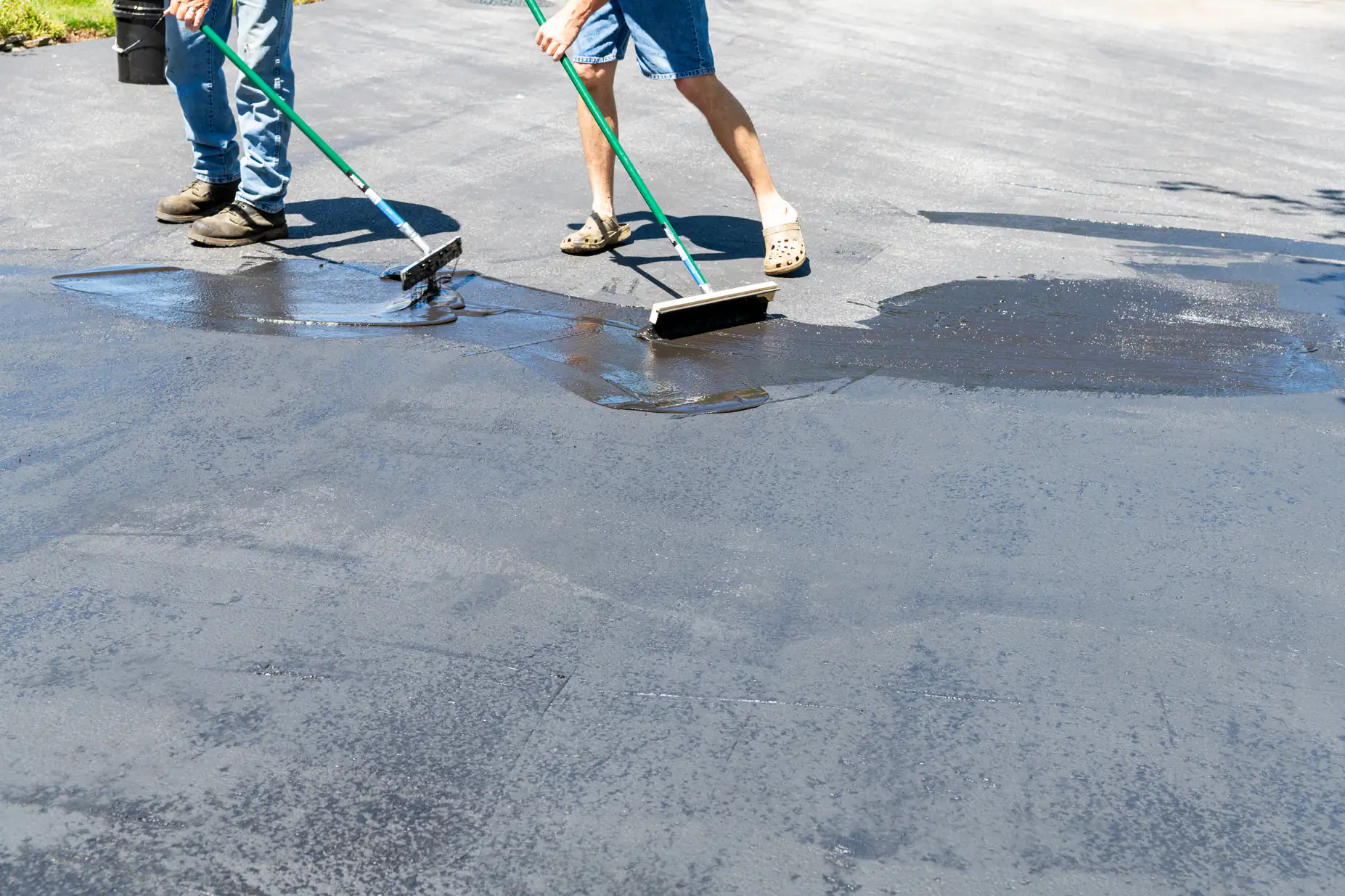
Once the surface is prepped and dry, we apply commercial-grade sealer using a spray system or squeegee, depending on the condition of your asphalt. Most Mendham driveways get two coats because one coat doesn’t hold up to our winters. The first coat soaks in and binds to the asphalt. The second coat creates the protective layer that blocks water, UV rays, and chemicals.
After application, the driveway needs 24 to 48 hours to cure depending on temperature and humidity. You’ll stay off it during that time. Once it’s cured, you’ve got a sealed surface that should last three to four years before it needs another coat. We’ll walk you through the timeline and any specific care instructions before we leave.
Ready to get started?
Sealcoating in Mendham typically runs $0.15 to $0.40 per square foot depending on the size and condition of your driveway. A standard two-car driveway usually costs between $200 and $500. That includes surface prep, crack filling for minor damage, two coats of commercial-grade sealer, and proper cure time.
Compare that to replacement costs. New asphalt installation in Morris County runs $6 to $8 per square foot right now, and that number keeps climbing. A 600-square-foot driveway costs $3,600 to $4,800 to replace. Sealcoating that same driveway every three years for 15 years costs around $1,500 total. The math isn’t close.
Here’s what separates a quality sealcoating job from a cheap one: surface prep, material grade, and application method. Contractors who skip crack filling or use watered-down sealer can undercut pricing, but you’ll be resealing in 18 months instead of three years. We use commercial-grade coal tar or asphalt emulsion sealer applied at the right thickness. It costs more per gallon, but it lasts. You’re not paying for the cheapest option—you’re paying for the one that actually works in New Jersey’s climate.
Sealcoating protects a driveway that is still structurally sound. Where it is not, start with our driveway paving in Mendham page.

Every three to four years if you want it to last. That’s the realistic timeline for a properly sealed driveway in Morris County’s climate. Some contractors will tell you every year, but that’s overkill unless your driveway sees heavy commercial traffic.
New asphalt is the exception. Don’t seal it right away. Let it cure for at least six months, ideally a full year. Fresh asphalt needs time to harden and release oils. Sealing too early traps those oils and prevents proper curing.
After that first seal, you’re looking at a three-to-four-year cycle. If you wait longer than four years, you’ll start seeing the gray, dried-out look that means the asphalt binder is breaking down. At that point, you’re playing catch-up instead of staying ahead of damage.
Late spring through early fall. You need consistent temperatures above 50°F during the day and no rain in the forecast for at least 24 hours after application. That usually means May through September in Mendham.
Sealer needs warmth to cure properly. If it’s too cold, it won’t bond to the asphalt. If it’s too hot—above 90°F—it can dry too fast and not penetrate deep enough. The sweet spot is 60°F to 85°F with low humidity.
We don’t seal driveways when rain is coming. Even if the surface looks dry, moisture in the air or a surprise shower can ruin the bond. You’ll end up with peeling sealer that has to be stripped and reapplied. It’s not worth the risk. Better to wait a few days for the right conditions than to rush a job that won’t hold up.
Yes, but the cracks need to be filled first. Sealer isn’t a crack filler—it’s a protective coating. If you just seal over cracks, water still gets in underneath, freezes, expands, and makes the cracks worse. You’ve wasted money on a cosmetic fix that doesn’t actually protect anything.
We fill cracks with hot rubberized crack filler before sealing. It’s flexible, so it moves with the asphalt as temperatures change. That prevents the crack from reopening during the next freeze-thaw cycle. Small cracks under a quarter-inch get sealed over without separate filling, but anything larger needs attention.
If your driveway has major structural damage—alligatoring, potholes, sunken sections—sealcoating won’t fix it. At that point, you’re looking at patching or replacement for those areas before sealing makes sense. We’ll tell you honestly if your driveway is past the point where sealing helps.
Three to four years with proper application and normal residential use. That’s with two coats of commercial-grade sealer applied to a well-prepped surface. Single-coat jobs or bargain sealer might last 18 months to two years before they start wearing thin.
Morris County’s climate is hard on sealcoating. Winter salt, freeze-thaw cycles, UV exposure in summer—it all breaks down the protective layer over time. You’ll notice it starting to fade or wear in high-traffic areas like the apron near the garage or the end of the driveway near the street. That’s normal. When you see that gray, dried-out look coming back, it’s time to reseal.
Some driveways last longer if they’re not in direct sun all day or if they don’t get heavy use. But planning on three to four years is realistic. Anything beyond that is a bonus. The goal isn’t to make it last forever—it’s to protect the asphalt underneath so you’re not replacing the whole driveway in 10 years.
If your driveway’s structure is still solid, sealcoating is absolutely worth it. You’re spending a few hundred dollars to add years of life to asphalt that would otherwise deteriorate. Replacement costs 10 to 20 times more and doesn’t make sense unless the base is failing.
Here’s how to tell the difference: if you’ve got surface cracks, fading, minor wear—seal it. If you’ve got potholes, large sections sinking, widespread alligatoring, or a crumbling base—replace it. Sealcoating protects good asphalt. It doesn’t fix bad asphalt.
Most Mendham driveways we see are somewhere in the middle. The surface is worn but the base is fine. Sealcoating buys you another decade or more before replacement becomes necessary. That’s real value. You’re not throwing money at a lost cause—you’re protecting an asset that still has plenty of life left.
Concrete driveways benefit from sealing too, but it’s a different process and a different product. Concrete sealer protects against moisture, salt damage, and staining. It doesn’t restore color the way asphalt sealer does, but it does extend the life of the concrete and make it easier to clean.
Concrete sealing typically happens every two to five years depending on the type of sealer used. Penetrating sealers soak into the concrete and protect from within. Topical sealers create a surface layer that can add a slight sheen. Both work, but penetrating sealers tend to last longer in freeze-thaw climates like ours.
If you’ve got a stamped or decorative concrete driveway, sealing is even more important. It protects the color and pattern from fading and keeps the surface from flaking. We handle both asphalt and concrete sealing, so if you’re not sure what you need, we’ll walk the driveway with you and explain what makes sense for your specific situation.
1. We'll follow up
Expect a callback within 24-48 hours of your request.
2. The floor is yours
Share project goals and special requirements.
3. Plan your project
Like what you hear? We'll provide next steps and expert guidance.
