
Hear from Our Customers
Your driveway takes a beating in Lake Hiawatha, NJ. December through February brings the worst of it—temperatures hovering right around freezing, snow melting during sunny afternoons, then refreezing overnight. This cycle repeats weekly, sometimes daily, and every time it happens, water seeps deeper into those hairline cracks you’ve been ignoring.
Sealcoating creates a waterproof barrier before that damage compounds. Done right, it extends your driveway’s lifespan past 30 years instead of the typical 20 to 25. That’s real protection against the freeze-thaw cycles that destroy untreated asphalt across Morris County.
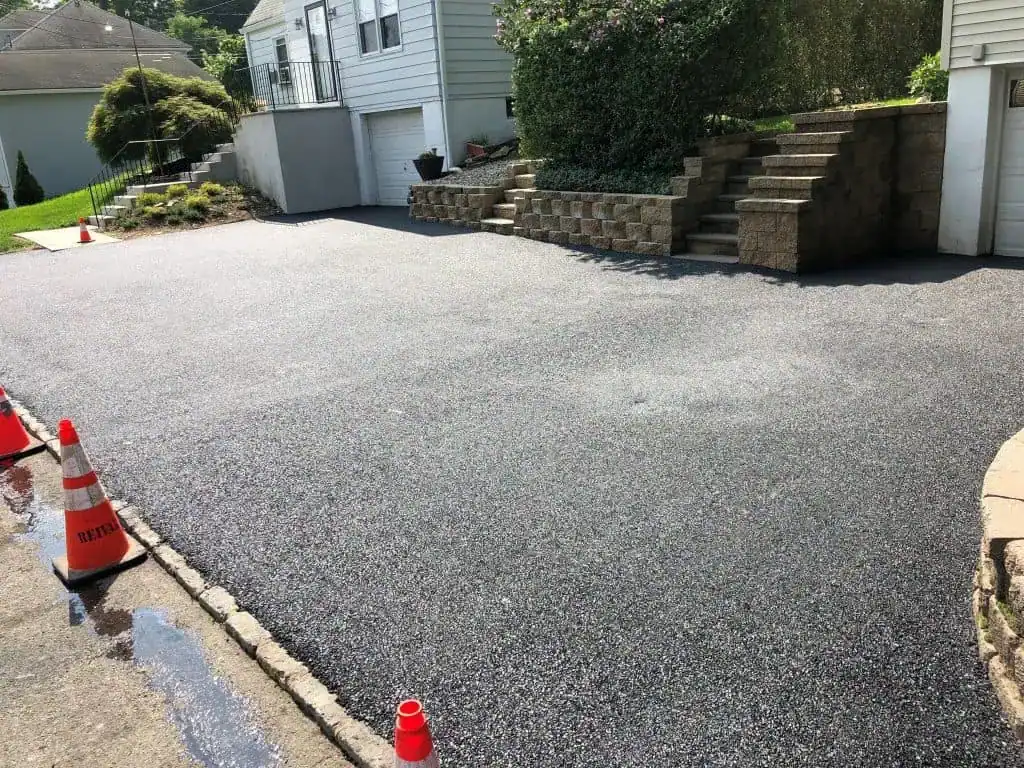
The difference shows up immediately. Your driveway goes from faded gray to deep black. But more importantly, you’re looking at 3 to 4 years of protection with a proper two-coat application—not the 1 to 2 years you’d get from a single coat or a DIY job with Home Depot materials.
We’ve been sealing driveways across Morris, Sussex, and Somerset Counties for years. We’re based here, we work here, and we’ve seen what happens when homeowners wait too long or hire the wrong contractor.
Lake Hiawatha sits in hardiness zones 6a and 6b. That means your asphalt faces humid summers and cold winters with constant temperature swings. We account for that in every job—from the sealer we use to the number of coats we apply.
You’ll get clear pricing upfront, a 24 to 48 hour callback on quote requests, and work that’s scheduled and completed when we say it will be. No surprises, no diluted materials, no fly-by-night crews.
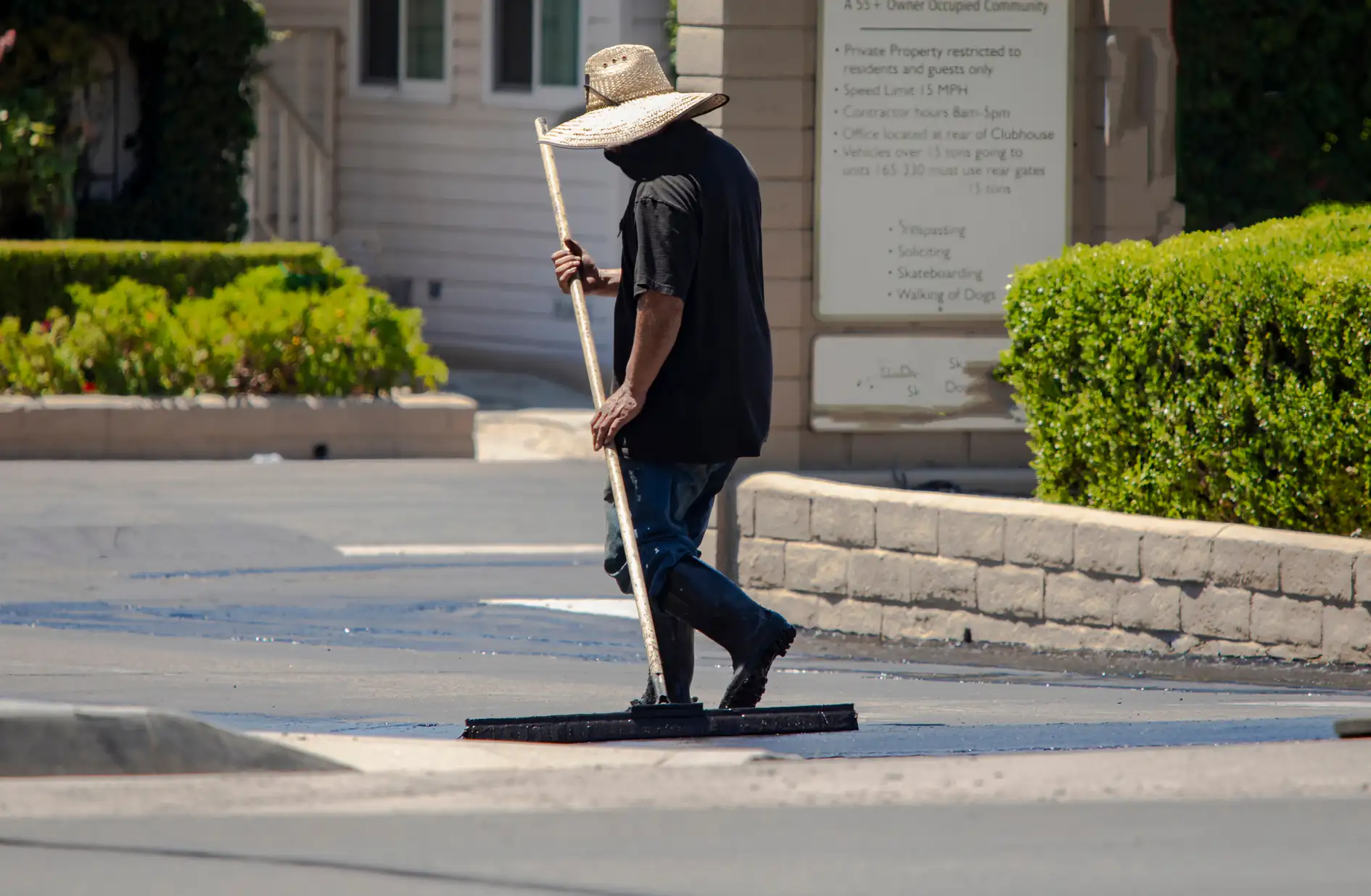
First, we power wash your driveway to remove dirt, oil, and debris. Clean asphalt is critical—sealer won’t bond properly to a dirty surface. This step also reveals any cracks or damage that need attention before we seal.
Next comes crack filling. We include up to 50 linear feet of crack repair in every sealcoating job. Hot rubberized crack filler goes into every gap, preventing water from penetrating the base layer. Skipping this step is how most DIY jobs fail within a year.
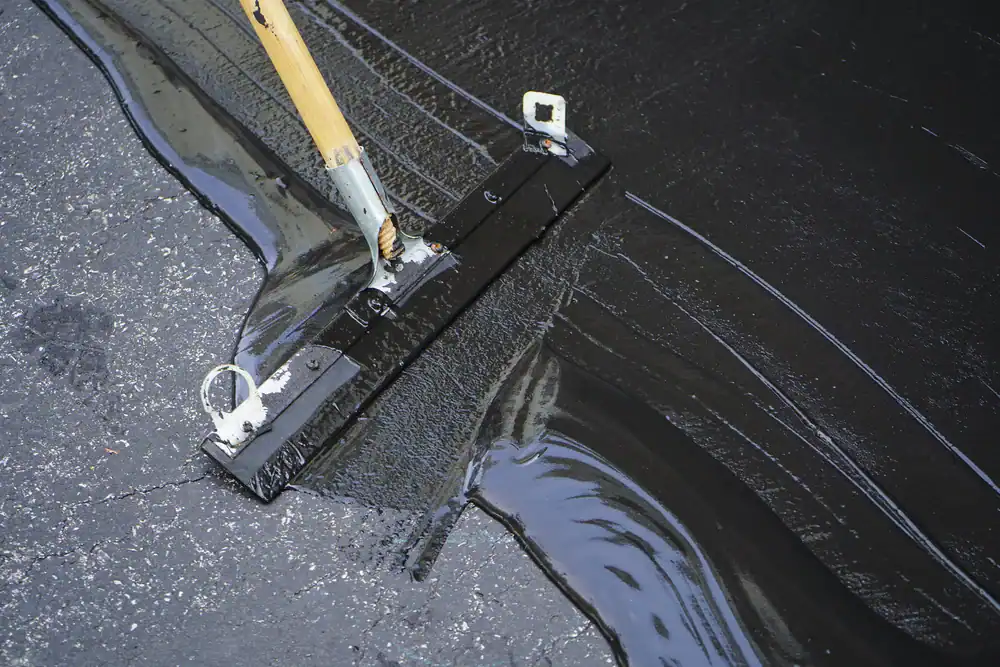
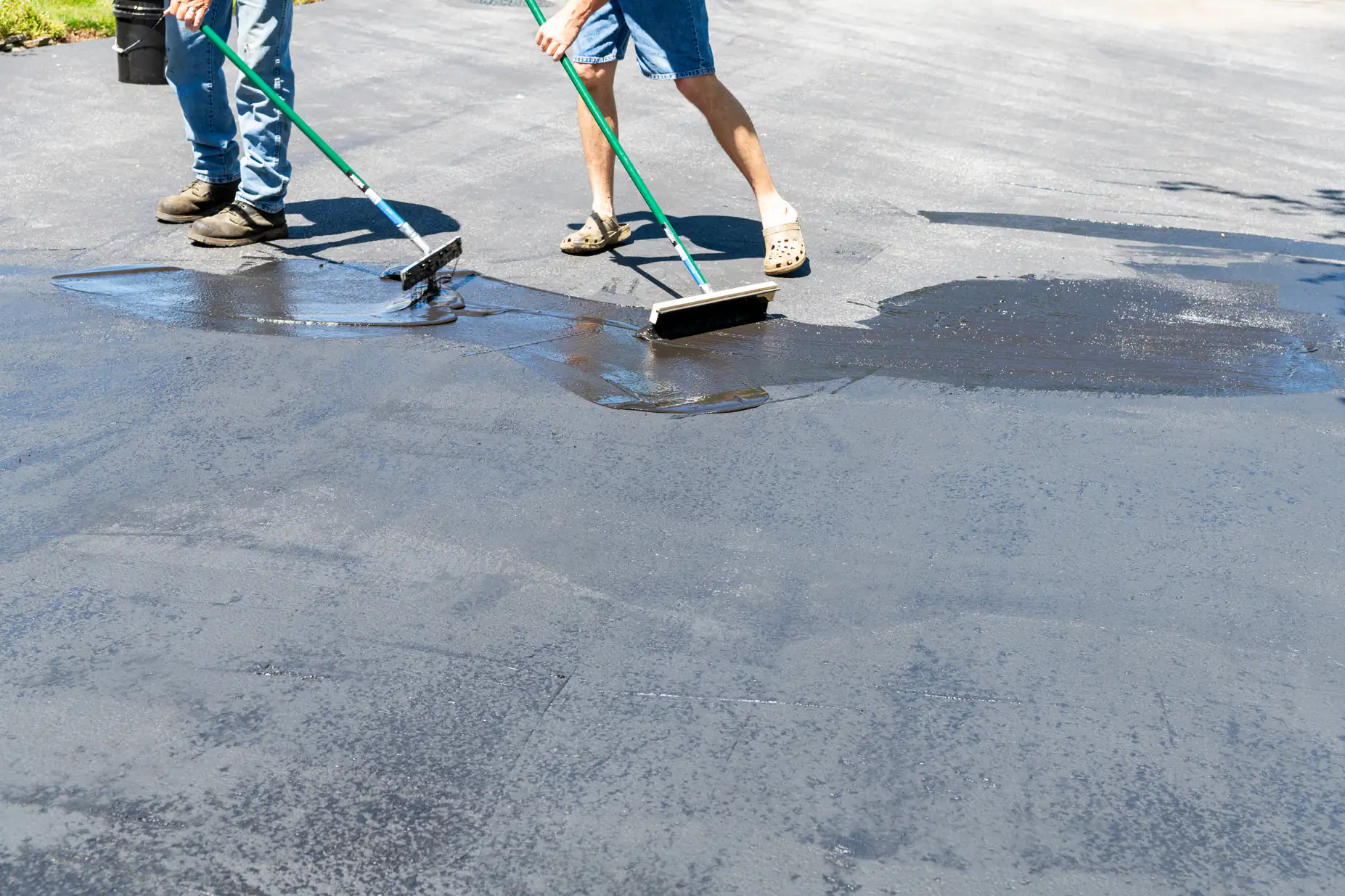
Then we apply two coats of commercial-grade coal tar sealer. Not the stuff you buy at big box stores—professional material with a sand additive for traction and durability. We use spray equipment for even coverage, not squeegees that leave streaks and thin spots.
The first coat seals the surface. The second coat adds thickness and extends the protection window. In New Jersey, two coats aren’t optional—they’re necessary to withstand our climate. You’ll need to stay off the driveway for 24 to 48 hours while it cures, depending on temperature and humidity.
Ready to get started?
Every sealcoating job includes power washing, crack filling up to 50 linear feet, two coats of coal tar sealer with sand additive, and a 2-year warranty. That’s the baseline. If your driveway needs more extensive crack repair, we’ll tell you upfront—not after we’ve started the work.
Timing matters in Lake Hiawatha, NJ. Most sealcoating happens between April and November because the materials are temperature-sensitive. Cold weather limits effectiveness and curing time. We schedule around rain and temperature drops to ensure proper application and drying.
Cost typically runs $0.15 to $0.40 per square foot for residential driveways in Morris County. A standard two-car driveway averages $300 to $500 depending on size and condition. That’s roughly 2,000% less than the $6 to $8 per square foot you’d pay for full replacement. The math isn’t complicated—preventive maintenance saves you thousands.
You’re also protecting your property value. A deteriorated driveway hurts curb appeal and lowers resale value in New Jersey’s competitive real estate market. Buyers notice. A freshly sealed driveway signals that the home has been maintained, not neglected.

A proper two-coat sealcoating job lasts 3 to 4 years in Lake Hiawatha, NJ. Single-coat applications or DIY work typically fail within 1 to 2 years because they don’t provide enough thickness to withstand our freeze-thaw cycles.
The lifespan depends on a few factors. Traffic volume matters—driveways with multiple vehicles or heavy use wear faster. Weather exposure plays a role too. Driveways in full sun fade quicker than shaded areas, though UV protection in quality sealer helps.
Material quality makes the biggest difference. Commercial-grade coal tar sealer with sand additive outlasts cheap alternatives by years. Professional application ensures even coverage without thin spots that crack or peel prematurely. You’re paying for durability, not just appearance.
Late spring through early fall gives you the best results. You need consistent temperatures above 50 degrees for at least 24 hours before and after application. That’s when the sealer cures properly and bonds to the asphalt.
In Morris County, most sealcoating happens between April and November. We avoid scheduling during rainy periods or when temperatures drop at night. Moisture and cold prevent proper curing, which leads to peeling and premature failure.
New asphalt needs 6 to 12 months before its first sealcoating. Fresh asphalt contains oils that need to evaporate. Sealing too early traps those oils and prevents proper bonding. After that initial waiting period, you should reseal every 3 to 4 years to maintain protection.
You can seal your own driveway, but the results rarely match professional work. DIY sealcoating typically lasts 1 to 2 years versus 3 to 4 years for professional applications. The difference comes down to materials, equipment, and preparation.
Big box store sealers are diluted compared to commercial-grade products. They’re designed for easy application, not maximum durability. You’ll also be using a squeegee instead of spray equipment, which makes even coverage nearly impossible. Thin spots fail first.
Preparation matters more than most homeowners realize. We power wash to remove all contaminants, fill cracks with hot rubberized material, and apply two coats at the correct thickness. Skipping any of these steps shortens the lifespan significantly. Factor in your time and the cost of materials, and professional sealcoating often makes more financial sense.
Unsealed asphalt deteriorates faster. UV rays break down the binders that hold aggregate together, causing oxidation and brittleness. Water seeps into small cracks, freezes, expands, and turns hairline fractures into potholes. Oil and gas stains penetrate deeper and weaken the surface.
In Lake Hiawatha, NJ, the freeze-thaw cycle accelerates this damage. Your driveway experiences repeated stress from November through March as temperatures swing above and below freezing. Each cycle pushes water deeper into the base layer, compromising structural integrity.
The financial impact adds up quickly. A quarter-inch crack can evolve into widespread damage that requires full replacement instead of simple repairs. You’re looking at $6 to $8 per square foot for removal and repaving versus $0.15 to $0.40 per square foot for preventive sealcoating. Most homeowners spend $3,000 to $8,000 on replacement versus under $500 for maintenance.
Most residential driveways in Lake Hiawatha, NJ cost between $300 and $500 for professional two-coat sealcoating. Price depends on square footage, current condition, and how much crack repair you need. The typical rate runs $0.15 to $0.40 per square foot.
A standard two-car driveway measures around 600 to 800 square feet. At $0.30 per square foot, you’re looking at $180 to $240 for just the sealcoating. Add crack filling, power washing, and a second coat, and the total reaches $300 to $500 for most properties.
Prices in Morris County run 15% to 20% higher than national averages due to labor costs and material expenses in New Jersey. But you’re still paying a fraction of replacement costs. Sealcoating every 3 to 4 years costs roughly $1,500 over 15 years. Full replacement runs $5,000 to $8,000 or more. The return on investment is clear.
You need two coats in New Jersey. The freeze-thaw cycles from November through March are too harsh for single-coat applications to hold up. Two coats provide the thickness necessary to protect your asphalt for 3 to 4 years instead of 1 to 2 years.
The first coat seals the surface and fills small imperfections. The second coat adds depth and creates a thicker barrier against water, UV rays, and chemicals. That extra layer makes the difference between sealcoating that lasts and sealcoating that fails prematurely.
Some contractors offer single-coat applications at lower prices. You’ll save $50 to $100 upfront, but you’ll be resealing twice as often. Over time, two coats cost less and protect better. It’s not about upselling—it’s about what actually works in Morris County’s climate.