
Hear from Our Customers
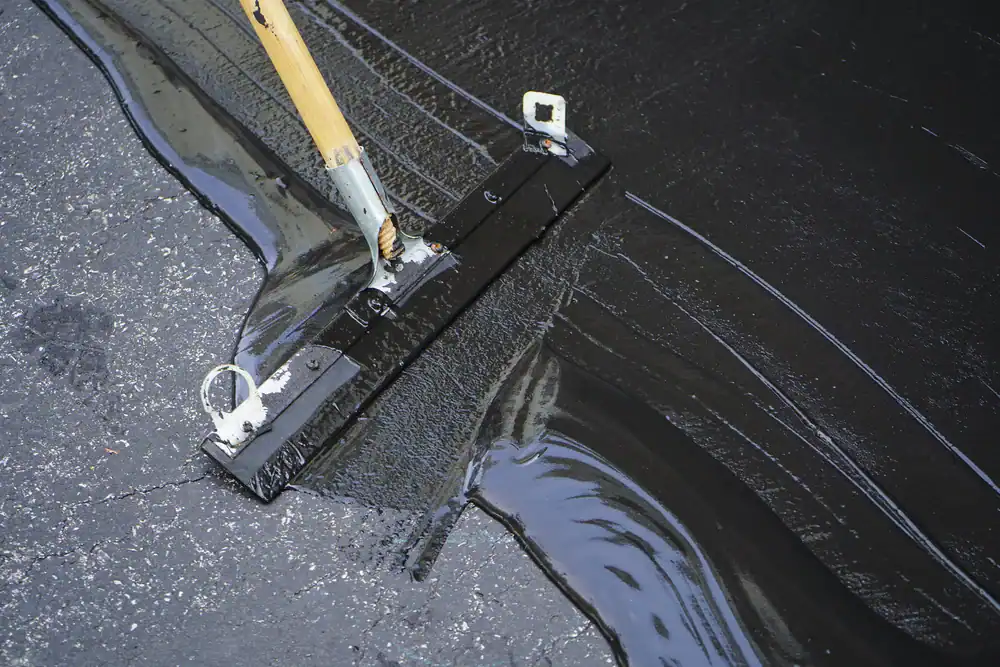
Water can’t reach the base. That’s the entire point, and it matters more in Hamburg than almost anywhere else in New Jersey.
When temperatures swing from 35 degrees to 15 degrees overnight—which happens constantly from November through March—any water sitting in your asphalt expands by 9%. That’s not a small shift. It widens cracks, pushes up edges, and turns minor surface wear into structural problems that cost $6 to $8 per square foot to replace.
Sealcoating stops that cycle. It creates a flexible, waterproof layer that sheds moisture instead of absorbing it. You’re not just making your driveway look better. You’re keeping water out of the base layer, where it does the most expensive damage.
Most driveways last 25 years. With consistent sealcoating every three to four years, you can push that past 30. And you’re doing it for pennies on the dollar compared to what you’d spend repairing or replacing sections that weren’t protected.
Platinum Paving is a third-generation, family-owned contractor based in Dover. We’ve spent over 20 years working in Morris, Sussex, and Somerset Counties, which means we know exactly what Hamburg driveways go through every winter.
We’re not trying to upsell you on services you don’t need. If your driveway is in good shape and just needs sealcoating, that’s what we’ll recommend. If there are underlying issues that need attention first, we’ll tell you that too.
You’ll get a callback within 24 to 48 hours after requesting a quote. We show up when we say we will, we finish on schedule, and we don’t leave you guessing about cost. Hamburg homeowners have enough to manage without wondering if their contractor is actually going to follow through.
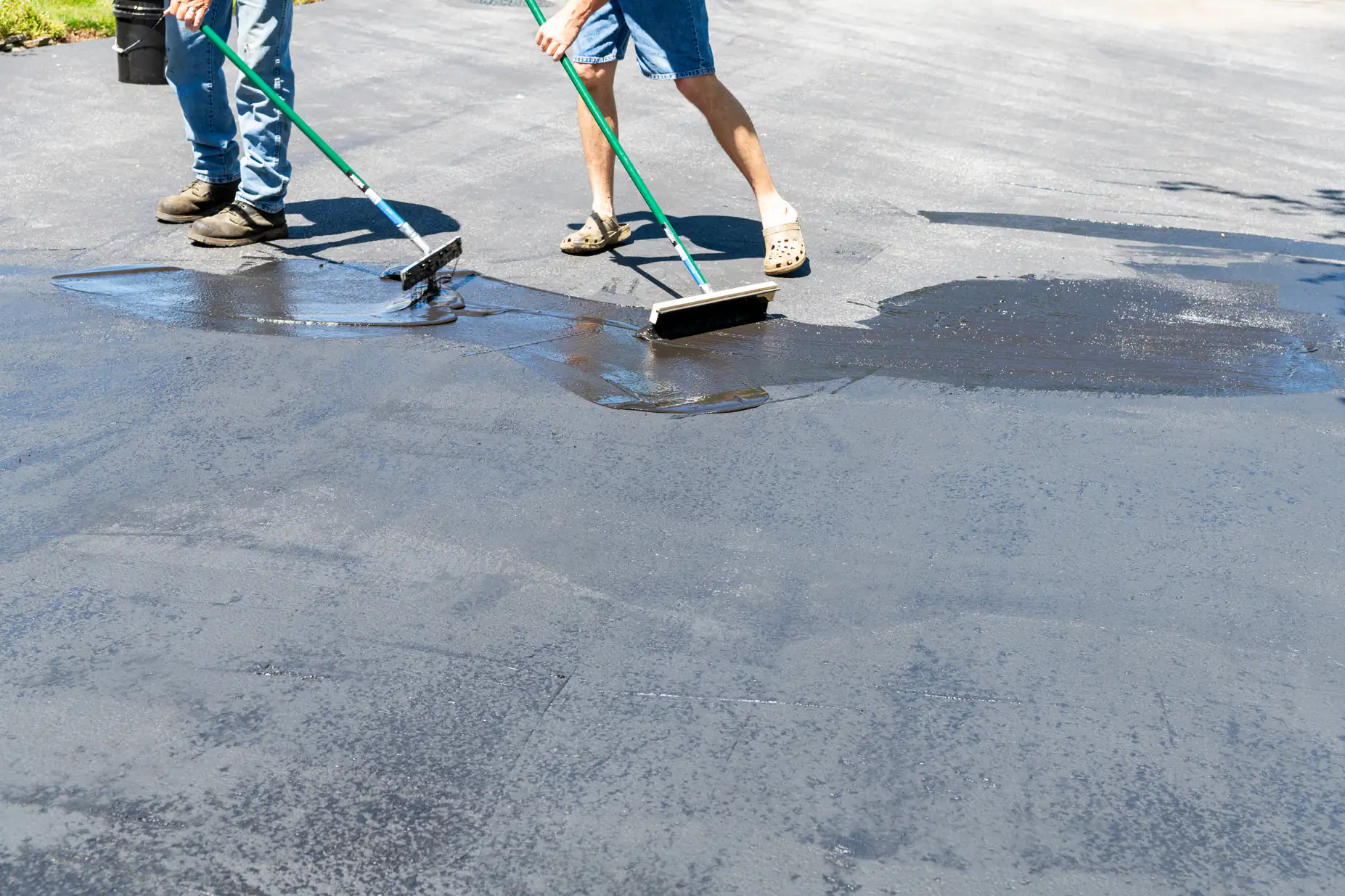
First, we clean the surface. Any dirt, debris, or loose material gets removed because sealer won’t bond to a dirty driveway. We’re not just blowing it off with a leaf blower—we’re making sure the surface is ready.
Next, we fill cracks. If there are gaps or separations in the asphalt, we address those before applying sealer. Sealcoating isn’t a crack filler, and trying to use it that way just wastes your money.
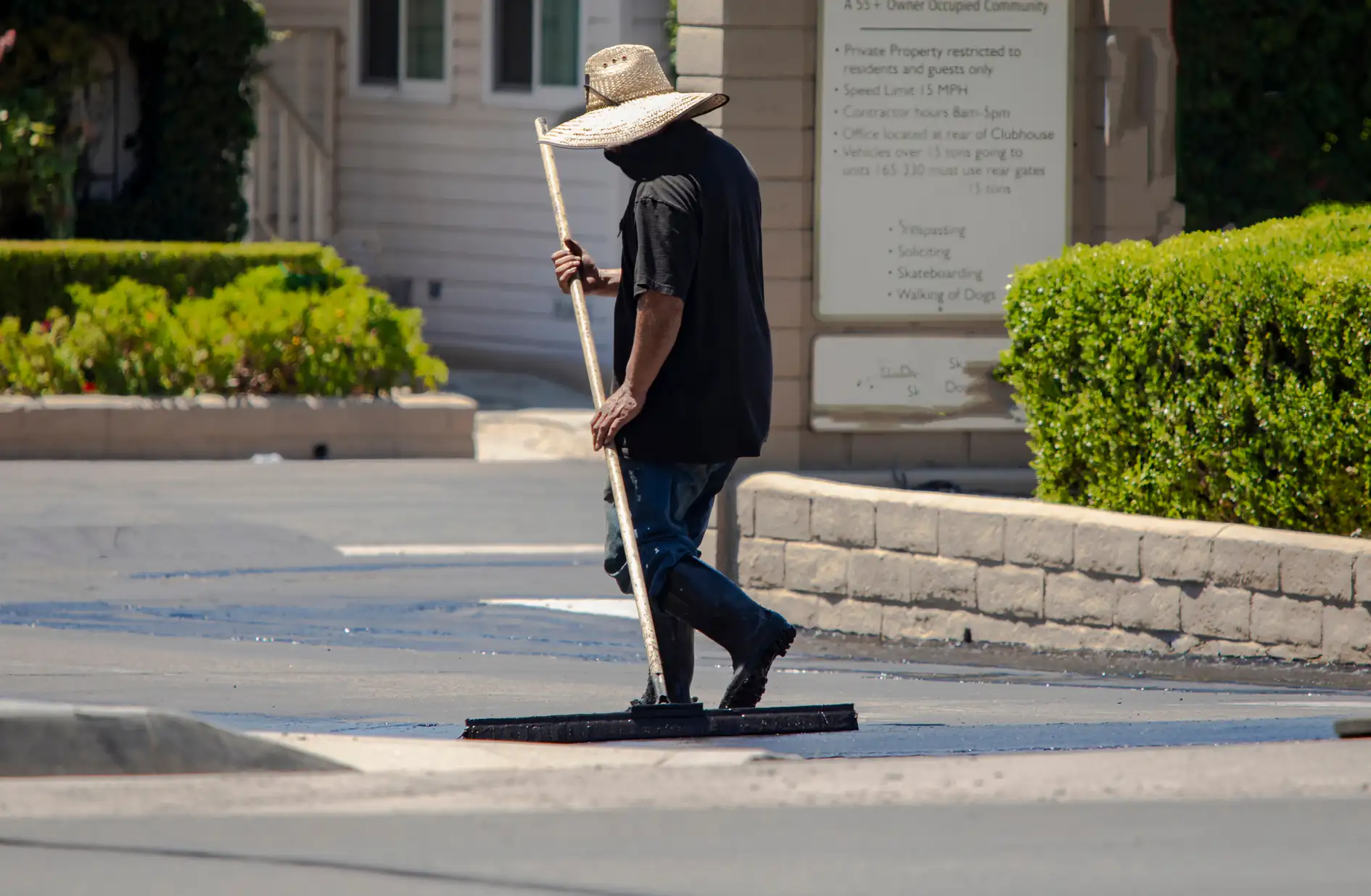
Then we apply two coats of sealer. One coat might work in warmer climates, but not here. New Jersey winters are brutal, and a single layer won’t hold up to the freeze-thaw cycles you’re dealing with from November through March. We mix our sealer in-house, which gives us control over thickness and coverage. It goes on by hand, not sprayed, so you get even application and clean edges.
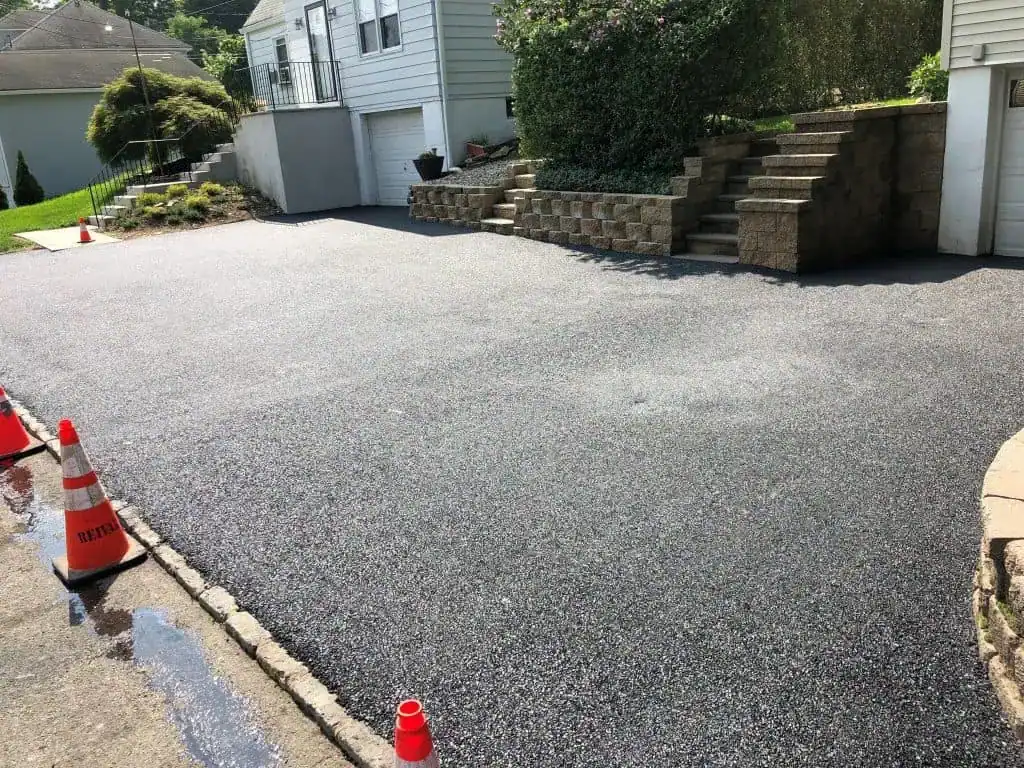
After that, it needs to cure. You’ll stay off the driveway for 24 to 48 hours depending on temperature and humidity. Once it’s cured, you’ve got a protective layer that lasts three to four years and keeps water from reaching the base.
Ready to get started?
Sealcoating in Hamburg typically runs between $0.15 and $0.40 per square foot. For most residential driveways, that’s somewhere between $150 and $500 depending on size and condition.
That’s 15% to 20% higher than the national average, and it’s not because contractors here are overcharging. It’s because New Jersey driveways take more abuse. You’re dealing with heavier freeze-thaw wear, road salt, and moisture infiltration that doesn’t happen in milder climates. The materials and application methods have to account for that, or the sealcoat fails in a year instead of lasting three or four.
You’re also paying for two coats, not one. A single coat might look fine for 12 to 18 months, but it won’t protect your driveway through multiple winters. Two coats give you the thickness and durability you actually need in this area.
And you’re avoiding the alternative, which is patching or replacing damaged asphalt at $6 to $8 per square foot. Sealcoating is preventive. It stops the water infiltration that leads to those expensive repairs. If you’re spending $300 now to avoid spending $3,000 later, that’s not an expense—it’s just smart maintenance.

Fall is the best window, usually September through early November. You need temperatures consistently above 50 degrees during the day and no rain in the forecast for at least 24 hours after application.
Spring works too, but you’re dealing with a tighter schedule. Everyone who waited through winter suddenly needs their driveway sealed at the same time, and you’re often reacting to damage instead of preventing it. Fall gives you a protective layer in place before the freeze-thaw cycles start, which is the whole point.
Summer can work if temperatures aren’t too high. Once it hits the mid-80s or higher, sealer can dry too fast and not bond properly. Early morning applications help, but fall is still the ideal time for most Hamburg homeowners.
Two coats will last three to four years in this climate. A single coat might only give you one to two years, which is why we recommend two applications.
New Jersey winters are hard on pavement. You’re dealing with freeze-thaw cycles, road salt, and heavy moisture from November through March. That wears down sealcoating faster than it would in a state with milder weather.
If you reseal every three to four years, you’re keeping a protective barrier in place that blocks water infiltration and extends the life of your driveway well past 30 years. If you skip it or wait too long between applications, you’re letting water reach the base layer, and that’s when you start seeing structural damage that costs real money to fix.
Sealcoating is specifically for asphalt driveways. Concrete uses a different type of sealer, and the application process isn’t the same.
Asphalt sealcoating creates a protective layer that blocks UV rays, water, and chemicals from breaking down the binding agents in the pavement. Concrete sealers work differently—they’re designed to prevent staining, reduce moisture absorption, and protect against freeze-thaw damage, but the chemistry and application are completely separate.
If you have a concrete driveway and you’re looking for protection, you’ll want a concrete sealer, not asphalt sealcoat. If you’re not sure what type of driveway you have, asphalt is black or dark gray and slightly flexible, while concrete is light gray and rigid. We can take a look and recommend the right product.
If it rains before the sealer cures, it can wash away the coating or leave streaks and thin spots that won’t protect your driveway properly. That’s why weather matters so much when scheduling sealcoating.
Sealer needs at least 24 hours to cure in good conditions—dry weather and temperatures above 50 degrees. If rain is in the forecast, we won’t start the job. It’s not worth applying sealer that won’t bond correctly or last as long as it should.
If unexpected rain does hit after application, the damage depends on timing. Light rain after 12 hours might not ruin the job, but heavy rain within the first few hours almost always does. That’s why we watch the forecast closely and only schedule sealcoating when conditions are right. You’re paying for protection that lasts three to four years, and we’re not going to compromise that by rushing the job.
No. New asphalt needs time to cure before you seal it—usually six months to a year depending on the mix and weather conditions.
Fresh asphalt contains oils that need to evaporate and harden. If you seal too early, you’re trapping those oils under the sealer, which prevents proper curing and can lead to soft spots or premature wear.
Once the driveway has cured and the surface has turned from jet black to a lighter gray, that’s when it’s ready for sealcoating. At that point, you’re protecting the pavement before it starts to break down from UV exposure, water infiltration, and freeze-thaw cycles. If you’re not sure whether your driveway is ready, we can take a look and let you know.
Most residential driveways in Hamburg run between $150 and $500 depending on size and condition. The cost breaks down to about $0.15 to $0.40 per square foot for professional two-coat application.
If your driveway needs crack filling or repairs before sealcoating, that adds to the cost, but it’s necessary. Sealcoating won’t fix structural problems—it just protects the surface. If there are underlying issues, addressing them first means the sealcoat actually does its job.
You’ll see lower prices from contractors who spray one coat and move on, but that’s not going to last in this climate. New Jersey winters require two coats for durability, and hand application ensures even coverage. You’re paying a little more upfront for protection that lasts three to four years instead of one or two. That’s the difference between maintaining your driveway and replacing it.