
Hear from Our Customers
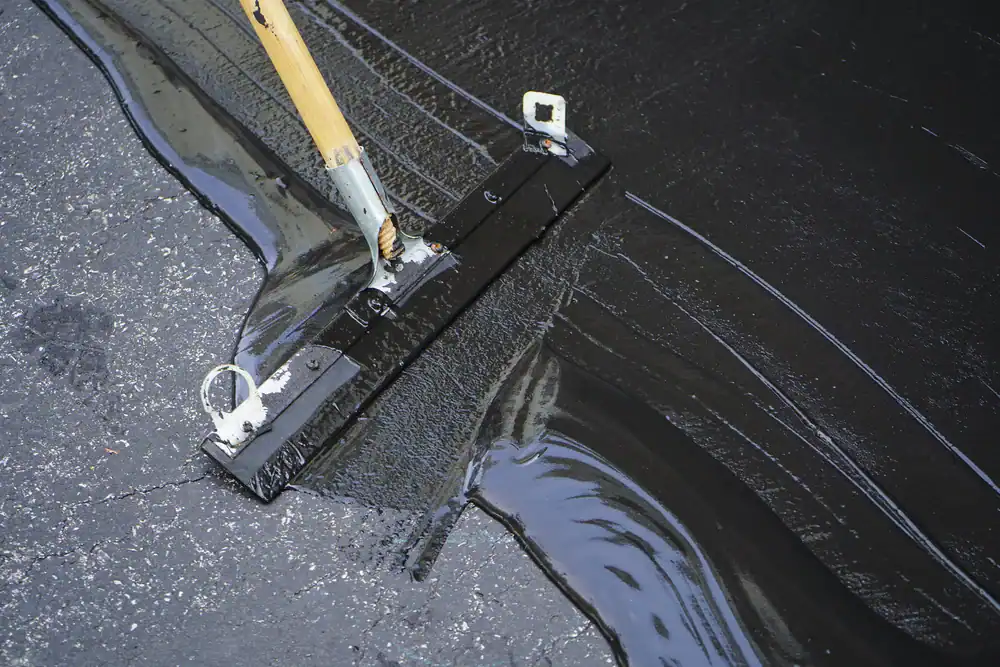
Your driveway stops aging so fast. That’s what sealcoating does—it creates a barrier between your asphalt and everything trying to destroy it.
Water can’t seep into cracks and freeze overnight, which means you’re not dealing with those expanding splits that turn into potholes by spring. Road salt can’t penetrate the surface and break down the binders holding your asphalt together. Oil stains, gas drips, and UV rays get blocked before they oxidize and fade your driveway from black to gray.
Most driveways in Franklin Park are 20 to 40 years old, built during the housing boom between the 1980s and early 2000s. If yours hasn’t been sealed in the last few years, it’s absorbing damage every single day. Sealcoating every two to three years can stretch your driveway’s lifespan from 15 years to 25-plus years. That’s the difference between a $400 maintenance job now and a $5,000 replacement later.
We work exclusively in Morris, Somerset, and Sussex Counties. We’re not a national franchise or a crew that shows up once and disappears. We’re based here, and we’ve been sealing and paving driveways across Franklin Park and Somerset County for years.
That matters because North Jersey weather is different. You get more freeze-thaw cycles than Central or South Jersey, heavier road salt usage, and older housing stock that needs smarter maintenance. We know what works here because we’ve done it hundreds of times.
When you call, you’ll talk to someone who understands your driveway, your neighborhood, and the specific challenges that come with maintaining asphalt in this area. No runaround. No pressure. Just a clear answer about whether sealcoating makes sense for your situation.
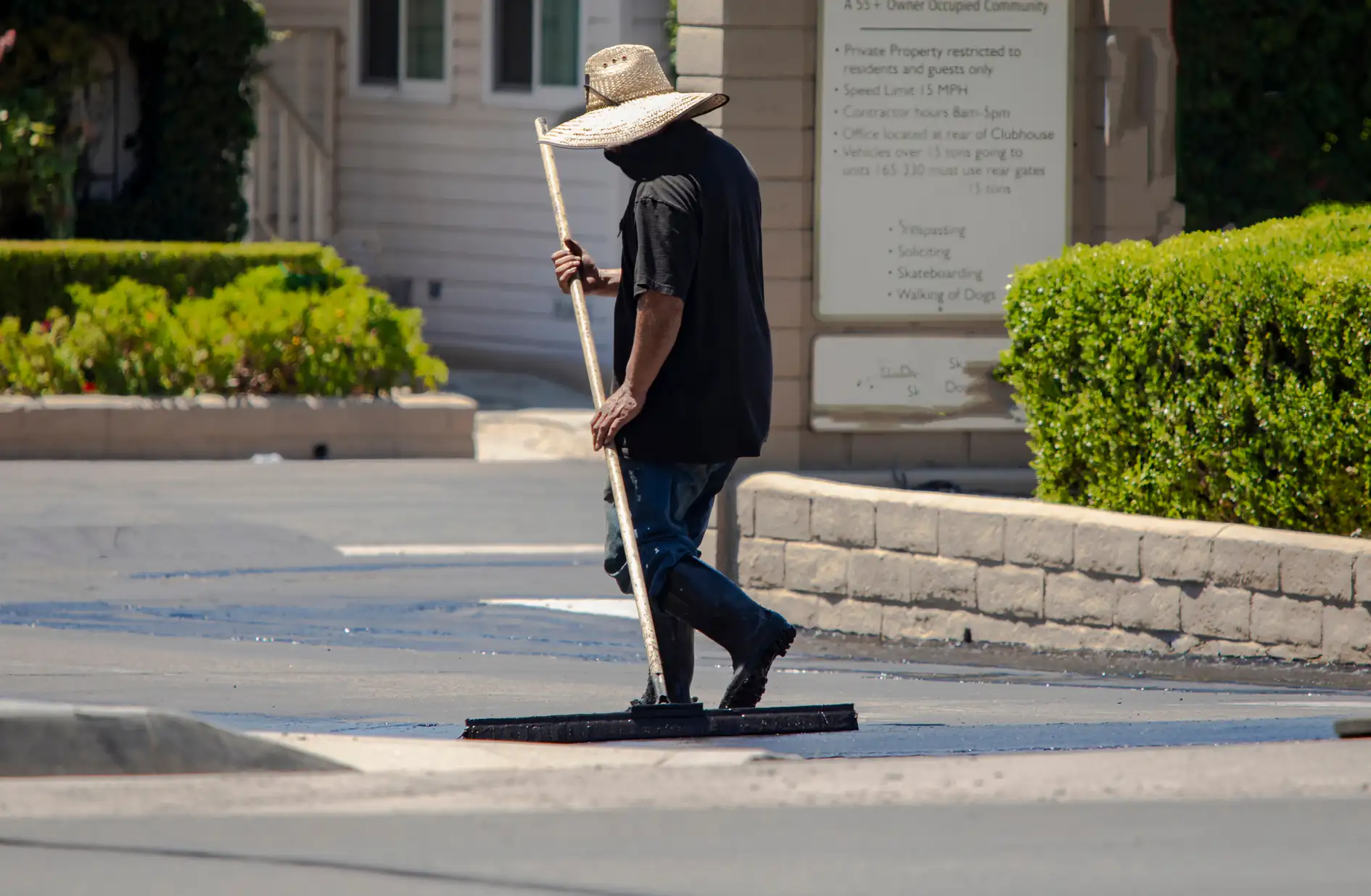
First, we clean your driveway completely. That means removing dirt, debris, oil stains, and anything else sitting on the surface. Sealcoat won’t bond properly to a dirty driveway, so this step matters more than most contractors admit.
Next, we repair any cracks or damaged areas. Hairline cracks get filled so water can’t work its way underneath. Larger cracks or potholes get patched with hot asphalt. If your driveway has serious structural problems, we’ll tell you that too—sealcoating can’t fix base failures, and you deserve to know before spending money.
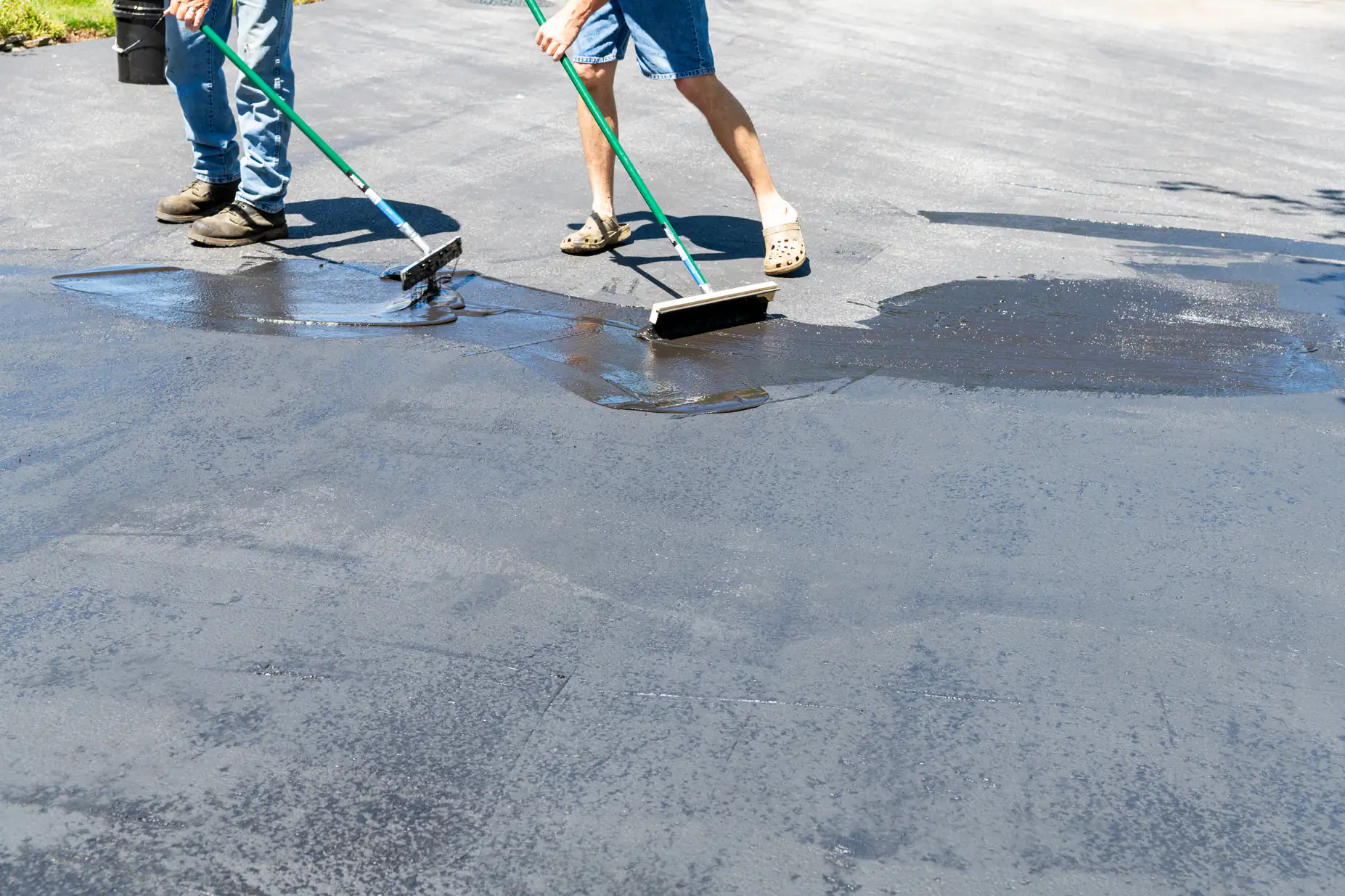
Then we apply the sealcoat material. We use professional-grade asphalt emulsion sealer, not the watered-down stuff you’ll find at a big-box store. The application thickness depends on your driveway’s condition, age, and exposure. We’re not just rolling it on as fast as possible—we’re making sure it penetrates, bonds, and cures correctly.
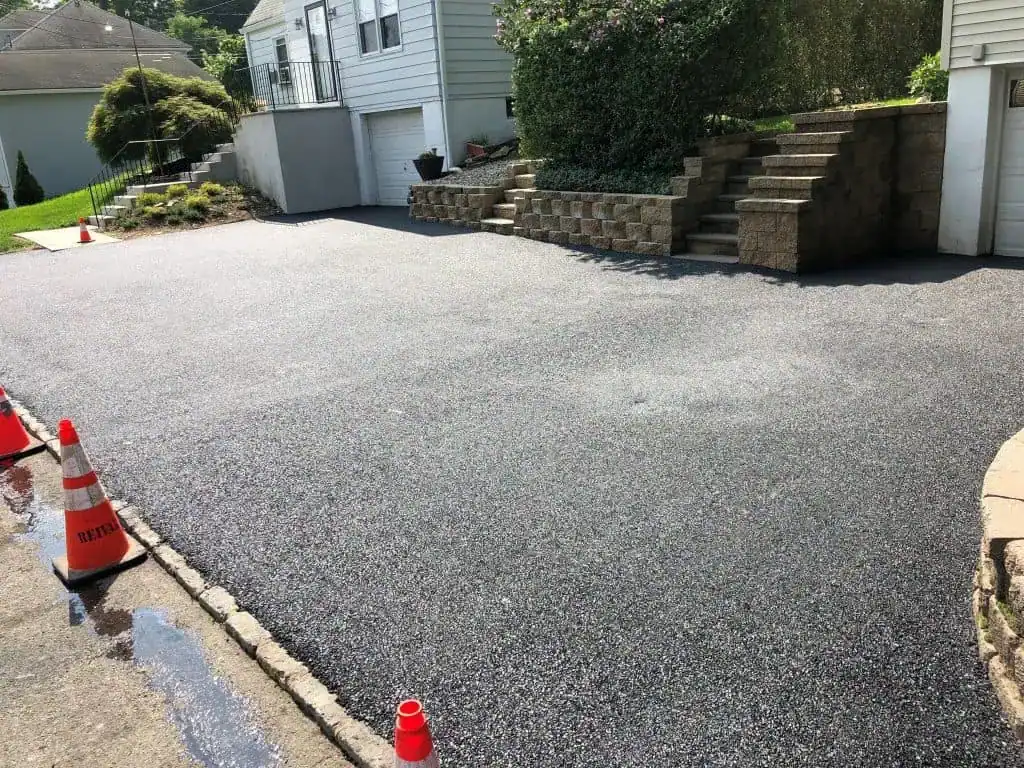
After application, your driveway needs 24 to 48 hours to cure, depending on temperature and humidity. We’ll give you a specific timeline based on the forecast. Once it’s cured, your driveway is ready for traffic, weather, and whatever else New Jersey throws at it.
Ready to get started?
Driveway sealcoating in Franklin Park typically costs between $0.15 and $0.40 per square foot. For most residential driveways, that works out to $200 to $500 total. New Jersey prices run about 15 to 20 percent higher than the national average because labor costs more here and our freeze-thaw cycles demand better materials.
That price includes surface cleaning, crack filling, two coats of professional-grade sealer, and proper curing time. If your driveway has significant damage—deep cracks, potholes, or edge crumbling—you might need repairs before sealcoating, which adds to the cost. We’ll walk your property and give you an honest assessment before quoting anything.
Franklin Park sits in Somerset County, where the median home value is around $326,800 and the average household owns two cars. Your driveway takes a beating. Sealcoating every two to three years is the most cost-effective way to protect that investment without waiting until you’re forced into a full replacement. Think of it as preventive maintenance—you’re spending a few hundred now to avoid spending thousands later.
Fall is the best time to seal your driveway in this area. Temperatures between 50 and 70 degrees let the sealer penetrate and cure properly. You also get ahead of winter, which means your driveway is protected before the first freeze-thaw cycle hits.

Every two to three years is the standard recommendation for driveways in Franklin Park and Somerset County. That timeline keeps your asphalt protected without over-sealing, which can cause its own problems.
If your driveway gets heavy use—multiple vehicles, frequent turning, or commercial traffic—you might need to seal it closer to every two years. If it’s lightly used and stays in good shape, you can stretch it to three years. The key indicator is color: when your driveway starts looking gray instead of black, it’s time.
North Jersey’s freeze-thaw cycles are harder on asphalt than most other climates. Water seeps into small cracks during the day, freezes overnight, and expands with enough force to split your driveway apart. Sealcoating blocks that water before it gets in. Miss a cycle or two, and you’re looking at repairs instead of maintenance.
Sealcoating protects the surface of your existing asphalt. Repaving replaces it entirely. They solve different problems.
If your driveway has surface wear—fading, minor cracks, small stains—sealcoating fixes that for a few hundred dollars. It’s a protective coating that restores appearance and blocks further damage. If your driveway has structural failure—large potholes, widespread cracking, sinking sections, or base problems—sealcoating won’t help. You need repaving, which costs $3 to $7 per square foot depending on thickness and site prep.
Most homeowners in Franklin Park can get years of extra life from sealcoating if they start early enough. The mistake is waiting until the damage is so severe that sealcoating becomes pointless. If you’re not sure which you need, we’ll walk your driveway and tell you honestly. There’s no benefit to us recommending sealcoating if your driveway actually needs replacement—you’ll just be unhappy with the results.
You can seal your own driveway, but the results usually aren’t comparable to professional work. The issue isn’t effort—it’s equipment, materials, and technique.
Big-box store sealers are thinner and less durable than what professional driveway sealcoating contractors use. They’re designed for homeowner application, which means they’re easier to spread but don’t last as long. Professional-grade sealers have higher asphalt content and better adhesion, but they require commercial equipment to apply correctly.
Surface prep also matters more than most people realize. If you don’t clean the driveway thoroughly or fill cracks properly, the sealer won’t bond. It’ll peel, flake, or wear off unevenly within a year. We see DIY sealcoating jobs fail all the time in Franklin Park, and the homeowner ends up paying twice—once for materials, once for us to strip it and redo it.
If your driveway is small, in great shape, and you’re comfortable with the work, DIY might make sense. If it’s large, damaged, or you want it done right the first time, hiring a contractor saves you time and money in the long run.
Late summer through mid-fall is ideal for driveway sealcoating in Franklin Park. You want temperatures consistently between 50 and 70 degrees, low humidity, and no rain in the forecast for at least 24 hours after application.
Spring seems like an obvious choice, but it’s actually problematic. You’re dealing with temperature swings, unpredictable rain, and higher humidity, all of which interfere with curing. You’re also competing with everyone else who waited until spring to fix winter damage, which means longer wait times and higher prices.
Fall gives you stable weather and gets your driveway protected before winter starts doing damage. By the time the first freeze hits, your asphalt has a sealed barrier that blocks moisture and prevents those freeze-thaw cracks from forming. You’re being proactive instead of reactive.
We don’t recommend sealing in summer when temperatures are above 85 degrees. The sealer dries too fast, which prevents proper penetration and bonding. Winter is obviously out—most sealers won’t cure below 50 degrees.
Professional sealcoating lasts two to three years in Franklin Park under normal conditions. That lifespan depends on traffic, weather exposure, and how well the driveway was prepped before sealing.
Driveways with heavy vehicle traffic, frequent turning, or direct sun exposure wear faster. Driveways that stay shaded, get light use, or were sealed over a well-maintained surface last longer. The sealer itself doesn’t fail overnight—it gradually wears away from friction, UV exposure, and weather.
You’ll know it’s time to reseal when your driveway starts losing its dark black color and fading to gray. That’s the asphalt showing through, which means the protective layer is thinning. If you wait too long after that, you’re back to square one—water seeping in, cracks forming, and damage accelerating.
The goal isn’t to seal your driveway once and forget about it. The goal is to stay on a regular maintenance schedule so your asphalt never gets to the point where it needs major repairs. That’s how you stretch a 15-year driveway into 25-plus years.
Sealcoating prevents surface damage and slows down the aging process, but it’s not a miracle fix. It works by creating a waterproof barrier that blocks moisture, UV rays, oil, and chemicals from penetrating your asphalt.
The biggest threat to driveways in Franklin Park is water infiltration. When water seeps into small cracks and freezes, it expands by about nine percent. That expansion force is strong enough to split asphalt apart, turning hairline cracks into structural problems. Sealcoating stops water from getting in, which prevents that freeze-thaw damage before it starts.
It also protects against oxidation. UV rays and oxygen break down the petroleum binders in asphalt, making it brittle and gray. Sealcoating blocks UV exposure and keeps those binders intact, so your driveway stays flexible and black.
What sealcoating doesn’t do is fix existing structural problems. If your driveway already has deep cracks, potholes, or base failure, sealing over it won’t make those issues disappear. You need repairs first, then sealcoating to protect the repairs. That’s why timing matters—if you seal your driveway regularly starting when it’s still in good shape, you avoid most of those expensive problems altogether.