
Hear from Our Customers
Here’s what happens when you skip driveway sealing in Morris County. November rolls around, temperatures drop, water seeps into those hairline cracks you’ve been ignoring. That water freezes, expands with 30,000 psi of force, and by March you’re staring at potholes that’ll cost you thousands to fix.
Professional sealcoating creates a waterproof barrier before any of that happens. The dark, smooth surface sheds water instead of absorbing it, even when temperatures swing from 45 degrees and raining to 15 degrees with snow overnight. That’s the exact weather pattern that destroys unprotected asphalt in North Jersey.
Your driveway also melts snow faster after sealcoating. The dark surface absorbs and retains heat from the sun, which means less time shoveling, fewer slip hazards, and reduced freeze-thaw damage over time. A $300 sealcoat job today prevents a $5,000 repaving job three years from now.
We’re a third-generation, family-owned contractor grounded in Morris County. We’ve spent over 20 years protecting driveways throughout Dover, Morristown, Parsippany, and the surrounding areas because we understand what North Jersey’s climate does to asphalt.
We’re not the cheapest option, and that’s intentional. You’re paying for hand-applied sealcoating using professional-grade materials, not a spray job that wears off in six months. Every job comes with a five-year warranty because we know our work holds up against Morris County winters.
Dover homeowners deal with 40% more freeze-thaw cycles than Central or South Jersey. That’s why we focus on climate-specific protection, proper surface prep, and application timing that actually matters for long-term results.
First, we inspect your driveway for cracks, oil stains, and drainage issues. Any crack wider than a quarter-inch gets filled before we seal. Oil stains get treated with a primer because sealer won’t bond to petroleum residue.
Next, we clean the entire surface. Dirt, debris, and vegetation get removed because sealcoating only works when it bonds directly to clean asphalt. We’re not spraying over problems—we’re fixing them first.
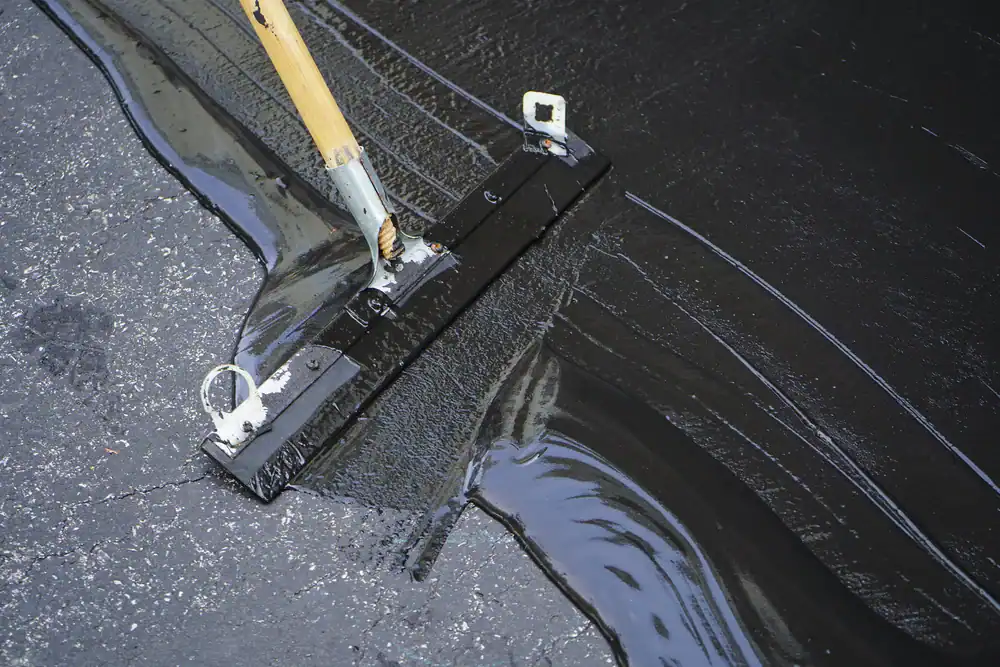
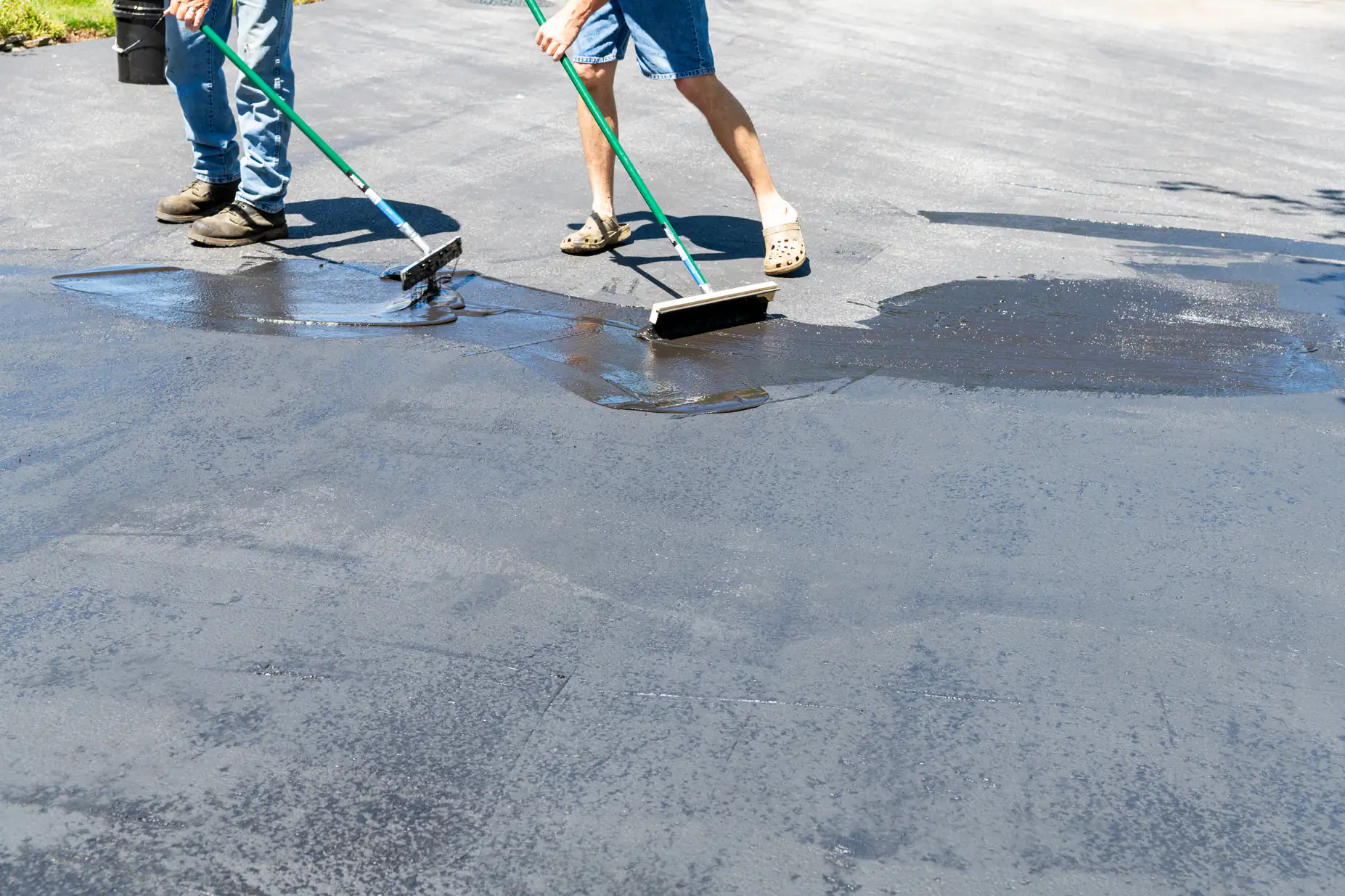
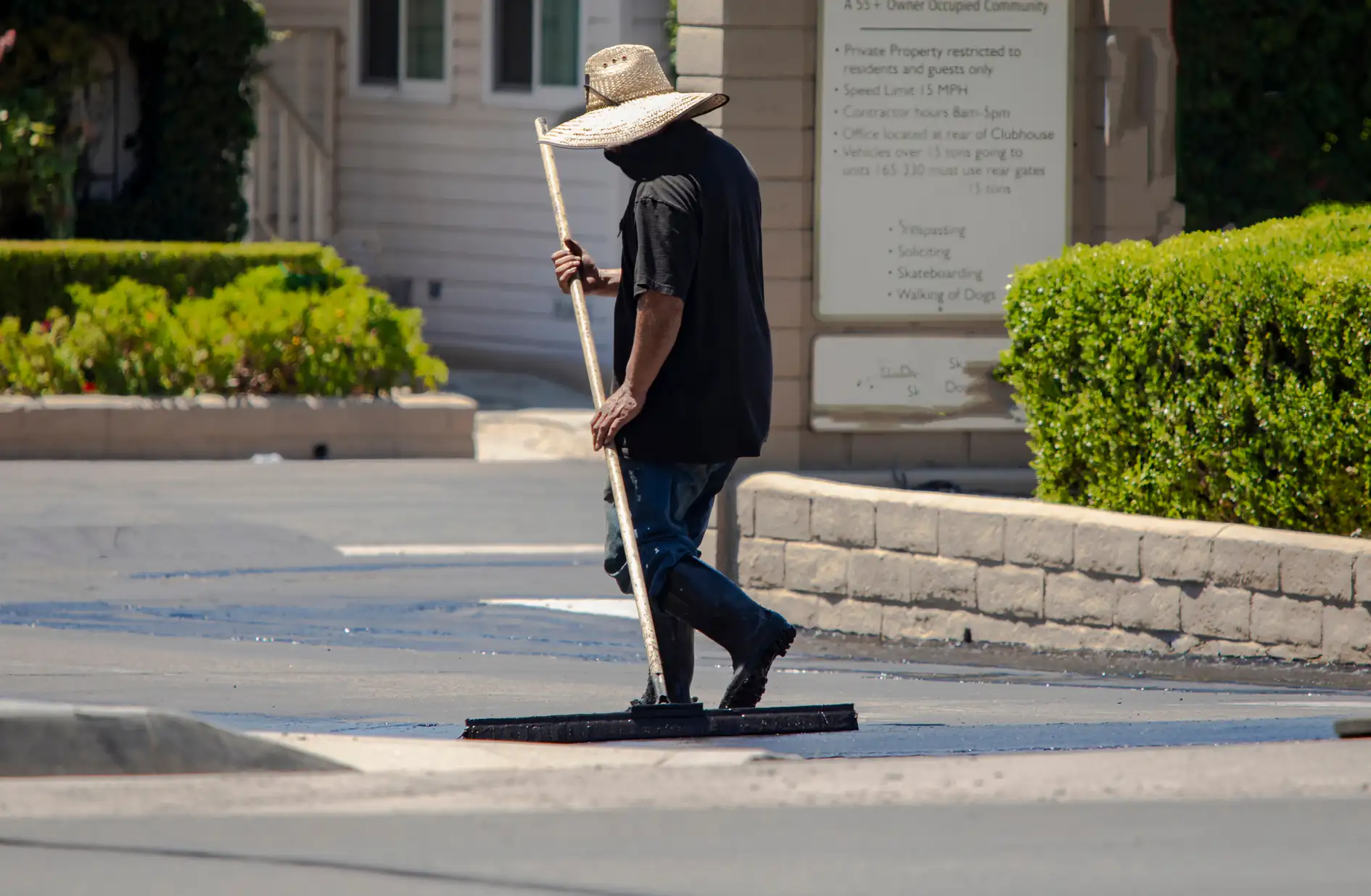
Then we apply two coats of commercial-grade sealer by hand. Hand application ensures even coverage and proper thickness, especially around edges and transitions. The first coat seals the surface, the second coat provides the protective layer that weathers Dover’s winters.
You’ll need to stay off the driveway for 24 to 48 hours depending on temperature and humidity. We only seal when conditions are right—between 50 and 85 degrees with no rain in the forecast. Rushing the cure time defeats the purpose.
Ready to get started?
Professional driveway sealcoating in Dover includes complete surface preparation, crack filling for fractures up to half an inch wide, and oil stain treatment. We’re addressing every issue that would prevent proper adhesion or long-term performance.
You get two coats of high-grade coal tar or asphalt emulsion sealer applied by hand, not sprayed. The material we use is designed for North Jersey’s climate—flexible enough to move with temperature changes without cracking, durable enough to last three years minimum between applications.
Morris County driveways face unique challenges. Your property sits in a zone where winter temperatures can swing 30 degrees in a single day. That’s why we time our sealcoating for fall, when moderate temperatures and dry conditions allow proper curing before winter arrives. Spring sealing works too, but fall gives you immediate protection against the season that causes the most damage.
Most Dover driveways run between 400 and 800 square feet. At $0.15 to $0.40 per square foot, you’re looking at $150 to $500 for professional sealcoating that extends your driveway’s lifespan from 15 years to 25-plus years.

Most driveways in Morris County need sealcoating every two to three years. That timeline shifts based on traffic, sun exposure, and how well the previous sealcoat was applied.
If your driveway faces south and gets full sun all day, UV rays break down the asphalt binder faster. You might need sealing every two years. A north-facing driveway with tree cover can stretch to three years between applications.
Heavy use shortens the timeline too. A household with four cars coming and going daily wears through sealcoating faster than a household with one vehicle. Watch for fading color and water absorption as signs you’re due for another coat.
Fall offers the best conditions for sealcoating in Dover. September through early November gives you moderate temperatures, low humidity, and dry weather. The sealer cures properly and you get a protective barrier in place before winter’s freeze-thaw cycles start.
Spring works as a second option, typically late April through June once temperatures stabilize above 50 degrees at night. The downside is you’ve already endured a winter of potential damage. Any cracks that formed over winter need repair before sealing.
Summer sealing is possible but tricky. Temperatures above 85 degrees cause sealer to dry too fast, which leads to poor penetration and premature failure. Early morning applications help, but fall remains the optimal window for North Jersey driveways.
You can buy sealer at any home improvement store and apply it yourself. Whether you should depends on your tolerance for redoing the job in 12 months when it fails.
DIY sealcoating typically skips proper surface prep. Most homeowners don’t fill cracks correctly, don’t clean oil stains, and don’t apply thick enough coats. The result looks fine for six months, then starts peeling or wearing through in high-traffic areas.
Professional driveway sealing contractors bring commercial-grade materials, proper equipment, and experience with Morris County’s climate. We know how thick to apply sealer for Dover’s freeze-thaw cycles, how to handle drainage issues, and when weather conditions are actually suitable for application. The cost difference between DIY and professional is usually $100 to $200. The performance difference is two to three years of protection.
Professional sealcoating in Morris County runs $0.15 to $0.40 per square foot. A typical residential driveway costs between $150 and $500 depending on size, condition, and prep work required.
That price includes crack filling, surface cleaning, oil stain treatment, and two coats of sealer. If your driveway needs extensive crack repair or has major drainage issues, expect additional costs. We give you clear upfront pricing during the estimate so there are no surprise charges.
North Jersey prices run about 15% to 20% higher than national averages because of higher labor costs and the heavy freeze-thaw wear our climate puts on asphalt. You’re paying for materials and application methods that actually survive Dover winters. Cheap sealcoating fails fast here.
Coal tar sealer offers superior protection against gas, oil, and chemical spills. It’s more durable, lasts longer, and provides better waterproofing. The tradeoff is a stronger odor during application and a slightly higher cost.
Asphalt emulsion sealer is more environmentally friendly, has less odor, and costs a bit less. It still provides solid protection for residential driveways, especially if you’re not dealing with frequent oil leaks or chemical exposure.
For Dover driveways, both options work well if applied correctly. The bigger factor is proper surface prep and application thickness. A well-applied asphalt emulsion seal beats a poorly applied coal tar seal every time. We’ll recommend the right product based on your driveway’s condition, your budget, and how you use the space.
No. Sealcoating protects asphalt from future damage but doesn’t repair structural issues. Cracks need to be filled before we apply sealer, otherwise water still penetrates through the crack and causes the same freeze-thaw damage.
We fill cracks up to half an inch wide with rubberized crack filler as part of the sealcoating process. Anything wider than that needs more extensive repair—possibly routing and sealing, or in severe cases, cutting out and patching the damaged section.
Think of sealcoating as preventive maintenance, not repair. It stops small surface cracks from becoming big problems, blocks water infiltration, and protects against UV damage and chemical spills. But if your driveway already has major structural damage, you need repair work first, then sealcoating to protect that investment.