
Hear from Our Customers
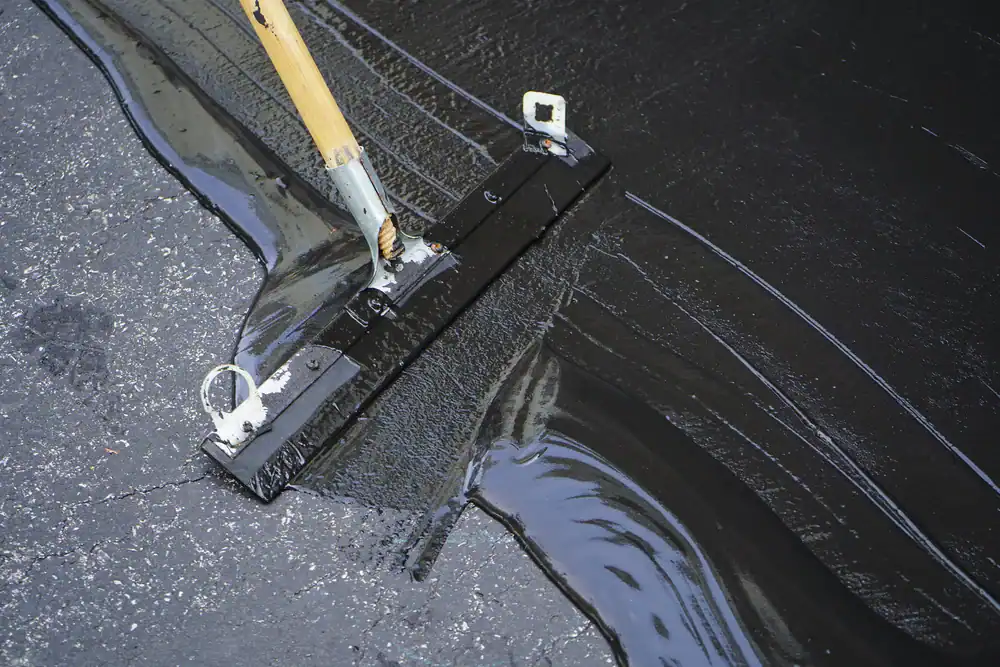
Your driveway stops deteriorating. That’s the short version.
The longer version: water can’t seep into cracks anymore. When temperatures drop and that water freezes, it won’t expand and tear your asphalt apart from the inside. Road salt won’t eat away at the surface. UV rays won’t fade and dry out the binder that holds everything together.
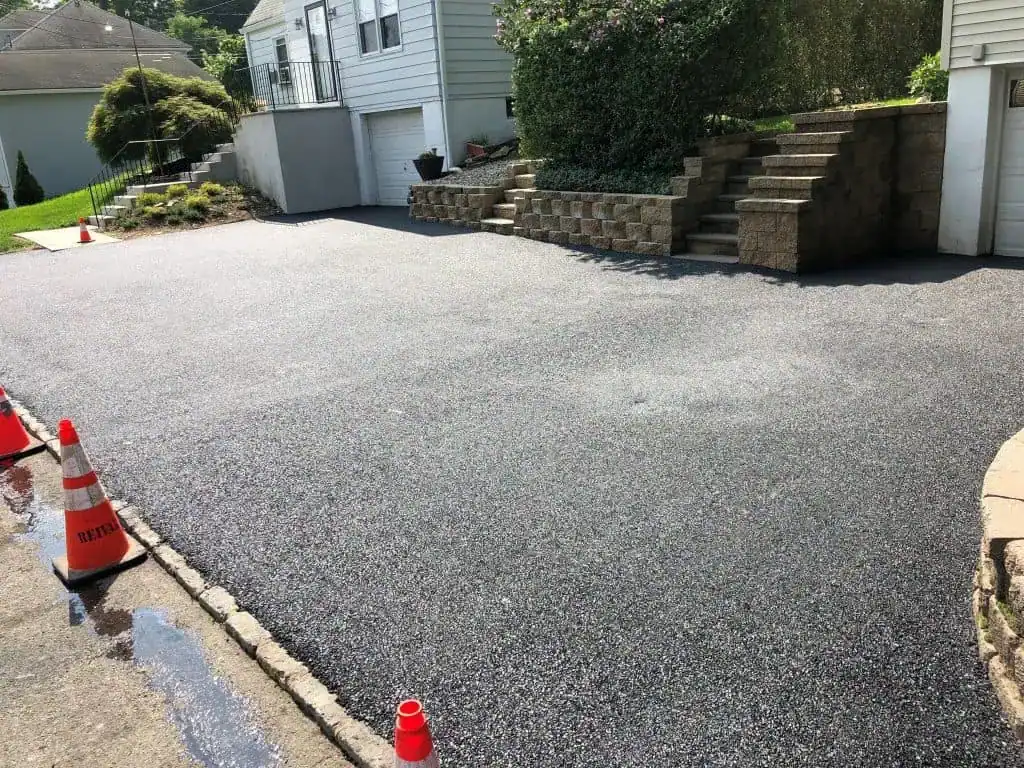
You get a smooth, dark surface that looks new again. More importantly, you’re not staring at widening cracks every spring wondering when you’ll need to replace the whole thing. Most driveways last about 25 years, but with regular sealcoating every 3-4 years, you can push that past 30 years without major repairs.
That’s not marketing talk. That’s what happens when you create a barrier between your asphalt and everything North Jersey weather throws at it between November and March.
We’re based here. We know what freeze-thaw cycles do to driveways in Chatham, Madison, and Morristown because we see it every spring.
That’s why we always recommend two coats for residential driveways in this area. Single-coat applications don’t hold up to the November-through-March beating our climate delivers. Two coats give you a thicker protective layer that lasts 3-4 years instead of 1-2.
We also don’t use coal tar sealer. Some towns in New Jersey have banned it due to environmental concerns, and the trend is moving toward asphalt-based sealers across the state. We mix our sealer in-house for a thicker, darker finish that actually lasts. Everything we do is backed by a 2-year warranty on materials and labor.
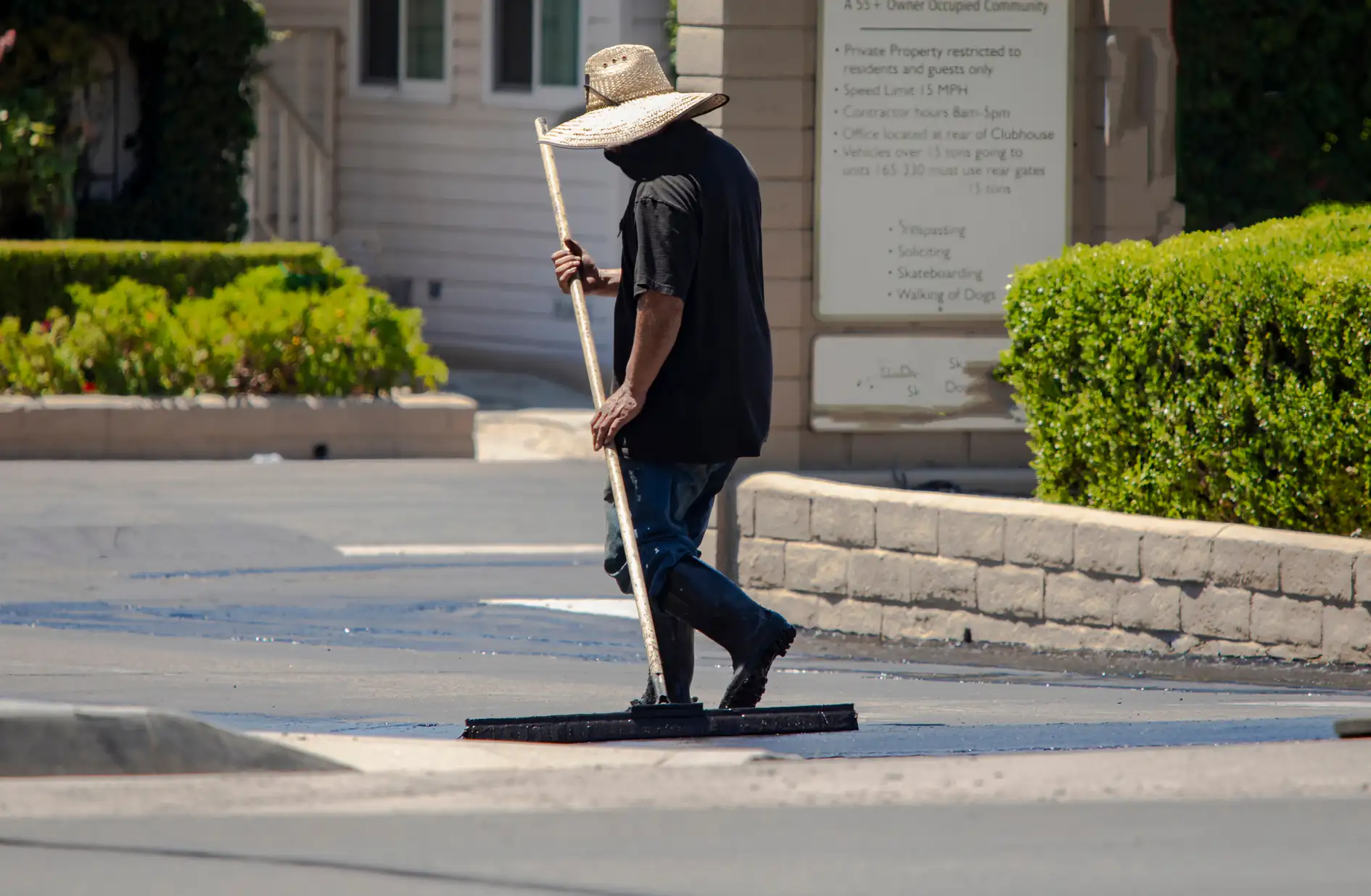
First, we clean your driveway. We’re talking broom, blower, and a thorough sweep to remove dirt, debris, and anything that would prevent the sealer from bonding properly.
Next, we fill the cracks. Any crack wider than a quarter-inch gets filled with rubberized crack filler. This prevents water from getting underneath and causing more damage. It also keeps the sealer from just disappearing into the gaps.
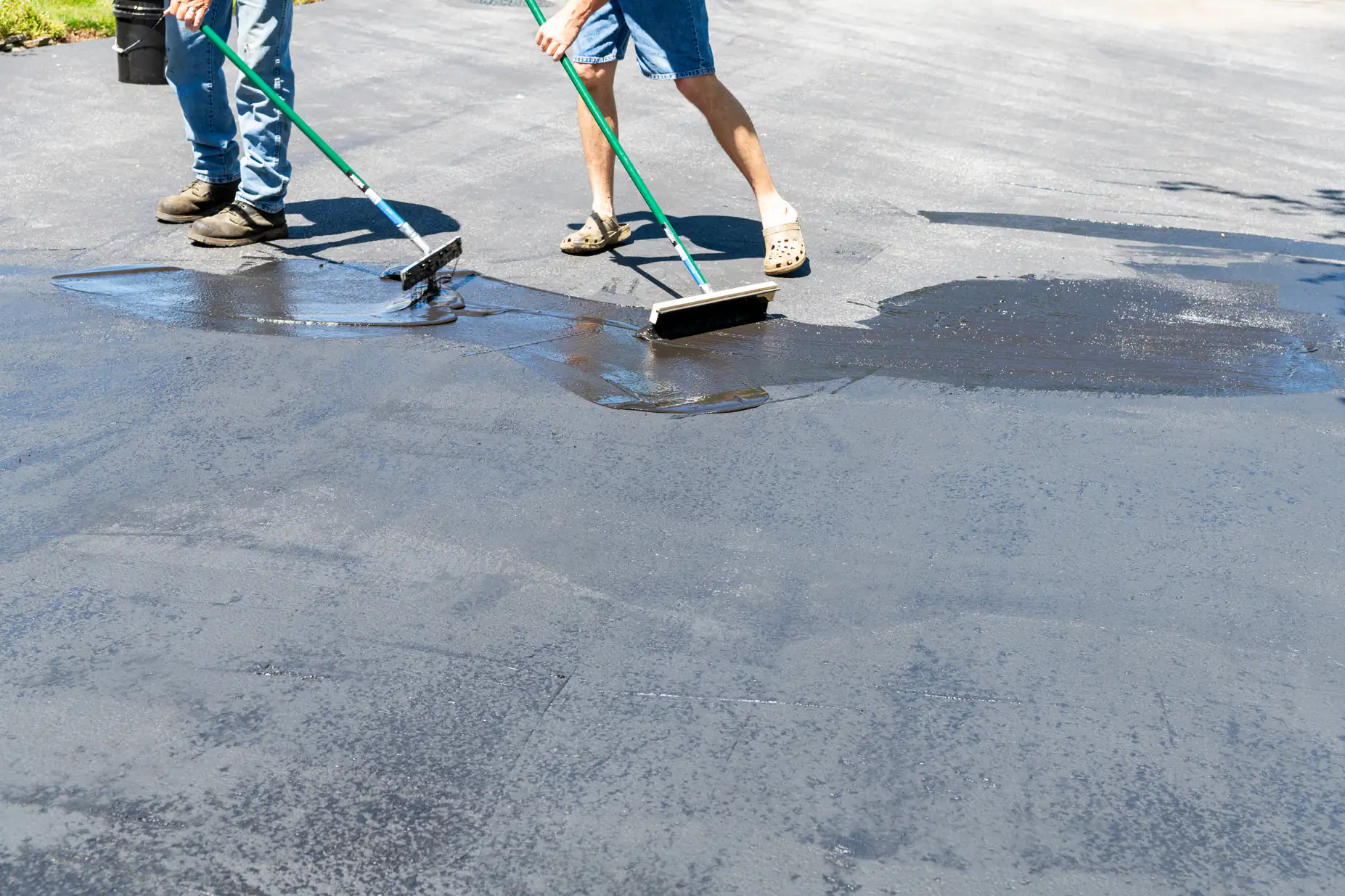
Then we apply the first coat by hand using squeegees. Hand application gives us control over thickness and coverage that spray equipment doesn’t. We edge carefully around your garage, walkways, and landscaping to keep everything clean.
After the first coat cures—usually 24 hours depending on temperature and humidity—we come back and apply the second coat. This is what gives you that deep, dark finish and the protection that actually lasts multiple years.
You’ll need to stay off the driveway for 24-48 hours after the final coat. That’s it. No complicated maintenance schedule, no special treatments. Just a protected driveway that’s ready for winter.
Ready to get started?
You’re getting preparation work that most homeowners don’t even know matters. The cleaning, the crack filling, the edging—that’s what separates a sealcoating job that lasts from one that starts failing in six months.
In Chatham and throughout Morris County, we’re dealing with temperature swings that go from 90 degrees in summer to below freezing in winter. Your driveway expands and contracts with those changes. If the sealer isn’t applied correctly, or if the surface wasn’t prepped right, it’ll crack and peel.
We also time our work carefully. Fall is the ideal window for sealcoating in New Jersey. Temperatures are moderate, conditions are dry, and the sealer cures properly before winter arrives. That means your driveway enters the freeze-thaw season fully protected instead of vulnerable.
Spring is when everyone notices the damage and calls for repairs. By then you’re fixing problems instead of preventing them. And emergency repairs during winter? They cost more and don’t work as well because cold weather limits what materials can do.

Most residential driveways in Chatham run between $300 and $500 for professional two-coat sealcoating. That includes crack filling, cleaning, and hand application of both coats.
The exact price depends on your driveway’s size and condition. A standard two-car driveway is usually around 600 square feet. At $0.15-$0.40 per square foot (typical for Morris County), you’re looking at $240-$400 for materials and labor.
If your driveway has significant cracking or damage, you might need additional crack filling or repairs before sealcoating. We’ll tell you that upfront. But even with extra prep work, you’re spending a fraction of what replacement costs—which typically runs $3,000-$8,000 for the same driveway.
Two coats of quality sealer last 3-4 years on residential driveways in New Jersey. Single-coat applications only last 1-2 years, which is why we don’t recommend them for our climate.
The freeze-thaw cycles we get from November through March are brutal on asphalt. Water seeps into tiny cracks and pores, then expands about 9% when it freezes. That expansion creates pressure that breaks down the sealer and the asphalt underneath.
Two coats give you a thicker protective barrier that holds up better against that cycle. You’re not just getting a darker finish—you’re getting actual protection that lasts long enough to be worth the investment. Plan on resealing every 3-4 years to maintain that protection and keep your driveway in good shape.
Fall is the best time for driveway sealcoating in Chatham and throughout Morris County. You want moderate temperatures (ideally 50-85 degrees) and dry conditions for at least 24-48 hours after application.
September and October usually give you those conditions. The sealer cures properly, and you’re creating that protective barrier right before winter hits. That timing matters because you’re preventing damage instead of reacting to it in spring.
Spring is the second-best option, but you’re competing with everyone else who just discovered winter damage on their driveway. You’re also dealing with more unpredictable weather and the risk of late-season cold snaps that can interfere with curing. Summer works too, but extreme heat can make application tricky and the sealer can dry too fast.
Asphalt-based sealer and coal tar sealer both protect your driveway, but coal tar is being phased out in New Jersey due to environmental concerns. Several municipalities have already banned or restricted it, and the trend is moving toward a statewide ban.
Asphalt-based sealer is what we use. It’s made from refined asphalt, water, mineral fillers, and additives. It bonds well to asphalt driveways, provides excellent protection against water and UV damage, and doesn’t carry the same environmental issues as coal tar.
The performance difference is minimal when applied correctly. What matters more is the quality of the sealer, proper surface preparation, and application technique. We mix our sealer in-house to control thickness and quality, which gives you better protection and a longer-lasting finish than most off-the-shelf products.
You can seal your own driveway, but most DIY jobs don’t last as long or look as good as professional work. The main issues are surface preparation, sealer quality, and application technique.
Store-bought sealer is thinner than what we use. It goes on easier, but it also wears off faster—sometimes in just one winter. You’re also working with basic tools that make it hard to get even coverage, especially around edges and transitions.
The bigger issue is preparation. If you don’t clean the surface properly or fill cracks correctly, the sealer won’t bond right. It’ll peel, crack, or wear through in high-traffic areas within months. Professional equipment and experience make a real difference in how long the job lasts.
For a typical Chatham driveway, you might save $150-200 doing it yourself. But if you have to redo it every year instead of every 3-4 years, you’re not actually saving money. You’re just spreading the cost out and doing more work.
If your driveway has surface cracks, fading, or minor damage but the base is still solid, sealcoating will extend its life. If you’re seeing widespread potholes, major settling, or alligator cracking (interconnected cracks that look like reptile skin), you probably need replacement.
Here’s a simple test: look at the worst areas. If the damage is mostly surface-level—cracks less than a quarter-inch wide, fading, minor raveling—sealcoating and crack filling will fix it. If you can see the base material underneath, or if sections of the driveway are sinking or heaving, the structural integrity is compromised.
Most driveways in Chatham that are 10-20 years old and have been maintained reasonably well are good candidates for sealcoating. If your driveway is 25+ years old and has never been sealed, it might be too far gone. We’ll tell you honestly what makes sense. There’s no point sealcoating a driveway that needs replacement—it’s just delaying the inevitable and wasting your money.