
Hear from Our Customers
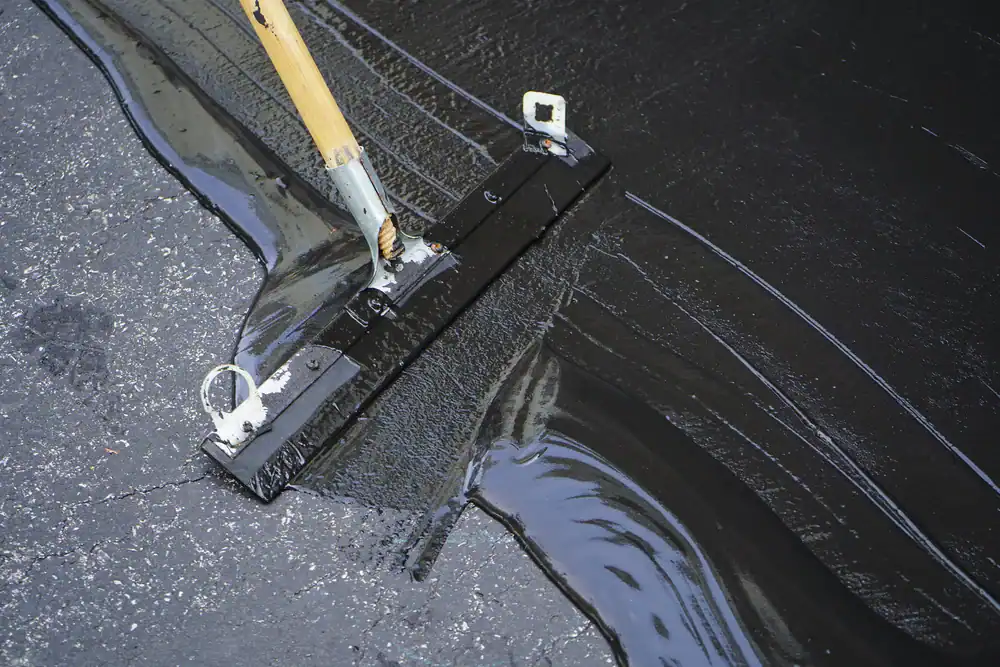
Here’s what happens when you seal your driveway before winter hits. Water stops getting into the cracks. Ice can’t expand and blow apart your asphalt from the inside. Road salt runs off instead of eating through the surface.
You’re looking at a driveway that stays intact through 55 to 75 freeze-thaw cycles every year. That’s what Caldwell, NJ deals with. Most driveways around here don’t make it past 10 years without serious damage. Sealed driveways last 20 to 30 years.
The math is simple. Spend $300 to $500 now on professional sealcoating, or spend $5,000 to $7,000 on a full replacement in three years. Your driveway also looks better, cleans easier, and adds value to your property instead of dragging it down.
We work exclusively in Morris, Essex, and Somerset Counties. We know what North Jersey winters do to asphalt because we’ve been fixing and protecting driveways here for over a decade.
We’re not the cheapest option in Caldwell, NJ. We use professional-grade sealants with UV protection and flexibility additives that consumer products don’t have. Our equipment applies it evenly and at the right thickness. You get results that actually hold up.
Over 2,300 driveways sealed. Clear pricing before we start. No callbacks asking for more money halfway through. We show up when we say we will and finish in one to three days depending on your driveway size.
First, we clean your driveway completely. Dirt, oil, debris – anything that keeps sealant from bonding properly gets removed. Most DIY jobs fail because this step gets skipped or done poorly.
Next, we fill cracks and repair damage. Sealcoating isn’t a fix for structural problems, but small cracks get filled so water can’t work its way underneath. If your driveway has serious issues, we’ll tell you before we start.
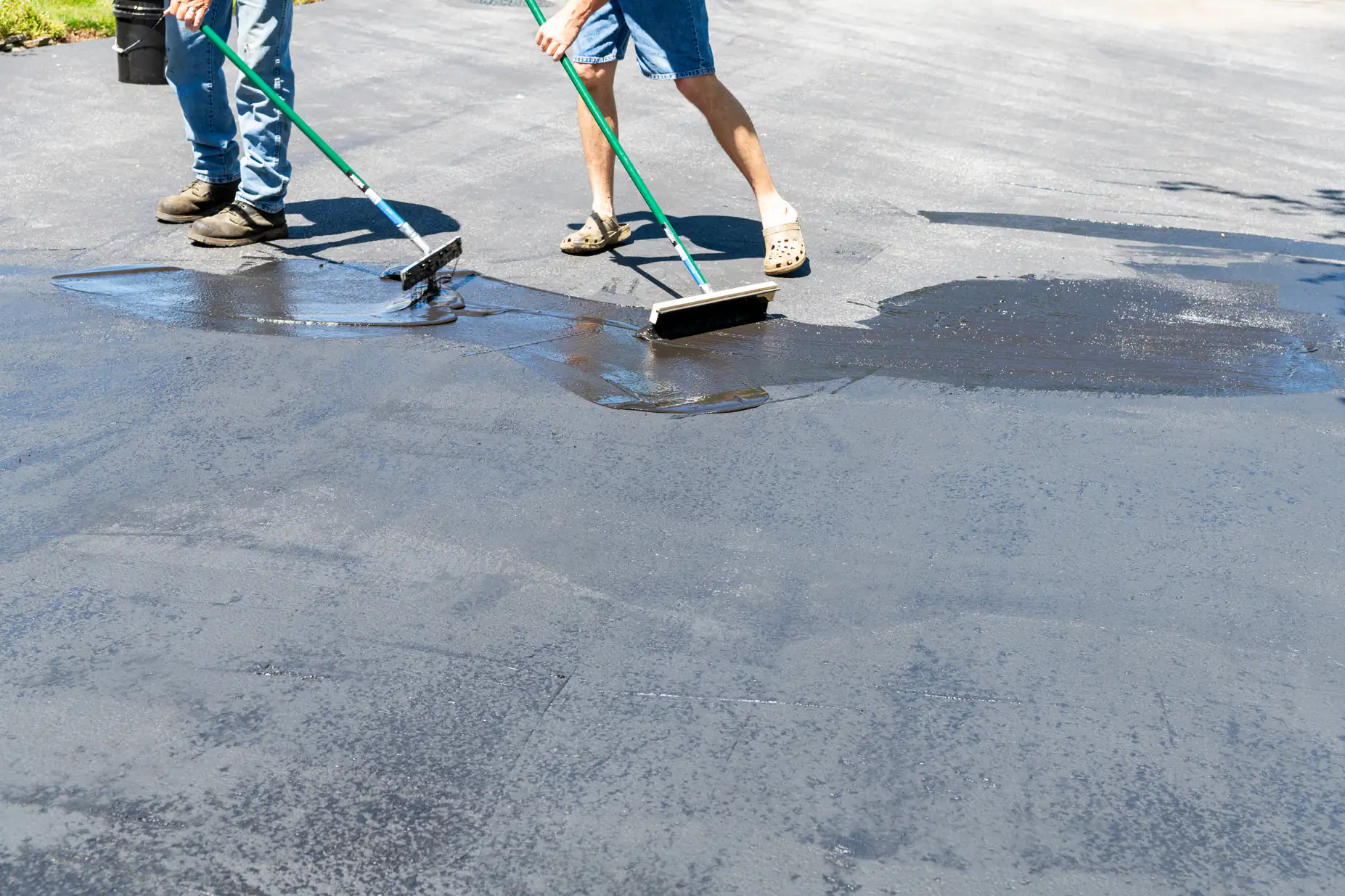
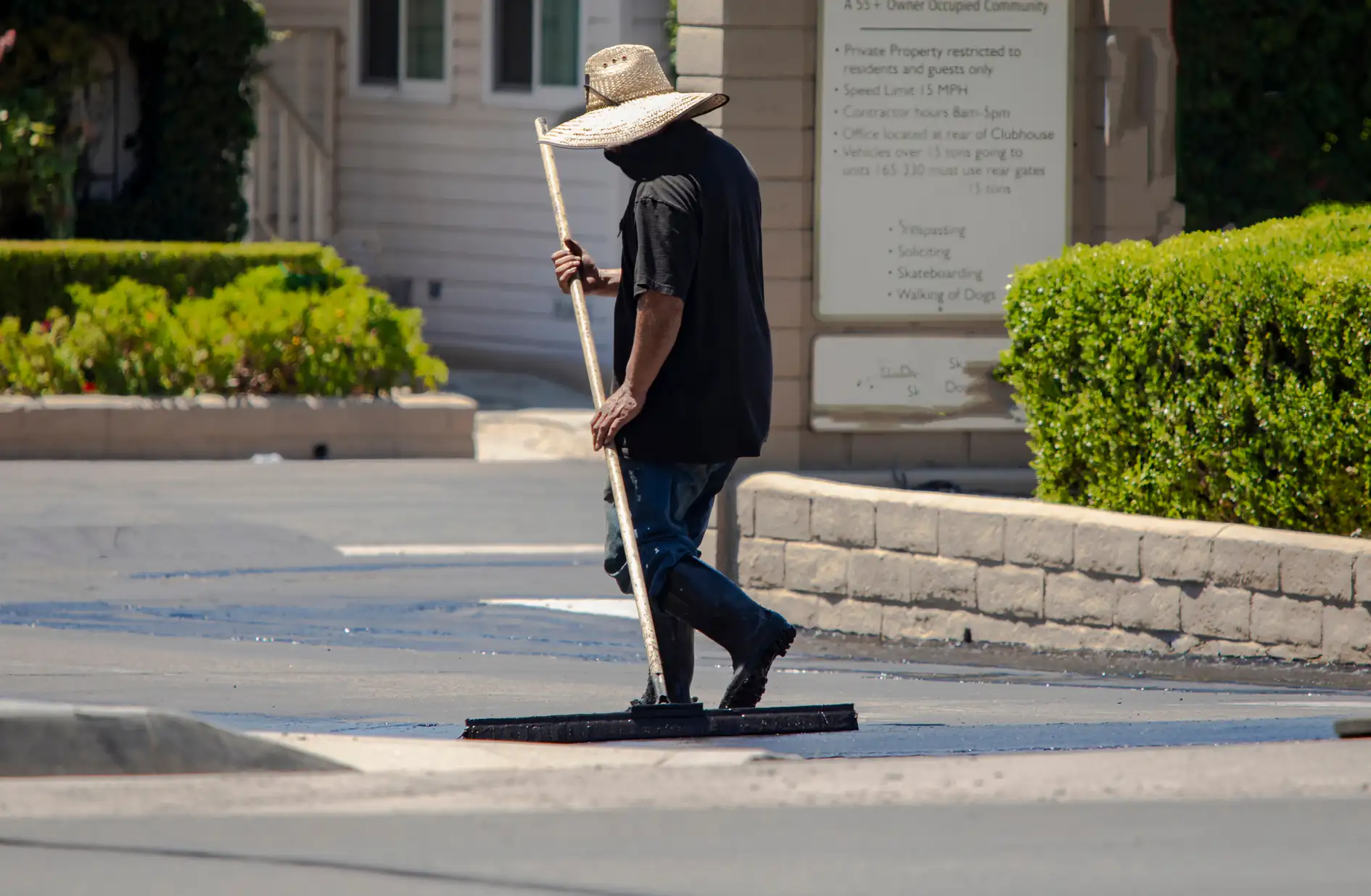
Then we apply two coats of commercial-grade sealer. The first coat penetrates and bonds. The second coat creates the protective barrier that keeps water, salt, and UV rays from breaking down your asphalt. We use squeegees and professional sprayers to get even coverage without thin spots.
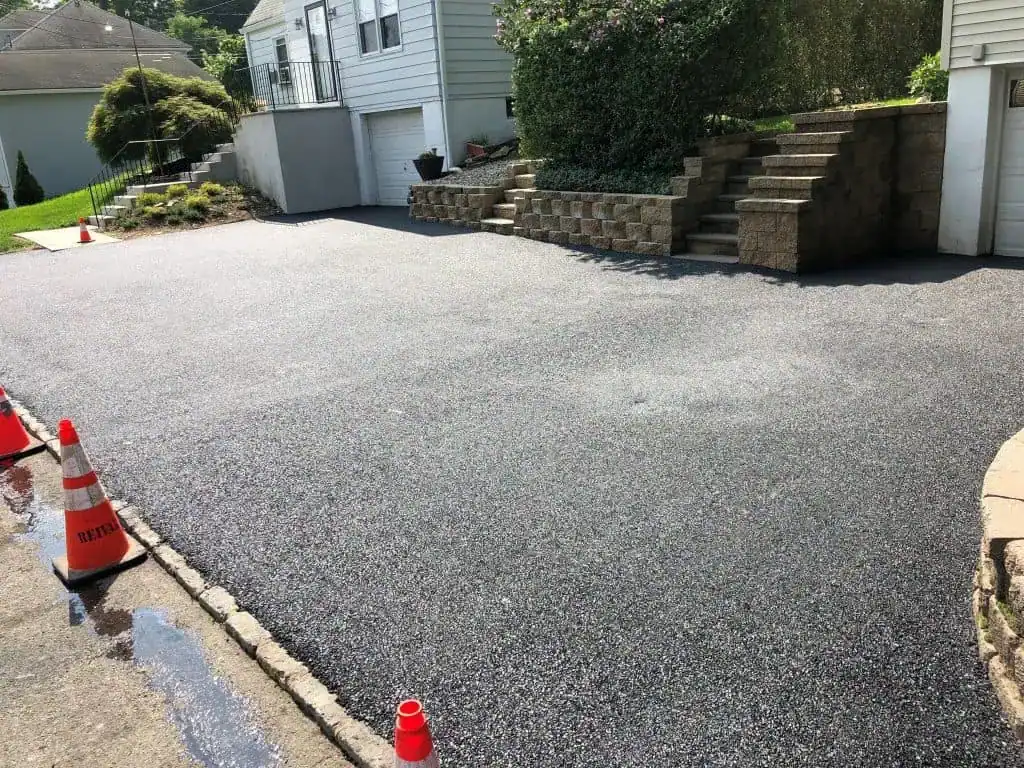
You stay off it for 24 to 48 hours depending on temperature and humidity. After that, you’ve got a driveway that’s protected for the next two to three years. Most homeowners in Caldwell, NJ reseal every two to three years to keep that protection active.
Ready to get started?
Every sealcoating job includes surface cleaning, crack filling up to a quarter inch, edging along garage doors and walkways, and two coats of professional sealer. We also mark off the area and handle cleanup when we’re done.
Fall is the best time to seal your driveway in Caldwell, NJ. Temperatures stay between 50 and 70 degrees, which is perfect for curing. You get maximum protection time before winter starts testing it. Spring works too, but you lose months of protection while waiting for consistent warm weather.
The cost runs between 15 and 40 cents per square foot depending on your driveway’s condition and size. A typical residential driveway in Caldwell costs $300 to $500 for professional sealcoating. That’s higher than the national average because labor costs more here and our freeze-thaw cycles are more severe. You’re paying for materials and application methods that actually handle North Jersey winters.

Professional sealcoating lasts two to three years in Caldwell, NJ when applied correctly. That timeframe accounts for the 55 to 75 freeze-thaw cycles we get every winter, plus road salt, UV exposure, and regular traffic.
DIY sealcoating usually breaks down faster because the materials aren’t as durable and the application is uneven. You’ll see thin spots and early wear within a year. Professional sealer has additives that keep it flexible through temperature swings and resistant to chemicals.
You’ll know it’s time to reseal when the surface starts looking faded or gray instead of deep black. Small cracks might start showing up. Don’t wait until you see serious damage. Resealing every two to three years keeps water out and prevents expensive repairs.
Professional sealcoating uses commercial-grade materials that are thicker, more flexible, and more durable than anything you’ll find at a home improvement store. The sealer itself has additives for UV protection and temperature resistance that consumer products skip.
The equipment matters too. We use commercial squeegees and sprayers that apply consistent thickness across your entire driveway. DIY application with a brush or cheap squeegee leaves thin spots, thick spots, and uneven coverage. Those thin spots fail first and let water in.
Surface prep is where most DIY jobs fall apart. You need the driveway completely clean and dry, cracks properly filled, and oil stains treated. Most homeowners don’t have the equipment or experience to do that right. You end up with sealer that doesn’t bond properly and peels off within a year. Professional application costs more upfront but lasts longer and protects better.
Driveway sealcoating in Caldwell, NJ runs between $300 and $500 for a typical residential driveway. That breaks down to about 15 to 40 cents per square foot depending on your driveway’s size, condition, and how much crack filling it needs.
Prices here run 15 to 20 percent higher than the national average. Labor costs more in North Jersey, and our climate is harder on asphalt. You need better materials and more thorough application to handle the freeze-thaw cycles and road salt we deal with.
If someone quotes you significantly less, ask what corners they’re cutting. Cheaper jobs usually mean thinner application, lower-grade sealer, or skipped prep work. You’ll pay for it later when the sealcoat fails early and you’re dealing with crack repairs or resurfacing. Clear pricing upfront with no surprise charges is what you should expect from driveway sealer companies worth hiring.
Fall is the best time for driveway sealcoating in Caldwell, NJ. September through early November gives you moderate temperatures between 50 and 70 degrees, low humidity, and dry conditions. The sealer cures properly and you get maximum protection time before winter damage starts.
Spring works too, but you’re racing against unpredictable weather and you lose several months of protection while waiting for consistent warmth. Summer can be too hot – sealer dries too fast and doesn’t bond as well.
You need at least 24 hours of dry weather with temperatures above 50 degrees for proper curing. Check the forecast before scheduling. Rain or cold temperatures within that window will ruin the application. We book up fast in fall, so schedule early if you want the optimal window.
Sealcoating doesn’t fix cracks – it prevents them from getting worse. We fill small cracks up to a quarter inch as part of the prep work, but sealcoating itself is a protective coating, not a structural repair.
If your driveway has cracks wider than a quarter inch, alligator cracking, or areas where the base is failing, you need repairs before sealcoating makes sense. Sealing over serious damage just hides the problem temporarily. Water will still get underneath and cause more damage through freeze-thaw cycles.
Here’s how to think about it: sealcoating protects good asphalt and keeps small problems from becoming big ones. It stops water penetration, prevents oxidation, and blocks UV damage. But it won’t fix a driveway that’s already falling apart. Get an honest assessment before you spend money on sealing. Sometimes repair or resurfacing is the smarter move.
North Jersey gets 40 percent more freeze-thaw cycles than Central or South Jersey. Caldwell sees 55 to 75 cycles every winter. Each cycle means water gets into your asphalt, freezes, expands by 9 percent, and cracks the surface from the inside.
That expansion creates up to 30,000 PSI of pressure. Unsealed asphalt can’t handle that kind of repeated stress. Add road salt on top of it and your driveway deteriorates fast. Most unsealed driveways around here need major repairs or replacement within 10 to 15 years.
Sealcoating creates a waterproof barrier that stops this cycle. Water runs off instead of soaking in. Salt can’t penetrate the surface. UV rays don’t oxidize and dry out the asphalt. You’re essentially giving your driveway a protective shell that handles everything North Jersey winters throw at it. That’s why driveway sealing near me gets searched so often here – it’s not optional maintenance, it’s necessary protection.