
Hear from Our Customers
Here’s what happens when you don’t seal your driveway: water gets in. It freezes. It expands by 9%. Cracks widen. Then spring hits, more water seeps deeper, and the cycle repeats until you’re looking at complete failure.
Sealcoating stops that process before it starts. It creates a waterproof barrier that keeps moisture out and blocks UV rays that dry out and crack asphalt. You’re not just making your driveway look better—you’re buying yourself another 5-10 years before you need to think about replacement.
In Sussex County, where freeze-thaw cycles hit harder than most of New Jersey, that protection matters. Your driveway either gets sealed every few years, or it gets replaced every 15. The math isn’t complicated.
We work across Morris, Sussex, and Somerset Counties. We know what North Jersey weather does to asphalt because we’ve been repairing and protecting it for years.
We’re not the cheapest option, and that’s intentional. Cheap sealcoating means one thin coat that barely lasts a season. We apply two coats using DEP-compliant materials that hold up to the conditions you actually face here—snow, salt, oil drips, and temperature swings that go from 10° to 90° in the span of a few months.
You’ll get a callback within 48 hours, clear pricing with no surprises, and work that shows up on schedule. That’s how we’ve built a reputation in towns like Byram Center, Dover, Morristown, and everywhere in between.
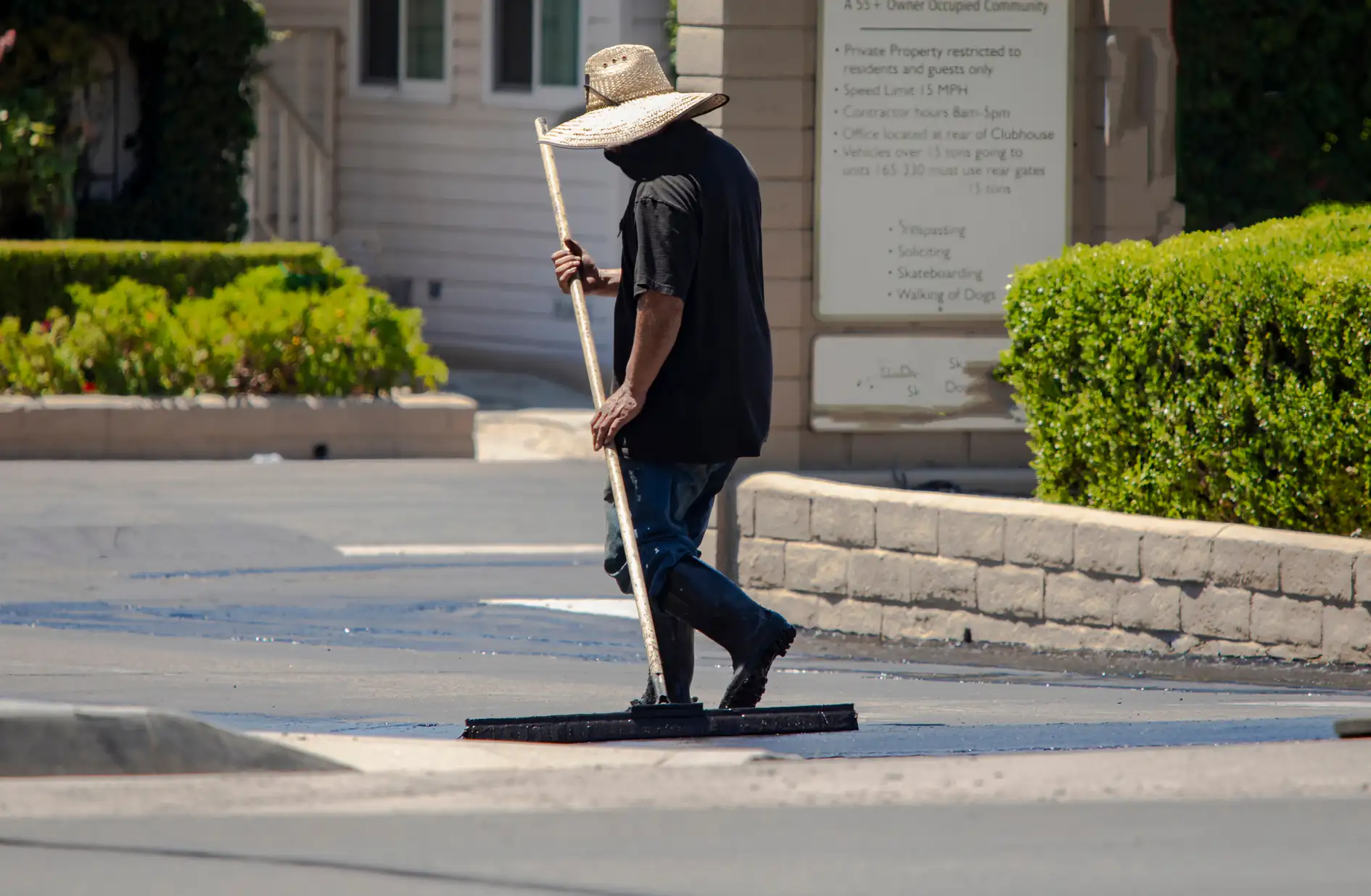
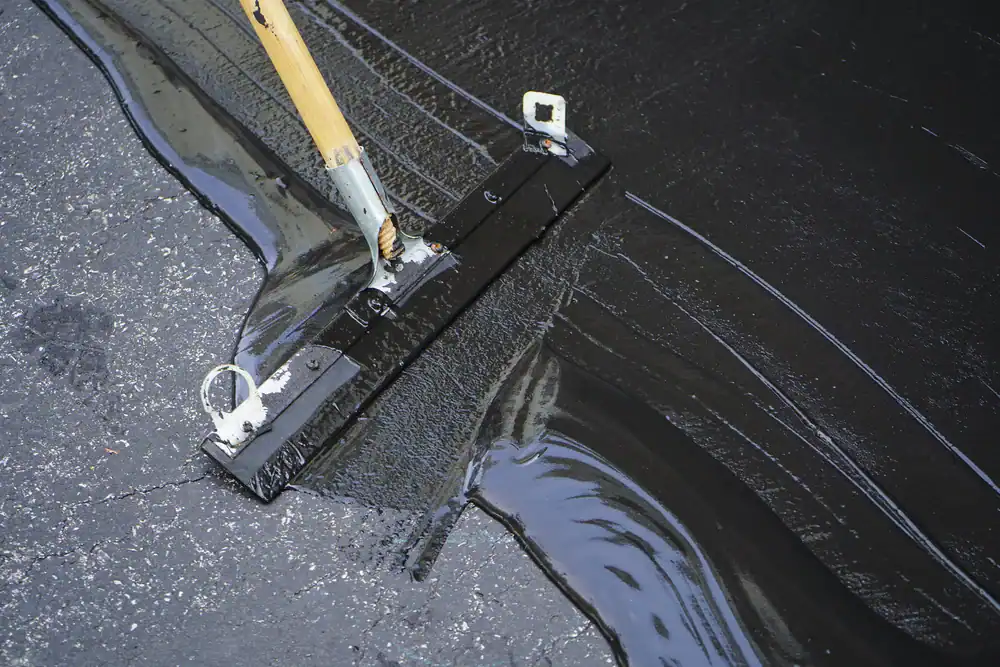
First, we clean the surface. Any dirt, oil, or debris gets removed because sealer won’t bond to a dirty driveway. If there are cracks wider than a quarter-inch, we fill them. Sealer isn’t crack filler—it’s a protective coating. The repairs come first.
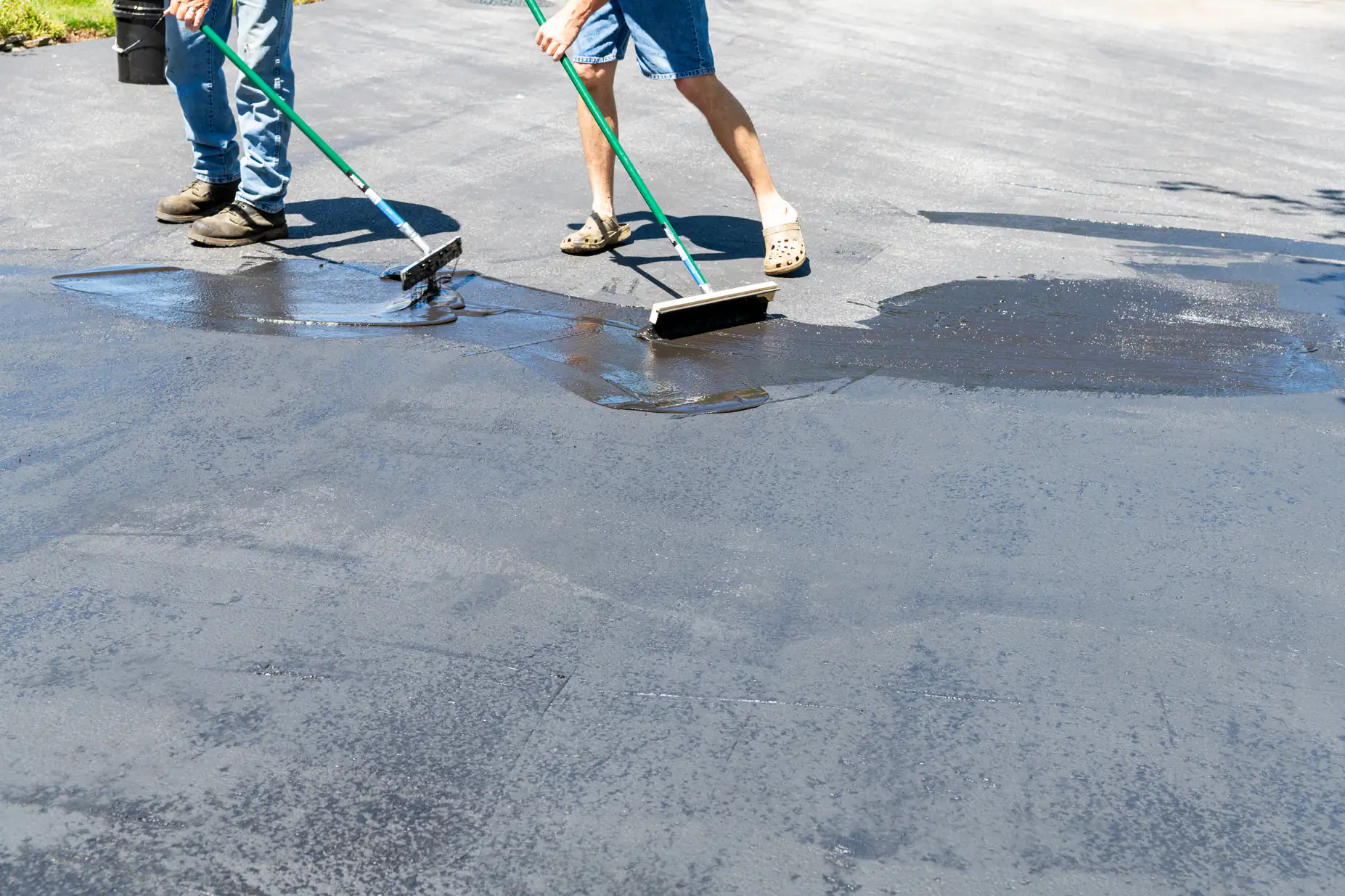
Then we apply the first coat. It soaks into the asphalt and creates the base layer of protection. After it dries, we apply the second coat. That’s the layer that gives you the deep black finish and the real durability. Single-coat jobs might look fine for a year, but two coats last three to four times longer.
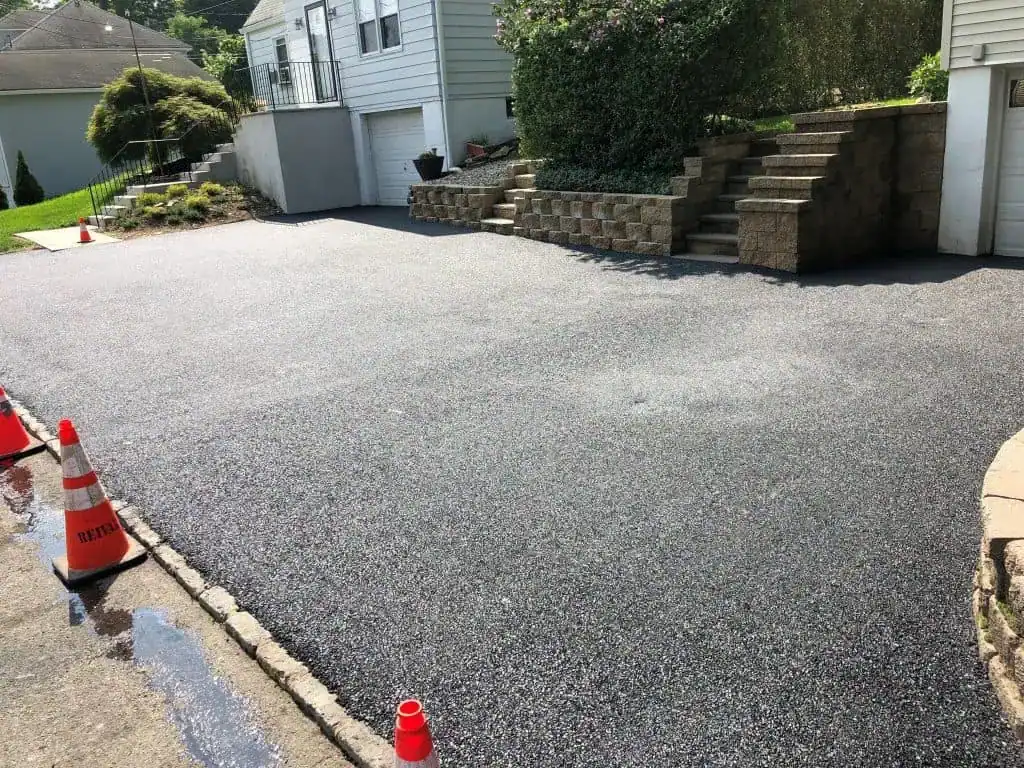
You’ll need to stay off the driveway for 24-48 hours depending on temperature and humidity. After that, it’s cured and ready. The whole process takes a day, and what you’re left with is a driveway that looks new and can handle another few years of whatever weather gets thrown at it.
Ready to get started?
Driveway sealcoating near Byram Center typically runs higher than the national average—about 15-20% more. That’s not a markup. That’s the reality of working in a climate that’s harder on pavement. The materials need to be tougher, the prep work takes longer, and the application standards are stricter.
You’re paying for crack filling, surface cleaning, two-coat application, and materials that meet New Jersey’s environmental standards. A typical residential driveway costs a fraction of what you’d spend on repaving, which runs $6-8 per square foot. Sealcoating? You’re looking at pennies per square foot for protection that can extend your driveway’s life well past 30 years.
Most driveways here need sealing every 2-3 years. If yours hasn’t been sealed in five years or more, you’re already behind. The longer you wait, the more damage sets in, and eventually sealing won’t be enough. You’ll be looking at resurfacing or full replacement instead.

A proper two-coat sealcoating job lasts 3-4 years in New Jersey. Single-coat applications might look fine initially, but they break down faster—usually within 1-2 years—because they don’t have the thickness to withstand freeze-thaw cycles and UV exposure.
The lifespan depends on a few things: traffic volume, sun exposure, and how well the driveway was prepped. If the surface wasn’t cleaned properly or cracks weren’t filled first, the sealer won’t bond correctly and you’ll see premature wear.
In Sussex County, where winters are harsher, you might need to reseal closer to the 2-3 year mark. Pay attention to the finish. When it starts looking faded or gray instead of black, that’s your signal that the protective layer is wearing thin.
Late spring through early fall. You need temperatures above 50°F for at least 24 hours after application, and the forecast needs to be dry. Sealer won’t cure properly in cold or wet conditions.
Fall is actually ideal in North Jersey. The temperatures are moderate, humidity is lower, and you’re getting the driveway protected right before winter hits. That’s when you need the protection most—before the first freeze-thaw cycle starts tearing into any cracks or weak spots.
Avoid sealing in summer heat above 90°F. The sealer dries too fast and won’t penetrate the asphalt properly. Spring works if you’re patient enough to wait for a consistent warm, dry stretch. Most driveway sealing companies in this area get booked solid in September and October because homeowners know that’s the window.
Yes, but the cracks need to be filled first. Sealcoating isn’t designed to fill gaps—it’s a thin protective layer, not a crack filler. If you try to seal over cracks without filling them, the sealer will just sink into the gaps and you’ll still have the same problem underneath.
We fill cracks wider than a quarter-inch with rubberized crack filler before applying any sealer. That material flexes with temperature changes and keeps water from getting under the asphalt. Once the filler cures, then we seal the entire surface.
If your driveway has major structural damage—like alligatoring, potholes, or large sections that are crumbling—sealcoating won’t fix it. At that point, you’re looking at patching or resurfacing before sealing makes sense. It’s about knowing when prevention works and when you’re past that point.
Absolutely. Replacing a driveway costs $6-8 per square foot in New Jersey. For an average two-car driveway, that’s $5,000-$8,000. Sealcoating costs a fraction of that and can extend your driveway’s life by 60% or more.
Here’s the math: an unsealed driveway in this climate typically lasts about 15-20 years before it needs replacement. A properly maintained, sealed driveway can last 25-30+ years. You’re spending a few hundred dollars every few years to avoid a five-figure replacement.
The key is staying ahead of the damage. Once your driveway deteriorates past a certain point, sealing won’t help. But if you start sealing early—within the first few years after installation—and keep up with it every 2-3 years, you’re protecting your investment for the long term. That’s a 2,000%+ return compared to replacement costs.
Because the weather here is harder on asphalt. New Jersey gets the full range—freezing winters, hot summers, heavy rain, and snow followed by salt and chemicals. That means the materials need to be more durable and the application standards are higher.
Sealcoating products used in North Jersey have to meet DEP environmental compliance standards, which adds to material costs. The prep work is also more intensive because driveways here take more of a beating. More cracks to fill, more cleaning required, and more attention to detail during application.
You’re also paying for local expertise. Contractors here know that a driveway in Sussex County needs different treatment than one in a milder climate. We’re not just applying sealer—we’re applying the right sealer, at the right thickness, with the right prep work to handle conditions that would destroy a cheaper job in two years.
Look at the color first. If your driveway has faded from black to gray, the asphalt is oxidizing and losing its protective oils. That’s your first sign. Next, check for small cracks, rough texture, or areas where water pools instead of beading up. All of those mean the surface is breaking down.
A good rule: if it’s been more than 3 years since the last sealcoating, you’re due. If it’s been 5+ years or you’ve never sealed it, you’re overdue. New driveways should be sealed 6-12 months after installation, once the asphalt has fully cured.
Run your hand across the surface. If it feels rough or you see loose aggregate, the binder holding the asphalt together is deteriorating. That’s exactly what sealcoating prevents. The longer you wait after noticing these signs, the more damage accumulates underneath—and eventually, sealing won’t be enough to save it.