
Hear from Our Customers
Your driveway takes a beating in Butler. Between 40-plus freeze-thaw cycles each winter and summer heat pushing past 90 degrees, asphalt breaks down faster here than in most places. Water gets into small cracks, freezes, expands by 9%, and turns minor surface issues into major structural problems.
Sealcoating creates a protective barrier that keeps water out and prevents oxidation from UV exposure. You’re looking at extending your driveway’s lifespan from around 15 years to 25-plus years with regular maintenance every 2-3 years.
The cost difference matters. A proper sealcoating job runs $180-$270 for a typical 600-square-foot driveway in Butler. Compare that to the $1,500-plus you’ll spend fixing cracks that could’ve been prevented, or the $5,000-plus for repaving when the damage gets too far gone. You’re not just making your driveway look better—you’re avoiding expensive repairs that start small and get worse fast.
We’ve been handling asphalt and concrete work across Morris County for over two decades. We’re licensed with the NJ Division of Consumer Affairs (13VH08981600), fully insured, and BBB accredited.
What that means for you: if something goes wrong, you’re protected. If the work doesn’t hold up, we’re still here. We’re not a crew that shows up, collects payment, and disappears when problems surface later.
Butler’s weather demands contractors who understand how freeze-thaw cycles, road salt exposure, and heavy rainfall affect asphalt differently than other regions. We use commercial-grade coal tar sealers, apply a minimum of two coats, and add sand for traction and durability. The owner is on-site from start to finish, and we back our work with a warranty that actually means something.
First, we power wash your driveway to remove dirt, debris, and any loose material. A clean surface is critical—sealer won’t bond properly to dirty asphalt, and you’ll end up with premature failure.
Next, we fill cracks up to 50 linear feet using hot rubberized crack filler. This step prevents water infiltration at the most vulnerable points. Skipping it means you’re sealing over problems that will only get worse underneath.
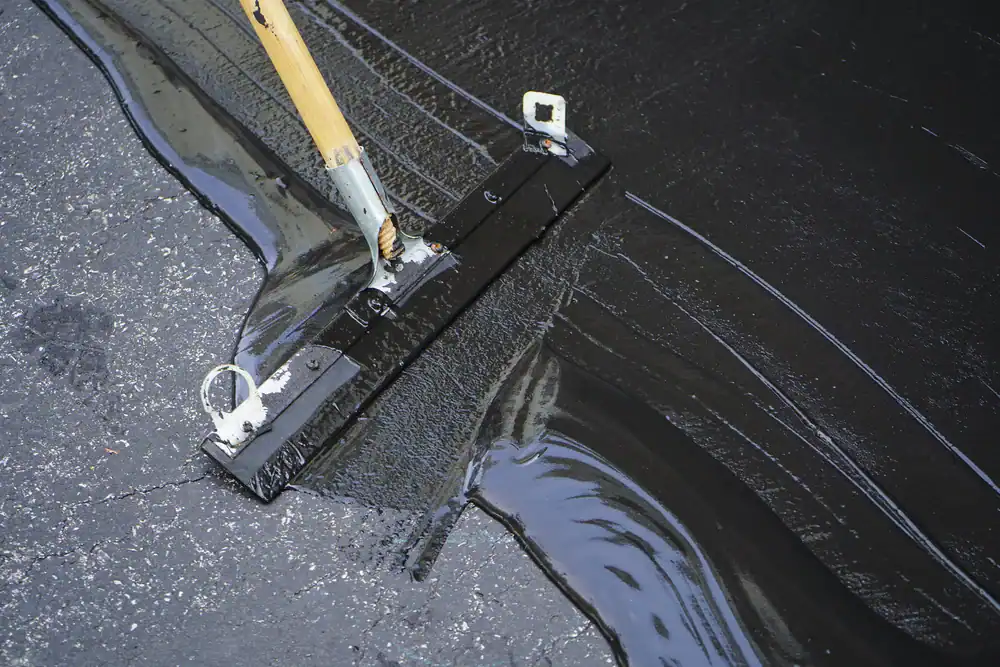
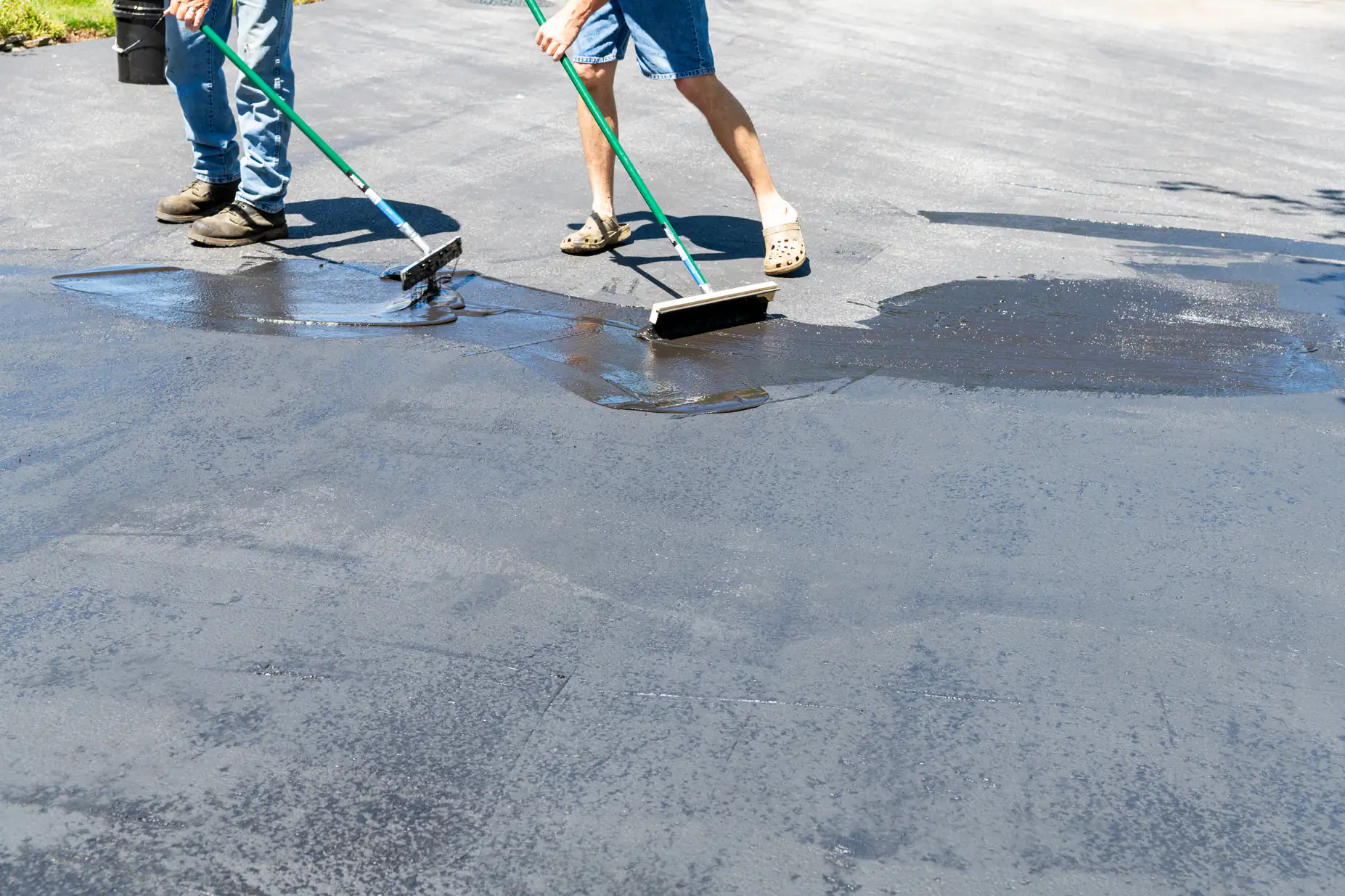
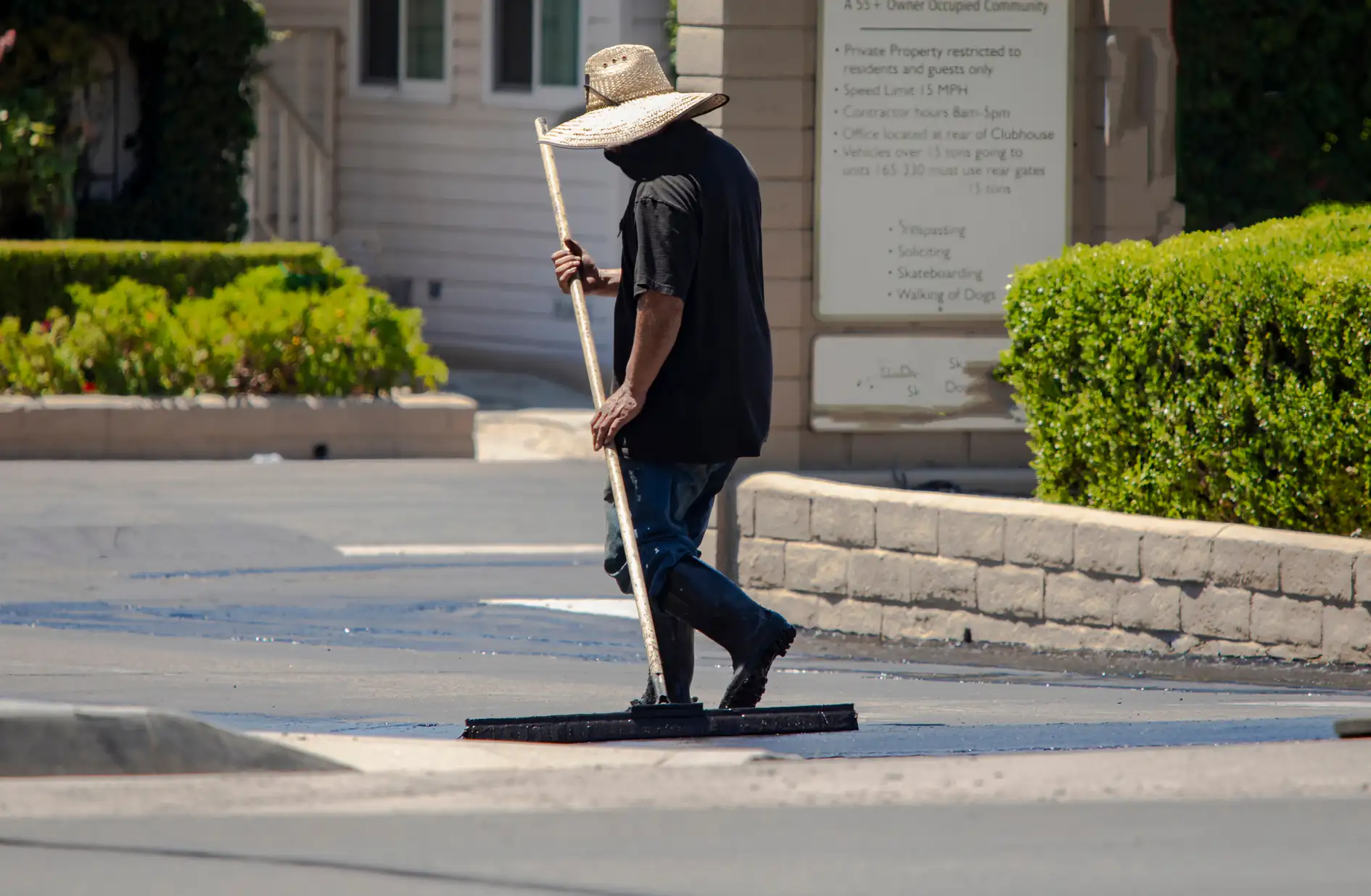
Then we apply two coats of commercial-grade coal tar sealer with a sand additive. The first coat penetrates and bonds to the asphalt. The second coat builds thickness and durability. Two coats aren’t overkill for Butler’s climate—they’re necessary if you want the sealcoating to last 3-4 years instead of 1-2.
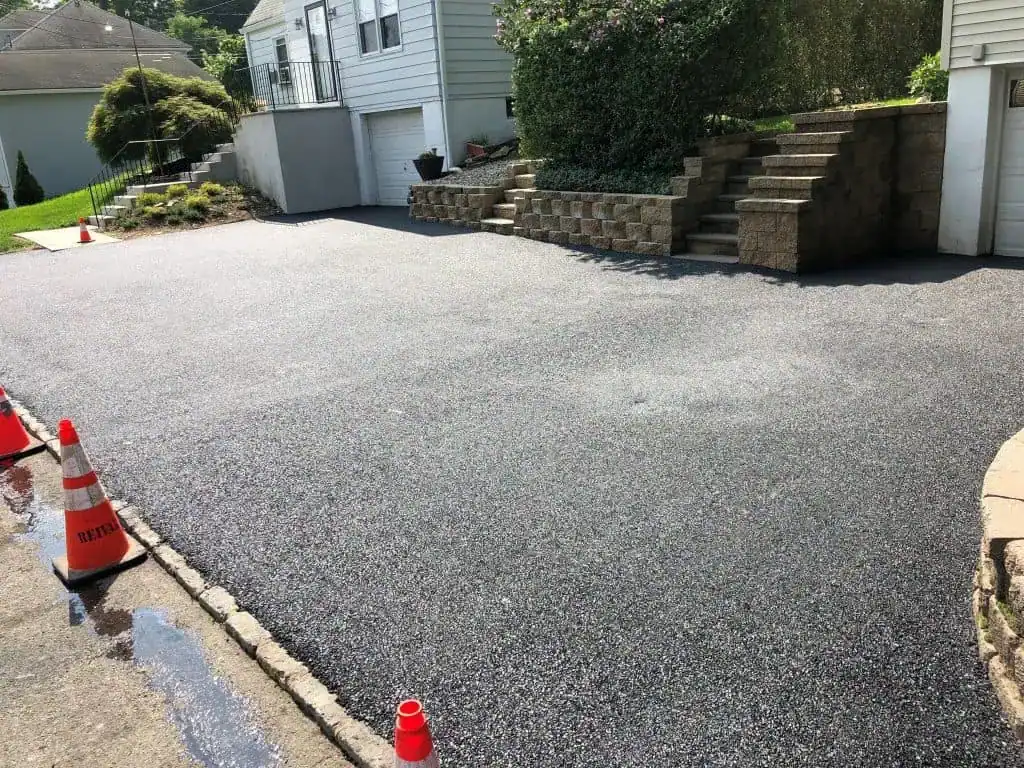
We let each coat cure properly before applying the next. Rushing this process compromises the entire job. After the final coat, your driveway needs 24-48 hours before you can drive on it, depending on temperature and humidity. We’ll give you specific timing based on current weather conditions.
Ready to get started?
Our standard driveway sealcoating service includes power washing, crack filling up to 50 linear feet, two coats of coal tar sealer, sand additive for traction, and a 2-year warranty. You’re not paying for one coat and hoping it holds—you’re getting the thickness needed to handle Morris County winters.
The coal tar sealer we use outperforms asphalt emulsion sealers in durability and weather resistance. It costs slightly more, but it lasts longer and protects better against gas and oil spills, which are common on driveways.
Timing matters in Butler. We typically sealcoat in spring and fall when temperatures stay consistently between 50-85 degrees and rain isn’t in the forecast for at least 24 hours. Summer heat above 90 degrees can cause sealer to dry too fast and not bond properly. Winter temperatures prevent proper curing entirely.
If your driveway is new, wait at least 3-6 months before sealcoating. Fresh asphalt needs time to cure and release oils. Sealing too early traps those oils and prevents proper bonding. If you’re unsure about timing, we’ll assess your specific situation and give you a straight answer about whether your driveway is ready.

Most residential driveways in Butler run between $180-$270 for a standard 600-square-foot surface. That price includes power washing, crack filling up to 50 linear feet, two coats of sealer, and a sand additive for traction.
Pricing breaks down to roughly $0.15-$0.40 per square foot depending on driveway condition, size, and how much crack repair is needed. Butler prices run about 15-20% higher than the national average because of higher labor costs and the need for more durable materials that can handle New Jersey’s harsh climate.
If a contractor quotes you significantly less, ask what’s included. Single-coat applications or skipped crack filling might save money upfront but cost you more in premature failure and earlier reapplication. If the quote seems unusually high, ask for a breakdown—you should understand exactly what you’re paying for.
A proper two-coat sealcoating job in Butler typically lasts 3-4 years before you need to reapply. Single-coat applications might only give you 1-2 years, which is why we don’t recommend them for this climate.
How long your sealcoating lasts depends on traffic volume, weather exposure, and whether you’re parking in the same spots repeatedly. Driveways that see heavy use or don’t have good drainage will need more frequent maintenance.
You’ll know it’s time to reseal when the surface starts looking faded or gray instead of deep black, or when you notice water isn’t beading up on the surface anymore. Waiting too long between applications means you’re losing the protective benefits and allowing damage to start again. Regular resealing every 2-3 years is cheaper than letting your driveway deteriorate and paying for major repairs.
Fall is ideal for sealcoating in Butler. Temperatures are moderate, humidity is lower, and you’re creating a protective barrier right before winter hits. Spring is the second-best option, especially if you’re addressing damage from the previous winter.
You need temperatures consistently between 50-85 degrees with no rain in the forecast for at least 24 hours after application. The sealer needs time to cure properly—too cold and it won’t set, too hot and it dries too fast without bonding correctly.
Avoid summer days above 90 degrees and obviously anything below 50 degrees. Most contractors in Morris County book up quickly in spring and fall because those windows are limited. If you’re planning to sealcoat, schedule early in the season rather than waiting until the last minute and finding out availability is gone.
You can buy sealer at a hardware store and do it yourself, but most DIY jobs don’t last as long or protect as well as professional applications. The difference comes down to surface preparation, material quality, and application technique.
We use commercial-grade sealers that outperform consumer products. We have equipment for proper power washing and crack filling that most homeowners don’t own. We also know how to apply sealer at the right thickness—too thin and it won’t protect, too thick and it can crack or peel.
The bigger risk with DIY sealcoating is improper surface prep. If you don’t clean thoroughly or fill cracks correctly, the sealer won’t bond and you’ve wasted time and money on a job that fails early. For a typical Butler driveway, the cost difference between DIY and professional work is a few hundred dollars. That’s not much when you factor in the equipment you’d need to buy or rent, the time involved, and the risk of doing it wrong.
No, sealcoating doesn’t fill cracks—it seals the surface. Cracks need to be filled separately before sealcoating, which is why crack filling is included in our standard service up to 50 linear feet.
We use hot rubberized crack filler that bonds to the asphalt and flexes with temperature changes. This prevents water from getting into the crack and causing freeze-thaw damage. If we just sealcoated over cracks without filling them, water would still infiltrate and the damage would continue underneath the sealer.
For driveways with extensive cracking (more than 50 linear feet), you’ll need additional crack filling at an extra cost, or you might be looking at more significant repairs before sealcoating makes sense. If cracks are wider than a quarter-inch or if there’s structural damage like sunken areas, sealcoating alone won’t fix the problem. We’ll assess your driveway’s condition and tell you honestly whether sealcoating is the right solution or if you need more extensive work first.
Plan on waiting 24-48 hours before driving on your driveway after sealcoating. The exact time depends on temperature, humidity, and how much sun exposure your driveway gets.
Warmer, drier conditions mean faster curing. Cooler temperatures or high humidity extend the wait time. We’ll give you specific guidance based on the weather forecast when we complete your job.
Driving on sealer before it’s fully cured will leave tire marks, create ruts, and damage the finish. You’ll also track sealer onto the street and possibly into your garage. It’s frustrating to wait, but it’s more frustrating to ruin a fresh sealcoating job by using it too soon. If you absolutely need driveway access during the curing period, let us know before we start—we can sometimes sealcoat in sections to keep part of your driveway usable.