Paving Contractor in Downtown Newark

Newark Paving That Survives Every Winter

Stop watching your driveway crack apart every spring. Get professional paving contractor services in Downtown Newark designed to handle New Jersey’s brutal freeze-thaw cycles.
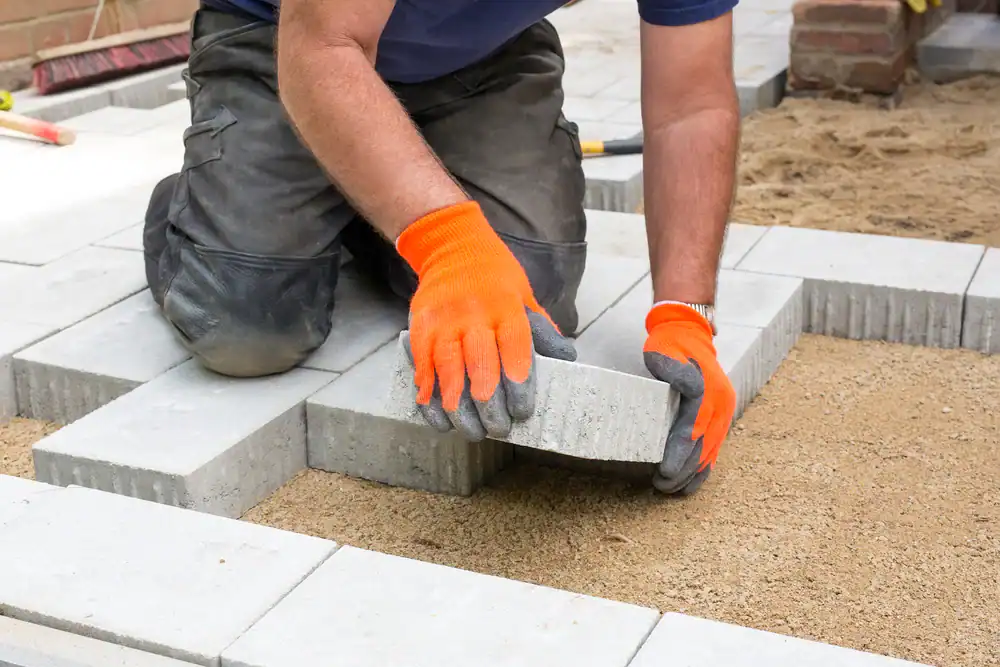
A person wearing orange gloves and dark pants kneels on the ground, placing rectangular concrete pavers onto a bed of sand—just like expert Paving Contractors in Morris, NJ, Sussex & Somerset County create stunning paved surfaces outdoors.

Hear from Our Customers

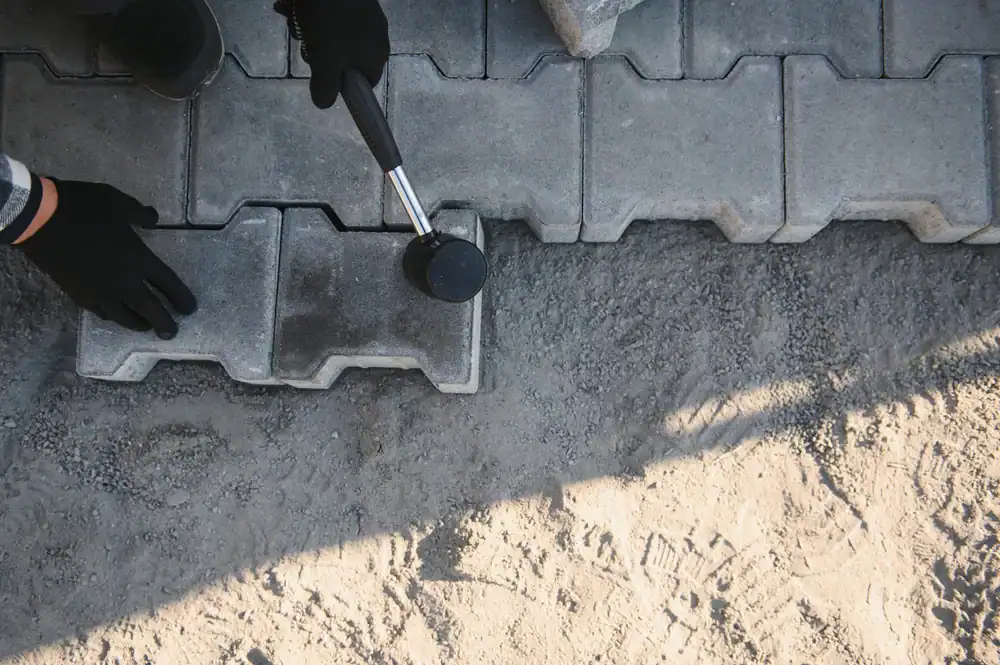
A person in black gloves uses a rubber mallet to install concrete pavers on compacted sand, aligning interlocking blocks for a pathway—a technique often used by paving contractors in Morris, Sussex & Somerset County, NJ.

Professional Asphalt Paving Downtown Newark

What Proper Paving Actually Delivers

You get pavement that doesn’t crack after the first winter freeze. Your driveway actually sheds water instead of creating ice rinks that damage your foundation.

The right asphalt paving means no embarrassing potholes when clients visit your Downtown Newark business. No water seeping through cracks into your building’s foundation. No emergency repair calls two years later because someone skipped proper base preparation.

When it’s installed correctly, your asphalt handles Newark’s temperature swings without falling apart. That’s what happens when you work with a paving contractor who understands this climate and won’t rush the critical steps.

Downtown Newark Asphalt Company

Twenty Years Building Newark's Pavements

We’ve been solving Downtown Newark’s paving challenges for over two decades. We’re not the contractors who take your deposit and disappear when problems arise.

We understand Newark’s unique demands – the heavy downtown traffic patterns, the aging infrastructure that requires careful drainage solutions, and the weather extremes that destroy poorly installed pavement within years.

Our crews know Newark’s permit requirements inside and out. We maintain full licensing and insurance coverage, and we’ll prove it upfront. Most importantly, we build it right the first time so you’re not dealing with failures down the road.
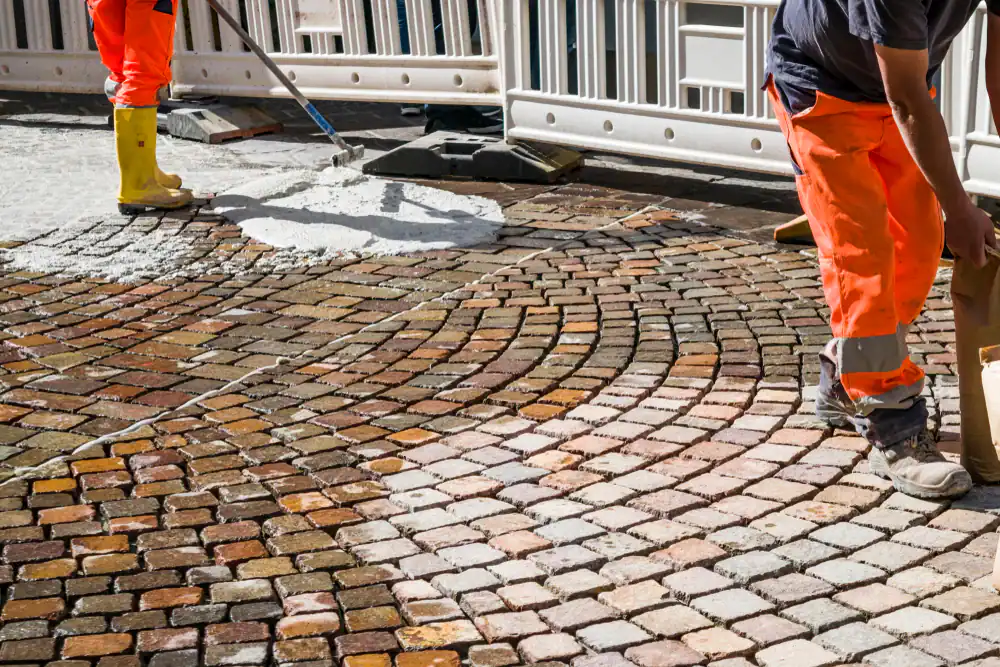
Two workers in bright orange pants repair a cobblestone street in Sussex & Somerset County, NJ. One adjusts stones while the other applies cement or grout, showcasing the skilled craftsmanship of paving contractors Morris. A temporary barrier is visible behind them.

Asphalt Installation Process Newark

The Process That Creates Lasting Results

We start by evaluating your existing base and drainage conditions. Most paving failures begin here – with contractors who skip proper site analysis to save time and underbid competitors.

Next comes excavation of any compromised material, proper grading installation, and aggregate base compaction to engineering specifications. This foundation work determines whether your pavement survives 5 years or 25 years in Newark’s climate.

The hot-mix asphalt application follows, then the critical compaction process using heavy rollers at precise temperatures. We achieve proper density through multiple passes – insufficient compaction leaves pavement porous and weak against Newark’s freeze-thaw cycles.

The final step is adequate curing time before traffic use. We’ll specify exactly when your surface is ready, not just when it looks dry.
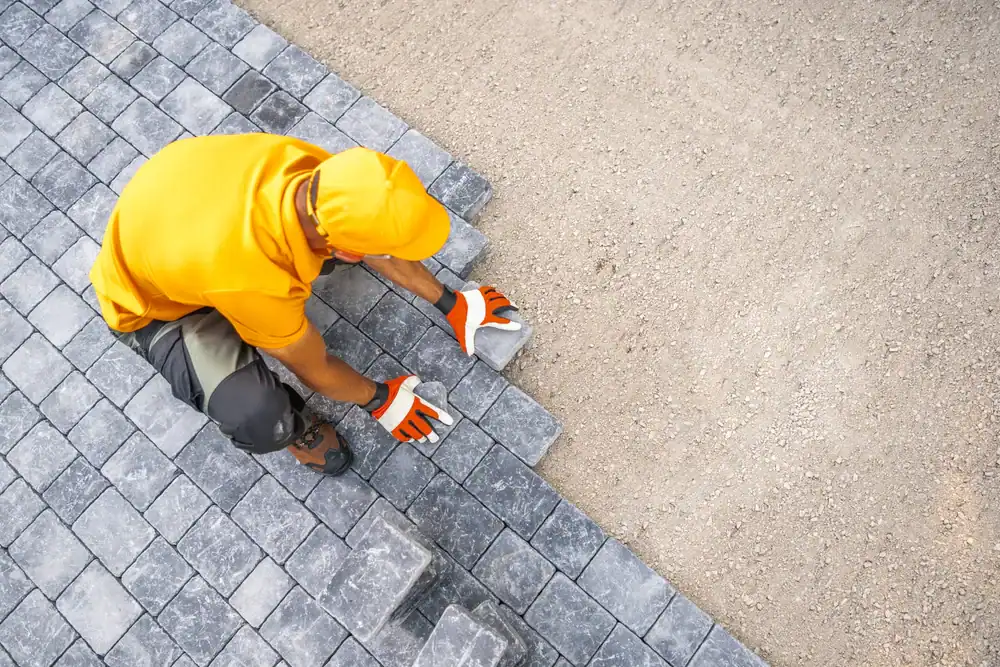
A worker in an orange shirt and gloves is laying gray paving stones on the ground, aligning them next to bare earth. Captured from above, this scene highlights the skilled work of NJ Paving Contractors Morris, Sussex & Somerset County.

Ready to get started?

Explore More Services

About Platinum Paving

Get a Free Consultation

Commercial Paving Services Newark

Complete Newark Paving Solutions

We handle residential driveways to major commercial parking lots throughout Downtown Newark. Asphalt paving, concrete contractor work, sealcoating, and repairs – all with the same commitment to proper installation.

Downtown Newark businesses need parking lots that withstand constant traffic without developing cracks or drainage failures. We engineer commercial paving with appropriate thickness for your specific load requirements and traffic volume.

For residential properties, we recognize your driveway creates the first impression visitors get. We ensure it enhances your property’s appearance while delivering the durability Newark’s weather demands.

Every project includes comprehensive drainage planning – critical in an urban area where water management can destroy even quality pavement if runoff isn’t properly directed away from the surface.
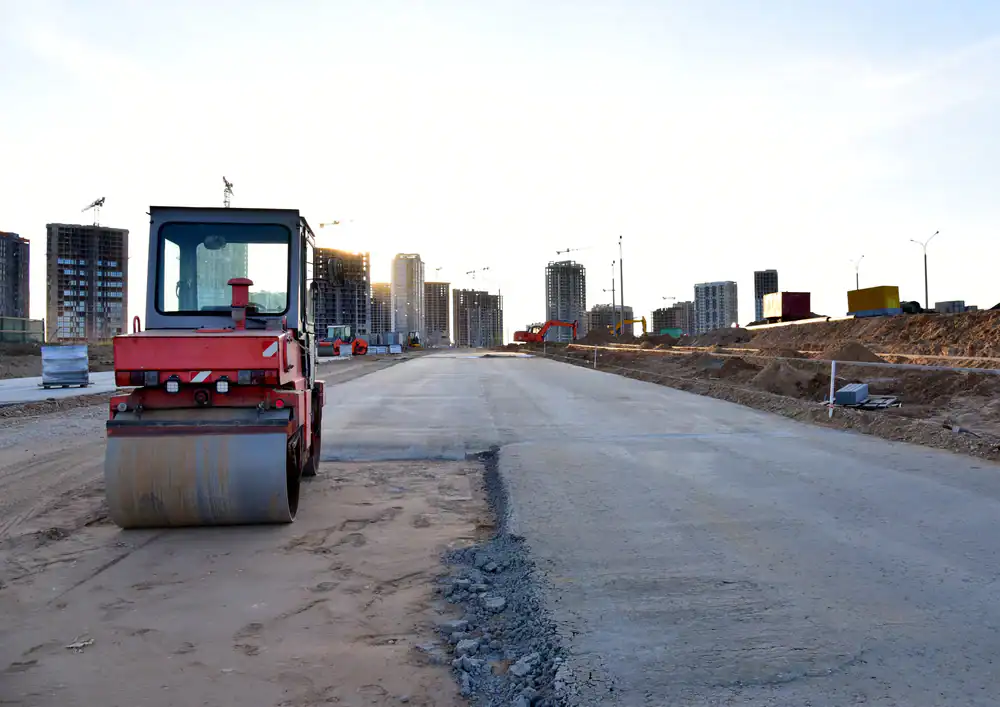
A red road roller sits on a partially paved roadway at a construction site in NJ, with modern high-rise buildings and cranes in the background—showcasing the work of Paving Contractors Morris, Sussex & Somerset County under a bright sky.
Residential driveways typically require 1-2 days from excavation through final compaction, depending on size and existing conditions. Commercial parking lots vary significantly based on square footage and complexity requirements. The timeline includes site preparation, base construction, asphalt installation, and proper curing periods. We don’t compress these phases – each step requires adequate time to ensure long-term performance in Newark’s challenging climate. Weather conditions affect scheduling too. We won’t install asphalt during rain or when temperatures drop too low, as this compromises the installation quality. Better to delay a day than rebuild the entire project.
Asphalt performs better in Newark’s freeze-thaw cycles than concrete due to its flexibility. It expands and contracts with temperature changes without developing the stress cracks that plague rigid concrete surfaces. Concrete offers longer lifespan but requires higher upfront investment and can crack when ground movement occurs. Repair options are limited – you typically must replace entire concrete sections rather than patch small areas. Asphalt allows cost-effective resurfacing when it eventually wears out, extending total service life economically. For Newark’s climate conditions, asphalt typically provides superior long-term value.
If more than 30% of your driveway shows cracking or pothole damage, full replacement usually makes more economic sense than continued patching. Multiple repairs accumulate costs quickly without addressing underlying base deterioration. Drainage problems indicate replacement necessity. If water pools on your driveway or flows toward your foundation, the grading requires correction during complete reconstruction rather than surface repairs. We assess your base condition during our evaluation. When the foundation layer is compromised, surface repairs become temporary fixes that don’t solve the fundamental structural problems.
Most residential driveway projects don’t require permits in Newark, but commercial installations and work affecting municipal drainage systems typically do need approval. Projects involving drainage pattern changes or connections to city storm water systems usually require permits. We manage the permit application process for projects that need municipal approval. We understand Newark’s specific regulatory requirements and will inform you upfront whether permits are necessary. This prevents project delays and ensures compliance with all local building codes.
Foot traffic is possible within a few hours, but wait 24-48 hours minimum before vehicle traffic. Complete curing requires several days depending on weather and asphalt thickness. Higher temperatures extend wait times – asphalt remains softer longer during hot weather. Cold conditions can also affect curing rates, so we adjust recommendations based on installation conditions. We provide specific timing guidance based on your project’s conditions. Following these guidelines prevents tire impressions and surface damage that can’t be easily corrected later.
Newark’s freeze-thaw cycles cause water infiltration into minor surface cracks, where freezing expansion creates progressively larger damage each winter season. This makes proper installation and preventive sealcoating essential. Prevention begins with adequate base preparation and appropriate asphalt thickness for local climate conditions. We also recommend sealcoating every 2-3 years to prevent water penetration through the surface layer. Quality installation provides the most important protection. When base layers are properly compacted and drainage systems function correctly, asphalt can withstand temperature fluctuations without developing the surface cracks that allow water infiltration.