
Driveway Paving in Bridgepoint, NJ

Your Driveway Done Right, Built to Last

Professional driveway paving that enhances your property value and withstands New Jersey weather year after year.

Freshly paved black asphalt driveway curves through a green lawn, bordered by stone edging. Paving Contractors Morris, Sussex & Somerset County, NJ have tools and paving stones visible on the grass, all surrounded by tall trees and a sunny sky.

Hear from Our Customers

A blue dump truck with "Platinum Paving" written on the door is parked on a dirt lot in NJ, surrounded by trees and other trucks under a partly cloudy sky. Trusted by Sussex & Somerset County as premier paving contractors Morris.

Professional Asphalt Driveway Installation Services

Transform Your Property's First Impression

Your driveway sets the tone before anyone steps foot in your home. A professionally paved driveway doesn’t just look better—it functions better, lasts longer, and adds real value to your property.

You’ll notice the difference immediately. No more navigating around potholes or worrying about guests’ reactions to cracked, uneven surfaces. Instead, you get a smooth, attractive entrance that complements your home and makes you proud of what visitors see first.

The right driveway installation also means fewer headaches down the road. Proper grading prevents water pooling near your foundation. Quality materials resist New Jersey’s freeze-thaw cycles. Professional installation techniques ensure your investment pays off for decades, not just seasons.

Bridgepoint Driveway Paving Contractors

Local Expertise You Can Count On

Platinum Paving has been serving Bridgepoint and surrounding New Jersey communities with reliable driveway paving services. We understand local soil conditions, climate challenges, and municipal requirements that affect every paving project.

What sets us apart is straightforward service without the runaround. We show up when scheduled, provide clear estimates, and complete projects as promised. Our team brings professional equipment and proven techniques to every job, whether it’s a new driveway installation or resurfacing an existing surface.

Licensed and insured, we’ve built our reputation on quality work and honest communication with homeowners throughout the Bridgepoint area.

A worker in a blue shirt smooths the edge of freshly laid asphalt while another operates an orange paving machine on a rural road—Paving Contractors Morris, Sussex & Somerset County, NJ ensure quality results amid grass, bare trees, and a cloudy sky.

Residential Driveway Paving Process

Simple Process, Professional Results

Every driveway project starts with an on-site evaluation of your property’s specific needs. We assess current conditions, drainage requirements, and any site-specific challenges that could affect the installation.

Preparation comes next—proper excavation, grading, and base preparation that most homeowners never see but makes all the difference in longevity. This foundation work ensures your new driveway can handle vehicle weight and weather conditions without premature cracking or settling.

The paving itself uses professional-grade materials applied with commercial equipment. Whether you choose asphalt or concrete, the installation follows industry best practices for thickness, compaction, and finishing. You’ll see the difference in both appearance and performance from day one.

Final steps include proper curing time and any necessary sealing or finishing touches. We explain maintenance recommendations to help you protect your investment long-term.
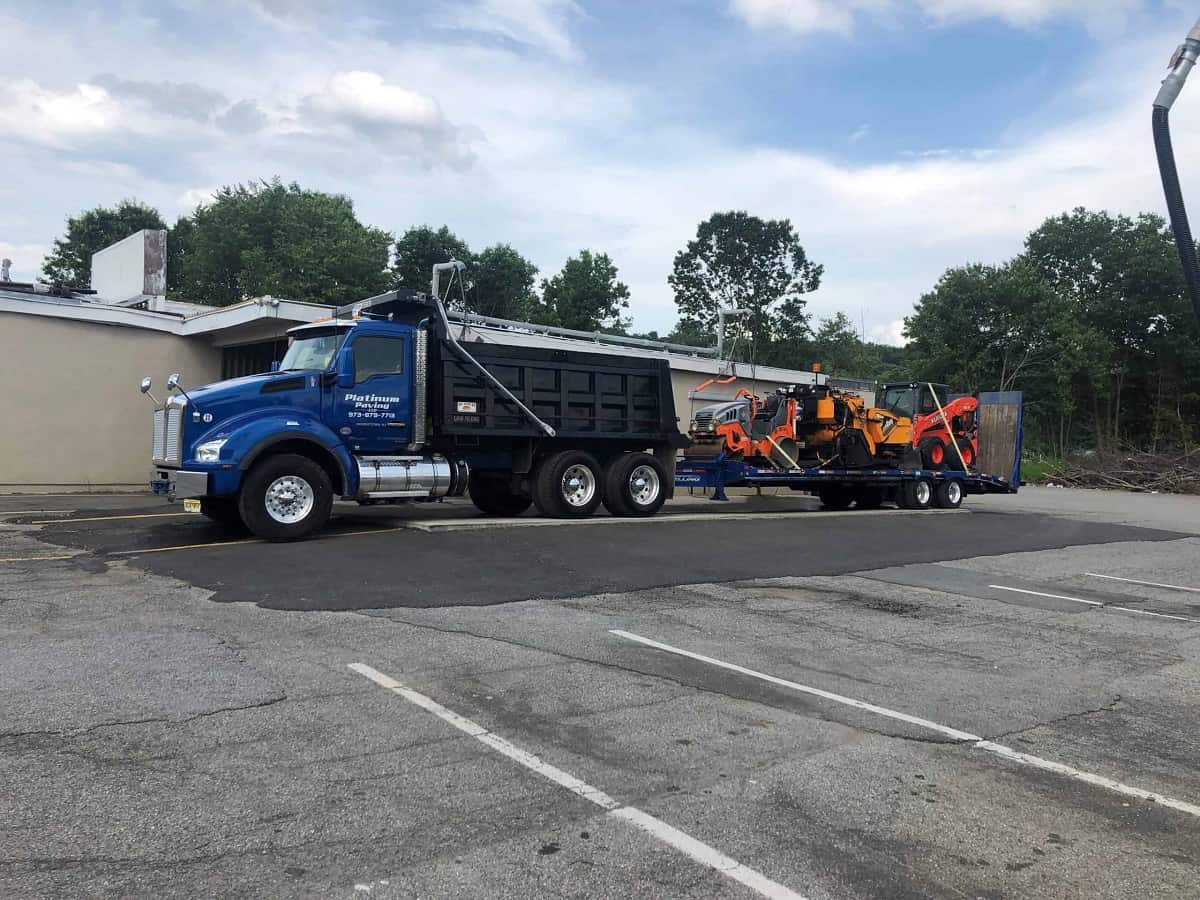
A blue dump truck with a black bed, used by Paving Contractors Morris, NJ, is parked in a lot towing a flatbed trailer with orange construction equipment. Trees and a building are visible in the Sussex & Somerset County background.

Ready to get started?

Explore More Services

About Platinum Paving

Get a Free Consultation

Complete Driveway Services Bridgepoint

Full-Service Driveway Solutions

Platinum Paving handles every aspect of driveway work, from new installations to repairs and resurfacing. Our asphalt driveway paving uses materials designed for New Jersey’s climate extremes, while concrete options provide different aesthetic and durability benefits.

Existing driveways often need resurfacing rather than complete replacement. We evaluate whether your current base can support a new surface layer, potentially saving you significant cost while still delivering a like-new appearance and performance.

Repair services address specific problem areas before they spread. Crack sealing, pothole repair, and drainage improvements can extend your driveway’s life and prevent more expensive issues. Our goal is always finding the most cost-effective solution that meets your long-term needs, not just selling you the biggest job possible.

A newly paved asphalt driveway by Paving Contractors Morris, Sussex & Somerset County, NJ leads to a gray two-story house. Construction materials and a truck are nearby, with yellow caution tape blocking access. Trees surround the area.
Most residential driveway paving projects take 1-3 days depending on size and complexity. New installations require more time for proper excavation and base preparation, while resurfacing existing driveways typically completes faster. Weather conditions can affect timing, especially for asphalt work which requires specific temperature ranges for optimal results. We provide realistic timelines during the estimate process and keep you informed of any schedule changes due to weather or unexpected site conditions.
Asphalt driveways cost less upfront and can be resurfaced more easily, making them popular for many homeowners. They handle freeze-thaw cycles well but require periodic sealing. Concrete driveways have higher initial costs but last longer with minimal maintenance and offer more design options. Concrete also reflects heat better in summer. Your choice depends on budget, aesthetic preferences, and long-term maintenance considerations. Both materials perform well in New Jersey when properly installed with adequate base preparation.
Surface cracks, minor settling, and wear patterns often indicate resurfacing can restore your driveway effectively. However, extensive cracking, significant settling, poor drainage, or base failure typically require complete replacement. Edge deterioration, large potholes, and alligator cracking (interconnected cracks forming small squares) usually mean the base has failed. A professional evaluation examines both surface conditions and underlying structure to recommend the most cost-effective solution. Sometimes spot repairs can extend life before resurfacing becomes necessary.
Driveway paving costs vary based on size, material choice, site conditions, and scope of work required. Asphalt installations typically cost less than concrete, while resurfacing costs less than complete replacement. Factors affecting price include excavation needs, drainage requirements, permit costs, and access challenges. The best approach is getting detailed estimates that break down material and labor costs. This helps you understand what you’re paying for and compare options accurately. Quality installation pays off long-term through reduced maintenance and longer lifespan.
Asphalt driveways typically allow light vehicle traffic after 24-48 hours but need several days to fully cure. Avoid turning wheels while stationary and heavy loads for the first week. Concrete driveways require longer curing—usually 7 days before regular vehicle use and 28 days for full strength. Weather affects curing times, with hot weather accelerating the process and cold weather slowing it. We provide specific guidance based on materials used, weather conditions, and your driveway’s particular requirements.
Proper drainage is essential for any driveway project and gets addressed during the design phase. This includes grading the surface to direct water away from your home’s foundation and installing drainage systems when needed. Poor drainage causes premature pavement failure, ice formation, and potential foundation problems. Our evaluation process identifies existing drainage issues and incorporates solutions into the paving plan. Sometimes this means installing catch basins, adjusting grades, or redirecting water flow. Addressing drainage properly during installation prevents costly problems later.