Summary:
You’re looking at your driveway options and the numbers aren’t adding up. Asphalt quotes are coming in higher than expected. Concrete is completely out of reach. But you need something better than gravel that won’t wash away every spring.
Tar and chip driveways might be the solution you haven’t fully considered. This textured paving method costs 30-40% less than asphalt while delivering a stable surface that handles Sussex County’s weather. It’s not perfect for every situation, but for the right property, it solves the budget problem without forcing you to settle for loose gravel.
Here’s what you need to know about how tar and chip compares to your other options.
What Is a Tar and Chip Driveway
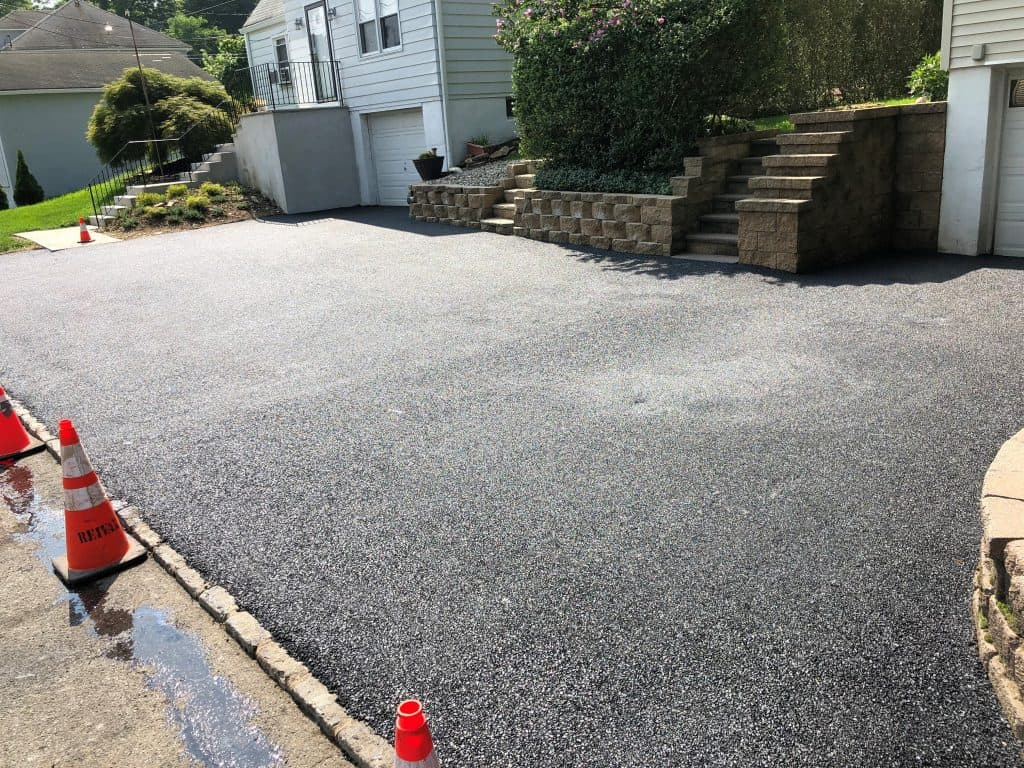
A tar and chip driveway combines hot liquid asphalt with a layer of crushed stone chips that get pressed into the surface. You might also hear it called chip seal, macadam, or seal chip. The process creates a textured, gravel-like appearance that’s more stable than loose stone but different from smooth asphalt.
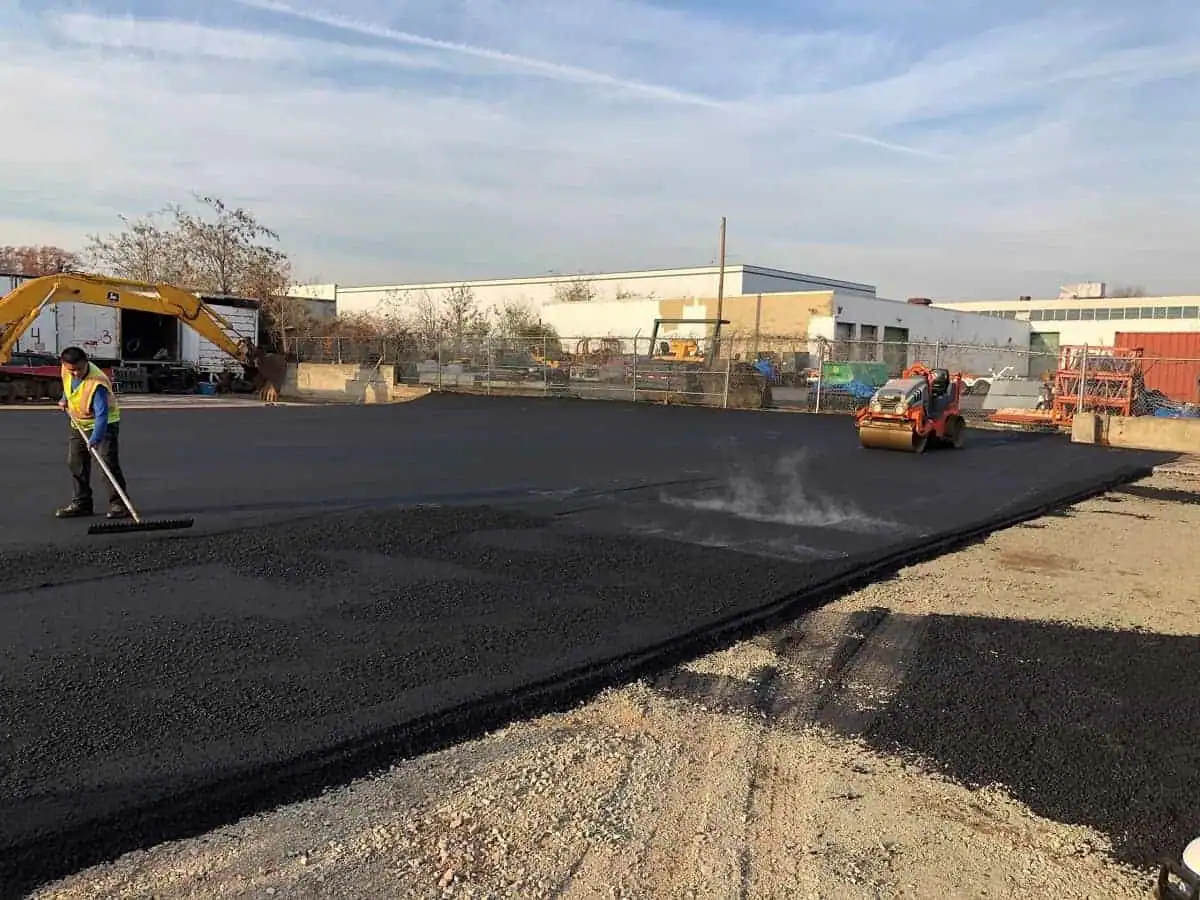
The installation happens in layers. First comes a gravel base for foundation. Then contractors spray hot liquid asphalt over the prepared surface. While the asphalt is still hot, they spread stone chips across the top and use a heavy roller to press them into the liquid asphalt. The result is a rough-textured surface where the stones are permanently embedded.
This method has been used on rural roads and residential driveways for over a century. It works particularly well for properties with long driveways where the cost difference between tar and chip and traditional asphalt becomes substantial.
How Tar and Chip Installation Works
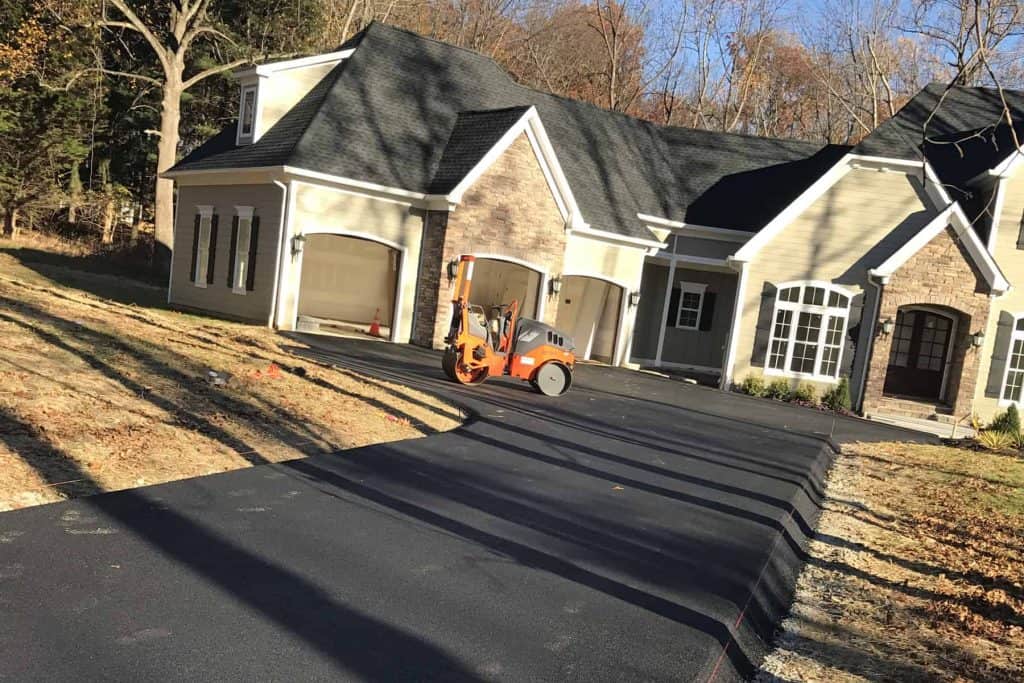
The installation process is simpler than traditional asphalt paving, which partly explains the lower cost. We start by preparing the base, which means grading the area for proper drainage and compacting a layer of crushed stone or gravel. This foundation work is critical regardless of what surface material you choose.
Once the base is ready, we heat and spray liquid asphalt emulsion across the surface. Timing matters here because the asphalt needs to be hot enough for the stone chips to embed properly. We then spread a layer of aggregate stone chips evenly across the liquid asphalt. Stone size typically ranges from 3/8 inch to 3/4 inch depending on whether you’re getting a single or double seal.
A heavy roller compacts the chips into the asphalt, creating the bond that holds everything together. For a single chip seal, that’s it. For a double chip seal, we repeat the process with a second layer of asphalt and smaller aggregate chips. This creates a more durable surface that handles heavier traffic better.
Most tar and chip driveways are ready to use within 24 to 48 hours. That’s faster than concrete, which requires seven days of curing before you can drive on it. The surface will continue to settle and compact slightly over the first few weeks as vehicles drive over it, but you don’t need to stay off it entirely like you would with fresh concrete.
You can install tar and chip over an existing driveway if the current base is in decent shape. This saves on demolition and disposal costs. However, any major cracks or potholes need repair first, or they’ll telegraph through to your new surface.
Single vs Double Chip Seal
The difference between single and double chip seal comes down to durability and cost. A single chip seal costs $2 to $3 per square foot and includes one layer of asphalt emulsion with one layer of 3/8 inch to 3/4 inch aggregate. This works fine for residential driveways with light to moderate traffic.
A double chip seal costs $3 to $5 per square foot and features two layers. The first layer uses larger aggregate chips, then a second application of asphalt and smaller chips goes on top. This creates a thicker, more durable surface that stands up better to daily wear and heavier vehicles.
For most homeowners, single chip seal provides adequate performance. You’d consider double chip seal if you have multiple vehicles, commercial traffic, or just want the longest possible lifespan from your tar and chip surface. The extra layer adds years of service life but increases your upfront investment.
The choice also affects appearance. Single seal shows more of the larger stone texture, giving it a more rustic look. Double seal has a slightly finer texture from the smaller top layer of chips, though it’s still noticeably textured compared to smooth asphalt.
In Sussex County’s climate with freeze-thaw cycles, the double seal option provides better protection. The additional layer means water has more difficulty penetrating to the base layer where freeze-thaw damage starts. If your budget allows for it, the double seal often makes sense for the added durability in New Jersey weather conditions.
Want live answers?
Connect with a Platinum Paving expert for fast, friendly support.
Concrete Pavement vs Asphalt
The fundamental difference between these three options comes down to composition, cost, and how they perform over time. Concrete uses cement as a binder mixed with sand, gravel, and water. Asphalt uses petroleum-based bitumen to bind stone aggregate and sand. Tar and chip is essentially a simplified version of asphalt with exposed stone chips on the surface.
Each material responds differently to Sussex County’s weather patterns. Temperatures here range from 18°F in winter to 83°F in summer, with frequent freeze-thaw cycles that can destroy improperly installed or maintained driveways. Near Lake Hopatcong and other water bodies, you get even more temperature swings that amplify this effect.
Cost is usually the first consideration. For a typical 600 square foot two-car driveway, tar and chip runs $1,200 to $3,000. Asphalt costs $3,000 to $4,800. Concrete hits $4,200 to $7,800 for basic installation. Those price differences become even more significant on larger driveways or long rural access roads.
Is Asphalt Cheaper Than Cement
Asphalt costs less than concrete both for installation and long-term maintenance, though the gap narrows when you factor in asphalt’s higher maintenance needs. In New Jersey, asphalt installation runs $5 to $8 per square foot while concrete costs $7 to $13 per square foot for basic work. That’s a 40-50% difference in upfront cost.
The maintenance picture complicates the comparison. Asphalt requires sealcoating every three to five years, which costs $200 to $400 for an average driveway. You’ll also need occasional crack repairs. Over a 20-year period, those sealcoating applications add $1,200 to $2,000 to your total cost. Concrete needs less frequent maintenance, maybe $300 to $500 for crack repairs every five to ten years, plus occasional sealing.
When you add it all up over 20 years, asphalt costs $5,000 to $8,300 total while concrete runs $5,400 to $9,800. The cheaper upfront option isn’t necessarily the better long-term investment, but it does require less cash at installation time.
Asphalt handles New Jersey’s freeze-thaw cycles better than concrete because it’s more flexible. Concrete’s rigid structure means cracks tend to be more severe when they happen. However, concrete lasts longer overall, typically 30 to 40 years compared to asphalt’s 15 to 30 years. If you’re planning to stay in your home for decades, concrete’s longevity might justify the higher initial cost.
For Sussex County specifically, you need to consider soil conditions. Clay-heavy soils that expand and contract with moisture changes favor asphalt’s flexibility. If your property has drainage issues or sits on clay soil, asphalt typically performs better long-term than concrete’s rigid structure. Tar and chip on a properly prepared base can work in these conditions too, though it won’t last as long as either asphalt or concrete.
Climate Performance in Sussex County
Sussex County’s location creates specific challenges for all driveway materials. The area experiences frequent freeze-thaw cycles, particularly near Stanhope, Franklin, and Lake Hopatcong. Water moderates temperature swings near the lake, creating more frequent transitions between freezing and thawing than properties just a few miles inland.
When water seeps into cracks during the day and freezes overnight, it expands with enough force to split rock. This happens repeatedly throughout winter as temperatures hover around freezing rather than staying consistently cold or warm. Properties near the lake see this effect amplified, which explains why neighbors closer to water often deal with more driveway problems.
Asphalt’s dark color absorbs heat, which means snow and ice melt faster without needing as much salt or ice melt. This creates a safer surface in winter and reduces the chemical exposure that damages pavement. Concrete’s lighter color doesn’t absorb heat as effectively, so ice and snow linger longer.
The installation timing also matters in New Jersey. Asphalt can be installed during mild winter conditions, while concrete really needs dry, above-freezing weather for proper curing. This gives you more flexibility in scheduling your project. Tar and chip installation requires warm, dry conditions similar to asphalt, typically between April and October for best results.
Road salt and ice melt products create additional challenges. These chemicals are devastating to unprotected surfaces, particularly concrete. Salt-damaged concrete becomes porous and develops surface pitting that’s expensive to repair. Asphalt handles salt exposure better, especially when protected with regular sealcoating. Tar and chip’s rough surface doesn’t require sealing, which eliminates one maintenance step.
Is Concrete or Asphalt Better
For most Sussex County properties, asphalt outperforms concrete in freeze-thaw resistance and overall climate compatibility. The key issue is how each material responds to water infiltration and freezing temperatures. Asphalt’s flexibility allows it to expand and contract with temperature changes without cracking as readily as concrete.
Concrete can last longer in ideal conditions, but Sussex County’s conditions aren’t ideal for concrete. The freeze-thaw cycles that occur 40% more frequently here than in Central or South Jersey take a toll on concrete’s rigid structure. When concrete does crack, the repairs are more extensive and expensive than typical asphalt fixes.
If you want decorative options, concrete offers more customization with stamped patterns, colors, and textures. Asphalt is limited to black or dark red tones, though you can add borders or decorative elements at additional cost. For homeowners who prioritize appearance over performance, concrete’s aesthetic versatility might outweigh the climate concerns.